
 Se i rummet
 Del som kort
 Del
Del
 Detaljer
 Guide
Guide

 Download
 Lignende værker
 Røntgenundersøgelse
 Diasshow
 Spørgsmål og svar
 Statistikker
Provençal Winter


 Vis mere
Giclée / Kunsttryk
Giclée- eller lærredstryk i museumskvalitet med hurtig produktion og fleksible muligheder for finish. ( Køb håndmalet maleri Skift til digitalt billede)




P118B Dkr10

P118H Dkr10

P118W Dkr10

P438Z Dkr10

P508JH Dkr12

P508YH Dkr12

P805H Dkr10

P805Z Dkr10

P919BZ Dkr10

P919G Dkr10

P919XJ Dkr10

P959ZH Dkr10

P968JZ Dkr12

W106C Dkr8

W218G Dkr10

W218JH Dkr8

W218Y Dkr10

W307PJ Dkr10

W316G Dkr10

W316PJ Dkr8

W316Y Dkr10

W398PJ Dkr8

W4111J Dkr10

W500HY Dkr15

W500JH Dkr15

W692G Dkr12

W849H Dkr8

W940BG Dkr15

W953PJ Dkr8




Vælg mellem vores forudindstillede størrelser, der matcher kunstværkets originale proportioner.

Indtast den bredde og højde, du har brug for, så det passer til din ramme eller din væg. Et print kan kun beskæres, aldrig gøres større end selve billedet, så en størrelse med et andet format vil medføre, at dele af motivet går tabt. Vi sender dig en digital mockup til godkendelse, før vi printer noget. Billedet vist på denne side viser ikke den faktiske beskæring — det er kun mockuppen, der gør.
Verdensomspændende levering () på 2 uger i stedet for de sædvanlige 4/5 uger. (4 november)

Gratis ekspresforsendelse til hele verden

Lærred af linned i høj kvalitet

Fuld transportforsikring

Garanti for refusion af told og importafgifter

Garanti for præcis farvegengivelse

100 dages returret ved fabrikationsfejl

100% fuld returret

Mængderabat ved flere køb
 Glasmulighed er kun tilgængelig i størrelser under 110 cm

Provençal Winter
Giclée / Kunsttryk
Størrelse på reproduktion
-


Samlet pris
Dkr 538
A Moment Frozen in Provençal Light: Exploring Henry Herbert La Thangue’s “Provençal Winter”
Henry Herbert La Thangue's "Provençal Winter," painted in 1903, isn’t merely a depiction of a rural scene; it’s an immersion into the very soul of the South of France. This oil on canvas transports us to a sun-drenched hillside, where a woman diligently harvests lemons beneath a canopy of roses and ancient trees – a tableau brimming with quiet industry and understated beauty. La Thangue, a key figure in the New English Art Club movement, masterfully captured the essence of Impressionism while firmly rooted in British realist tradition, creating an artwork that resonates with both familiarity and exotic allure.
The painting’s genesis lies within La Thangue's extensive travels throughout Europe. Following his time in Paris, where he honed his skills under Jean-Léon Gérôme, the artist sought to translate the vibrant light and atmosphere of Provence onto canvas. This period marked a significant shift in his style – moving away from purely academic representation towards a more evocative approach that prioritized capturing fleeting moments of natural beauty. “Provençal Winter” exemplifies this evolution; it’s less about precise detail and more about conveying the feeling of warmth, tranquility, and the rhythm of rural life.
Decoding the Palette: Technique and Artistic Choices
La Thangue's technique is characterized by a remarkable sensitivity to light and color. He employs broken brushstrokes – short, distinct marks that blend optically rather than through meticulous layering – creating a shimmering effect reminiscent of sunlight filtering through foliage. The dominant hues are warm earth tones: ochres, siennas, and umbers create the foundation for the landscape, while bursts of pink from the roses and the pale yellows of the lemons inject vibrant energy into the composition. Notice how he uses subtle gradations of color to suggest depth and volume; the distant trees recede into a hazy blue-grey, creating an illusion of atmospheric perspective.
The artist’s choice of medium – oil on canvas – further contributes to the painting's richness and texture. The slow drying time of oil paint allowed La Thangue to build up layers of color gradually, achieving a remarkable sense of luminosity and tactile quality. He skillfully utilizes impasto—thickly applied paint—to accentuate the rough bark of the trees and the textured surface of the lemons, adding a tangible dimension to the scene.
Symbolism and Narrative Resonance
Beyond its aesthetic beauty, “Provençal Winter” is rich in symbolic meaning. The woman harvesting lemons represents not just labor but also abundance, fertility, and the cyclical nature of life. Lemons, traditionally associated with prosperity and vitality, are a potent symbol within this context. The roses, with their delicate fragrance and vibrant color, evoke themes of love, beauty, and fleeting moments of joy. The scene itself suggests a harmonious relationship between humanity and nature – a quiet celebration of the simple pleasures of rural existence.
Furthermore, the painting’s setting—a sun-drenched hillside in Provence—holds historical significance. The region has long been associated with artistic inspiration, attracting painters like Cézanne and Van Gogh who sought to capture its unique light and atmosphere. La Thangue's work reflects this legacy, drawing upon the traditions of plein air painting while forging his own distinctive style.
A Timeless Masterpiece: Reproduction and Legacy
"Provençal Winter" stands as a testament to Henry Herbert La Thangue’s artistic vision and technical skill. OriginalUniqueArt.com offers meticulously crafted, hand-painted oil reproductions that faithfully capture the essence of this iconic artwork. These reproductions are created by skilled artisans using high-quality materials, ensuring that they retain the luminosity, texture, and emotional impact of the original. Whether adorning a living room wall or gracing a corporate office, “Provençal Winter” continues to evoke feelings of serenity, warmth, and timeless beauty—a perfect embodiment of the idyllic charm of Provence.
Spørgsmål og svar
Hvilken placering passer bedst til formatet på "Provençal Winter" af Henry Herbert La Thangue?
Formatet Landscape af "Provençal Winter" af Henry Herbert La Thangue anbefales til en Living Room. Format og rumstørrelse er tilsammen vejledende for placeringen af en reproduktion.
Er "Provençal Winter" typisk for det, som Henry Herbert La Thangue normalt skabte?
Blandt Henry Herbert La Thangues gennemgående temaer – landscape focus, british countryside, light & color study, french plein air, impressionist light, rural british scene, rural life values, seasonal beauty – bringer "Provençal Winter" sit eget fokus på rural landscape, winter scene, floral composition, lemon still life, british countryside, impressionist colors, peaceful setting.
Hvad er den dominerende farve i "Provençal Winter" af Henry Herbert La Thangue?
Den dominerende farve i "Provençal Winter" af Henry Herbert La Thangue er Clay (#9c7232).
Kunstnerbiografi
Henry Herbert La Thangues visionære realisme
Henry Herbert La Thangue står som en central skikkelse i det britiske realistiske landskabsmaleris væv, en mester hvis pensel fangede den engelske landsbygds stille værdighed og det europæiske kontinents flygtige lys. Han blev født i Croydon, Surrey, i 1859, og hans kunstneriske rejse begyndte midt i det intellektuelle opbrud i det victorianske London. Formet af forbindelser til andre lysende skikkelser som Stanhope Forbes og Frederick Goodall under sin tid på Dulwich College, udviklede La Thangue en tidlig og dyb værdsættelse for den omhyggelige observation. Denne formative periode indprentede i ham en dedikation til detaljen, som skulle blive kendetegnet ved hans varige eftermæle.
Hans formelle uddannelse var præget af streng disciplin og omfattede både Lambeth School of Art og det prestigefyldte Royal Academy i London. Året 1879 viste sig at være et vendepunkt, da han blev tildelt en eftertragtet guldmedalje – en bedrift, der førte ham mod et transformativt stipendiatophold ved Jean-Léon Gérômes atelier i Paris. Det var i denne franske kontekst, at La Thangue mødte Barbizon-skolens ånd. Selvom hans instruktører lejlighedsvis kritiserede hans tendens til romantik, lykkedes det La Thangue at forene principperne fra plein air-maleri med en urokkelig dedikation til realismen, hvor han lærte at indfange det umiddelbare, atmosfæriske væsen af det naturlige lys.
En rejse gennem lys og landskab
La Thangues kreative ånd var aldrig begrænset af grænser. Mellem 1881 og 1882 tillod hans ekspeditioner til Bretagne og Rhône-dalen i Donzère ham at fordybe sig i Frankrigs mangfoldige landskaber. Disse rejser udvidede hans kunstneriske horisont og introducerede en palet af bløde farver og rolig skønhed, som senere kom til udtryk i værker som "A Provençal Stream." Dette værk tjener som et fredfyldt vidnesbyrd om hans impressionistiske indflydelser, hvor vandets bevægelse og solens varme er gengivet med et delikat og stemningsfuldt præg.
Ved sin hjemkomst til England i 1886 blev La Thangue en aktiv deltager i de skiftende strømninger i det britiske kunstetablissement. Hans medlemskab af Royal Institute of Oil Painters cementerede hans professionelle status, men han forblev en reformator af hjertet. Hans engagement i bevægelsen, der udfordrede Royal Academys traditionalistiske greb, bidrog i sidste ende til dannelsen af New English Art Club (NEAC). Gennem dette nye forum kæmpede han for en mere demokratisk tilgang til kunsten og fremviste værker, der fejrede den ærlige, uforfalskede skønhed i landlivet og arbejderklassens slid.
Mestring af det rurale narrativ
Den sande sjæl i La Thangues værk ligger i hans evne til at transformere almindelige landbrugsscener til dybe emotionelle oplevelser. Hans senere år, især tiden i South Walsham, Norfolk, så en fordybelse af hans fokus på landets rytmer. I mesterværker som "The Last Furrow" (1895) indfanger han høstens rørende skønhed ved at benytte en realistisk teknik, der ærer det hårde arbejde og den ynde, som findes i det rurale liv. Hans arbejde anvender ofte en rig, impasto-tekstur for at give fysisk tyngde til jorden og himlen, som er afbildet på hans lærred.
Måske intet værk indkapsler hans evne til at forene symbolik med naturalisme bedre end "Nightfall," også kendt som "The Gleaners." I dette rørende oliemalerie fra 1895 benytter La Thangue varme farver og en følelse af frembrydende skygge for at fremkalde høstsæsonens højtidelighed. Gennem hans øjne er landskabet ikke blot en kulisse, men en levende karakter, gennemsyret af historien om dem, der arbejder på det. Hans eftermæle forbliver en vital del af Newlyn School-traditionen, og tilbyder et vindue til en svunden æra af britisk pastoralt liv gennem en linse af udsøgt, lysfyldt realisme.

Henry Herbert La Thangue
1859 - 1929
Kort om kunstneren
- Artistic Movement Or Style: Realistisk landskabsmaleri & genremaleri
- Artists Or Movements Influenced By This Artist: ['Newlyn School']
- Artists Who Influenced This Artist:
- Jean-Léon Gérôme
- Bastien Lepage
- Dagnan Bouveret
- Date Of Birth: 1859
- Full Name: Henry Herbert La Thangue
- Nationality: Engelsk
- Notable Artworks:
- The Mulberry Tree
- Return of the Reapers
- The Man with the Scythe
- Place Of Birth: Croydon, Storbritannien
Relaterede artikler

Impressionismens Mestre: Top 10 Landskaber der Ændrede Kunsten | OriginalUniqueArt.dk
Oplev impressionismens magi! Dyk ned i top 10 landskabsmalerier af Monet, Renoir & Van Gogh. Lær historien bag mesterværkerne og find inspiration til din indretning med OriginalUniqueArt.dk – køb kunst online.
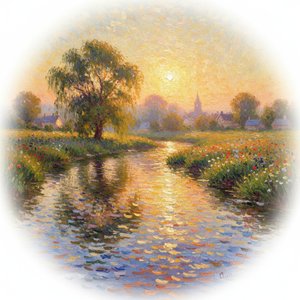
Capturing Light: A Masterclass in the Ethereal Beauty of Impressionistic Landscapes
Explore the ethereal beauty of Impressionist landscapes. Discover how masters like Monet captured fleeting light through color and texture, and learn to curate these timeless, luminous masterpieces for your home collection.

Paul Cézannes 25 Mesterværker: En Kunstnerisk Rejse til Moderne Malerkunst | OriginalUniqueArt.dk
Oplev Paul Cézannes 25 mest ikoniske malerier – fra stilleben til landskaber. Lær om impressionismen, hans unikke stil og køb eksklusive kunsttryk på OriginalUniqueArt.dk. Find inspiration til din indretning!

Evocations of Place: A Historical Journey Through Landscape Art
Explore the rich history of landscape art with OriginalUniqueArt. Discover renowned artists, movements like Impressionism & Romanticism, and expert guidance for collecting timeless pieces. Find your perfect serene escape today!

Impressionismens Mestre: Top 10 Landskaber der Ændrede Kunsten | OriginalUniqueArt.dk
Oplev impressionismens magi! Dyk ned i top 10 landskabsmalerier af Monet, Renoir & Degas. Lær historierne bag disse ikoniske kunstværker og find inspiration til dit hjem hos OriginalUniqueArt.com – museumskvalitet reproduktioner online.