
 Se i rummet
 Del som kort
 Del
Del
 Detaljer
 Guide
Guide

 Download
 Lignende værker
 Røntgenundersøgelse
 Diasshow
 Spørgsmål og svar
 Statistikker
Venus between Ceres and Bacchus

- 402.0 x 287.0 cm


 Vis mere
Giclée / Kunsttryk
Giclée- eller lærredstryk i museumskvalitet med hurtig produktion og fleksible muligheder for finish. ( Køb håndmalet maleri Skift til digitalt billede)




P118B Dkr10

P118H Dkr10

P118W Dkr10

P438Z Dkr10

P508JH Dkr12

P508YH Dkr12

P805H Dkr10

P805Z Dkr10

P919BZ Dkr10

P919G Dkr10

P919XJ Dkr10

P959ZH Dkr10

P968JZ Dkr12

W106C Dkr8

W218G Dkr10

W218JH Dkr8

W218Y Dkr10

W307PJ Dkr10

W316G Dkr10

W316PJ Dkr8

W316Y Dkr10

W398PJ Dkr8

W4111J Dkr10

W500HY Dkr15

W500JH Dkr15

W692G Dkr12

W849H Dkr8

W940BG Dkr15

W953PJ Dkr8




Vælg mellem vores forudindstillede størrelser, der matcher kunstværkets originale proportioner.

Indtast den bredde og højde, du har brug for, så det passer til din ramme eller din væg. Et print kan kun beskæres, aldrig gøres større end selve billedet, så en størrelse med et andet format vil medføre, at dele af motivet går tabt. Vi sender dig en digital mockup til godkendelse, før vi printer noget. Billedet vist på denne side viser ikke den faktiske beskæring — det er kun mockuppen, der gør.
Verdensomspændende levering () på 2 uger i stedet for de sædvanlige 4/5 uger. (3 november)

Gratis ekspresforsendelse til hele verden

Lærred af linned i høj kvalitet

Fuld transportforsikring

Garanti for refusion af told og importafgifter

Garanti for præcis farvegengivelse

100 dages returret ved fabrikationsfejl

100% fuld returret

Mængderabat ved flere køb
 Glasmulighed er kun tilgængelig i størrelser under 110 cm

Venus between Ceres and Bacchus
Giclée / Kunsttryk
Størrelse på reproduktion
-


Samlet pris
Dkr 540
A Divine Interlude: Exploring Venus between Ceres and Bacchus
To gaze upon this magnificent canvas is to step directly into a moment suspended in mythological splendor. Venus between Ceres and Bacchus, painted around 1590 by Hendrik Goltzius, is far more than a mere depiction of classical figures; it is an elaborate tapestry woven from themes of fertility, divine love, and the cyclical nature of life itself. The composition immediately draws the eye into a richly populated scene where three central figures—the goddess Venus, the nurturing Ceres, and the jovial Bacchus—are arranged in a tableau vivant that speaks volumes through its very stillness.
Mythological Resonance and Symbolism
The grouping of these deities is inherently symbolic. Venus, embodying beauty and desire, occupies the heart of the narrative, flanked by two powerful forces of nature and sustenance. Ceres, goddess of agriculture and motherhood, represents the bounty of the earth, while Bacchus, the god of wine and ecstasy, speaks to pleasure and vital energy. The inclusion of these figures suggests a harmonious balance—a divine acknowledgment that beauty (Venus) thrives when supported by both earthly nourishment (Ceres) and spirited joy (Bacchus). Scattered throughout the scene are carefully placed objects: a delicate cup, an ornate bowl, and a central vase. These items are not incidental; they function as visual anchors, hinting at rituals, offerings, and the pleasures that accompany life's most profound experiences.
Mastery of the Northern Mannerist Style
Hendrik Goltzius, a titan of the late Renaissance and early Baroque period, imbues this work with his signature "exuberance." While rooted in classical mythology, the execution showcases the sophisticated flair characteristic of Northern Mannerism. Goltzius was renowned for his technical virtuosity, translating the drama and complexity often associated with Italian High Renaissance masters into a distinctly German-Dutch sensibility. Observe the figures: their poses are dynamic yet elegantly composed, suggesting an underlying narrative tension beneath the surface calm. The presence of three angels in the background further elevates the scene from a simple gathering to an apotheosis—a moment blessed by celestial intervention.
Technique and Visual Impact for the Modern Collector
The sheer scale of this piece, measuring 402 x 287 cm, commands attention, making it a breathtaking focal point for any grand hall or gallery. The richness of Goltzius's technique allows for intricate detailing in the drapery, the musculature, and the symbolic accoutrements. For those seeking to bring this level of historical grandeur into their own space, acquiring a high-quality hand-painted reproduction offers an unparalleled opportunity. It allows one to connect intimately with the master’s brushwork—the subtle gradations of tone, the dramatic interplay of light across bare skin, and the deep saturation of the background elements—without the monumental commitment of the original masterpiece.
An Emotional Echo Across Centuries
Ultimately, Venus between Ceres and Bacchus resonates because it speaks to universal human concerns: the pursuit of beauty, the necessity of sustenance, and the celebration of life's fleeting joys. It is a visual meditation on abundance. Owning or displaying a reproduction of this work is not merely decorating; it is curating an atmosphere steeped in classical mythology, artistic genius, and enduring, divine harmony.
Spørgsmål og svar
Hvor harmoniske er farverne i "Venus between Ceres and Bacchus" af Hendrik Goltzius?
Farveharmonien i "Venus between Ceres and Bacchus" er beskrevet som Unified Palette.
Hvad forestiller "Venus between Ceres and Bacchus" af Hendrik Goltzius?
Motiverne i "Venus between Ceres and Bacchus" er venus, bacchus, ceres, nude figures, mythology, angels, classical art.
Kan jeg se "Venus between Ceres and Bacchus" som et diasshow i fuld skærm?
Se diasshowet på siden Billedserie for "Venus between Ceres and Bacchus" af Hendrik Goltzius.
Kunstnerbiografi
Hendrik Goltzius: En Mester af Det Tidlige Barok
Hendrik Goltzius, født i Braunschweig omkring 1558 og død i Haarlem i 1617, var en markant figur i den hollandske kunsthistorie – en printmaker, grafiker og maler, der definerede sin tid som den førende repræsentant for den nordlige mannerisme. Hans arbejde er kendetegnet ved en dynamisk energi, en virtuos teknikalitet og et strejf af overdådighed, der gjorde ham til en af de mest eftertragtede kunstnere i Europa under det 16. og begyndelsen af det 17. århundrede. Goltzius var ikke blot en dygtig tekniker; han var en visionær, der med sin grafiske stil introducerede elementer fra den italienske renessance til det nordlige Nederland – et skifte, der markerede en vigtig udvikling i kunstens landskab. Hans arv lever videre i dag gennem hans utallige tryk og malerier, som findes i de mest prestigefyldte museer verden over. Goltzius’s barndom var præget af et traume – en brand, der efterlod ham med en deformeret højre hånd. Denne fysiske udfordring, paradoksalt nok, blev hans største styrke. Den unikke muskelstruktur i hans arm gav ham en kraftfuld og præcis bevægelse, når han brugte burinen (en grafisk skabelon) til at skabe sine karakteristiske linjer. Denne teknik, ofte kaldet "swelling line" – hvor linjernes tykkelse varierer for at skabe dybde og nuancer – var en af hans mest genkendelige træk og adskilte ham markant fra mange samtidige kunstnere. Hans træning i gravering startede hos den berømte grafiker Dirck Volckertszoon Coornhert, der selv havde studeret under den tyske mester Albrecht Dürer. Goltzius’s karriere tog fart i Haarlem, hvor han etablerede sit eget atelier og hurtigt opnåede international anerkendelse. Han blev hyret af adskillige royale kunder, herunder den romerske kejser Rudolf II, der var en ivrig samler af kunstværker. Goltzius’s mest berømte tryk er uden tvivl hans reproduktioner af Bartholomeus Spranger's allegoriske billeder – et samarbejde, der bidrog til at popularisere den italienske manierisme i det nordlige Europa. Han skabte også en række imponerende trykkort, der forestiller sig mytologiske figurer og bibelske fortællinger, ofte med en dramatisk og teatralsk stil. Hans arbejde var præget af en dyb forståelse for anatomi og komposition, hvilket gav hans billeder en følelse af livagtighed og dynamik. En særlig vigtig del af Goltzius’s kunstneriske udvikling var hans eksperimentering med forskellige teknikker. Udover den traditionelle buring brugte han ofte pen og sort tusch til at skabe detaljerede konturer og effekter, hvilket resulterede i billeder med en unik tekstur og dybde. Han var også en pioner inden for "dot and lozenge" teknikken – et system af små prikker og lozener, der blev brugt til at simulere skumring og skygge. Denne teknik demonstrerede hans tekniske kunnen og hans evne til at skabe illusionen af tredimensionalitet på papir. Goltzius’s malerier, selvom de er færre i antal end hans tryk, er også værdifulde eksempler på hans kunstneriske talent. Hans tidlige malerier viser indflydelse fra den italienske renessance, mens hans senere værker er mere eksperimenterende og karakteristiske for den nordlige mannerisme. Han skabte portrætter, landskaber og religiøse scener med en imponerende dygtighed og en følelse af bevægelse og drama. Goltzius’s arbejde har haft en varig indflydelse på kunsthistorien. Hans tekniske kunnen og hans innovative tilgang til gravering inspirerede mange efterfølgende kunstnere, herunder Jacques Bellange. Hans tryk er i dag udstillet i de mest prestigefyldte museer verden over – fra Metropolitan Museum of Art i New York til British Museum i London. Han er en af de vigtigste repræsentanter for den nordlige mannerisme og et symbol på det hollandske kunstgeni under det 16. århundrede. Hans kunst fortsætter med at fascinere og inspirere kunstelskere og forskere over hele verden.Goltzius’s Vigtigste Arbejder
* **Jupiter:** Et imponerende tryk, der forestiller Jupiter, der slår en titan med et lyn. * **Minerva:** En skildring af gudinden Minerva, der er kendt for sin visdom og strategi. * **Prophetene Baruch:** Et tryk, der viser profeten Baruch, der bringer en budskab til kong David. * **Demogorgon og de Guder:** En serie af tryk, der forestiller Demogorgon, den frygtede gud i mytologien, og hans følge af guder. * **Apollo Belvedere:** Et tryk, der gengiver den berømte statue af Apollo fra det antikke Rom.Museer med Goltzius’s Arbejde
* **Los Angeles County Museum of Art (LACMA)** * **Philadelphia Museum of Art** * **British Museum** * **Metropolitan Museum of Art** * **Rijksmuseum Amsterdam** * **Museum Boijmans Van Beuningen**
Hendrik Goltzius
1558 - 1617 , Tyskland
Kort om kunstneren
- Artistic Movement Or Style: Nordlig Mærketeknik & Baroktrykning
- Artists Or Movements Influenced By This Artist: ['Jacques Bellange']
- Artists Who Influenced This Artist: ['Dirck Volckertszoon Coornhert']
- Date Of Birth: Jan/Feb 1558
- Date Of Death: 1 Jan 1617
- Full Name: Hendrik Goltzius
- Nationality: Hollandsk
- Notable Artworks:
- Jupiter
- Minerva
- Profet Baruch
- Place Of Birth: Braunschweig, Italien
Relaterede artikler

Hendrick Goltzius: Master Engraver & the Flourishing of Dutch Mannerism
Explore the life & art of Hendrick Goltzius, a master engraver of Dutch Mannerism. Discover his innovative techniques, iconic engravings like 'Jahel', and lasting influence on Baroque art. Learn about collecting Goltzius today.

The Intricate World of Engraving: A Historical Survey of Technique, Artistic Expression & Enduring Legacy
Explore the rich history of engraving with OriginalUniqueArt. Discover techniques, iconic artists like Dürer & Callot, collecting tips, and expert guidance for preserving your art investment. Learn about intaglio printing & more!

The Precision of the Burin: An Expert Guide to the High-Impact World of Masterful Engraving Art
Discover the sharp, high-impact world of engraving art. Our expert guide explores intaglio techniques, the mastery of the burin, and how collectors can appreciate the precision and enduring legacy of this profound graphic art form.
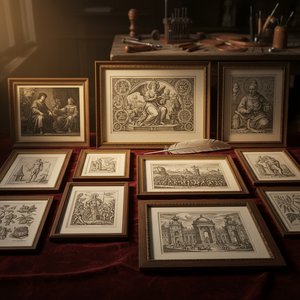
Tidløse Raderinger: 10 Mesterværker der Forandrede Kunsten – Find Inspiration til Dit Hjem
Oplev 10 legendariske raderinger af Dürer, Rembrandt & Goya! Fordyb dig i kunsthistorien og lær om teknikken bag disse ikoniske værker. Find inspiration til din indretning med museumskvalitets reproduktioner på OriginalUniqueArt.com.

Engraving: A Historical Survey of Technique, Artistic Expression & Enduring Legacy
Explore the rich history of engraving with OriginalUniqueArt. Discover techniques, iconic artists like Dürer & Callot, collecting tips, and expert guidance for preserving your art investment. Learn about intaglio printing & more!

