

 Se i rummet
 Send
Send Del
Del
 Detaljer
 Studieguide til kunstværker

 Download
 Lignende værker
 Røntgenundersøgelse
 Se diasshow
 Statistik
Hallstand


 Læs mere
Håndlavet oliereproduktion
Håndmalet olie på lærred i din valgte størrelse og ramme, udført efter bestilling af vores kunstnere. ( Skift til printversion Skift til digitalt billede)




P118B Dkr10

P118H Dkr10

P118W Dkr10

P438Z Dkr10

P508JH Dkr12

P508YH Dkr12

P805H Dkr10

P805Z Dkr10

P919BZ Dkr10

P919G Dkr10

P919XJ Dkr10

P959ZH Dkr10

P968JZ Dkr12

W106C Dkr8

W218G Dkr10

W218JH Dkr8

W218Y Dkr10

W307PJ Dkr10

W316G Dkr10

W316PJ Dkr8

W316Y Dkr10

W398PJ Dkr8

W4111J Dkr10

W500HY Dkr15

W500JH Dkr15

W692G Dkr12

W849H Dkr8

W940BG Dkr15

W953PJ Dkr8




Vælg mellem vores forudindstillede størrelser, der matcher kunstværkets originale proportioner.

Du kan indtaste dine egne mål for at passe til en bestemt ramme eller plads. Hvis den valgte størrelse ikke stemmer overens med det originale billedes proportioner, vil vi enten beskære kunstværket eller udvide maleriet med yderligere håndmalede elementer. En digital skitse sendes til din godkendelse, før produktionen påbegyndes.
Bemærk venligst, at forhåndsvisningen på skærmen ikke afspejler den faktiske beskæring eller udvidelse. Kun skitsen vil nøjagtigt vise den endelige komposition.
Selvom specialmål er mulige, anbefaler vi at vælge en dimension fra den foruddefinerede liste for at bevare de originale proportioner.
Efter bestilling vil OriginalUniqueArt.com team sende en e-mail til kunden for at indhente instruktioner og fremsende et udkast til gennemgang.
Levering i hele verden () på 3-4 uger i stedet for de standard 5 uger. (12 oktober). Ingen kompromiser med kvaliteten.

Gratis ekspresforsendelse til hele verden

Lærred af linned i høj kvalitet

Komplet transportforsikring

Garanti for refusion af told og importafgifter

Garanti for autentisk farvegengivelse

100 dages returret ved fabrikationsfejl

100% fuld returret

Mængderabat ved flere køb
 Glasmulighed er kun tilgængelig i størrelser under 110 cm

Hallstand
Reproduktionsmateriale
Reproduktionsstørrelse
-


Samlet pris
Dkr 1934
Om kunstneren
The Poet of Iron and Glass: The Life of Hector Guimard
Hector Guimard (1867-1942) stands as a singular figure in the annals of Art Nouveau architecture, embodying its ethos of organic form and flowing lines—a testament to the transformative power of design. Born in Lyon, France, he pursued his artistic education at the École des Beaux-Arts and later honed his skills at the School of Decorative Arts, establishing himself as both a craftsman and an innovator within the burgeoning Parisian avant-garde movement. His career spanned decades, leaving behind an indelible mark on the cityscape and shaping perceptions of beauty and functionality through a lens that merged the industrial with the biological.
Guimard’s artistic journey began amidst the fervor of Impressionism and Japonisme, absorbing stylistic cues from these movements that would ultimately coalesce into his distinctive vision. However, it was Castel Béranger—the inaugural apartment building in Paris—that cemented his reputation as a pioneer of Art Nouveau. Selected from a competitive design brief in 1899, Guimard’s audacious proposal captivated judges with its innovative use of ironwork and glass, establishing it as the first true exemplar of this revolutionary style. The building's undulating façade, adorned with stylized floral motifs and intricate geometric patterns—a deliberate rejection of rigid classical forms—became a symbol of artistic aspiration and signaled a decisive break from traditional architectural conventions.
A Legacy Written in the Streets of Paris
Guimard’s fame ascended to unparalleled heights thanks to his involvement in the construction of Paris’s first underground railway stations. Between 1890 and 1930, he designed approximately fifty metro entrances and over one hundred and forty-one station halls—a monumental undertaking that profoundly impacted the city's visual landscape and cultural identity. These structures are instantly recognizable for their graceful arches crafted from cast iron, which seem to emerge from the earth like skeletal vines or exotic flora. Through these entrances, Guimard brought high art to the masses, turning a utilitarian transit system into an immersive gallery of organic modernism.
Beyond the grand scale of urban architecture, Guimard’s genius extended into the intimate realms of interior design and decorative arts. He believed that a cohesive aesthetic should permeate every aspect of life, from the structural bones of a building to the smallest household object. His work often featured:
- Furniture Design: Pieces such as his Bench for a Smoking Parlour (1897) demonstrate how he applied the same sinuous, whip-lash curves found in his architecture to functional wooden forms, creating an atmosphere of luxurious, naturalistic elegance.
- Metalwork and Ironwork: His mastery over cast iron allowed him to manipulate hard, industrial materials into soft, fluid shapes that mimicked the growth patterns of plants.
- Integrated Ornamentation: In works like the entrance to Castel Béranger, he utilized elegant blue metal bars and intricate decorative elements to create a rhythmic, visual melody across the building's surface.
The Enduring Spirit of Art Nouveau
The historical significance of Hector Guimard lies in his ability to bridge the gap between the craftsmanship of the past and the industrial possibilities of the future. While his style was deeply rooted in the natural world, his use of mass-produced materials like iron and glass anticipated the functionalist movements that would follow. He did not merely decorate buildings; he breathed life into them, creating environments that felt as though they were breathing alongside their inhabitants.
Though the era of Art Nouveau eventually gave way to the more rigid geometries of Art Deco and Modernism, Guimard's influence remains etched into the very soul of Paris. His ability to transform the urban environment into a poetic landscape of iron and glass ensures that he is remembered not just as an architect, but as a visionary who taught the modern world how to find beauty in the organic flow of life.

Hector Guimard
1867 - 1942 , France
Hurtige fakta
- Full Name: Hector Guimard
- Nationality: French
- Date Of Birth: 1867
- Date Of Death: 1942
- Place Of Birth: Lyon, France
- Notable Artworks:
- Madame Guimard’s Bedroom
- Grids for the Paris Métro
- Artistic Movement Or Style: Art Nouveau
- Artists Who Influenced This Artist:
- Gustav Eiffel
- Victor Horta
Relaterede artikler
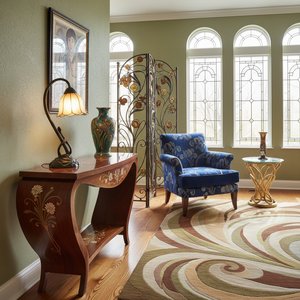
Art Nouveau: De 10 Mesterværker der Definerede Stilen – Kunst og Indretning
Oplev Art Nouveau's 10 mest ikoniske værker! Fra Mucha til Klimt – dyk ned i jugendstilens symbolisme, organiske former og farver. Find inspiration & køb kunst online hos OriginalUniqueArt.com. Udforsk samlingen nu!

The Elegance of Art Nouveau: Embracing Nature's Fluid Beauty and the Belle Époque Spirit
Discover the enchanting world of Art Nouveau. Explore the organic beauty, flowing lines, and Belle Époque elegance that defined an era of unparalleled craftsmanship and natural inspiration.

Echoes of a Turning Tide: Artistic Responses to 1912 – A Year of Transformation
Explore the pivotal artistic responses to 1912 – a year of transformation! Discover Cubism, Fauvism, Art Nouveau & more with expert analysis and stunning reproductions at OriginalUniqueArt.

The Flowing Line & Flourishing Form: Exploring Art Nouveau's Aesthetic Legacy
Explore the captivating world of Art Nouveau! Discover its origins, key artists like Horta & Mucha, regional styles, innovative techniques, and lasting influence on architecture & design. A comprehensive guide for art enthusiasts.
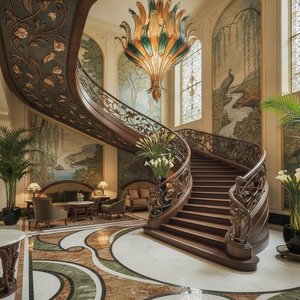
Art Nouveau Guide: Integrating Elegant Curves and Organic Design into Luxury Hotel Interiors
Master Art Nouveau integration for luxury hotel interiors. Discover expert strategies for utilizing organic curves, whiplash lines, and botanical motifs to create sophisticated, high-end hospitality spaces with scalable, professional art procurement solutions.