
 Se i fuld skala
 Del
Del Del
Del
 Detaljer

 Download
 Lignende værker
 Røntgenundersøgelse
 Diasshow
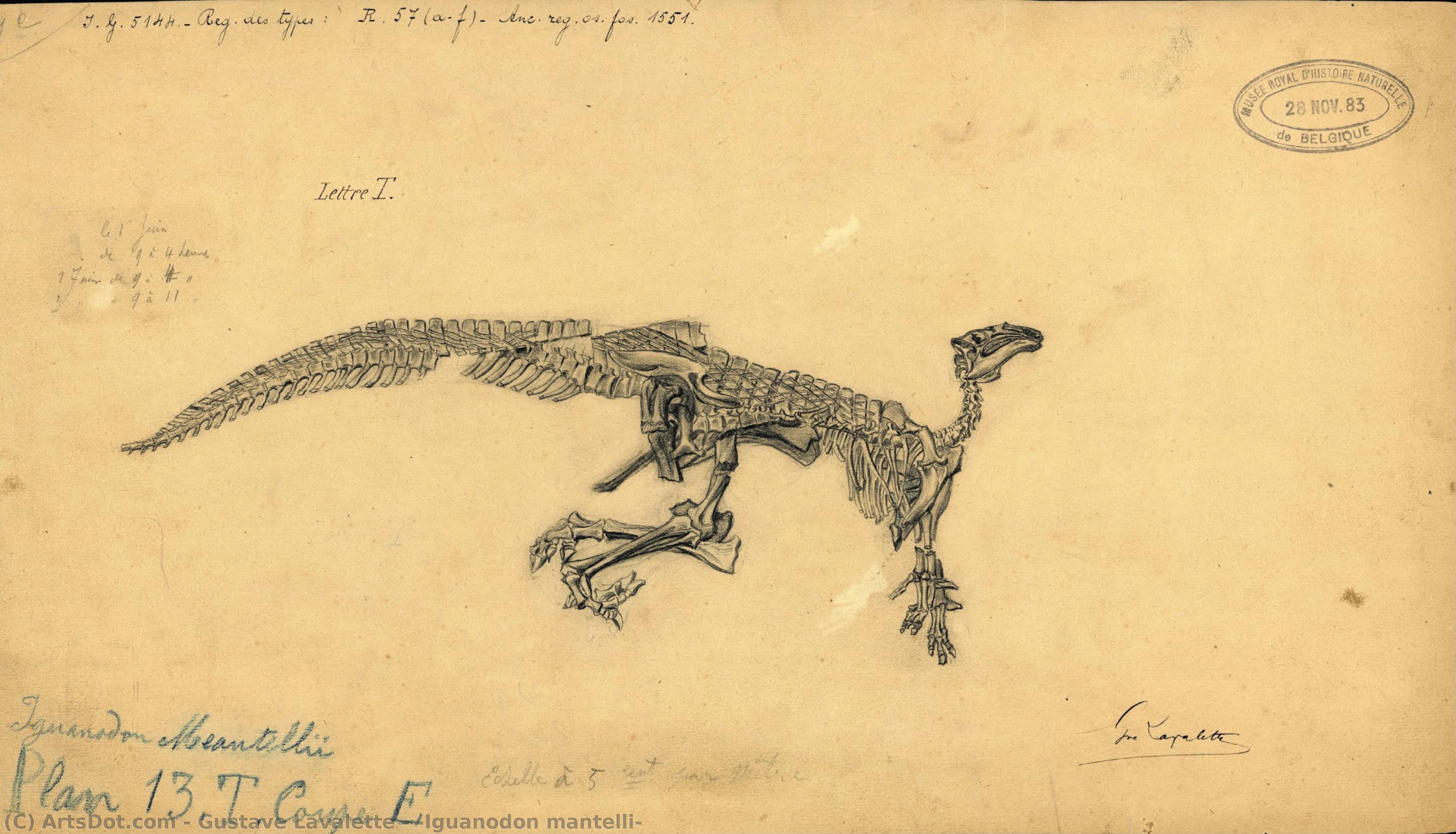
“Iguanodon mantelli”


 Se mere
Håndlavet oliereproduktion
Håndmalet olie på lærred i din valgte størrelse og ramme, udført efter bestilling af vores kunstnere. ( Køb print Køb billede)




































Vælg mellem vores forudindstillede størrelser, der matcher kunstværkets originale proportioner.

Du kan indtaste dine egne mål for at passe til en bestemt ramme eller plads. Hvis den valgte størrelse ikke stemmer overens med det originale billedes proportioner, vil vi enten beskære kunstværket eller udvide maleriet med yderligere håndmalede elementer. En digital skitse sendes til din godkendelse, før produktionen påbegyndes.
Bemærk venligst, at forhåndsvisningen på skærmen ikke afspejler den faktiske beskæring eller udvidelse. Kun skitsen vil nøjagtigt vise den endelige komposition.
Selvom specialmål er mulige, anbefaler vi at vælge en dimension fra den foruddefinerede liste for at bevare de originale proportioner.
Efter bestilling vil OriginalUniqueArt.com team sende en e-mail til kunden for at få instruktioner og levere et udkast til en skitse.
Levering i hele verden () på 3/4 uger i stedet for de standard 5 uger. (13 august). Ingen kompromiser med kvaliteten.

Gratis ekspresforsendelse til hele verden

Lærred af linned i høj kvalitet

Fuld transportforsikring

Garanti for refusion af told og importafgifter

Garanti for præcis farvegengivelse

60 dages returret (kun ved fabrikationsfejl)

100% Tilfredshedsgaranti

Mængderabat tilgængelig
 Glasmulighed er kun tilgængelig i størrelser under 110 cm

“Iguanodon mantelli”
Reproduktionsmetode
Størrelse på reproduktion
-


Samlet pris
$ 300
Kunstnerens biografi
Gustave Lavalette: A Pioneer of Paleontological Illustration
Born in Bernissart, Belgium, in 1883, Gustave Lavalette’s life was inextricably linked to the extraordinary discovery that would define his career and cement his place as a pivotal figure in both paleontology and artistic illustration. From an early age, Lavalette was immersed in the world of art, nurtured by a family deeply rooted in its practice. This familial encouragement, coupled with a burgeoning fascination with natural history – specifically, the burgeoning field of dinosaur research – laid the foundation for his unique contribution to scientific understanding. His journey began not within formal academic settings, but through self-directed study and an intense engagement with the geological wonders surrounding his hometown.
Lavalette’s early career was shaped by a rigorous apprenticeship at the Institute of Natural Sciences in Brussels. This institution provided him with invaluable training in both paleontology and artistic technique. It was here that he honed his observational skills, developing an unparalleled ability to meticulously document the skeletal remains unearthed from the coal mines of Bernissart – a region renowned for its remarkably preserved dinosaur fossils. Crucially, Lavalette wasn’t simply sketching; he was striving to capture not just the external form of these ancient creatures but also, through careful study and deduction, their posture, movement, and even what researchers hypothesized about their behavior.
The Iguanodon Discoveries of Bernissart
The year 1878 marked a watershed moment in paleontological history – the astonishing discovery of thirty nearly complete *Iguanodon* skeletons within the coal mines of Bernissart. This remarkable find, largely due to the persistent efforts of miners like Gustave Arnaut, immediately captivated the scientific community and the public alike. Lavalette’s role was paramount: he was tasked with creating detailed illustrations of these newly unearthed giants. His work wasn't merely decorative; it was a vital tool for paleontologists attempting to reconstruct the dinosaurs’ anatomy and understand their place in prehistoric ecosystems.
The process itself was painstaking. The fossils, embedded within layers of clay and pyrite (often mistakenly referred to as ‘fool’s gold’), presented significant challenges. Lavalette meticulously documented each bone, painstakingly removing the encrustations and creating incredibly detailed drawings that captured every nuance of form and texture. His illustrations weren't based on guesswork; they were informed by careful measurements, comparative anatomy, and a deep understanding of geological context. The resulting images – works like “Lettre R” and “Lettre A,” depicting *Iguanodon bernissartensis* – became essential reference materials for scientists around the world.
Technique and Style
Lavalette’s artistic style is characterized by an extraordinary level of detail and a remarkable ability to convey both scientific accuracy and a sense of life. His drawings are rendered in grayscale pencil, emphasizing form and texture through subtle variations in shading. He employed a meticulous approach, often working from multiple angles and using cross-hatching techniques to create depth and volume. His illustrations aren’t romanticized depictions; they are rigorously scientific studies, reflecting the precision and objectivity demanded by his task.
What distinguishes Lavalette's work is not simply technical skill but a profound respect for the subject matter. He approached each dinosaur skeleton with an almost reverent attitude, striving to honor the creatures he was documenting. His drawings possess a quiet dignity, conveying both the grandeur of these extinct giants and the painstaking effort required to understand them.
Legacy and Recognition
Lavalette’s contributions extended far beyond his individual illustrations. His work played a crucial role in shaping our understanding of *Iguanodon* anatomy and behavior. His detailed drawings provided invaluable insights for paleontologists, influencing subsequent research and reconstructions. His images have been exhibited extensively, including at the Musée Maurice Denis in France and the Musée Antoine Lecuyer, solidifying his reputation as a leading figure in paleontology art.
Today, Gustave Lavalette’s legacy continues to inspire artists and scientists alike. His meticulous illustrations serve as a testament to the power of observation, scientific rigor, and artistic skill. His work remains an integral part of the history of paleontology, offering a unique window into a world long vanished – a world brought vividly to life through the skillful hand of one dedicated artist.
To learn more about Gustave Lavalette’s work and other notable artists, visit https://OriginalUniqueArt.com/@/gustave-lavalette or explore the Musée Maurice Denis (France) and Musée Antoine Lecuyer (France).

Gustave Lavalette
1883 - , Belgium
Kort om kunstneren
- Artistic Movement Or Style: Paleontological illustration
- Date Of Birth: 1883
- Date Of Death: Living
- Full Name: Gustave Lavalette
- Nationality: Belgian
- Notable Artworks:
- Iguanodon bernissartensis ‘Lettre r’
- Iguanodon mantelli
- Iguanodon bernissartensis ‘Lettre a’
- Place Of Birth: Bernissart, Belgium

