Se i rummet
 Send
Send Del
Del
 Detaljer
 Studieguide til kunstværker

 Download
 Lignende værker
 Røntgenundersøgelse
 Se diasshow
 Statistik
Poachers in the Snow
 Oil On Canvas
- WallArt
- Realism
 1867
1867- 19th Century
 65.0 x 81.0 cm
 Musée des Beaux-Arts
 Læs mere
Giclée / Kunsttryk
Giclée- eller lærredstryk i museumskvalitet med hurtig produktion og fleksible muligheder for finish. ( Bestil håndmalet reproduktion Skift til digitalt billede)




P118B $10

P118H $10

P118W $10

P438Z $10

P508JH $12

P508YH $12

P805H $10

P805Z $10

P919BZ $10

P919G $10

P919XJ $10

P959ZH $10

P968JZ $12

W106C $8

W218G $10

W218JH $8

W218Y $10

W307PJ $10

W316G $10

W316PJ $8

W316Y $10

W398PJ $8

W4111J $10

W500HY $15

W500JH $15

W692G $12

W849H $8

W940BG $15

W953PJ $8




Vælg mellem vores forudindstillede størrelser, der matcher kunstværkets originale proportioner.

Du kan indtaste dine egne mål for at passe til en specifik ramme eller et bestemt område. Hvis den valgte størrelse ikke stemmer overens med det originale billedes proportioner, vil vi enten beskære kunstværket eller udvide billedet med en spejlet eller ensfarvet kant. En digital mockup vil blive sendt til din godkendelse, før produktionen påbegyndes.
Bemærk venligst, at forhåndsvisningen på skærmen ikke afspejler den faktiske beskæring eller udvidelse. Kun mockuppen vil nøjagtigt vise den endelige komposition.
Selvom specialmål er tilgængelige, anbefaler vi at vælge et mål fra den foruddefinerede liste for at bevare de originale proportioner.
Verdensomspændende levering () på 2 uger i stedet for de sædvanlige 4/5 uger. (27 september)

Gratis ekspresforsendelse til hele verden

Lærred af linned i høj kvalitet

Komplet transportforsikring

Garanti for refusion af told og importafgifter

Garanti for autentisk farvegengivelse

100 dages returret ved fabrikationsfejl

100% fuld returret

Mængderabat ved flere køb
 Glasmulighed er kun tilgængelig i størrelser under 110 cm

Poachers in the Snow
Giclée / Kunsttryk
Reproduktionsstørrelse
-


Samlet pris
$ 81
A Stark Winter Tableau: Gustave Courbet’s “Poachers in the Snow”
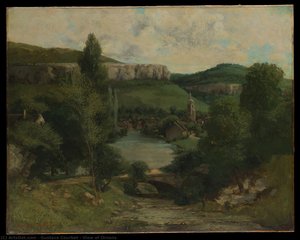
Gustave Courbet's "Poachers in the Snow," painted in 1867, isn’t merely a depiction of a winter scene; it’s a profound statement about humanity’s relationship with nature and the realities of rural life. This oil-on-canvas masterpiece, now housed within the Musée des Beaux-Arts et d’archéologie de Besançon, France, stands as a cornerstone of the Realist movement, demanding viewers confront the often uncomfortable truths of everyday existence without romantic glossing. Measuring 65 x 81 cm, the painting immediately draws the eye with its muted palette – predominantly whites and browns – mirroring the harshness and unforgiving beauty of a snow-laden landscape. Yet, within this seemingly simple composition lies a complex narrative woven through careful observation and deliberate artistic choices. The scene unfolds with two figures, clad in heavy coats and hats, trudging purposefully through the deep snow. Their postures suggest both weariness and determination, hinting at the difficult labor involved in their pursuit. The man on the left, leading a dog, embodies a cautious approach, while his companion, wielding a stick, exudes a more assertive energy – a clear indication of the illicit activity taking place. Courbet masterfully utilizes light and shadow to create a sense of depth and atmosphere, emphasizing the cold, biting wind that whips across the snow-covered ground. The dogs themselves are integral to the composition, not merely accessories but active participants in this stark drama, their presence adding a layer of companionship amidst the isolation of the scene. The background landscape—a blurred expanse of trees and distant hills—further reinforces the sense of vastness and solitude, underscoring the vulnerability of these figures against the raw power of nature. Courbet’s commitment to Realism is evident in every brushstroke. He eschewed idealized forms and vibrant colors, opting instead for a direct, unvarnished portrayal of reality. The loose application of paint, characteristic of his style, lends a sense of immediacy and spontaneity to the scene, as if captured in a fleeting moment. This deliberate rejection of academic conventions was revolutionary at the time, challenging the prevailing artistic norms that prioritized beauty and grandeur over truth and authenticity. The painting’s subject matter—poaching—was itself controversial, reflecting the social tensions and economic hardships prevalent in rural France during the 19th century. Courbet's choice to depict this illicit activity head-on was a bold statement about his commitment to portraying the lives of ordinary people, regardless of their moral standing. Beyond its immediate subject matter, “Poachers in the Snow” carries significant symbolic weight. The winter landscape can be interpreted as a metaphor for the harsh realities of life—the struggle for survival, the isolation of rural existence, and the conflict between humanity and nature. The figures themselves represent the complexities of human behavior – ambition, desperation, and perhaps even a degree of moral ambiguity. Courbet doesn’t offer judgment; he simply presents the scene as it is, inviting viewers to contemplate its implications. The painting's enduring power lies in its ability to evoke a sense of both melancholy and resilience, reminding us of our shared humanity and our connection to the natural world. It’s a testament to Courbet’s genius that this seemingly straightforward depiction continues to resonate with audiences today, prompting reflection on timeless themes of survival, morality, and the human condition.The Artist's Context: Gustave Courbet and the Rise of Realism
To fully appreciate “Poachers in the Snow,” it’s essential to understand the broader context within which Gustave Courbet was working – the rise of Realism in 19th-century France. Born in Ornans, France, in 1819, Courbet initially trained at the École des Beaux-Arts in Paris, but quickly grew disillusioned with the rigid conventions and idealized subjects favored by the Academy. He rejected the romanticism and historical narratives that dominated the Salon system, instead seeking to depict the world as he saw it – truthfully and without embellishment. Courbet’s artistic development was profoundly influenced by artists like Eugène Delacroix and Théodore Géricault, but he ultimately distanced himself from their Romantic ideals, prioritizing direct observation and a commitment to portraying everyday life. His early works explored landscapes and portraits, gradually shifting towards scenes of rural labor and the lives of working-class individuals. This shift was driven by a desire to break free from the constraints of academic art and to create paintings that reflected the realities of contemporary society. Courbet’s decision to paint subjects considered “unworthy” of artistic attention—such as peasants, laborers, and even criminals—was a deliberate act of rebellion against the established order. The painting "Poachers in the Snow" exemplifies this commitment to Realism. It's not a heroic depiction of hunters; it’s a stark portrayal of individuals engaged in an illegal activity, stripped of any romantic or idealized qualities. Courbet’s focus on detail—the texture of the snow, the weariness of the figures’ faces, the ruggedness of the landscape—creates a powerful sense of immediacy and authenticity. His rejection of traditional artistic techniques—such as smooth brushstrokes and carefully composed backgrounds—further emphasizes his commitment to portraying reality in its rawest form. Courbet's work was often met with criticism and controversy during his lifetime. Many critics dismissed his paintings as crude, vulgar, or lacking in aesthetic merit. However, he remained steadfast in his artistic vision, continuing to produce works that challenged the conventions of the art world and paved the way for future generations of artists. His influence on modern art is undeniable, establishing Realism as a dominant movement and inspiring countless artists to embrace direct observation and social commentary in their work.Technical Details & Artistic Techniques
The execution of “Poachers in the Snow” reveals Courbet’s mastery of oil painting techniques and his meticulous attention to detail. The canvas measures 65 x 81 cm, providing ample space for the artist to capture the vastness of the winter landscape and the physicality of the figures. Courbet employed a technique known as *alla prima*, meaning “at first sight,” which involved completing the painting in a single session without extensive underpainting or sketching. This approach resulted in a sense of spontaneity and immediacy, capturing the fleeting effects of light and shadow with remarkable precision. The color palette is deliberately muted—dominated by shades of white, brown, and gray—to evoke the cold, bleak atmosphere of the winter scene. Courbet skillfully used *chiaroscuro*, the contrast between light and dark, to create a sense of depth and volume, emphasizing the figures’ forms and the texture of the snow-covered ground. The brushstrokes are loose and expressive, contributing to the painting's overall sense of realism and immediacy. Courbet’s technique is characterized by a directness and honesty that reflects his commitment to portraying reality without idealization or embellishment. The composition itself is carefully constructed, with the two figures positioned diagonally across the canvas to create a dynamic and engaging visual arrangement. The use of perspective—particularly in the depiction of the distant hills—adds depth and realism to the scene. Courbet’s attention to detail extends beyond the main subjects to include subtle elements such as the texture of the snow, the folds of the figures’ clothing, and the reflections of light on the ground. These small details contribute significantly to the painting's overall sense of authenticity and immediacy. The artist’s ability to capture these nuances demonstrates his exceptional skill and his unwavering commitment to portraying reality with remarkable accuracy.A Legacy of Realism: Courbet and Beyond
“Poachers in the Snow” stands as a pivotal work in Gustave Courbet’s oeuvre and a defining example of the Realist movement. Its impact extended far beyond its immediate context, influencing generations of artists who followed. Courbet's rejection of academic conventions and his commitment to portraying everyday life without romanticization paved the way for future movements such as Impressionism and Social Realism. Artists like Jean-François Millet, Édouard Manet, and Honoré Daumier were deeply influenced by Courbet’s work, adopting his techniques and exploring similar themes of rural labor and social injustice. Manet's "Le Déjeuner sur l'herbe" (1863), for example, challenged traditional notions of beauty and morality, mirroring Courbet’s own rebellious spirit. Furthermore, Courbet’s legacy extends beyond the realm of painting. His commitment to depicting reality in its rawest form influenced other art forms, including photography and sculpture. The rise of Realism as a dominant movement in 19th-century France marked a significant shift in the history of art, challenging established conventions and opening up new possibilities for artistic expression. For those interested in exploring more of Courbet’s works or delving deeper into the world of Realist art, we recommend visiting the Musée des Beaux-Arts et d’archéologie de Besançon, France, where “Poachers in the Snow” is proudly displayed. Additionally, examining the work of Eugène-Louis Decisy, another prominent figure in the Realist movement, offers a valuable perspective on the diverse range of artistic approaches within this influential movement.Om kunstneren
En oprørers pensel: Livet og eftermælet efter Gustave Courbet
Født i den stille franske landsby Ornans i 1819, trådte Jean Désiré Gustave Courbet frem som en trodsig kraft mod sin tids etablerede kunstneriske normer. Hans historie er ikke blot en fortælling om maling og lærred; det er en beretning vævet sammen af sociale kommentarer, politisk overbevisning og en urokkelig dedikation til at skildre verden præcis, som han så den – uidealiseret, rå og dybt virkelighedsnær. Da han voksede op i en relativt velstående borgerlig familie, modtog Courbet opmuntring fra sin mor til at forfølge sine kunstneriske lyster, en næring der i sidste ende skulle antænde en revolution i kunstverdenen. Hans formelle uddannelse begyndte ved École des Beaux-Arts i Paris i 1839, men han fandt hurtigt sig selv i kamp med de akademiske konventioner og den romantiske idealisme, der herskede dér. Selvom han anerkendte indflydelser fra mestre som Eugène Delacroix og Théodore Géricault, banede Courbet sin egen vej – en vej, der prioriterede observation over fantasi og sandhed over tradition.Realismens fødsel: En udfordring af kunstneriske konventioner
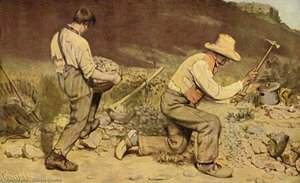
Courbets kunstneriske udvikling var præget af en bevidst afvisning af de herskende æstetiske standarder. Han var ikke interesseret i mytologiske fortællinger eller heroiske allegorier; hans blik var rettet mod det daglige liv hos almindelige mennesker, især dem, der levede et liv præget af hårdt arbejde og landlig eksistens. Denne forpligtelse til at skildre verden uden forskønnelse – det, der senere blev kendt som Realisme – mødte i begyndelsen foragt og hån fra kritikere, der var vant til mere polerede og idealiserede fremstillinger. Hans tidlige værker udforskede landskaber og portrætter, men skiftede hurtigt mod scener fra arbejderklassens liv, udført i en monumental skala, som traditionelt var forbeholdt historiske eller religiøse malerier. Dette bevidste valg var ikke blot stilistisk; det var et udsagn om den iboende værdighed og betydning af disse ofte oversete motiver. Stenknuserne, færdiggjort i 1849, men tragisk ødelagt under Anden Verdenskrig, eksemplificerede denne tilgang – en rå skildring af to arbejdere i hårdt slid, hvis ansigter er skjult af udmattelse og nød. Dette maleri, sammen med andre som Begravelse i Ornans (1850), udfordrede selve definitionen af, hvad der udgjorde et "værdigt" motiv for den høje kunst.Hovedværker og kunstnerisk filosofi
Begravelse i Ornans, et kolossalt lærred, der skildrer en provinsiel begravelse, vakte stor opsigt, da det blev udstillet i 1850-51. Værkets enorme størrelse – som normalt var forbeholdt storslåede historiemalerier – kombineret med dets urokkelige realisme og mangel på følelsesmæssig idealisering, chokerede publikum. Courbet portrætterede ikke de sørgende som noble eller dybt fortvivlede skikkelser; han præsenterede dem som almindelige mennesker, hvis ansigter var præget af en blanding af sorg, kedsomhed og resignation. Denne ærlighed var revolutionær. Hans kunstneriske filosofi strakte sig ud over motivvalget til også at omfatte teknikken. Han foretrak en direkte impasto-stil – hvor malingen påføres tykt på lærredet – hvilket understregede selve mediets materialitet. Malernes atelier (1855), et allegorisk værk, der afspejler hans kunstneriske overbevisninger og engagement i samtidens sociale spørgsmål, cementerede yderligere hans ry som en provokerende og uafhængig kunstner. Hans deltagelse i Salon des Refusés i 1863 – en udstilling af værker, der var blevet afvist af den officielle Salon – fastslog hans status som rebel og forkæmper for kunstnerisk frihed. Selv landskaber som Udsigt fra Fontainebleau-skoven (1855) var gennemsyret af en følelse af realisme, der indfangede skovens naturlige skønhed uden at romantisere den.Eftermæle og historisk betydning
Gustave Courbets indflydelse på efterfølgende kunstbevægelser er ubestridelig. Selvom han hentede inspiration fra tidligere mestre som Caravaggio for deres dramatiske realisme og brug af lys og skygge, rakte hans betydning langt ud over ren imitation. Han påvirkede impressionisterne og postimpressionisterne dybt ved at befri dem fra de traditionelle repræsentations begrænsninger og opmuntre dem til at udforske nye måder at se og skildre verden på. Hans fokus på social kommentar banede vejen for senere socialt engagerede kunstnere, der brugte deres arbejde som en platform for politisk aktivisme. Courbet var ikke blot en maler; han var en højlydt fortaler for kunstnerisk frihed og politisk forandring, og han deltog aktivt i de turbulente begivenheder i sin tid, herunder Pariserkommunen i 1871 – en involvering, der førte til en periode i eksil i Schweiz. Han døde i 1877 og efterlod sig et værk, der fortsat inspirerer og provokerer publikum den dag i dag.- Pioner inden for realismen
- Udfordrede akademiske konventioner
- Påvirkede impressionismen og postimpressionismen
- Forkæmper for kunstnerisk frihed

Gustave Courbet
1819 - 1877 , Frankrig
Hurtige fakta
- Artistic Movement Or Style: Realisme
- Artists Or Movements Influenced By This Artist:
- Impressionisme
- Postimpressionisme
- Artists Who Influenced This Artist:
- Eugène Delacroix
- Théodore Géricault
- Caravaggio
- Date Of Birth: 10 juni 1819
- Date Of Death: 31 december 1877
- Full Name: Gustave Courbet
- Nationality: Fransk
- Notable Artworks:
- La stenbrodre
- Begravelse ved Ornans
- Malerens atelier
- Place Of Birth: Orléans, Frankrig
Relaterede artikler

Evocations of Place: A Historical Journey Through Landscape Art
Explore the rich history of landscape art with OriginalUniqueArt. Discover renowned artists, movements like Impressionism & Romanticism, and expert guidance for collecting timeless pieces. Find your perfect serene escape today!

Romantikkens Landskaber: Top 10 Malerier der Definerede En Æra | OriginalUniqueArt
Oplev romantikkens storhedstid! Dyk ned i top 10 landskabsmalerier af Caspar David Friedrich, Turner & Constable. Historiske fortællinger og museumskvalitets reproduktioner på OriginalUniqueArt.com – find din inspiration til væggen her!

Romantic Realism's Finest: 10 Masterpieces for Your Home | OriginalUniqueArt
Explore 10 defining masterpieces of Romantic Realism! Discover Courbet, Millet & Daumier's powerful paintings—capturing emotion and social realities. Find museum-quality reproductions for your home at OriginalUniqueArt.com.
Realismens Mestre: Top 10 Kunstværker der Ændrede Kunsten | OriginalUniqueArt.dk
Oplev realismens 10 største kunstværker! Fra Courbet til Millet – udforsk historierne bag ikoniske malerier, teknikker og farver. Find museumskvalitets reproduktioner & inspiration til dit hjem på OriginalUniqueArt.com.
Sneens Mestre: Top 10 Berømte Malerier i Hvide Nuancer – Kunst til Dit Hjem
Oplev sneens magi i 10 ikoniske malerier! Fra Monet til Munch – udforsk historierne bag berømte værker, teknikker og kunstnernes vision. Find inspiration til dit hjem med museumskvalitets reproduktioner på OriginalUniqueArt.com