Se i rummet
 Send
Send Del
Del
 Detaljer
 Studieguide til kunstværker

 Download
 Lignende værker
 Røntgenundersøgelse
 Se diasshow
 Statistik
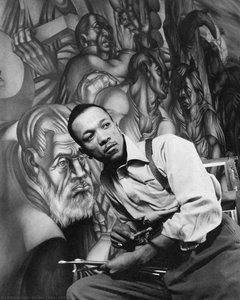
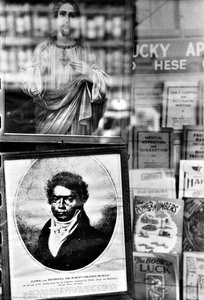
Untitled, Harlem, New York
 Acrylic On Canvas
- WallArt
- Documentary Photography
 1948
1948- 19th Century
 27.0 x 34.0 cm
 The Gordon Parks Foundation
 Læs mere
Kunstværket vist på denne side er beskyttet af ophavsretsloven, hvilket betyder, at vi ikke lovligt kan skabe eller sælge en identisk reproduktion. Denne beskyttelse håndhæves i henhold til internationale aftaler som f.eks. den Bernerkonventionen og af nationale love, herunder de bestemmelser, der er fastlagt i Amerikansk ophavsretslov - Titel 17.
Denne metode overholder fuldt ud ophavsretsreglerne, da den ikke indebærer kopiering eller duplikering af det beskyttede kunstværk. I stedet er der tale om en kreativ nytolkning – et nyt maleri, som er inspireret af det oprindelige, men ikke identisk med det.
Giclée / Kunsttryk
Giclée- eller lærredstryk i museumskvalitet med hurtig produktion og fleksible muligheder for finish. ( Bestil håndmalet reproduktion Skift til digitalt billede)




P118B Dkr10

P118H Dkr10

P118W Dkr10

P438Z Dkr10

P508JH Dkr12

P508YH Dkr12

P805H Dkr10

P805Z Dkr10

P919BZ Dkr10

P919G Dkr10

P919XJ Dkr10

P959ZH Dkr10

P968JZ Dkr12

W106C Dkr8

W218G Dkr10

W218JH Dkr8

W218Y Dkr10

W307PJ Dkr10

W316G Dkr10

W316PJ Dkr8

W316Y Dkr10

W398PJ Dkr8

W4111J Dkr10

W500HY Dkr15

W500JH Dkr15

W692G Dkr12

W849H Dkr8

W940BG Dkr15

W953PJ Dkr8




Vælg mellem vores forudindstillede størrelser, der matcher kunstværkets originale proportioner.

Indtast den bredde og højde, du har brug for, så det passer til din ramme eller din væg. Et print kan kun beskæres, aldrig gøres større end billedet, så en størrelse med en anden form vil miste en del af motivet. Vi sender dig en digital mockup til godkendelse, før vi printer noget. Billedet vist på denne side viser ikke den faktiske beskæring — det er kun mockuppen, der gør.
Verdensomspændende levering () på 2 uger i stedet for de sædvanlige 4/5 uger. (25 oktober)

Gratis ekspresforsendelse til hele verden

Lærred af linned i høj kvalitet

Komplet transportforsikring

Garanti for refusion af told og importafgifter

Garanti for autentisk farvegengivelse

100 dages returret ved fabrikationsfejl

100% fuld returret

Mængderabat ved flere køb
 Glasmulighed er kun tilgængelig i størrelser under 110 cm

Untitled, Harlem, New York
Giclée / Kunsttryk
Reproduktionsstørrelse
-


Samlet pris
Dkr 531
A Quiet Moment in Harlem: Gordon Parks’ “Untitled, Harlem, New York”
Gordon Parks' "Untitled, Harlem, New York," captured in 1948, isn’t merely a photograph; it’s a distilled essence of a specific time and place – the burgeoning heart of Harlem during the mid-20th century. This black and white image transcends its simple subject matter to become a poignant meditation on everyday life, social observation, and the quiet dignity of ordinary people. The photograph offers a rare glimpse into a domestic scene, likely a kitchen, where two Black men are engaged in what appears to be a commonplace activity: one holding a plate close to his face, seemingly lost in thought. Yet, within this unassuming tableau lies a powerful undercurrent of emotion and a subtle tension that draws the viewer in.
Parks’ approach is deeply rooted in documentary photography and photojournalism, a style he honed during his work for Life magazine. He wasn't interested in grand narratives or heroic figures; instead, he sought to capture authentic moments, revealing the complexities of African American life often overlooked by mainstream media. The photograph embodies this commitment, presenting a raw and unvarnished portrayal of two men within their environment. It’s a deliberate departure from idealized representations, offering a starkly honest depiction of daily existence.
Composition and Technique: A Masterclass in Light and Shadow
The composition is remarkably controlled despite its seemingly casual nature. The framing—a rectangular space dominated by the kitchen interior—creates a sense of intimacy while simultaneously emphasizing the subjects’ isolation. The placement of the men, slightly off-center, immediately establishes visual interest and directs the viewer's eye. Strong vertical lines, courtesy of the cabinets and window frame, provide structure to the image, anchoring the scene against the backdrop of the kitchen. Diagonal lines, subtly introduced through the arrangement of objects and the men’s postures, add a dynamic element, preventing the photograph from feeling static.
Parks' masterful use of light is crucial to the photograph’s impact. The lighting appears natural or diffused, casting soft shadows that define forms and textures with remarkable detail. This chiaroscuro effect—the dramatic contrast between light and dark—heightens the sense of drama and adds depth to the scene. Notice how the graininess typical of black-and-white film contributes to a vintage feel, grounding the image in its historical context. The photograph’s technical execution speaks volumes about Parks' skill as a photographer; he expertly manipulated the medium to convey his artistic vision.
Symbolism and Emotional Resonance
The central figure holding the plate close to his face is arguably the most compelling element of the image. It’s difficult to decipher his expression, but the gesture—a deliberate act of focusing on a single object—suggests introspection, perhaps even frustration or defiance. This simple action becomes laden with symbolic weight, inviting viewers to project their own interpretations onto the scene. The other man in the background, partially obscured, adds another layer of complexity, hinting at a shared experience or unspoken connection.
Beyond this immediate interpretation, “Untitled, Harlem, New York” speaks to broader themes of identity, community, and the realities of life within segregated America. It’s a testament to Parks' ability to capture not just visual details but also the emotional atmosphere of his subjects’ lives. The photograph evokes feelings of quiet contemplation, a sense of shared humanity, and a subtle awareness of social inequalities.
Historical Context and Legacy
Created in 1948, this photograph is part of a larger body of work by Gordon Parks that documented the experiences of African Americans during a pivotal era in American history. His early photographs for Life magazine, often depicting poverty and hardship, were groundbreaking for their unflinching honesty and their commitment to representing marginalized communities. “Untitled, Harlem, New York” exemplifies this approach, offering a glimpse into the everyday lives of residents of Harlem—a neighborhood known for its rich cultural heritage but also for facing significant challenges.
Parks’ work continues to resonate today, influencing generations of photographers and artists. His ability to capture authentic moments with sensitivity and insight remains remarkably relevant. Reproductions of “Untitled, Harlem, New York” are highly sought after by collectors and interior designers alike, valued not only for their aesthetic qualities but also for their historical significance and their powerful emotional impact. It stands as a timeless reminder of the beauty and complexity found in ordinary lives.
Spørgsmål & svar
Befinder "Untitled, Harlem, New York" sig i kunstnerens hjemland?
Ja – kunstværket opbevares i kunstnerens hjemland. "Untitled, Harlem, New York" findes i USA, mens Gordon Parks blev født i USA.
Hvordan forenes kontrast og harmoni i "Untitled, Harlem, New York"?
Farveanalysen af "Untitled, Harlem, New York" af Gordon Parks registrerer en Statement kontrast og en Softly Mixed Palette harmoni.
Hvor bør en reproduktion af "Untitled, Harlem, New York" af Gordon Parks hænges op?
Format (Square) og anbefalet rum (Living Room) er de to placeringsoplysninger, der er registreret for "Untitled, Harlem, New York" af Gordon Parks.
Om kunstneren
Gordon Parks: Et Liv i Billeder og Film
Gordon Roger Alexander Buchanan Parks, født den 30. november 1912 i Fort Scott, Kansas, var mere end blot en fotograf; han var en visuel historiefortæller, en musikalsk sjæl og en banebrydende filminstruktør. Hans liv var en rejse fra de segregerede landområder i Kansas til verdens mest prestigefyldte magasiner og filmstudier, en rejse der afspejlede den amerikanske oplevelse for afroamerikanere i det 20. århundrede. Parks’ tidlige år var præget af den dybe uretfærdighed ved segregationen, en virkelighed han senere ville dokumentere med en usædvanlig skarphed og empati. Han lærte sig selv fotografi, et talent der hurtigt blev tydeligt, og som skulle blive hans primære middel til at udtrykke sin vision for verden. Hans evne til at fange menneskelige øjeblikke med en blanding af styrke og sårbarhed var bemærkelsesværdig, og det var denne evne, der åbnede døre til en karriere, der ville ændre landskabet for både fotografi og film.Fra Stillbilleder til Bevægelige Billeder: En Karrieres Udvikling
Parks’ gennembrud kom med hans arbejde for *Life* Magazine og *Vogue*, hvor han blev den første afroamerikanske fotograf. Han dokumenterede livet i Amerika med en ærlighed og autenticitet, der var revolutionerende. Hans billeder af fattigdom, racisme og social ulighed rørte ved nationens samvittighed og tvang mange til at konfrontere de hårde realiteter, som mange forsøgte at ignorere. Han fik et ry for sin evne til at skabe portrætter, der ikke blot afspejlede en persons udseende, men også deres indre liv – deres håb, frygt og drømme. Hans ikoniske fotografier af Malcolm X, Muhammad Ali og Barbra Streisand er vidnesbyrd om hans talent for at fange essensen af sine emner. Men Parks var ikke kun en stillfotograf; han havde også en brændende ambition om at fortælle historier gennem bevægelige billeder."Shaft" og "The Learning Tree": Filmisk Banebrydning
Parks’ overgang til film blev markeret af to bemærkelsesværdige værker: *The Learning Tree* (1969) og *Shaft* (1971). *The Learning Tree*, en semiautobiografisk fortælling om hans barndom i Kansas, var den første film instrueret af en afroamerikaner for et stort filmselskab, Warner Brothers. Den modtog ros for sin ærlige skildring af livet i det segregerede Amerika og Parks’ evne til at formidle komplekse følelser med subtilitet og nuance. *Shaft*, derimod, var en helt anden oplevelse – en actionfilm, der definerede genren "blaxploitation" og blev et kulturelt fænomen. Filmen, med dens stilfulde billeder og blændende soundtrack, cementerede Parks’ status som en innovativ filminstruktør, der ikke var bange for at udfordre konventionerne.Arv og Indflydelse: En Inspirationskilde
Gordon Parks døde i 2006, men hans arv lever videre. Han banede vejen for generationer af afroamerikanske kunstnere inden for fotografi, film og musik. Hans arbejde er udstillet på museer over hele verden, herunder Museum of Modern Art (MoMA) i New York, og hans billeder fortsætter med at inspirere og provokere til eftertanke. Parks’ evne til at kombinere kunstnerisk vision med social bevidsthed gjorde ham til en unik stemme i det 20. århundredes amerikanske kulturlandskab. Han var mere end blot en fotograf eller filminstruktør; han var et vidnesbyrd om den menneskelige ånds styrke og evnen til at skabe skønhed selv under de sværeste forhold. Hans bidrag til kunsten er ubestridelige, og hans historie vil fortsætte med at inspirere kommende generationer af kunstnere til at bruge deres talent til at gøre en forskel i verden.Vigtige Værker
- Emerging Man (Gelatin Silver Print): Et ikonisk billede, der fanger ungdommens energi og potentiale.
- Shaft (1971): En banebrydende film, der definerede "blaxploitation"-genren.
- The Learning Tree (1969): En semiautobiografisk fortælling om Parks’ barndom i Kansas.

Gordon Parks
1912 - 2006 , USA
Hurtige fakta
- Bemærkelsesværdige Værker:
- Shaft (1971)
- The Learning Tree (1969)
- Emerging Man
- Harlem Gang Wars
- Night Rumble
- Dødsdato: 7. marts 2006
- Fuldt Navn: Gordon Roger Alexander Buchanan Parks
- Fødested: Fort Scott, USA
- Fødselsdato: 30. november 1912
- Kunstnere Eller Bevægelser Påvirket Af Ham: ['Afrikansk-amerikanske kunstnere']
- Kunstnerisk Stil: Fotojournalisme, Socialrealisme
- Nationalitet: Amerikansk
Relaterede artikler
Gordon Parks: A Poetic Lens on American Life – Photography, Social Justice & Storytelling
Explore the profound work of Gordon Parks, a groundbreaking photographer who documented American life with unparalleled empathy and artistry. Discover his iconic images & lasting impact on social justice through Life magazine & beyond.
Shadow & Soul: Why Black & White Photography Remains the Ultimate Power Move in Modern Art
Discover why black & white photography remains a powerful force in contemporary art. Explore the impact of light, shadow, and texture through a visual journey of monochrome mastery and learn how to elevate your space with timeless grayscale aesthetics.
Witnessing History Through Lens & Light: Documentary Photography's Enduring Legacy
Explore the powerful history of documentary photography – from its origins to contemporary masters like Gordon Parks & W. Eugene Smith. Discover how this art form shapes our understanding of society and witness pivotal moments in time.

Monochrome Visions: Exploring the Aesthetic & Historical Significance of Black & White Photography
Explore the rich history & artistic power of black and white photography. From early techniques to iconic masters like Ansel Adams, discover why monochrome continues to captivate art lovers today. Expert insights for collectors.

Hvide Mesterværker: Top 10 Maler der Fascinerer – Kunst til Dit Hjem | OriginalUniqueArt.dk
Oplev skønheden i hvide malerier! Fra Monet til Van Gogh – udforsk 10 ikoniske kunstværker og deres historie. Find inspiration til dit hjem & køb museumskvalitets reproduktioner på OriginalUniqueArt.com.