
 Se i fuld skala
 Del
Del Del
Del
 Detaljer

 Download
 Lignende værker
 Røntgenundersøgelse
 Diasshow
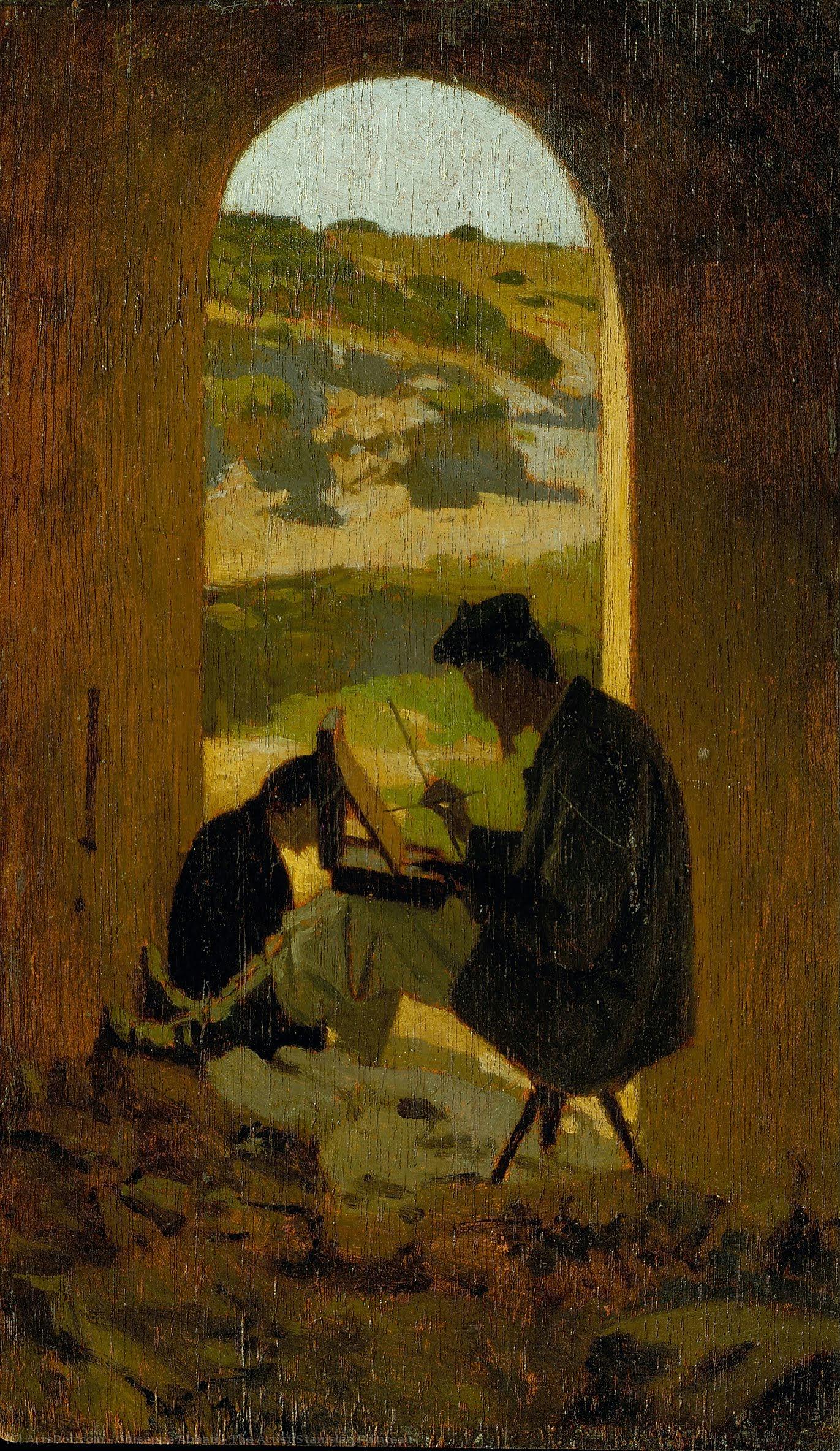
The Artist Stanislao Pointeau
 Oil On Canvas
- WallArt
- Macchiaioli Movement
 1863
1863- 19th Century
 35.0 x 20.0 cm
 Musée des impressionnismes Giverny
 Se mere
Håndlavet oliereproduktion
Håndmalet olie på lærred i din valgte størrelse og ramme, udført efter bestilling af vores kunstnere. ( Køb print Køb billede)




P118B $10

P118H $10

P118W $10

P438Z $10

P508JH $12

P508YH $12

P805H $10

P805Z $10

P919BZ $10

P919G $10

P919XJ $10

P959ZH $10

P968JZ $12

W106C $8

W218G $10

W218JH $8

W218Y $10

W307PJ $10

W316G $10

W316PJ $8

W316Y $10

W398PJ $8

W4111J $10

W500HY $15

W500JH $15

W692G $12

W849H $8

W940BG $15

W953PJ $8




Vælg mellem vores forudindstillede størrelser, der matcher kunstværkets originale proportioner.

Du kan indtaste dine egne mål for at passe til en bestemt ramme eller plads. Hvis den valgte størrelse ikke stemmer overens med det originale billedes proportioner, vil vi enten beskære kunstværket eller udvide maleriet med yderligere håndmalede elementer. En digital skitse sendes til din godkendelse, før produktionen påbegyndes.
Bemærk venligst, at forhåndsvisningen på skærmen ikke afspejler den faktiske beskæring eller udvidelse. Kun skitsen vil nøjagtigt vise den endelige komposition.
Selvom specialmål er mulige, anbefaler vi at vælge en dimension fra den foruddefinerede liste for at bevare de originale proportioner.
Efter bestilling vil OriginalUniqueArt.com team sende en e-mail til kunden for at få instruktioner og levere et udkast til en skitse.
Levering i hele verden () på 3/4 uger i stedet for de standard 5 uger. (20 august). Ingen kompromiser med kvaliteten.

Gratis ekspresforsendelse til hele verden

Lærred af linned i høj kvalitet

Fuld transportforsikring

Garanti for refusion af told og importafgifter

Garanti for præcis farvegengivelse

60 dages returret (kun ved fabrikationsfejl)

100% Tilfredshedsgaranti

Mængderabat tilgængelig
 Glasmulighed er kun tilgængelig i størrelser under 110 cm

The Artist Stanislao Pointeau
Reproduktionsmetode
Størrelse på reproduktion
-


Samlet pris
$ 300
Beskrivelse af kunstværket
A Moment of Camaraderie: Unveiling "The Artist Stanislao Pointeau" by Giuseppe Abbati
Giuseppe Abbati’s “The Artist Stanislao Pointeau,” painted in 1863, is more than just a portrait; it's a poignant snapshot of human connection forged amidst the turbulent backdrop of Italian unification. Measuring a modest 35 x 20 cm, this intimate scene immediately draws the viewer into a world of rustic simplicity and quiet contemplation. The painting depicts two men – Stanislao Pointeau, presumably the artist himself, and an unidentified companion – engaged in what appears to be a serious discussion within a humble room. The dirt floor, worn bench, and carefully placed chair speak volumes about their lives, suggesting a shared space of intellectual exchange and perhaps even artistic collaboration.
The Macchiaioli Influence and a Tragic Turning Point
Attributed to Abbati, this work reflects the burgeoning influence of the *Macchiaioli* movement, a group of Florentine artists who revolutionized Italian painting in the mid-19th century. Born in Naples in 1836, Abbati’s early training under his father, Vincenzo Abbati, focused on architectural interiors – a hallmark of Neapolitan artistic tradition. However, his life dramatically shifted with his participation in Garibaldi's campaign for unification. The Battle of Capua resulted in the loss of his right eye, an event that profoundly impacted his artistic vision and ultimately led him to Florence. It was in Florence, at the renowned Caffè Michelangiolo, that Abbati found himself immersed within the circle of the *Macchiaioli* – Giovanni Fattori, Silvestro Lega, and others – a group known for their loose brushwork, vibrant colors, and commitment to capturing fleeting moments of everyday life. This influence is palpable in “The Artist Stanislao Pointeau,” evident in the painterly application of color and the emphasis on atmosphere.
Technique and Composition: A Study in Light and Shadow
Abbati’s technique is characterized by a masterful use of *macchiano*, the signature style of the Macchiaioli, where dabs or strokes of paint are applied side-by-side to create an impressionistic effect. This technique lends itself beautifully to capturing the play of light and shadow within the room, particularly evident in the way the sunlight streams through the window, illuminating the figures and casting intriguing shadows on the floor. The composition is deliberately understated, focusing intently on the interaction between the two men. The placement of the book near the standing figure suggests a shared interest in learning or perhaps a moment of inspiration. The careful attention to detail – the worn texture of the bench, the folds of the clothing – adds to the painting’s realism and emotional resonance.
Symbolism and Emotional Impact
"The Artist Stanislao Pointeau" transcends a simple portrait; it's an exploration of friendship, intellectual exchange, and perhaps even the bittersweet reflection on loss. The setting itself—a humble room stripped bare of ostentation—suggests a focus on genuine human connection rather than material wealth. Abbati’s ability to capture this quiet moment of camaraderie is remarkable, inviting viewers to contemplate the value of shared experiences and the enduring power of human relationships. This painting offers a window into a pivotal era in Italian history and a testament to the artistic vision of Giuseppe Abbati, a key figure within the revolutionary *Macchiaioli* movement.
Kunstnerens biografi
Giuseppe Abbati: Life and Legacy
Early Life and Training
Giuseppe Abbati was born in Naples, Italy, on January 13, 1836. He received his initial artistic training from his father, Vincenzo Abbati, who specialized in paintings of architectural interiors. This early influence is evident in Giuseppe’s first works, which also focused on interior scenes.
Military Service and the Macchiaioli
Abbati's life took a dramatic turn when he participated in Garibaldi’s 1860 campaign for Italian unification. During the Battle of Capua, he tragically lost his right eye. Following this experience, he moved to Florence, a pivotal moment that shaped his artistic trajectory. In Florence, at the famed Caffè Michelangiolo, he connected with key figures who would become known as the Macchiaioli – Giovanni Fattori, Silvestro Lega, and others.
Artistic Development and Style
Initially recognized for his interior views—for which he even received a medal at the National Exposition in Florence in 1861 (which he refused as protest against the jury)—Abbati soon embraced plein air painting, influenced by his new circle of artists. His style became characterized by a bold treatment of light and shadow, focusing on capturing luminous effects in landscapes. He often depicted scenes viewed through doorways or windows, creating a sense of depth and atmosphere.
Key Characteristics of Abbati’s Work
- Bold Light Effects: A defining feature of his paintings.
- Plein Air Painting: Embracing the practice of painting outdoors to capture natural light.
- Horizontal Formats: Many of his landscapes, like “View of Castiglioncello,” are elongated horizontally, a common preference among the Macchiaioli.
- Dramatic Contrasts: Juxtaposing luminous outdoor scenes with darkened interiors.
Later Life and Untimely Death
Abbati’s artistic pursuits were again interrupted in 1866 when he enlisted in the army for the Third Independence War. He was captured by Austrian forces in Croatia before returning to civilian life at the end of the year. He spent his final year painting in the countryside near Castelnuovo della Misericordia. Tragically, Abbati died on February 21, 1868, in Florence, after being bitten by his own dog and contracting rabies.
Influences and Historical Significance
Abbati was significantly influenced by the ideals of the Macchiaioli movement, which sought to break away from academic traditions and embrace a more realistic depiction of Italian life. He contributed to the Risorgimento artistic expression through his depictions of landscapes and everyday scenes. While his career was cut short, Abbati’s work remains important for its innovative use of light, its connection to the Macchiaioli aesthetic, and its reflection of a pivotal period in Italian history.
Notable Works
- “View from the Wine Cellar of Diego Martelli” (1866)
- “Landscape at Castiglioncello” (1867)
- “Cloister” (1861)
- “Gallery with Armor Bearer” (1864)

Giuseppe Abbati
1836 - 1868 , Italy
Kort om kunstneren
- Birth Date: 1836-01-13
- Birth Place: Naples, Italy
- Death Date: 1868-02-21
- Movement: Macchiaioli
- Name: Giuseppe Abbati
- Nationality: Italian
- Notable Works:
- View from the Wine Cellar of Diego Martelli
- Landscape at Castiglioncello
- Cloister
- Gallery with Armor Bearer
Relaterede artikler

Giovanni Fattori: Realism, Identity & the Tuscan Landscape – A Macchiaioli Master
Explore the life & art of Giovanni Fattori, a leading figure of the Macchiaioli movement. Discover his revolutionary realism, captivating Tuscan landscapes, and lasting impact on Italian painting. Learn more at OriginalUniqueArt.
Top 10 Landskabsmalerier: Kunst, Historie og Inspiration til Dit Hjem
Oplev de 10 mest ikoniske landskabsmalerier fra Monet, Van Gogh og Caspar David Friedrich. Lær historien bag disse mesterværker & find inspiration til dit hjem med OriginalUniqueArt.coms kuraterede kunstsamling. Udforsk nu!

Evocations of Place: A Historical Journey Through Landscape Art
Explore the rich history of landscape art with OriginalUniqueArt. Discover renowned artists, movements like Impressionism & Romanticism, and expert guidance for collecting timeless pieces. Find your perfect serene escape today!

Evocations of Place: A Historical Journey Through Landscape Art
Explore the rich history of landscape art with OriginalUniqueArt. Discover renowned artists, movements like Impressionism & tonalism, and expert guidance for collecting timeless pieces. Find your perfect serene escape today!

Paul Cézannes 25 Mesterværker: En Kunstnerisk Rejse til Moderne Malerkunst | OriginalUniqueArt.dk
Oplev Paul Cézannes 25 mest ikoniske malerier – fra stilleben til landskaber. Lær om impressionismen, hans unikke stil og køb eksklusive kunsttryk på OriginalUniqueArt.dk. Find inspiration til din indretning!

