
 Se i rummet
 Send
Send Del
Del
 Detaljer
 Studieguide til kunstværker

 Download
 Lignende værker
 Røntgenundersøgelse
 Se diasshow
 Statistik
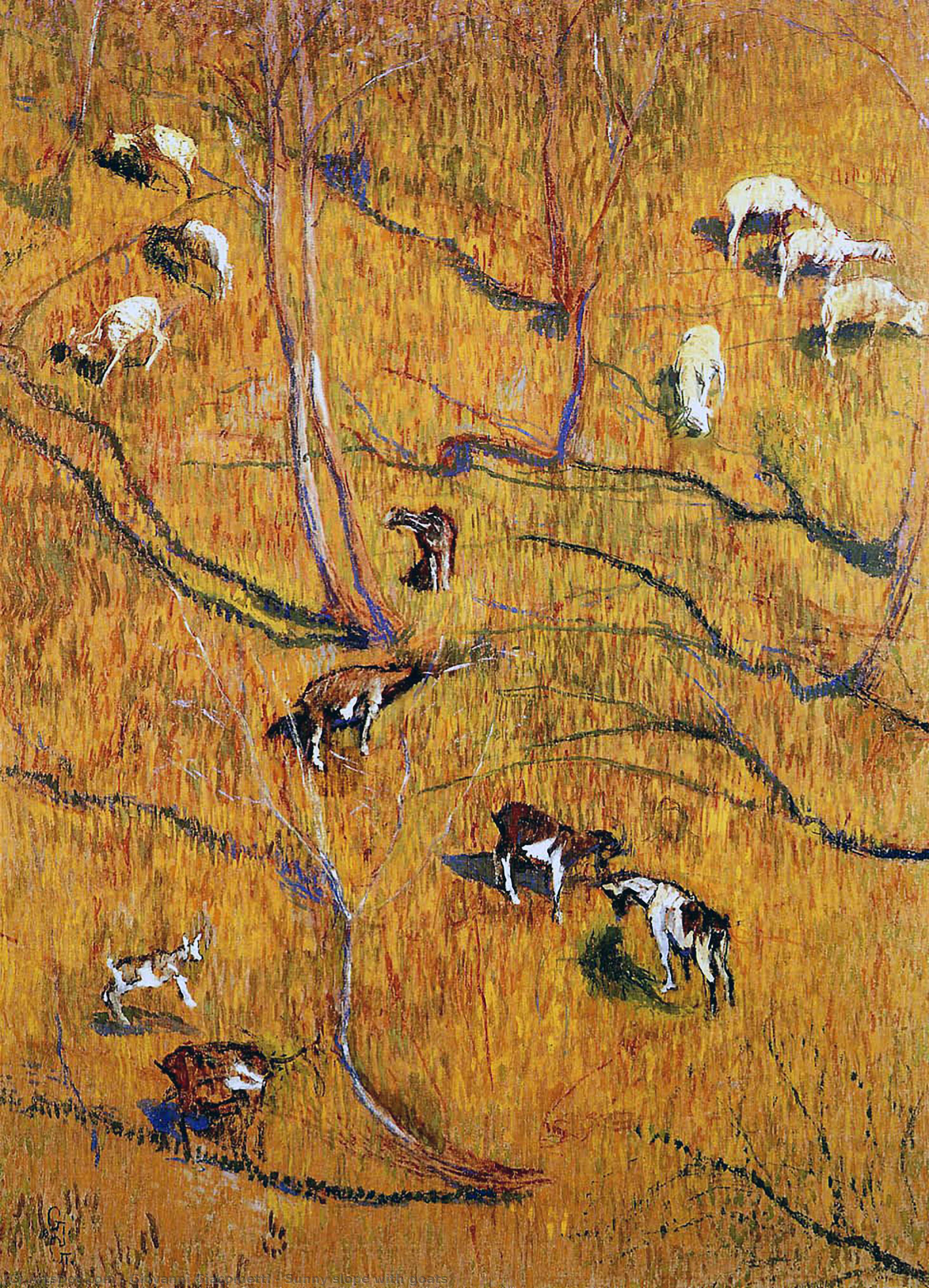
Sunny slope with goats


 Læs mere
Håndlavet oliereproduktion
Håndmalet olie på lærred i din valgte størrelse og ramme, udført efter bestilling af vores kunstnere. ( Skift til printversion Skift til digitalt billede)




P118B $10

P118H $10

P118W $10

P438Z $10

P508JH $12

P508YH $12

P805H $10

P805Z $10

P919BZ $10

P919G $10

P919XJ $10

P959ZH $10

P968JZ $12

W106C $8

W218G $10

W218JH $8

W218Y $10

W307PJ $10

W316G $10

W316PJ $8

W316Y $10

W398PJ $8

W4111J $10

W500HY $15

W500JH $15

W692G $12

W849H $8

W940BG $15

W953PJ $8




Vælg mellem vores forudindstillede størrelser, der matcher kunstværkets originale proportioner.

Du kan indtaste dine egne mål for at passe til en bestemt ramme eller plads. Hvis den valgte størrelse ikke stemmer overens med det originale billedes proportioner, vil vi enten beskære kunstværket eller udvide maleriet med yderligere håndmalede elementer. En digital skitse sendes til din godkendelse, før produktionen påbegyndes.
Bemærk venligst, at forhåndsvisningen på skærmen ikke afspejler den faktiske beskæring eller udvidelse. Kun skitsen vil nøjagtigt vise den endelige komposition.
Selvom specialmål er mulige, anbefaler vi at vælge en dimension fra den foruddefinerede liste for at bevare de originale proportioner.
Efter bestilling vil OriginalUniqueArt.com team sende en e-mail til kunden for at indhente instruktioner og fremsende et udkast til gennemgang.
Levering i hele verden () på 3-4 uger i stedet for de standard 5 uger. (25 september). Ingen kompromiser med kvaliteten.

Gratis ekspresforsendelse til hele verden

Lærred af linned i høj kvalitet

Komplet transportforsikring

Garanti for refusion af told og importafgifter

Garanti for autentisk farvegengivelse

100 dages returret ved fabrikationsfejl

100% fuld returret

Mængderabat ved flere køb
 Glasmulighed er kun tilgængelig i størrelser under 110 cm

Sunny slope with goats
Reproduktionsmateriale
Reproduktionsstørrelse
-


Samlet pris
$ 300
A Pastoral Dream in Oil
In the quiet, sun-drenched corners of the Swiss landscape, Giovanni Giacometti found a language of light and texture that transcends mere representation. His work, Sunny slope with goats, invites the viewer into a tranquil, pastoral sanctuary where the boundaries between reality and impression begin to dissolve. The composition centers on a gentle, sloping meadow, populated by sheep and goats that graze amidst a delicate web of bare tree branches. There is an immediate, visceral warmth to the piece, driven by a palette of earthy ochres, soft ambers, and muted greens that evoke the feeling of a late afternoon glow. It is not merely a depiction of livestock in a field; it is an atmospheric meditation on the stillness of rural life, captured with a sense of profound peace.
The technique employed by Giacometti reveals a master at work with the physical properties of his medium. Moving beyond the delicate precision of his early academic training, this piece showcases a bold, Post-Impressionist sensibility. The artist utilizes thick, impasto brushstrokes that lend the canvas a sculptural quality, where the paint itself becomes part of the landscape's topography. These visible, gestural marks create a rhythmic energy across the surface, defining the rounded forms of the animals and the irregular, skeletal silhouettes of the trees without the need for harsh outlines. This tactile approach ensures that the light does not just sit upon the canvas but seems to emerge from within the very layers of pigment, creating a sense of depth and volume that is both captivating and immersive.
Symbolism and Emotional Resonance
Beyond its aesthetic charm, Sunny slope with goats carries a deeper emotional weight, touching upon themes of solitude and the cyclical nature of life. The flattened perspective and simplified forms strip away the distractions of the modern world, focusing the viewer's attention on the elemental connection between creature and earth. The bare branches, juxtaposed against the warmth of the sunlit slope, suggest a moment of seasonal transition—perhaps the quiet anticipation of spring or the reflective stillness of autumn. This creates a dreamlike quality, where the scene feels less like a specific geographic location and more like a memory or a fragment of a pastoral myth.
For the discerning collector or interior designer, this artwork offers a sophisticated anchor for a room. Its organic shapes and harmonious color temperature make it an ideal centerpiece for spaces designed to evoke calm, such as a study, a library, or a serene living area. As a high-quality reproduction, the emphasis on texture and light allows the piece to interact dynamically with ambient lighting in a home, bringing a touch of Swiss heritage and timeless elegance to any decor. To possess this work is to invite a sense of enduring tranquility into one's environment, celebrating the quiet beauty found in the simplest moments of the natural world.
Om kunstneren
A Life Painted in the Heart of Switzerland
Giovanni Ulrico Giacometti, born on March 7th, 1868, in Stampa near Borgonovo in Switzerland, was more than just a painter; he was a son of the Alps, his life inextricably woven into the dramatic beauty and rugged spirit of his homeland. His upbringing within a large family—one of eight children to a father who skillfully balanced the demands of baking with running a local café—provided him with an early exposure to both the practicalities of daily life and the seeds of artistic curiosity. Crucially, he was nurtured by his cousin, Augusto Giacometti, another artist whose passion ignited a spark within young Giovanni, setting him on a path that would ultimately define his entire existence. Formal training began at the Kunstgewerbeschule in Munich in 1886, but it soon became apparent that the school’s rigid structure and emphasis on technical precision were not suited to Giacometti's burgeoning artistic vision—a desire for something more expressive and deeply rooted in observation.The Transformative Influence of Giovanni Segantini
A pivotal moment arrived in 1894, when a chance encounter with the renowned landscape painter Giovanni Segantini proved transformative. Segantini, a master of capturing the ethereal light and atmosphere of the Swiss Alps, wasn’t merely an acquaintance; he became a mentor, opening Giacometti's eyes to the sublime grandeur of the Bergell region and introducing him to the revolutionary technique of Divisionism. This approach, characterized by applying small dots or strokes of color—a method championed by Georges Seurat—allowed Giacometti to create vibrant, luminous effects that seemed to capture the very essence of light and atmosphere. Segantini’s influence is immediately apparent in Giacometti's early works, which began to reflect a heightened sensitivity to light, a dramatic use of color, and an increasingly expressive approach to landscape painting. The Bergell region—with its towering peaks, deep valleys, and ever-changing weather—became a constant source of inspiration, shaping not only his artistic style but also his emotional connection to the land. Giacometti’s early paintings often depicted scenes of daily life in the mountains, imbued with a sense of quiet contemplation and a profound appreciation for the natural world.Bridging Tradition and Modernity: Impressionism and Beyond
Following a period of wandering and artistic exploration after Segantini's death, Giacometti returned to Switzerland, but his artistic journey continued to evolve. He initially studied under William Adolphe Bouguereau and Joseph Nicolas Robert-Fleury at the Académie Julian in Paris, gaining valuable experience in traditional academic techniques. However, he soon found himself drawn to the burgeoning currents of modern art—particularly Impressionism and Post-Impressionism—and sought guidance from Cuno Amiet, a fellow Swiss painter who had established himself as a leading figure in the Parisian avant-garde. This period marked a crucial shift in Giacometti’s artistic development, as he began to experiment with looser brushstrokes, brighter colors, and more expressive forms. He also became involved with the “Brücke” group in Berlin, an influential Expressionist movement that sought to convey intense emotions through bold color and distorted forms. His work during this time reflected a growing interest in psychological themes and social commentary, moving beyond purely representational landscapes to explore the complexities of human experience.The Language of Symbolism and Portraiture
Giacometti’s artistic language became increasingly layered and nuanced throughout his career. While he remained deeply rooted in the traditions of landscape painting, he also embraced elements of Symbolism—a movement that sought to express ideas through evocative imagery and allegory—and incorporated them into his work. His portraits, in particular, are notable for their psychological depth and emotional intensity. He was fascinated by capturing not just the outward appearance of his subjects but also their inner lives—their thoughts, feelings, and motivations. His portraits often feature subtle gestures, enigmatic expressions, and carefully chosen details that reveal hidden layers of meaning. Works like “Mutter und Kind an der Wiege” (Mother and Child at the Cradle) exemplify this ability to convey complex emotions through simple, yet powerfully evocative imagery.A Legacy Etched in Stone and Color
Giovanni Giacometti died on June 25th, 1933, in Glion, Switzerland, leaving behind a rich and diverse body of work that reflects a pivotal moment in Swiss art history. His paintings—characterized by their luminous colors, dramatic compositions, and profound emotional depth—continue to resonate with viewers today. Beyond his own artistic achievements, Giacometti’s legacy is inextricably linked to that of his sons: Alberto, Diego, and Bruno. He fostered a creative environment within his family that nurtured the talents of his children, who would go on to become leading figures in modern art – notably, Alberto Giacometti as a sculptor and Diego Giacometti as a painter. Giovanni’s influence extended beyond his immediate family, as he served on the Eidgenössische Kunstkommission (Swiss Federal Art Commission) from 1918-1921 and again from 1931-1932, demonstrating his commitment to supporting the arts within Switzerland. His work is now held in prestigious collections around the world, a testament to his enduring artistic vision and his profound connection to the beauty of the Swiss landscape.
Giovanni Giacometti
1868 - 1933 , Schweiz
Hurtige fakta
- Artistic Movement Or Style: Post-Impressionisme
- Artists Or Movements Influenced By This Artist: ['Alberto Giacometti']
- Artists Who Influenced This Artist: ['Giovanni Segantini']
- Date Of Birth: 7. marts 1868
- Date Of Death: 25. juni 1933
- Full Name: Giovanni Ulrico Giacometti
- Nationality: Schweizer
- Notable Artworks:
- In den Schuppen
- Capolago im Winter
- Morgenlicht am See Sils
- Place Of Birth: Stampa, Schweiz
Relaterede artikler

Cultivating Visions: A Historical Journey Through Rural Landscapes in Art
Explore the rich history of rural landscape painting with OriginalUniqueArt. Discover Impressionist masterpieces, key artists & movements. Find your perfect serene artwork and bring nature's beauty home.

Evocations of Place: A Historical Journey Through Landscape Art
Explore the rich history of landscape art with OriginalUniqueArt. Discover renowned artists, movements like Impressionism & tonalism, and expert guidance for collecting timeless pieces. Find your perfect serene escape today!

Evocations of Place: A Historical Journey Through Landscape Art
Explore the rich history of landscape art with OriginalUniqueArt. Discover renowned artists, movements like Impressionism & Romanticism, and expert guidance for collecting timeless pieces. Find your perfect serene escape today!

John Constables 25 Mesterværker: En Hyldest til Englands Landskabskunst | OriginalUniqueArt.com
Oplev John Constables 25 mest ikoniske værker! Fordyb dig i engelsk romantik, betagende landskaber og tidløs skønhed. Køb museumskvalitets reproduktioner af 'The Hay Wain' & mere på OriginalUniqueArt.com – inspiration til dit hjem.

Paul Cézannes 25 Mesterværker: En Kunstnerisk Rejse til Moderne Malerkunst | OriginalUniqueArt.dk
Oplev Paul Cézannes 25 mest ikoniske malerier – fra stilleben til landskaber. Lær om impressionismen, hans unikke stil og køb eksklusive kunsttryk på OriginalUniqueArt.dk. Find inspiration til din indretning!