
 Se i fuld skala
 Del
Del Del
Del
 Detaljer

 Download
 Lignende værker
 Røntgenundersøgelse
 Diasshow
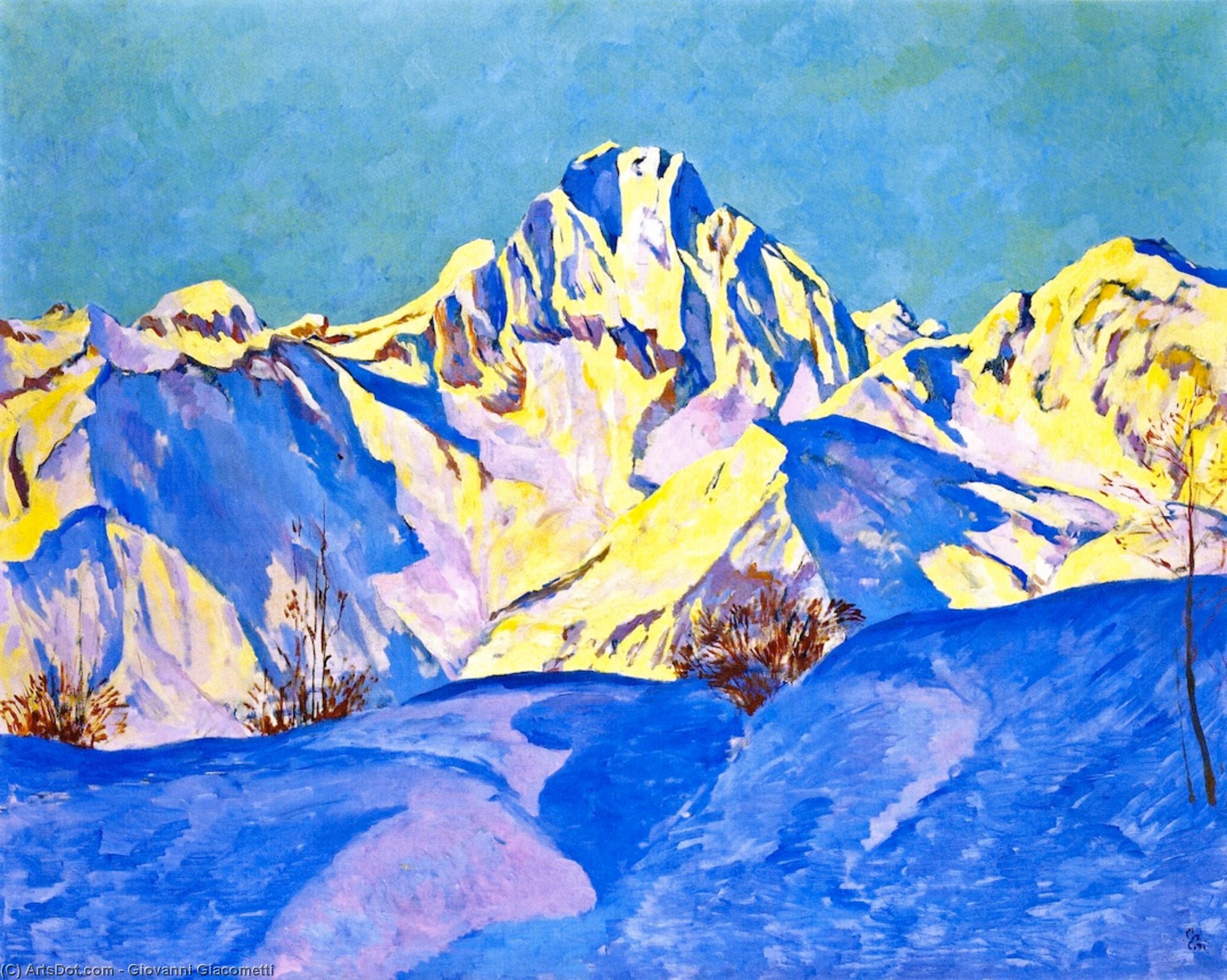
Snow Mountains
 Oil On Canvas
- WallArt
- Impressionism
 1914
1914- Modern
 100.0 x 125.0 cm
 Se mere
Køb et højopløst, forbedret digitalt billede, der er langt bedre end online-forhåndsvisningen.
Hver fil er omhyggeligt forberedt af vores interne specialister ved hjælp af avancerede værktøjer og ekspertmæssig manuel retuschering. Vi sikrer, at hvert billede har enestående klarhed, præcis farvegengivelse og fine detaljer.
Den endelige fil leveres via e-mail inden for 72 timer og er optimeret til øjeblikkelig brug i professionelle, redaktionelle og trykte miljøer. Det er den samme kvalitet, som førende designstudier, forlag og gallerier har tillid til.
Digitalt billede
Download en højopløselig fil til personlig fremvisning, print og kreative projekter. ( Køb print Køb håndlavet maleri)
Inkluderet i alle ordrer på digitale billeder
Ekspert digital levering, garanteret
Når du vælger OriginalUniqueArt.com, får du ikke blot et billede – du modtager et professionelt optimeret digitalt kunstværk, skabt med præcision og sikret med en tilfredshedsgaranti. Her er alt, hvad din ordre automatisk indeholder:

Hurtig levering via e-mail
Din højkvalitets digitale billedfil vil blive sendt til din e-mail inden for 72 timer efter bestilling – klar til øjeblikkelig brug.

AI-optimeret digital fil
Dit kunstværk optimeres professionelt ved hjælp af avancerede AI-værktøjer og manuel redigering, hvilket sikrer maksimal detaljegrad, klarhed og farvenøjagtighed.

Gratis livslang genlevering
Har du ved en fejl slettet eller mistet din fil? Ingen bekymring – vi sender den igen til enhver tid, helt gratis.

Ingen importgebyrer – nogensinde
Nyd dit kunstværk med det samme uden told, afgifter eller leveringsgebyrer – digitale downloads er altid skattefrie.

Garanteret farvenøjagtighed
Vi sikrer, at dit digitale billede gengiver de originale farver så præcist som muligt ved hjælp af professionelle værktøjer og farvestyring.

60 dages tilfredshedsgaranti
Hvis du ikke er tilfreds med dit digitale billede, vil vi revidere det eller refundere 100% inden for 60 dage – uden spørgsmål.

100% Pengene tilbage-garanti
Ik tilfreds? Få fuld refusion inden for 60 dage efter modtagelse af din digitale fil – uden spørgsmål.

Mængderabat
Køb 3 billeder, spar 10% - Køb 5, spar 15% - Køb 10+, spar 20%. Ideelt til kreative projekter, gallerier og bureauer.
Beskrivelse af samlerobjektet
A Majestic Encounter with the Alpine Sublime
In the quietude of 1914, Giovanni Giacometti captured a moment of profound stillness in his masterpiece, 'Snow Mountains.' This breathtaking oil on canvas serves as more than just a landscape; it is an invitation into a world where the earth meets the heavens in a silent, frozen embrace. The composition is dominated by a monumental mountain range, its jagged peaks draped in heavy, pristine snow that seems to glow against the crisp clarity of the Swiss sky. As the eye wanders across the canvas, one discovers smaller, intricate peaks that emerge from the larger mass, providing a sense of immense depth and geological complexity. This rhythmic layering of stone and ice creates a visual symphony of scale, making the viewer feel both humbled by the grandeur of nature and intimately connected to its serene rhythm.
The artist’s technical mastery is evident in the way he utilizes the rich textures of oil paint to breathe life into the inanimate. Giacometti employs a delicate balance of light and shadow to define the rugged contours of the mountains, allowing the brilliant whites of the snow to contrast sharply with the deep, cool shadows tucked within the crevices. Scattered throughout this wintry expanse are resilient trees, their dark silhouettes acting as vital anchors within the composition. These botanical elements do more than provide scale; they offer a poignant contrast between the ephemeral life of the forest and the eternal, unchanging presence of the mountains. The interplay between the vibrant blue sky and the stark white landscape creates a harmonious color palette that is both invigorating and soothing to the soul.
Historical Resonance and Artistic Legacy
To understand 'Snow Mountains' is to understand the lineage of Swiss artistic excellence. Giovanni Giacometti, a painter whose life was deeply rooted in the dramatic landscapes of his homeland, brought a unique sensitivity to the depiction of nature. While he moved through various stylistic evolutions—from the structured training in Munich to the vibrant influences of Paris—his heart remained tether of the Alps. This painting stands as a testament to that enduring connection. It is also a piece steeped in familial legacy, as Giovanni was the patriarch of an extraordinary artistic dynasty, most notably the father of the world-renowned sculptor Alberto Giacometti. In this work, we see the precursor to a modern sensibility: a focus on form, atmosphere, and the raw emotional power of the environment.
For the discerning collector or interior designer, 'Snow Mountains' offers an unparalleled opportunity to introduce a sense of tranquility and prestige into a living space. The painting’s ability to evoke feelings of awe and peace makes it a versatile centerpiece, capable of anchoring a room with its commanding presence while simultaneously providing a window of escapism. Whether placed in a contemporary gallery-style setting or a classic, traditional study, this reproduction captures the timeless essence of the natural world. It is not merely a depiction of scenery, but an emotional experience—a frozen moment of perfection that continues to inspire wonder more than a century after its creation.
Kunstnerens biografi
A Life Painted in the Heart of Switzerland
Giovanni Ulrico Giacometti, born on March 7th, 1868, in Stampa near Borgonovo in Switzerland, was more than just a painter; he was a son of the Alps, his life inextricably woven into the dramatic beauty and rugged spirit of his homeland. His upbringing within a large family—one of eight children to a father who skillfully balanced the demands of baking with running a local café—provided him with an early exposure to both the practicalities of daily life and the seeds of artistic curiosity. Crucially, he was nurtured by his cousin, Augusto Giacometti, another artist whose passion ignited a spark within young Giovanni, setting him on a path that would ultimately define his entire existence. Formal training began at the Kunstgewerbeschule in Munich in 1886, but it soon became apparent that the school’s rigid structure and emphasis on technical precision were not suited to Giacometti's burgeoning artistic vision—a desire for something more expressive and deeply rooted in observation.The Transformative Influence of Giovanni Segantini
A pivotal moment arrived in 1894, when a chance encounter with the renowned landscape painter Giovanni Segantini proved transformative. Segantini, a master of capturing the ethereal light and atmosphere of the Swiss Alps, wasn’t merely an acquaintance; he became a mentor, opening Giacometti's eyes to the sublime grandeur of the Bergell region and introducing him to the revolutionary technique of Divisionism. This approach, characterized by applying small dots or strokes of color—a method championed by Georges Seurat—allowed Giacometti to create vibrant, luminous effects that seemed to capture the very essence of light and atmosphere. Segantini’s influence is immediately apparent in Giacometti's early works, which began to reflect a heightened sensitivity to light, a dramatic use of color, and an increasingly expressive approach to landscape painting. The Bergell region—with its towering peaks, deep valleys, and ever-changing weather—became a constant source of inspiration, shaping not only his artistic style but also his emotional connection to the land. Giacometti’s early paintings often depicted scenes of daily life in the mountains, imbued with a sense of quiet contemplation and a profound appreciation for the natural world.Bridging Tradition and Modernity: Impressionism and Beyond
Following a period of wandering and artistic exploration after Segantini's death, Giacometti returned to Switzerland, but his artistic journey continued to evolve. He initially studied under William Adolphe Bouguereau and Joseph Nicolas Robert-Fleury at the Académie Julian in Paris, gaining valuable experience in traditional academic techniques. However, he soon found himself drawn to the burgeoning currents of modern art—particularly Impressionism and Post-Impressionism—and sought guidance from Cuno Amiet, a fellow Swiss painter who had established himself as a leading figure in the Parisian avant-garde. This period marked a crucial shift in Giacometti’s artistic development, as he began to experiment with looser brushstrokes, brighter colors, and more expressive forms. He also became involved with the “Brücke” group in Berlin, an influential Expressionist movement that sought to convey intense emotions through bold color and distorted forms. His work during this time reflected a growing interest in psychological themes and social commentary, moving beyond purely representational landscapes to explore the complexities of human experience.The Language of Symbolism and Portraiture
Giacometti’s artistic language became increasingly layered and nuanced throughout his career. While he remained deeply rooted in the traditions of landscape painting, he also embraced elements of Symbolism—a movement that sought to express ideas through evocative imagery and allegory—and incorporated them into his work. His portraits, in particular, are notable for their psychological depth and emotional intensity. He was fascinated by capturing not just the outward appearance of his subjects but also their inner lives—their thoughts, feelings, and motivations. His portraits often feature subtle gestures, enigmatic expressions, and carefully chosen details that reveal hidden layers of meaning. Works like “Mutter und Kind an der Wiege” (Mother and Child at the Cradle) exemplify this ability to convey complex emotions through simple, yet powerfully evocative imagery.A Legacy Etched in Stone and Color
Giovanni Giacometti died on June 25th, 1933, in Glion, Switzerland, leaving behind a rich and diverse body of work that reflects a pivotal moment in Swiss art history. His paintings—characterized by their luminous colors, dramatic compositions, and profound emotional depth—continue to resonate with viewers today. Beyond his own artistic achievements, Giacometti’s legacy is inextricably linked to that of his sons: Alberto, Diego, and Bruno. He fostered a creative environment within his family that nurtured the talents of his children, who would go on to become leading figures in modern art – notably, Alberto Giacometti as a sculptor and Diego Giacometti as a painter. Giovanni’s influence extended beyond his immediate family, as he served on the Eidgenössische Kunstkommission (Swiss Federal Art Commission) from 1918-1921 and again from 1931-1932, demonstrating his commitment to supporting the arts within Switzerland. His work is now held in prestigious collections around the world, a testament to his enduring artistic vision and his profound connection to the beauty of the Swiss landscape.
Giovanni Giacometti
1868 - 1933 , Schweiz
Kort om kunstneren
- Artistic Movement Or Style: Post-Impressionisme
- Artists Or Movements Influenced By This Artist: ['Alberto Giacometti']
- Artists Who Influenced This Artist: ['Giovanni Segantini']
- Date Of Birth: 7. marts 1868
- Date Of Death: 25. juni 1933
- Full Name: Giovanni Ulrico Giacometti
- Nationality: Schweizer
- Notable Artworks:
- In den Schuppen
- Capolago im Winter
- Morgenlicht am See Sils
- Place Of Birth: Stampa, Schweiz

