

 Se i rummet
 Send
Send Del
Del
 Detaljer
 Studieguide til kunstværker

 Download
 Lignende værker
 Røntgenundersøgelse
 Se diasshow
 Statistik
The Annunciation
 Acrylic On Canvas
- WallArt
- Renaissance
 19.0 x 22.0 cm
 Kupferstichkabinett
 Læs mere
Giclée / Kunsttryk
Giclée- eller lærredstryk i museumskvalitet med hurtig produktion og fleksible muligheder for finish. ( Bestil håndmalet reproduktion Skift til digitalt billede)




P118B Dkr10

P118H Dkr10

P118W Dkr10

P438Z Dkr10

P508JH Dkr12

P508YH Dkr12

P805H Dkr10

P805Z Dkr10

P919BZ Dkr10

P919G Dkr10

P919XJ Dkr10

P959ZH Dkr10

P968JZ Dkr12

W106C Dkr8

W218G Dkr10

W218JH Dkr8

W218Y Dkr10

W307PJ Dkr10

W316G Dkr10

W316PJ Dkr8

W316Y Dkr10

W398PJ Dkr8

W4111J Dkr10

W500HY Dkr15

W500JH Dkr15

W692G Dkr12

W849H Dkr8

W940BG Dkr15

W953PJ Dkr8




Vælg mellem vores forudindstillede størrelser, der matcher kunstværkets originale proportioner.

Indtast den bredde og højde, du har brug for, så det passer til din ramme eller din væg. Et print kan kun beskæres, aldrig gøres større end billedet, så en størrelse med en anden form vil miste en del af motivet. Vi sender dig en digital mockup til godkendelse, før vi printer noget. Billedet vist på denne side viser ikke den faktiske beskæring — det er kun mockuppen, der gør.
Verdensomspændende levering () på 2 uger i stedet for de sædvanlige 4/5 uger. (24 oktober)

Gratis ekspresforsendelse til hele verden

Lærred af linned i høj kvalitet

Komplet transportforsikring

Garanti for refusion af told og importafgifter

Garanti for autentisk farvegengivelse

100 dages returret ved fabrikationsfejl

100% fuld returret

Mængderabat ved flere køb
 Glasmulighed er kun tilgængelig i størrelser under 110 cm

The Annunciation
Giclée / Kunsttryk
Reproduktionsstørrelse
-


Samlet pris
Dkr 531
A Moment of Divine Revelation: Exploring Vasari’s ‘The Annunciation’
Giorgio Vasari's “The Annunciation,” painted circa 1567, isn’t merely a depiction of a biblical scene; it’s a carefully constructed tableau brimming with symbolic weight and technical mastery. This remarkable work, often considered a pivotal study for a larger ceiling painting, offers a rare glimpse into the artist’s process – a testament to his dedication to capturing not just likeness but also the profound emotional resonance of faith. The image, rendered in the delicate hues of carta azzurra (azure paper), immediately draws the eye with its ethereal quality and remarkable sense of spatial depth.
Vasari’s choice of blue pigment is crucial to understanding the painting's impact. The specific shade, a pale, almost luminous azure, was highly prized in Renaissance Italy for its ability to create an airy, atmospheric effect. It’s not simply a color; it’s a key element in conveying the divine presence and the sense of otherworldly grace that permeates the scene. The artist skillfully employs washes of ink and delicate highlights – a technique reminiscent of tempera painting – to build up layers of texture and luminosity, avoiding the heavy impasto favored by some of his contemporaries. This restrained approach allows for an astonishing level of detail, particularly in the rendering of Mary’s face and the angel Gabriel's flowing robes.
Architectural Echoes: Composition and Spatial Dynamics
Beyond its exquisite color palette, “The Annunciation” is distinguished by its sophisticated architectural design. Vasari masterfully integrates architectural elements – a coffered ceiling, a portal in the background, and a tent-shaped baldachin – to reinforce the composition’s clarity and stability. These aren't merely decorative flourishes; they serve as visual anchors, guiding the viewer’s eye through the scene and creating a sense of depth and perspective. The low vantage point, characteristic of ceiling paintings, emphasizes the scale of the figures and the grandeur of the event. Notice how Vasari uses linear perspective to create the illusion of receding space – the distant portal subtly diminishing in size, drawing us into the narrative.
The arrangement of the figures is equally deliberate. Gabriel, positioned on the left, extends his arm towards Mary, who sits serenely in the center of the frame. The subtle gestures and expressions convey a sense of reverence and anticipation. Even the secondary figures – a man near the top-left corner and another at the bottom-right – contribute to the scene’s dynamism, suggesting a broader context and inviting contemplation. The inclusion of a simple chair and vase adds a touch of domesticity, grounding the divine event within a recognizable human setting.
A Renaissance Masterpiece: Context and Legacy
Giorgio Vasari (1511-1574) was more than just a painter; he was a polymath – an architect, sculptor, historian, and biographer. His “Lives of the Most Excellent Painters, Sculptors, and Architects,” published in 1550, established a framework for understanding Renaissance art that continues to influence scholars today. Vasari’s work profoundly shaped our perception of the period, elevating the status of artists and establishing Florence as the epicenter of artistic innovation. “The Annunciation” exemplifies his commitment to capturing both the beauty and the spiritual significance of religious subjects.
Further research reveals that this painting was originally intended for a ceiling in the Chapel of Santa Michele in the Torre Pia, Vatican Palace, alongside three other roundels depicting the Nativity, the Annunciation, Zacharias and the Angel, and the Liberation of St. Peter. The rediscovery of these related works has illuminated Vasari’s artistic process and provided valuable insights into the history of Renaissance art. The image's presence in the Louvre Museum and its detailed documentation through online resources – such as WikiArt and Google Arts & Culture – ensure that this remarkable masterpiece remains accessible to a global audience.
Reproductions and Inspiration
A high-quality reproduction of Vasari’s “The Annunciation” offers a stunning opportunity to bring the drama and beauty of this Renaissance painting into your home or office. The delicate color palette, masterful composition, and profound symbolism will undoubtedly captivate viewers and evoke a sense of serenity and contemplation. Consider commissioning a hand-painted replica – a faithful recreation that captures the essence of Vasari’s original work, allowing you to experience the artistry firsthand.
Spørgsmål & svar
Hvem sælger håndmalede kopier af "The Annunciation" af Giorgio Vasari?
Håndmalede kopier af "The Annunciation" af Giorgio Vasari sælges på denne hjemmeside: en håndmalet oliereproduktion på lærred af hør, bestilt via dens Håndmalet reproduktion-side.
Kan jeg bruge augmented reality til at se "The Annunciation" af Giorgio Vasari i mit eget rum?
"The Annunciation" har en augmented reality-forhåndsvisning: kunstværkets AR-forhåndsvisning-side viser det i dit eget rum på en kompatibel enhed.
Hvilken teknik er "The Annunciation" udført med?
Giorgio Vasari brugte Acrylic On Canvas-teknikken til "The Annunciation". Teknikken definerer det originale værks materielle karakter.
Om kunstneren
En Livsfortælling Vevet Ind i Renæssancens Fabric
Giorgio Vasari, født den 30. juli 1511 i Arezzo, Toscana, var langt mere end blot en maler; han var et sandt udtryk for den italienske renæssances ånd. Hans liv unfolded som et levende væv, broderet med tråde af kunstnerisk skabelse, arkitektonisk innovation, indsigtfuld historisk skrivning og en ubønhørlig dedikation til at fejre de mestre, der kom før ham. Fra sine tidligste træningsår under Guglielmo da Marsiglia, en dygtig håndværker i glasmalerier, blev Giorgio’s vej ledet mod visuel kunst. Men det var hans flytning til Firenze ved seksten års alderen, der virkelig antændte hans potentiale. Han fordybede sig i den dynamiske kreds omkring Andrea del Sarto og absorberede indflydelserne fra Rosso Fiorentino og Jacopo Pontormo, hvilket førte ham ud på en rejse, der skulle se ham blive en af æras mest indflydelsesrige figurer. Hans formative år var også dybt præget af Medici-familiens værdighed og venskab, et forhold, der ville forme både hans karriere og hans perspektiv på kunstens rolle i samfundet.Den Kunstners Hånd og Øje
Vasaris kunstneriske stil er ofte kategoriseret som manierisme, hvilket afspejler de dominerende æstetiske tendenser i midten af det 16. århundrede. Hans malerier kendetegnes ved forlængede figurer, dynamiske kompositioner og en raffineret brug af farver – kvaliteter, der blev højt rost under hans levetid. Selvom han måske ikke opnåede samme varige berømmelse som nogle af de kunstnere, han kronikerede, så var Vasaris færdigheder ubestridelige. Bemærkelsesværdige værker som *The Studio of the Painter*, et fresco beliggende i Casa Vasari i Arezzo, giver et fascinerende indblik i den kunstneriske praksis på det tidspunkt. Den enorme skala og ambitionen bag hans fresiker for Palazzo Vecchio i Firenze, udført mellem 1555 og 1572, demonstrerer hans mesterskab inden for store dekorative anlæg. Hans endelige monumentale værk, *Dommedag*, udsmykkende kupolen i Firenze-katedralen – færdiggjort efter sin død af Federico Zuccari – står som et vidnesbyrd om hans urokkelige engagement i grandiose kunstneriske visioner. Ud over maleri bidrog Vasari også betydeligt inden for arkitektur. Han designede den elegante loggia af Palazzo degli Uffizi, og omdannede det til en offentlig plads og skabte et vitalt link i Florencis bylandskab. Mest berømt er hans koncept og tilsyn med konstruktionen af Vasaris korridor, en hemmelig passage, der forbinder Uffizi-galleriet med Palazzo Pitti – et ingeniørkunstnerisk mesterværk, der fortsat fascinerer besøgende i dag.En Historiker, der Skaber Et Arv
Men det er sandsynligvis som kunsthistoriker, at Giorgio Vasari sikrede sin mest vedvarende arv. Hans monumentale værk, *Lives of the Most Excellent Painters, Sculptors, and Architects*, udgivet i 1550 (med en revideret udgave i 1568), revolutionerede måden, hvorpå kunst blev forstået og værdsat. Denne banebrydende tekst var ikke blot en samling af biografer; den etablerede en narrativ ramme for udviklingen af italiensk renæssancekunst, sporens evolution fra de tidlige mestre som Cimabue og Giotto til hans samtidige Michelangelo og Raphael. Vasaris værk introducerede konceptet om "renæssancen" – en genfødsel af klassiske idealer – og lagde grundlaget for moderne kunsthistorie som et videnskabeligt felt. Selvom han anerkendte, at Vasaris beretninger ikke er uden bias og unøjagtigheder, især når det gælder kunstnere, der kom før hans egen tid, så har *Lives*’ indflydelse været dybtgående. Det gav en afgørende historisk kontekst for kunstnerisk skabelse, hvilket hævede kunstnernes status til intellektuelle figurer værdige til akademisk undersøgelse.Indflydelser og Vedvarende Betydning
Vasaris kunstneriske udvikling blev dybt præget af hans eksponering for renæssancens mestre. Hans besøg i Rom i 1529, hvor han studerede Michelangelos værker, var afgørende. Han absorberede deres principper for komposition, anatomisk nøjagtighed og idealiseret skønhed, hvilket integrerede dem i sin egen stil. Michelangelo, som Vasari beundrede dybt, udøvede en særlig stærk indflydelse på både hans maleri og arkitektur. Den grandiositet og dynamik, der kendetegner Michelangelos arbejde, er tydelige i mange af Vasaris projekter. Ud over specifikke kunstnere har de bredere intellektuelle strømninger i renæssancen – humanisme, klassisk læring og en genopdagelse af empirisk observation – også informeret Vasaris tilgang til kunst og historie. Giorgio Vasari døde den 27. juni 1574 i Firenze, efterlod sig en flerfacetteret arv, der fortsat resonerer i dag. Han var ikke kun en talentfuld kunstner og arkitekt, men også en pionerende historiker, hvis skrifter har formet vores forståelse af en af de mest transformative perioder i vestlig kunsthistorie. Hans værk er essentielt for enhver, der søger at udforske den rige kulturelle arv fra den italienske renæssance.Vigtigste Opnåelser
* **Lives of the Most Excellent Painters, Sculptors, and Architects (1550):** Vasaris mest berømte værk, en banebrydende kunsthistorisk tekst, der revolutionerede måden, hvorpå kunst blev studeret og forstået. * **Design af Palazzo Uffizi:** Vasari var arkitekten bag den ikoniske loggia i Palazzo degli Uffizi, som omdannede det til et centralt offentligt rum i Firenze. * **Vasaris Korridor:** Han designede og byggede den hemmelige passage, der forbinder Uffizi-galleriet med Palazzo Pitti, et imponerende ingeniørkunstnerisk mesterværk. * **Fresker i Palazzo Vecchio:** Vasari udførte store fresiker i Palazzo Vecchio, som afspejler hans evne til at skabe grandiose dekorative anlæg. * **Dommedagskuppel (Udført efter hans død):** Han var ansvarlig for den monumentale *Dommedags* fresko på kupolen i Firenze-katedralen.
Giorgio Vasari
1511 - 1574 , Italien
Hurtige fakta
- Artistic Movement Or Style: Mannerisme
- Artists Or Movements Influenced By This Artist:
- Renaissance kunsthistorik
- Renæssancekunst
- Artists Who Influenced This Artist:
- Andrea del Sarto
- Michelangelo
- Date Of Birth: 30. juli 1511
- Date Of Death: 27. juni 1574
- Full Name: Giorgio Vasari
- Nationality: Italiensk
- Notable Artworks:
- Studiet af maleren
- Sidste dommedag
- Uffizi-loggia
- Place Of Birth: Arezzo, Italien
Relaterede artikler

Top 10 Berømte Malerier i Skønne Slate Blue Nuancer – Kunst til Dit Hjem
Oplev skønheden i 10 berømte malerier domineret af den elegante slate blue nuance. Fra Monet til Van Gogh – lær historierne bag ikoniske kunstværker og find inspiration til dit hjem. Køb museumskvalitets reproduktioner på OriginalUniqueArt.com

Ephemeral Expressions: Exploring the Nuances of Ink on Paper Through History & Contemporary Art
Explore the captivating world of ink wash painting – from its ancient origins to contemporary masters. Discover techniques, symbolism & conservation insights with OriginalUniqueArt.com.

The Alchemy of Ink: Mastering the Timeless Beauty and Art History of Paper and Brush
Embark on a sophisticated exploration of ink wash painting and Sumi-e. Uncover the profound historical lineages, Zen philosophies, and technical mastery behind this timeless medium in our authoritative guide for fine art enthusiasts.

Serene Blue Backgrounds: Discover Soulful Art to Transform Your Space with Timeless Elegance
Transform your home with soulful blue art. From serene Monet impressions to modern textured sculptures, discover curated masterpieces designed to inspire calm. Explore expert art consultations and bespoke hand-painted reproductions to create your personal sanctuary.
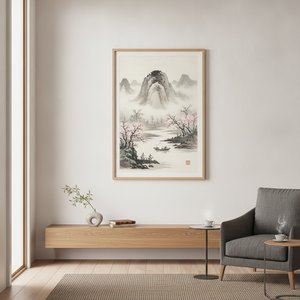
The Beauty of Ink Wash: Discover Serene & Soulful Art for Your Home
Discover the tranquil beauty of ink wash painting. Explore how Sumi-e and monochrome landscapes bring Zen-inspired serenity and soulful elegance to your home decor through expert curation and timeless East Asian aesthetics.


