Northern Renaissance · 1598
Forest Landscape (Gillis Van Coninxloo, 1598)
Gillis Van Coninxloo (1544–1607) har skabt Forest Landscape. Det er fra 1598. Det tilhører Northern Renaissance-bevægelsen. Den er udført i Oil On Panel. Det opbevares på Liechtenstein Museum i Wien, Austria. Målene er 42 × 61 cm.
- 1598
- Oil On Panel
- 42 × 61 cm
- Liechtenstein Museum, Wien

 Se i rummet

 Håndmalet oliemalerie
 Del som kort
 Del
 Faktablad


 Download
 Lignende værker
 Røntgenundersøgelse
 Diasshow
 Spørgsmål og svar

 Statistikker
Forest Landscape kort fortalt
- Titel
- Forest Landscape
- Kunstner
- Gillis Van Coninxloo (1544–1607)
- Kunstner født i
- Antwerpen, Belgien
- Dato
- 1598
- Medium
- Oil On Panel
- Dimensioner
- 42 × 61 cm
- Hvor det kan ses
- Liechtenstein Museum, Wien, Austria
- Bevægelse
- Northern Renaissance
- Periode
- Early Modern
- Motiv
- forest landscape, dark woods, path, village view, atmospheric, tranquility
Hvad forestiller Forest Landscape?
Identification of the Forest Landscape Artwork
The artwork titled Forest Landscape is a painting by the Flemish artist Gillis Van Coninxloo. Executed in 1598, this work is an oil on panel. The physical dimensions of the piece are 42 x 61 cm. It is currently held within the Liechtenstein Museum in Vienna, Austria.
This specific composition depicts a dense woodland environment. The scene features a winding path that leads into a thicket of trees. The foliage consists of various shades of green, while the trunks and branches create a heavy canopy overhead. In the background, a small village is visible through the gaps in the trees, providing a sense of distance within the forest setting.
The subject matter focuses on the natural world, specifically the textures of bark, leaves, and moss. A single, small human figure is positioned beneath a tree within the landscape. The composition utilizes a dark palette of browns, greens, and ochres to define the wooded area. Light filters through the upper branches, creating a contrast between the shadowed recesses of the undergrowth and the illuminated patches of the clearing.
Composition and Visual Elements
The composition is largely symmetrical, organized around a winding path that leads the eye toward the center of the image. This path cuts through a dense woodland, where the trunks and branches of trees intertwine to form a thick canopy overhead. Only a few small patches of sky are visible through the gaps in the foliage. Within this enclosed space, a single tiny human figure reclines beneath a tree, positioned near the center of the scene. The scale of the trees and the surrounding undergrowth dwarfs the figure, emphasizing the vastness of the natural environment.
Color is concentrated in the various hues of green found in the leaves and the mossy textures of the forest floor. These greens contrast with the dark browns and ochres of the tree trunks and the earth. In the background, a small village is visible through the trees, providing a sense of distance and depth. The lighting creates a chiaroscuro effect, with strong contrasts between the deep shadows of the thickets and the light that filters through the canopy onto the path and the reclining figure.
Technique and Artistic Style
The artist utilized oil on panel to establish a sense of depth and a tangible texture across the surface. The application of paint likely involves multiple layers and glazing, a method used to achieve a specific luminosity within the darker sections of the composition. This technique allows light to appear as though it is filtering through the canopy, creating a chiaroscuro effect through the deliberate placement of light and shadow. The resulting atmosphere is defined by a palette of dark colors and a high degree of intricate detail.
The composition is built upon a dense arrangement of ancient oaks and thick undergrowth. There is a clear priority placed on the textural richness of the natural elements, specifically the bark of the trees, the individual leaves, and the presence of moss. These organic forms are rendered with meticulous care, contributing to the overall density of the woodland scene. The interplay of light and shadow defines the verticality of the trunks and the irregular shapes of the foliage, emphasizing the physical presence of the forest environment.
Artistic Influence and Legacy
Gillis Van Coninxloo occupied a central position in the evolution of Northern landscape art. His technical approach functioned as a bridge between the intricate traditions of Mannerism and the atmospheric depth characteristic of the early Baroque. Through his development of the forest landscape, he moved away from panoramic vistas toward intimate, enclosed woodland scenes. This shift prioritized the textural details of bark, leaves, and moss, often submerging small human figures within an expansive, detailed natural environment.
The influence of his method extended to several prominent painters of the period. Jan Brueghel the Elder and Pieter Schoubroeck were among those affected by his stylistic developments. His approach to dense, immersive woodland compositions also impacted the work of Roeland Savery and various other Flemish and Dutch landscape painters. This specific work, created about 1598, represents his technical skill and craftsmanship in rendering the natural world.
Hvilket museum udstiller Forest Landscape?
Liechtenstein Museum
Wien, Austria
Et juvel af wienerbarokkens pragt Gemt i hjertet af Wiens historiske Ringstraße ligger Liechtenstein Museum i en ramme, der er lige så meget et mesterværk som de skatte, det beskytter. Indrettet i det storslåede Palais Liechtenstein tilbyder museet en fordybende rejse ind i den aristokratiske elegance og det dybe eftermæle fra Huset Liechtenstein. Når besøgende nærmer sig paladset, mødes de af en arkitektonisk storhed fra en svunden æra, hvor hver forgyldt gesims og hver svungen trappe hvisker fortællinger om kejserlig prestige.


Højopløselige billeder af Forest Landscape

Public domain: kunstneren døde i 1607.
Andre størrelser, beskæringer og kildehenvisning →Gillis Van Coninxloo, Forest Landscape (1598), Liechtenstein Museum. Public domain
Spørgsmål om Forest Landscape besvaret
Hvor kan man i dag se "Forest Landscape" af Gillis Van Coninxloo udstillet?
"Forest Landscape" af Gillis Van Coninxloo er udstillet på Liechtenstein Museum, Wien, Austria. Museets fortegnelse henviser til det originale værk og ikke til reproduktioner.
Hvornår er "Forest Landscape" af Gillis Van Coninxloo skabt?
"Forest Landscape" af Gillis Van Coninxloo blev skabt i 1598.
Hvilken teknik er brugt til "Forest Landscape" af Gillis Van Coninxloo?
Gillis Van Coninxloo brugte Oil On Panel-teknikken til "Forest Landscape". Teknikken definerer det originale værks materielle karakter.
Hvad er de faktiske mål på "Forest Landscape" af Gillis Van Coninxloo?
"Forest Landscape" måler 42 x 61 cm i sin oprindelige form. De originale dimensioner er en nyttig reference, når du skal vælge størrelsen på en reproduktion.
Hvad forestiller "Forest Landscape"?
Motiverne i "Forest Landscape" er forest landscape, dark woods, path, village view, atmospheric, tranquility, nature scene, 16th century.
Er "Forest Landscape" fri for ophavsret?
Hvad angår ophavsret, er "Forest Landscape" i det offentlige domæne – ophavsretten er udløbet.
Hvem har skabt "Forest Landscape"?
"Forest Landscape" blev skabt af Gillis Van Coninxloo. Informationen på denne side beskriver Gillis Van Coninxloos originale værk.
Hvilken stilart tilhører "Forest Landscape"?
"Forest Landscape" er et værk fra Northern Renaissance. Denne stilart angiver den kunstneriske tradition, som værket indgår i.
Hvilken fase af Gillis Van Coninxloos kunstneriske udvikling repræsenterer "Forest Landscape"?
Inden for Gillis Van Coninxloos karriere tilhører "Forest Landscape" perioden Late 16th Century, hvilket gør det muligt at sammenligne værket med kunstnerens øvrige værker.
Om kunstneren, Gillis Van Coninxloo
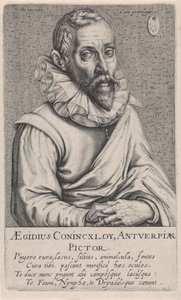
1544–1607, Belgien
Gillis Van Coninxloo
En mester af det grønne rige Gillis Van Coninxloo står som en skelsættende figur i udviklingen af nordlig landskabskunst, hvor han fungerede som en vital bro mellem de indviklede manieristiske traditioner og den spirende atmosfæriske dybde i den tidlige barok. Han blev født i Antwerpen, Belgien, og hans liv var dybt vævet sammen med de rige kunstneriske traditioner i Nederlandene. Som søn af en maler blev han opslugt af en verden, hvor håndværksmæssig præcision og observation af naturen var altafgørende. Hans tidlige uddannelse under mestre som Pieter Coecke van Aelst den Yngre og Lenaert Kroes gav ham et solidt fundament, men det var hans tid i værkstedet hos Gillis Mostaert, der for alvor lod hans talent blomstre, hvilket gjorde det muligt for ham at bidrage til professionelle værker, mens han finpudsede sin unikke vision.
Om Gillis Van Coninxloo Bemærkelsesværdige værker af Gillis Van Coninxloo
Også af Gillis Van Coninxloo
 Jonah Preaching to the Ninevites1583
 Woodland with Saint Jerome1583
 Landscape with the judgment of Midas1598
 Landscape with the Judgement of Paris1610
Essays om Forest Landscape
 French Barbizon paintersMasterpieces by Théodore Rousseau and Daubigny define the Barbizon School. Explore the full collection online at OriginalUniqueArt.com.
 Enchanted Woodlands: 10 Masterpieces That Capture the Magic of the ForestExplore iconic forest art by Shishkin, Klimt, and Van Gogh. Discover museum-quality masterpieces on OriginalUniqueArt.com.
 Mastering the Horizon: An Art Historian’s Guide to the World's Most Iconic Landscape PaintingsExplore the profound history of landscape painting with our expert guide. From Impressionist light to Chinese traditions, discover the tech…