

 Se i fuld skala
 Del
Del Del
Del
 Detaljer

 Download
 Lignende værker
 Røntgenundersøgelse
 Diasshow
George Washington (Vaughan-Sinclair portrait)
 Neoclassical
 1795
1795 93.0 x 80.0 cm
 Se mere
Giclée / Kunsttryk
Giclée- eller lærredstryk i museumskvalitet med hurtig produktion og fleksible muligheder for finish. ( Køb håndlavet maleri Køb billede)




P118B $10

P118H $10

P118W $10

P438Z $10

P508JH $12

P508YH $12

P805H $10

P805Z $10

P919BZ $10

P919G $10

P919XJ $10

P959ZH $10

P968JZ $12

W106C $8

W218G $10

W218JH $8

W218Y $10

W307PJ $10

W316G $10

W316PJ $8

W316Y $10

W398PJ $8

W4111J $10

W500HY $15

W500JH $15

W692G $12

W849H $8

W940BG $15

W953PJ $8




Vælg mellem vores forudindstillede størrelser, der matcher kunstværkets originale proportioner.

Du kan indtaste dine egne mål for at passe til en specifik ramme eller et bestemt område. Hvis den valgte størrelse ikke stemmer overens med det originale billedes proportioner, vil vi enten beskære kunstværket eller udvide billedet med en spejlet eller ensfarvet kant. En digital mockup vil blive sendt til din godkendelse, før produktionen påbegyndes.
Bemærk venligst, at forhåndsvisningen på skærmen ikke afspejler den faktiske beskæring eller udvidelse. Kun mockuppen vil nøjagtigt vise den endelige komposition.
Selvom specialmål er tilgængelige, anbefaler vi at vælge et mål fra den foruddefinerede liste for at bevare de originale proportioner.
Verdensomspændende levering () på 2 uger i stedet for de sædvanlige 4/5 uger. (22 august)

Gratis ekspresforsendelse til hele verden

Lærred af linned i høj kvalitet

Fuld transportforsikring

Garanti for refusion af told og importafgifter

Garanti for præcis farvegengivelse

60 dages returret (kun ved fabrikationsfejl)

100% Tilfredshedsgaranti

Mængderabat tilgængelig
 Glasmulighed er kun tilgængelig i størrelser under 110 cm

George Washington (Vaughan-Sinclair portrait)
Giclée / Kunsttryk
Størrelse på reproduktion
-


Samlet pris
$ 81
Beskrivelse af samlerobjektet
Captivating Portrait of a Founding Father
This exquisite oil portrait captures the commanding presence and dignified spirit of George Washington, the first President of the United States. Executed in 1795, this work exemplifies the neoclassical style that emphasizes realism, clarity, and timelessness. The subject’s calm yet authoritative expression invites viewers to reflect on his leadership, wisdom, and pivotal role in shaping American history. With meticulous attention to detail, the artist skillfully renders Washington’s features, conveying both his physical stature and the inner strength that has made him an enduring symbol of patriotism and resilience.Masterful Technique and Artistic Style
Created with traditional oil painting techniques, this portrait showcases fine brushwork, layered glazes, and subtle shading that bring depth and vitality to the composition. The artist employs a restrained color palette dominated by naturalistic tones—flesh, whites, blacks, and muted browns—highlighting the subject’s face and attire. The soft, directional lighting accentuates Washington’s high forehead, prominent nose, and firm lips, creating a three-dimensional effect that enhances the realism. The composition centers on Washington’s bust and shoulders, with his gaze directed outward, engaging viewers directly and establishing a sense of immediacy and connection.Historical Significance and Symbolism
This portrait not only celebrates Washington’s physical likeness but also embodies his leadership qualities—resolve, dignity, and calm authority. The formal attire and composed expression evoke his role as a statesman and founding father, symbolizing stability and national unity. The background’s warm reddish-brown hue contrasts subtly with his pale skin and white hair, emphasizing his prominence and the gravity of his position. As a piece rooted in neoclassical ideals, it reflects the Enlightenment values of reason, virtue, and civic responsibility that Washington exemplified.Emotional Impact and Interior Design Inspiration
Beyond its historical importance, this portrait exudes a sense of gravitas and inspiration, making it an ideal focal point for sophisticated interiors. Its timeless aesthetic complements both traditional and contemporary spaces, adding a layer of cultural depth and intellectual richness. Whether displayed in a study, library, or executive office, this high-quality reproduction serves as a powerful reminder of leadership, perseverance, and the enduring ideals of freedom and democracy. It is a compelling addition for collectors, art lovers, and interior designers seeking a distinguished piece that resonates with history and artistry alike.Kunstnerens biografi
Gilbert Stuart Newton: Life & Legacy
Early Life and Family Background
- Birth and Origins: Gilbert Stuart Newton was born on September 2, 1795, in Halifax, Nova Scotia. He was the youngest of twelve children.
- Family Connections: His father, Henry Newton, was a customs official, and his mother, Ann, held a significant artistic lineage – she was the daughter of Gilbert Stuart, the renowned American portrait painter.
- Early Years & Return to America: The family initially resided in Boston but returned to Charlestown near Boston in 1803 following his father’s death.
Artistic Training and Influences
- Initial Path & Uncle's Guidance: Though initially intended for a commercial career, Newton was apprenticed to his uncle, Gilbert Stuart, marking the beginning of his artistic journey.
- European Studies: He traveled to Europe with an elder brother and studied painting in Florence. Later visits to Paris (1817) introduced him to artists like Charles Robert Leslie, Washington Allston, and David Wilkie.
- Royal Academy & Formal Training: Newton continued his education at the Royal Academy in London after a period spent in the Netherlands.
Artistic Style and Major Themes
- Romantic Sensibilities: Newton’s work is generally categorized within the Romantic movement, characterized by emotional intensity and dramatic narratives.
- Literary & Poetic Inspirations: He became particularly known for paintings inspired by literature and poetry. Subjects drawn from works like *Don Quixote* and Shakespeare were prominent in his oeuvre.
- Portraiture & Genre Scenes: While he painted portraits, including those of notable figures such as Washington Irving, Newton also excelled in genre scenes depicting moments from literary narratives.
Key Achievements and Recognition
- Royal Academy Affiliation: Newton was elected an Honorary Academician of the National Academy of Design (1827), an Associate of the Royal Academy (1829), and a full Academician in 1832.
- Exhibitions & Patronage: He regularly exhibited at the Royal Academy from 1818 onwards, gaining recognition and attracting patrons like the Marquis of Lansdowne.
- Public Collections: His works found their way into prominent public collections, including the National Gallery and the South Kensington Museum (now V&A).
Later Life and Legacy
- Mental Health & Final Years: Shortly after his election to the Royal Academy, Newton began to suffer from mental illness. He was admitted to an asylum at Chelsea where he continued to paint until his death on August 5, 1835.
- Burial Site: He is buried in St Mary’s Church Wimbledon, London.
- Historical Significance: Though overshadowed by his uncle Gilbert Stuart, Newton carved a niche for himself as a skilled and imaginative artist of the Romantic period. His literary-inspired paintings offer insights into the cultural tastes and artistic trends of 19th-century Britain.

gilbert stuart newton
1795 - 1835
Kort om kunstneren
- Birth_Date: 1795
- Birth_Place: Halifax, Nova Scotia
- Death_Date: 1835
- Influenced_By: Gilbert Stuart (uncle)
- Movement: Romanticism
- Name: Gilbert Stuart Newton
- Nationality: British
- Notable_Works:
- Don Quixote in his Study
- Captain Macheath upbraided by Polly and Lucy
- Yorick and the Grisette
- The Window or the Dutch Girl
- Portia and Bassanio
Relaterede artikler

Georges Braques Mesterværker: Top 25 Kunstværker til Din Bolig
Oplev Georges Braques 25 mest ikoniske kunstværker! Dyk ned i kubismens verden, fra stilleben til analyse af form og farve. Find inspiration & køb eksklusive reproduktioner på OriginalUniqueArt.com – museumskvalitet til dit hjem.

Georges Seurat: Top 25 Kunstværker – Impressionisme & Pointillism til Dit Hjem
Oplev Georges Seurats 25 mest ikoniske værker! Fordyb dig i impressionismens og pointillismens verden. Find inspiration til din boligindretning med museumskvalitets kunsttryk på OriginalUniqueArt.com. Udforsk samlingen online.

Grant Wood & American Regionalism: Identity, Myth & the Rural Landscape
Explore the world of Grant Wood & American Regionalism with OriginalUniqueArt. Discover the symbolism behind 'American Gothic', recurring themes, and the movement's lasting impact on art history. High-quality reproductions available.

Amerikansk Realisme: 10 Mesterværker der Definerede En Kunstbevægelse – Find Din Inspiration Hos OriginalUniqueArt
Oplev de 10 mest ikoniske værker inden for amerikansk realisme! Fra Edward Hopper til Andrew Wyeth – lær historierne bag mesterværkerne og find inspiration til dit hjem. Køb museumskvalitets reproduktioner på OriginalUniqueArt.com.
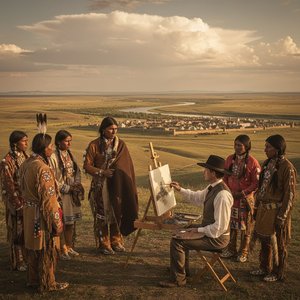
George Catlin: Witnessing & Representing Indigenous Life on the American Frontier
Explore the captivating art of George Catlin, renowned for his vivid portraits & landscapes documenting Native American life on the frontier. Discover a vanishing world through stunning paintings and historical context.

