
 Del
Del Del
Del
 Detaljer

 Download
 Lignende værker
 Diasshow
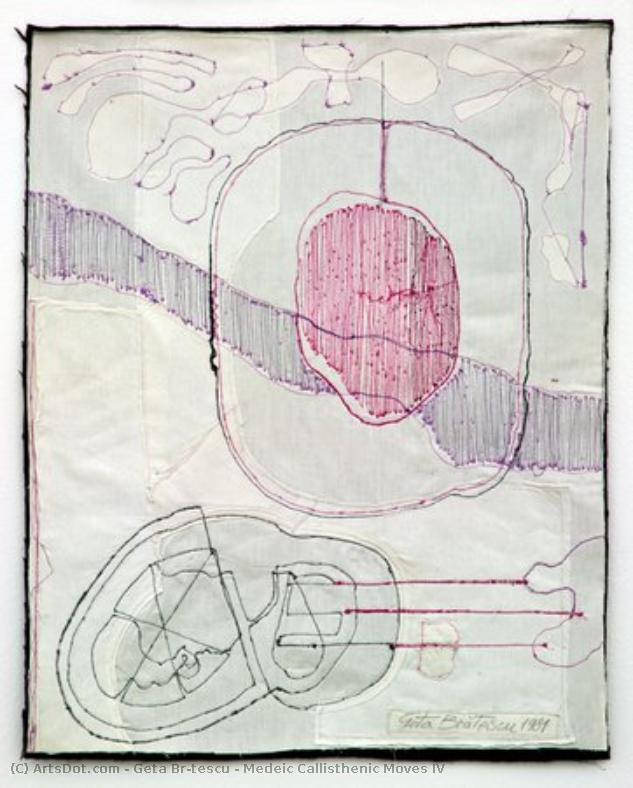
Medeic Callisthenic Moves IV


 Se mere
Giclée / Kunsttryk
Giclée- eller lærredstryk i museumskvalitet med hurtig produktion og fleksible muligheder for finish. ( Køb håndlavet maleri Køb billede)




































Vælg mellem vores forudindstillede størrelser, der matcher kunstværkets originale proportioner.

Du kan indtaste dine egne mål for at passe til en specifik ramme eller et bestemt område. Hvis den valgte størrelse ikke stemmer overens med det originale billedes proportioner, vil vi enten beskære kunstværket eller udvide billedet med en spejlet eller ensfarvet kant. En digital mockup vil blive sendt til din godkendelse, før produktionen påbegyndes.
Bemærk venligst, at forhåndsvisningen på skærmen ikke afspejler den faktiske beskæring eller udvidelse. Kun mockuppen vil nøjagtigt vise den endelige komposition.
Selvom specialmål er tilgængelige, anbefaler vi at vælge et mål fra den foruddefinerede liste for at bevare de originale proportioner.
Verdensomspændende levering () på 2 uger i stedet for de sædvanlige 4/5 uger. (21 august)

Gratis ekspresforsendelse til hele verden

Lærred af linned i høj kvalitet

Fuld transportforsikring

Garanti for refusion af told og importafgifter

Garanti for præcis farvegengivelse

60 dages returret (kun ved fabrikationsfejl)

100% Tilfredshedsgaranti

Mængderabat tilgængelig
 Glasmulighed er kun tilgængelig i størrelser under 110 cm

Medeic Callisthenic Moves IV
Giclée / Kunsttryk
Størrelse på reproduktion
-


Samlet pris
$ 81
Beskrivelse af samlerobjektet
A Tapestry of Thought: Geta Brătescu’s “Medeic Callisthenic Moves IV”
Geta Brătescu's "Medeic Callisthenic Moves IV," created in 1981, isn’t merely a textile; it’s an intimate dialogue between the artist and her materials—a testament to the power of process over precise representation. This work, deeply rooted in Romanian artistic tradition yet profoundly modern, invites viewers into a realm where line, color, and texture coalesce to evoke a sense of quiet contemplation and the very act of creation itself. Brătescu, a pivotal figure who navigated the complexities of post-communist Romania with unwavering artistic integrity, transforms simple linen into an arena for exploring identity, memory, and the fundamental language of art.
Composition and Technique: A Dance of Line and Fabric
The composition of “Medeic Callisthenic Moves IV” is deliberately asymmetrical, a subtle disruption that mirrors the inherent dynamism of movement. The lower half of the canvas is dominated by an amorphous shape—a suggestion of form rather than a defined image—while a horizontal band across the upper portion provides a grounding element. This arrangement isn’t haphazard; it's carefully orchestrated to draw the eye through the piece, encouraging a slow, deliberate observation. Brătescu masterfully employs a mixed media technique, layering hand-stitching onto the fabric itself. These stitches aren’t merely decorative; they are integral to the artwork’s texture and structure, creating raised lines that add depth and physicality. The application of paint or ink is equally considered—loose, gestural strokes mingle with more controlled marks, reflecting a balance between spontaneity and intention.
Color Palette and Symbolism: Echoes of Myth and Memory
The color palette is restrained yet profoundly evocative. Predominantly consisting of off-white, muted pinks (ranging from rose to lavender), and shades of deep violet, the hues create a sense of quiet intimacy—a feeling akin to looking at a cherished memory. The subtle variations within each color contribute to the work’s overall softness and depth. The title itself, “Medeic Callisthenic Moves,” immediately evokes the myth of Medea, the powerful sorceress from Greek mythology. This reference isn't literal; rather, it suggests themes of transformation, agency, and perhaps even a touch of melancholy. The movement implied by the title—a series of exercises or gestures—is rendered through the flowing lines and dynamic composition, hinting at a process of self-discovery and exploration.
Emotional Resonance and Artistic Legacy
"Medeic Callisthenic Moves IV" transcends its material components to become a deeply personal statement. It’s a work that speaks to the artist's own journey—her struggles, her resilience, and her unwavering commitment to artistic expression in a challenging political climate. The piece embodies Brătescu’s broader exploration of selfhood through art, particularly her interest in the studio as a space for both creation and introspection. Her unique approach – blending traditional techniques with conceptual ideas – firmly established her as a leading figure in Romanian contemporary art. Reproductions of this work offer a glimpse into Brătescu's world, inviting viewers to contemplate not just the image itself, but also the rich history and profound emotional depth behind it. It’s a piece that rewards repeated viewing, revealing new layers of meaning with each encounter.
Kunstnerens biografi
A Life Woven in Lines: The Art of Geta Brătescu
Geta Brătescu, a pivotal figure in Romanian contemporary art, lived a life deeply intertwined with the political and artistic currents of 20th-century Europe. Born Georgina Comanescu on May 4, 1926, in Ploiești, Romania, her journey as an artist was marked by resilience, innovation, and a profound exploration of identity, feminism, and the very essence of creative expression. Brătescu’s early intellectual pursuits led her to the University of Bucharest's Faculty of Letters between 1945 and 1949, where she studied under luminaries like George Călinescu and Tudor Vianu—a foundation that instilled in her a lifelong appreciation for literature and its power to inform artistic vision. Simultaneously, she enrolled at the Academy of Fine Arts, studying under Camil Ressu, but her studies were abruptly halted by the rising tide of communism. Deemed ‘of bad origins’ due to her family's property ownership, she faced expulsion, an early encounter with the censorship and political constraints that would shadow much of her career. This initial setback didn’t extinguish her artistic flame; instead, it fueled a period of self-directed learning and experimentation before returning to formal studies at the Institute of Fine Arts 'Nicolae Grigorescu' from 1969 to 1971.The Line as Language: A Multidisciplinary Approach
Brătescu’s artistic practice defied easy categorization, embracing a remarkable range of media—drawing, collage, photography, performance, illustration, and film all served as vehicles for her ideas. However, at the heart of this diverse output lay an unwavering fascination with the line. For Brătescu, the line wasn't merely a formal element; it was a fundamental tool for definition, measurement, and conveying movement—a way to map both physical space and inner states. This preoccupation is vividly apparent in her series of detailed hand studies, where the intricate network of lines captures not just anatomical form but also the expressive potential of the human touch. Her exploration extended beyond static representation into performative realms, using the line to delineate space and trace the boundaries of selfhood. This dedication to the line as a core element permeated all her work, becoming a signature that distinguished her unique artistic voice. She wasn’t interested in grand narratives or monumental statements; rather, she focused on the subtle power of gesture, the intimacy of materials, and the quiet revolutions possible within the confines of the studio.Identity, Feminism, and Resistance
Brătescu's art consistently grappled with complex questions of identity, often through self-portraits and performances that challenged conventional notions of representation. Her work frequently engaged with feminist themes, most notably in her series inspired by the mythological figure of Medea—a character whose story resonated deeply with Brătescu’s own experiences as a woman navigating a patriarchal society. The *Medeic Callisthenic Moves* series, created from scraps of cloth provided by her mother, is particularly poignant, reflecting a complex relationship to femininity and the weight of inherited narratives. Living under a restrictive political regime, Brătescu's art subtly addressed issues of censorship and freedom of expression. Her work often operated within the private sphere as a form of resistance—a quiet rebellion against imposed limitations. *Censored Self Portrait* (1978), a powerful photographic work depicting her mouth and eyes obscured by paper strips, stands as a stark symbol of these constraints, embodying the artist’s struggle to articulate herself in a silenced world. Her studio became a sanctuary, a space for experimentation and self-discovery where she could circumvent official channels and explore forbidden territories.Major Works and Lasting Legacy
Throughout her career, Brătescu produced a body of work that continues to inspire and challenge audiences. *The Studio* (1978), a seminal film created in collaboration with Ion Grigorescu, is a particularly significant piece, exploring the studio space as a site for self-definition and artistic creation—a microcosm of the artist’s inner world. The *Hands* series (1974–76) showcases her mastery of draughtsmanship and symbolic representation, elevating a seemingly mundane subject to profound metaphorical significance. The *Jeu des Formes (Game of Forms)* collages demonstrate her innovative approach to form and composition, continuing her exploration of lines and shapes in unexpected ways. Brătescu’s achievements were recognized late in life but with increasing acclaim. She served as artistic director of the influential Romanian literature and art magazine *Secolul 21*, and a major retrospective of her work was held at the National Museum of Art of Romania in 1999. In 2015, she had her first UK solo exhibition at Tate Liverpool, bringing her work to an international audience, culminating in representing Romania at the 57th Venice Biennale in 2017—a landmark moment in her career. Geta Brătescu passed away in Bucharest in 2018, leaving behind a legacy as a pioneering figure whose multidisciplinary approach and unwavering commitment to artistic freedom continue to resonate with generations of artists. She remains an essential voice for those seeking to challenge conventions and explore the complexities of human experience through art.
Geta Brătescu
1926 - 2018 , Romania
Kort om kunstneren
- Artistic Movement Or Style: Conceptual art, Performance art
- Artists Or Movements Influenced By This Artist: Romanian contemporary art
- Artists Who Influenced This Artist:
- George Călinescu
- Tudor Vianu
- Aesop
- Faust
- Medea
- Date Of Birth: May 4, 1926
- Date Of Death: 2018
- Full Name: Geta Brătescu
- Nationality: Romanian
- Notable Artworks:
- The Studio
- Hands
- Medeic Callisthenic Moves
- Jeu des Formes
- Censored Self Portrait
- Place Of Birth: Ploiești, Romania
Relaterede artikler

Geometrisk Abstraktion: Top 10 Kunstværker der Definerede Bevægelsen | OriginalUniqueArt.dk
Oplev de 10 mest ikoniske værker inden for geometrisk abstraktion! Fra Kandinsky til Mondrian – lær historierne bag disse banebrydende kunstnere og deres farverige malerier. Find museumskvalitets reproduktioner & inspiration til din indretning på OriginalUniqueArt.dk.
Beyond the Lines: Mastering the High-Impact World of Contemporary Abstraction
Master the high-impact world of contemporary abstraction. Discover how bold colors, textures, and modern movements like Abstract Expressionism can transform your space with premium, high-energy art curated for the design-conscious professional.

Top 10 Abstrakt Ekspressionisme Mesterværker – Kunst der Forandrede Verden | OriginalUniqueArt.com
Oplev de 10 mest ikoniske værker inden for Abstrakt Ekspressionisme – Jackson Pollock, Mark Rothko og mere. Lær historien bag kunstnerne & teknikken. Find museumskvalitets reproduktioner på OriginalUniqueArt.com.

Kandinskys 25 Mesterværker: En Rejse Ind i Abstrakt Kunst | OriginalUniqueArt.com
Oplev Kandinskys 25 mest ikoniske værker! Dyk ned i abstrakt kunst, ekspressionisme og farvernes sprog. Find luksus reproduktioner af berømte malerier som 'Komposition VIII' på OriginalUniqueArt.com – inspiration til din vægkunst & indretning.

Neo-Abstract Art: The High-Impact Evolution of Modern Visual Energy and Geometric Sophistication
Discover the power of Neo-Abstract art. Explore how bold geometric forms and high-impact visual energy are redefining modern design. Learn to curate sophisticated, high-energy spaces with the latest trends in contemporary abstraction and structural color.

