

 Se i rummet
 Send
Send Del
Del
 Detaljer
 Studieguide til kunstværker

 Download
 Lignende værker
 Røntgenundersøgelse
 Se diasshow
 Statistik
Self-Portrait
 Oil On Canvas
- WallArt
- Baroque Dutch Painting
 1665
1665- Early Modern
 49.0 x 39.0 cm
 Metropolitan Museum of Art
 Læs mere
Giclée / Kunsttryk
Giclée- eller lærredstryk i museumskvalitet med hurtig produktion og fleksible muligheder for finish. ( Bestil håndmalet reproduktion Skift til digitalt billede)




P118B Dkr10

P118H Dkr10

P118W Dkr10

P438Z Dkr10

P508JH Dkr12

P508YH Dkr12

P805H Dkr10

P805Z Dkr10

P919BZ Dkr10

P919G Dkr10

P919XJ Dkr10

P959ZH Dkr10

P968JZ Dkr12

W106C Dkr8

W218G Dkr10

W218JH Dkr8

W218Y Dkr10

W307PJ Dkr10

W316G Dkr10

W316PJ Dkr8

W316Y Dkr10

W398PJ Dkr8

W4111J Dkr10

W500HY Dkr15

W500JH Dkr15

W692G Dkr12

W849H Dkr8

W940BG Dkr15

W953PJ Dkr8




Vælg mellem vores forudindstillede størrelser, der matcher kunstværkets originale proportioner.

Indtast den bredde og højde, du har brug for, så det passer til din ramme eller din væg. Et print kan kun beskæres, aldrig gøres større end billedet, så en størrelse med en anden form vil miste en del af motivet. Vi sender dig en digital mockup til godkendelse, før vi printer noget. Billedet vist på denne side viser ikke den faktiske beskæring — det er kun mockuppen, der gør.
Verdensomspændende levering () på 2 uger i stedet for de sædvanlige 4/5 uger. (21 oktober)

Gratis ekspresforsendelse til hele verden

Lærred af linned i høj kvalitet

Komplet transportforsikring

Garanti for refusion af told og importafgifter

Garanti for autentisk farvegengivelse

100 dages returret ved fabrikationsfejl

100% fuld returret

Mængderabat ved flere køb
 Glasmulighed er kun tilgængelig i størrelser under 110 cm

Self-Portrait
Giclée / Kunsttryk
Reproduktionsstørrelse
-


Samlet pris
Dkr 528
A Moment of Contemplation: Gerrit Dou’s ‘Self-Portrait’
Gerrit Dou's 1665 self-portrait is more than just a likeness; it’s an exquisitely rendered meditation on the artist’s own presence and the quiet beauty he sought to capture. Painted during the height of the Dutch Golden Age, this work exemplifies the meticulous style that earned Dou the moniker “Gérard Dou” – a testament to his dedication to detail and mastery of light. The painting immediately draws the eye to the artist himself, seated on a simple bench, holding an open book, a gesture suggesting both intellectual pursuit and personal reflection. This isn’t a flamboyant self-promotion; rather, it's a deeply intimate portrayal, inviting us into Dou’s world.
The Art of Chiaroscuro and Trompe-l'oeil
Dou’s technique is the cornerstone of this captivating piece. He was a leading figure within the Leiden fijnschilders – a group known for their incredibly detailed and realistic paintings, particularly their innovative use of chiaroscuro, the dramatic interplay of light and shadow. Notice how he skillfully manipulates darkness to sculpt the folds of his clothing, creating a palpable sense of volume and texture. The subtle gradations of tone are achieved through layers upon layers of translucent glazes – a hallmark of Dou’s process – building up color slowly to achieve an almost luminous effect. Furthermore, elements within the composition subtly employ trompe-l'oeil techniques, particularly in the rendering of the potted plants and the bird perched above, creating an illusion of three-dimensionality that further enhances the painting’s realism.
Symbolism and Context
The inclusion of the book suggests a connection to learning and knowledge, aligning with Dou’s own intellectual curiosity. The potted plants – likely herbs or flowers – were not merely decorative; they held symbolic significance in Dutch art, representing prosperity, fertility, and domestic tranquility. The bird, a frequent motif in Dou's work, could symbolize hope, freedom, or even the fleeting nature of time. Painted in 1665, this self-portrait reflects a period of relative stability for the Netherlands following the Thirty Years’ War, yet also hints at the anxieties and uncertainties that permeated society. Dou’s dedication to capturing these nuances speaks volumes about his artistic vision.
A Legacy of Refinement
Measuring 49 x 39 cm, this intimate self-portrait offers a rare glimpse into the studio of one of the Dutch Golden Age's most accomplished artists. Gerrit Dou’s meticulous approach and profound understanding of light and shadow have secured his place as a master of realism and a key figure in the development of Northern European painting. This hand-painted reproduction allows you to experience the full impact of Dou’s artistry, bringing this captivating moment of contemplation into your own space.
Spørgsmål & svar
Hvilken teknik og stil kendetegner "Self-Portrait" af Gerrit Dou?
"Self-Portrait" af Gerrit Dou kombinerer Oil On Canvas-teknikken med Baroque Dutch Painting-stilen. Teknik og stilart beskriver værkets fremstilling og æstetiske udtryk.
Hvor kan jeg se en forhåndsvisning af "Self-Portrait"?
For at se en forhåndsvisning af en reproduktion af "Self-Portrait" af Gerrit Dou, skal du åbne værkets Forhåndsvisning-side.
Hvilken kunstretning er "Self-Portrait" af Gerrit Dou en del af?
Den kunstretning, der er forbundet med "Self-Portrait" af Gerrit Dou, er Baroque Dutch Painting. Denne klassificering placerer værket blandt relaterede kunstnere og kunstværker.
Om kunstneren
Gerrit Dou (1613 – 1675)
Gerrit Dou was one of the most celebrated painters of the Dutch Golden Age until the beginning of the nineteenth century. He trained under Rembrandt van Rijn, whose impact is evident in his early oeuvre. His fame rested on meticulously rendered scenes of everyday life—often depicted within arched stone openings known as ‘niche’ paintings—characterized by an unparalleled mastery of chiaroscuro. This distinctive artistic approach cemented his place among the foremost figures of Leiden’s artistic heritage.Early Life and Training
Gerrit Dou was born in Leiden on April 7, 1613, the youngest son of Marytje Jansdr van Rosenburg and the glazier Douwe Jansz de Vries van Arentsvelt of Harlingen (ca. 1584–ca. 1656). According to Jan Jansz. Orlers, burgomaster of Leiden and author of a city chronicle in 1641, Dou demonstrated “a pleasure and desire toward painting” from a young age. At the tender age of nine, he commenced his artistic education with Bartholomeus Dolendo (ca. 1570–1629), a copper engraver who instilled in him foundational skills in printmaking alongside painting. Subsequently, Dou pursued further training under Pieter Couwenhorn (ca. 1599–1654), a master glass painter, honing his craft and broadening his artistic horizons.Rembrandt’s Influence
Gerrit Dou's formative years coincided with Rembrandt’s residency in Leiden, where he served as Douwe Jansz.’s apprentice until the latter moved to Amsterdam in 1631. During this period, Dou benefited immensely from Rembrandt’s guidance—a relationship that profoundly shaped his artistic style and technique. As Arnold Houbraken recounts, Rembrandt's influence was palpable: “Whoever was surprised ‘that such noble painterly ability had sprouted from the school of Rembrandt’ had forgotten that Rembrandt, too, in his early years ‘had painted meticulously.’” This meticulous attention to detail—a hallmark of Rembrandt’s oeuvre—became a defining characteristic of Dou’s own artistic endeavors.The Leiden Fijnschilders and Artistic Innovation
Gerrit Dou emerged as a pivotal figure within the Leiden *fijnschilderij* school, alongside artists like Frans van Mieris the Elder and Gabriel Metsu. This movement championed an exacting style—characterized by minute detail and polished realism—primarily focused on genre scenes and nocturnal interiors illuminated with dramatic chiaroscuro effects. Dou’s groundbreaking technique of capturing subtle nuances of light—particularly in his iconic candlelit compositions—established him as a pioneer of artistic innovation, influencing generations of painters to come. His work stands apart from its contemporaries due to its profound psychological depth and masterful rendering of atmosphere.Notable Works and Legacy
Gerrit Dou's enduring legacy resides in his captivating paintings—among which “The Astronomer by Candlelight” exemplifies his unparalleled skill in portraying the interplay of light and shadow. These works are housed in prestigious institutions such as The Leiden Collection, New York, where visitors can immerse themselves in the splendor of European art from the sixteenth to eighteenth centuries. Furthermore, Dou’s influence extends beyond Leiden's artistic circles, permeating museums across Europe—including the Mauritshuis in Delft—where his masterpieces continue to inspire awe and admiration. Gerrit Dou remains a cornerstone of Dutch artistic history, celebrated for his unwavering dedication to craftmanship and his contribution to shaping the visual culture of his time.
Gerrit Dou
1613 - 1675 , Nederland
Hurtige fakta
- Artistic Movement Or Style: Fijnschilder
- Artists Or Movements Influenced By This Artist: ['Frans van Mieris den Ældre']
- Artists Who Influenced This Artist: ['Rembrandt van Rijn']
- Date Of Birth: April 7, 1613
- Full Name: Gerrit Dou
- Nationality: Nederlandsk
- Notable Artworks:
- The Astronomer by Candlelight
- Portrait of an Old Woman
- Place Of Birth: Leiden, Netherlands
Relaterede artikler

Golden Light & Dutch Skies: The Timeless Magic of Dutch Golden Age Landscapes
Discover the breathtaking beauty of Dutch Golden Age landscapes. Explore the mastery of light, chiaroscuro, and 17th-century realism through an expert art history lens, celebrating the enduring legacy of the Dutch Masters for discerning collectors and art lovers.
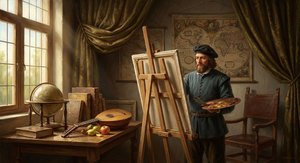
Illuminating Realism: Exploring the Dutch Golden Age of Painting (1600-1700)
Explore the Dutch Golden Age of painting (1600-1700) with OriginalUniqueArt. Discover Rembrandt, Vermeer & other masters. Learn about techniques, history & find museum-quality reproductions.

Hollandske Mestre: Top 10 Værker fra Guldalderen – Kunst til Dit Hjem
Oplev de 10 mest ikoniske værker fra den hollandske guldalder! Rembrandt, Vermeer og andre mestre afsløres. Find inspiration til dit hjem & køb museumskvalitets kunsttryk på OriginalUniqueArt.com.
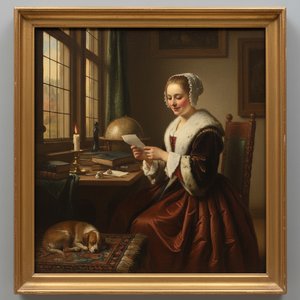
Gerrit Dou: Intimacy & Light in the Dutch Golden Age
Explore the exquisite world of Gerrit Dou, a master of Dutch Golden Age painting. Discover his intimate genre scenes, signature use of light, and lasting legacy. Learn about collecting Dou's works & their value.

Golden Age Reflections: Dutch Baroque Painting & Cultural Innovation
Explore the Dutch Golden Age of painting! Discover key artists like Vermeer & ter Borch, their innovative techniques, and the rich cultural context behind these Baroque masterpieces. Learn about collecting & appreciating this iconic art period.


