

 Se i rummet
 Send
Send Del
Del
 Detaljer
 Studieguide til kunstværker

 Download
 Lignende værker
 Røntgenundersøgelse
 Se diasshow
 Statistik
The Procuress


 Læs mere
Giclée / Kunsttryk
Giclée- eller lærredstryk i museumskvalitet med hurtig produktion og fleksible muligheder for finish. ( Bestil håndmalet reproduktion Skift til digitalt billede)




P118B Dkr10

P118H Dkr10

P118W Dkr10

P438Z Dkr10

P508JH Dkr12

P508YH Dkr12

P805H Dkr10

P805Z Dkr10

P919BZ Dkr10

P919G Dkr10

P919XJ Dkr10

P959ZH Dkr10

P968JZ Dkr12

W106C Dkr8

W218G Dkr10

W218JH Dkr8

W218Y Dkr10

W307PJ Dkr10

W316G Dkr10

W316PJ Dkr8

W316Y Dkr10

W398PJ Dkr8

W4111J Dkr10

W500HY Dkr15

W500JH Dkr15

W692G Dkr12

W849H Dkr8

W940BG Dkr15

W953PJ Dkr8




Vælg mellem vores forudindstillede størrelser, der matcher kunstværkets originale proportioner.

Indtast den bredde og højde, du har brug for, så det passer til din ramme eller din væg. Et print kan kun beskæres, aldrig gøres større end billedet, så en størrelse med en anden form vil miste en del af motivet. Vi sender dig en digital mockup til godkendelse, før vi printer noget. Billedet vist på denne side viser ikke den faktiske beskæring — det er kun mockuppen, der gør.
Verdensomspændende levering () på 2 uger i stedet for de sædvanlige 4/5 uger. (21 oktober)

Gratis ekspresforsendelse til hele verden

Lærred af linned i høj kvalitet

Komplet transportforsikring

Garanti for refusion af told og importafgifter

Garanti for autentisk farvegengivelse

100 dages returret ved fabrikationsfejl

100% fuld returret

Mængderabat ved flere køb
 Glasmulighed er kun tilgængelig i størrelser under 110 cm

The Procuress
Giclée / Kunsttryk
Reproduktionsstørrelse
-


Samlet pris
Dkr 528
A Nocturnal Drama Unveiled
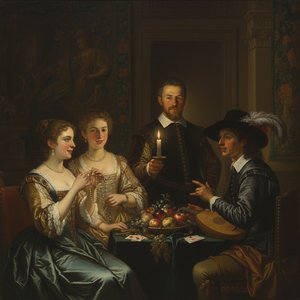
In the flickering glow of an unseen flame, Gerard van Honthorst’s The Procuress invites the viewer into a clandestine world of whispered secrets and moral ambiguity. Painted in 1625, this masterpiece serves as a breathtaking testament to the Dutch Golden Age, capturing a moment of theatrical tension that feels almost voyeuristic. The scene unfolds within a dimly lit interior, where the boundaries between light and shadow are not merely stylistic choices but narrative protagonists. As one gazes upon the composition, the eye is immediately drawn to the interplay of figures: a young woman with a provocative allure, an older woman acting as the intermediary, and a man whose presence suggests a transaction of much more than mere currency. It is a painting that does not just depict a scene; it breathes with the heavy, humid atmosphere of a Roman night.
The emotional resonance of the work lies in its ability to evoke a sense of palpable suspense. There is an intimacy here that borders on the uncomfortable, pulling the observer into a private encounter where social graces are stripped away by the raw necessity of desire and greed. For the collector or the lover of fine art, this piece offers more than just visual beauty; it provides a window into the psychological complexities of the human condition, making it an intellectually stimulating addition to any curated collection.
The Mastery of Tenebrism and Light
To understand The Procuress is to understand the genius of the man known as Gherardo delle Notti—Gerard of the Nights. Honthorst’s technical prowess is defined by his profound command of tenebrism, a technique characterized by violent contrasts between deep, impenetrable shadows and brilliant, localized highlights. Influenced heavily by the revolutionary Caravaggio, Honthorst mastered the art of "artificial lighting," where the light source—often a candle or a small lamp hidden from view—sculpts the figures out of the darkness. This method creates a sculptural quality in the flesh tones and a luxurious texture in the fabrics, from the shimmering silks to the heavy velvets.
The technique serves a dual purpose: it directs the viewer's gaze with surgical precision and heightens the dramatic stakes of the narrative. The way light catches the edge of a porcelain bowl or illuminates a seductive smile creates a rhythmic movement across the canvas, ensuring that the eye never rests too long on one spot but instead wanders through the shadows, searching for the next revelation. For interior designers, this dramatic use of chiaroscuro offers an unparalleled sense of depth and luxury, providing a focal point that can anchor a room with its profound architectural weight and classical elegance.
Symbolism and the Moral Landscape
Beyond its technical brilliance, The Procuress is a rich tapestry of social commentary and symbolic meaning. During the 17th century, such genre paintings often functioned as moralizing tales, warning against the vices of lust and avarice. The very title suggests a transaction of questionable morality, where the "matchmaker" facilitates encounters driven by passion and profit. Every element within the frame—the way a hand rests near a purse, the specific arrangement of objects on the table, and the suggestive glances exchanged between characters—contributes to a larger discourse on the fragility of virtue in an era of burgeoning mercantile wealth.
The painting captures the tension of the Dutch Golden Age, a period where unprecedented prosperity met deep-seated religious and ethical scrutiny. By bringing these themes into a domestic setting, Honthorst makes the high drama of morality accessible and intensely personal. Owning a reproduction of such a work is an opportunity to possess a piece of history that continues to provoke thought, offering a sophisticated layer of storytelling to any living space. It is a celebration of the shadows as much as the light, reminding us that the most compelling truths are often found in the dimmest corners of our existence.
Spørgsmål & svar
Findes der et diasshow til "The Procuress" af Gerard van Honthorst?
Diaporamaet af "The Procuress" kan ses på værkets Diaporama-side.
Hvilken farve dominerer kompositionen i "The Procuress" af Gerard van Honthorst?
Den dominerende farve i "The Procuress" af Gerard van Honthorst er Phthalo Green (#2f1c16).
Hvilket rum anbefales til "The Procuress" af Gerard van Honthorst?
En reproduktion af "The Procuress" passer godt ind i et Living Room.
Om kunstneren
En Master af Lys og Skygge: Livet og Kunsten af Gerard van Honthorst
Gerard van Honthorst trådte frem fra Utrecht i 1592, en central figur klar til at belyse den hollandske guldalder med sin dramatiske kunst. I første omgang vejledt af sin far, en dekorationsmaler, blomstrede Gerard’s talent under Abraham Bloemaert’s vægt, etablerende et solidt fundament i tegnekunst og komposition. Men det var en transformerende rejse til Rom, der uomgængeligt ændrede retningen for hans kunstneriske udvikling. Der, midt i den febrilske energi af det italienske barok, mødte han Caravaggio – et møde, der ville definere hans signaturstil og berettige ham til det evocative kælenavn “Gherardo delle Notti,” eller Gerard of the Nights. Brugen af tenebrism, en teknik med skarpe kontraster mellem lys og mørke, blev Honthorst’s varemærke, indgydende et palpabelt drama og følelsesmæssig intensitet i hans lærred. Han imiterede ikke blot Caravaggio; han oversatte den italienske mesters innovationer til en distinkt hollandsk sanselighed, med fokus på intime scener oplyst af kunstige lyskilder – stearinlys, lamper og ild, hvilket skabte en atmosfære både realistisk og dybt teateragtig. Denne mesterlærde over lys var ikke blot teknisk dygtighed; det var et middel til at afsløre karakter, til at trække betragteren ind i hver scenes følelsesmæssige kerne.Fra Romansk Opmuntring til Hollandsk Mesteri
Honthorst’s tid i Rom var præget af betydelig succes og værdighed. Han fandt gunst blandt byens elite, herunder Vincenzo Giustiniani, for hvem han skabte det kraftfulde “Christ Before the High Priest,” et værk, der exemplificerer hans mesterlige kommando over lys og skygge. Denne maleri, nu beboende i London’s National Gallery, viser ikke kun hans tekniske dygtighed, men også hans evne til at formidle dyb psykologisk indsigt i sine figurer. Han befæstede yderligere sin ry ved at arbejde for Cosimo II de' Medici, Grand Duke of Tuscany, og fortsatte med at udvise en tilpasningsevne og alsidighed, der ville tjene ham godt gennem hele hans karriere. Efter at have vendt tilbage til Utrecht omkring 1620 etablerede Honthorst sig hurtigt som en førende portrætmaler i det hollandske Rige. Hans evne til ikke kun at fange fysisk lighed, men også karakter og social status hos sine modeller gjorde ham meget eftertragtet af velhavende købmænd, adelsmænd og endda kongelige. Han blev præsident for St. Luke’s Gild i Utrecht i 1623, et bevis på hans voksende indflydelse inden for det kunstneriske samfund. Denne periode var præget af mange bestillinger, hvilket tillod Honthorst at finpudse sin stil og etablere en distinkt stemme inden for hollandsk maleri.En Kongelig Kunstner: Bestillinger og Samarbejder
Honthorst’s rækkevidde spredte sig ud over Holland. Hans arbejde tiltrak opmærksomhed fra Sir Dudley Carleton, der entusiastisk anbefalede ham til prominente engelske aristokrater som grevinden Victoria af Böhmen, hendes søster til Charles I, som ansatte ham som både maler og tegnekunstner for deres børn. Disse kongelige forbindelser førte til betydelige værker såsom den allegoriske repræsentation af Charles og Henrietta Maria som Diana og Apollo, nu beboende på Hampton Court Palace. Honthorst’s villighed til at samarbejde med andre kunstnere vidnager om hans åbenhed over for kunstnerisk udveksling. Han var f.eks. kendt for at huse Peter Paul Rubens under et besøg i Utrecht og endda male ham i en legende scene, der forestiller Diogenes, der leder efter en ærlig mand – et bevis på den gensidige respekt mellem disse to barok-giganter. Selvom nogle samarbejdsværker, såsom “The Taking of Christ,” oprindeligt blev tilskrevet kun Honthorst, har moderne forskning afsløret bidrag fra andre kunstnere, hvilket fremhæver de komplekse dynamikker i kunstnerisk produktion i denne periode.En Caravaggistisk Stemme
Honthorst var en nøglefigur i *Utrecht Caravaggisti*-bevægelsen – en gruppe hollandske malere, der omfavnede Caravaggio’s dramatiske realisme og tenebrism. Sammen med kunstnere som Hendrick ter Brugghen og Dirck van Baburen etablerede han en distinkt hollandsk fortolkning af italiensk barok stil. Hans fokus på genre scener oplyst af kunstige lyskilder, hans mesterlige portrætter og hans evne til at formidle følelser gennem dygtig brug af chiaroscuro efterlod et varigt præg på udviklingen af det hollandske guldalder maleri. Hans bror, Willem van Honthorst, fulgte i hans fodspor, men ofte med værker, der oprindeligt blev tilskrevet Gerard på grund af stilistiske ligheder.Et Eftermæle og en Arv
Gerard van Honthorst’s indflydelse resonerede langt ud over hans levetid. Han var en central figur i den *Utrecht Caravaggisti*-bevægelsen – en gruppe hollandske malere, der omfavnede Caravaggio’s dramatiske realisme og tenebrism. Sammen med kunstnere som Hendrick ter Brugghen og Dirck van Baburen etablerede han en distinkt hollandsk fortolkning af italiensk barok stil. Hans fokus på genre scener oplyst af kunstige lyskilder, hans mesterlige portrætter og hans evne til at formidle følelser gennem dygtig brug af chiaroscuro efterlod et varigt præg på udviklingen af det hollandske guldalder maleri. Hans bror, Willem van Honthorst, fulgte i hans fodspor, men ofte med værker, der oprindeligt blev tilskrevet Gerard på grund af stilistiske ligheder. Han døde i Utrecht i 1656 og efterlod et værk, der fortsat belyser det kunstneriske landskab og minder os om lysets og skyggens kraft til at afsløre den menneskelige tilstand.
Gerard van Honthorst
1590 - 1656 , Holland
Hurtige fakta
- Artistic Movement Or Style: Barok, Utrecht Caravaggister
- Artists Or Movements Influenced By This Artist: ['Utrecht Caravaggister']
- Artists Who Influenced This Artist: ['Caravaggio']
- Date Of Birth: 1592
- Date Of Death: 1656
- Full Name: Gerard van Honthorst
- Nationality: Hollandsk
- Notable Artworks:
- Christ før højpræsidenten
- Diana og Apollo
- Place Of Birth: Utrecht, Holland
Relaterede artikler
Gerard van Honthorst: Illuminating the Dutch Golden Age with Caravaggism & Courtly Grace
Explore the captivating world of Gerard van Honthorst, a Dutch Golden Age master renowned for his dramatic chiaroscuro & courtly portraits. Discover his life, art, and lasting influence on Baroque painting.

Hollandske Mestre: Top 10 Værker fra Guldalderen – Kunst til Dit Hjem
Oplev de 10 mest ikoniske værker fra den hollandske guldalder! Rembrandt, Vermeer og andre mestre afsløres. Find inspiration til dit hjem & køb museumskvalitets kunsttryk på OriginalUniqueArt.com.

Golden Age Reflections: Dutch Baroque Painting & Cultural Innovation
Explore the Dutch Golden Age of painting! Discover key artists like Vermeer & ter Borch, their innovative techniques, and the rich cultural context behind these Baroque masterpieces. Learn about collecting & appreciating this iconic art period.

Golden Light & Dutch Skies: The Timeless Magic of Dutch Golden Age Landscapes
Discover the breathtaking beauty of Dutch Golden Age landscapes. Explore the mastery of light, chiaroscuro, and 17th-century realism through an expert art history lens, celebrating the enduring legacy of the Dutch Masters for discerning collectors and art lovers.

Hollandsk Barok: Top 10 Mesterværker der Definerede en Æra – Kunst til Dit Hjem
Oplev Hollandsk Barok's 10 mest ikoniske værker! Rembrandt, Vermeer & co. – dyk ned i historien bag mesterværkerne og find inspiration til din boligindretning. Køb luksus kunsttryk på OriginalUniqueArt.com.
