Skift til printsalg
 Vis mere







































 For kunstværker eller reproduktioner, der er større end 105 cm (ca. 41 tommer) på en hvilken som helst side, vil rammen blive leveret som et adskilt sæt. Denne metode sikrer sikker levering og forhindrer skader under transport.


Georges de La Tour: A Master of Dramatic Light
Georges de La Tour (1593–1652) stands as a singular figure in Baroque art, renowned for his masterful manipulation of chiaroscuro—the dramatic interplay between light and dark—and his ability to evoke profound emotion through seemingly simple compositions. Unlike many of his contemporaries who sought grand spectacle, La Tour focused on intimate scenes bathed in candlelight, capturing moments of quiet contemplation and spiritual yearning.
Composition and Symbolism: The Fortune Teller
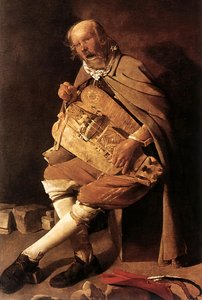
The painting The Hurdy-gurdy Player exemplifies La Tour’s distinctive style. The central figure—a beggar playing a hurdy-gurdy—is positioned against a dark background, illuminated by a single candle flickering outside the frame. This technique wasn't merely aesthetically pleasing; it served as a deliberate symbolic gesture. Light represents divine grace and illuminates the subject’s vulnerability, highlighting his poverty and spiritual quest.
Technique: Chiaroscuro – Caravaggio’s Legacy
La Tour’s approach to painting—characterized by intense chiaroscuro—was heavily influenced by Caravaggio, whose revolutionary use of light and shadow had irrevocably altered artistic conventions. La Tour meticulously studied Caravaggio's methods, adopting a similar technique that involved layering thin glazes over a dark underpainting to achieve remarkable tonal gradations. This painstaking process resulted in surfaces that shimmer with subtle luminescence—a testament to his technical prowess.
Historical Context: Lorraine and the Baroque Spirit
La Tour’s artistic output flourished during a period of significant cultural transformation in Lorraine, where he resided for most of his life. The Duchy experienced a revival of religious fervor under Maximilian I., fostering an environment conducive to artistic innovation. La Tour's paintings reflect the broader Baroque spirit—a preoccupation with emotion, dramatic gesture, and spiritual contemplation—marking him as one of the foremost artists of his time.
Museum Collection: Nantes’ Musée des Beaux-Arts
A remarkable specimen of La Tour’s oeuvre is housed at Musée des Beaux-Arts in Nantes, France. Admiring this painting allows visitors to appreciate the enduring legacy of a painter who elevated simplicity and psychological depth to new heights—a true embodiment of Baroque artistry.
Spørgsmål og svar
Hvad er lysstyrken i "Klavirkunstneren" af Georges de La Tour?
"Klavirkunstneren" af Georges de La Tour har en luminans på Mørk. Luminans beskriver, hvor meget lys farverne ser ud til at reflektere.
Hvilken farvepalette og hvilken følelse forener "Klavirkunstneren"?
I "Klavirkunstneren" ledsages en Mystisk følelse af Jordagtig farver.
Hvilken stilart og hvilken epoke tilhører "Klavirkunstneren" af Georges de La Tour?
"Klavirkunstneren" tilhører Baroque-retningen, og dets skaber arbejdede i Tidlig moderne tid-æraen.
 Se i rummet
 Del som kort
 Del
Del
 Detaljer
 Guide
Guide

 Download
 Lignende værker
 Røntgenundersøgelse
 Diasshow
 Spørgsmål og svar
 Statistikker