Analytical Cubism · 1929
The Round Table (Georges Braque, 1929)
Georges Braque (1882–1963) har skabt The Round Table. Det er fra 1929. Det tilhører Analytical Cubism-bevægelsen. Den er udført i Acrylic. Målene er 144 × 114 cm.
- 1929
- Acrylic
- 144 × 114 cm

 Se i rummet

 Håndmalet oliemalerie
 Del som kort
 Del
 Faktablad


 Download
 Lignende værker
 Røntgenundersøgelse
 Diasshow
 Spørgsmål og svar

 Statistikker
The Round Table kort fortalt
- Titel
- The Round Table
- Kunstner
- Georges Braque (1882–1963)
- Kunstner født i
- Argenteuil, Frankrig
- Dato
- 1929
- Medium
- Acrylic
- Dimensioner
- 144 × 114 cm
- Bevægelse
- Analytical Cubism
- Motiv
- bookshelf composition, table setting, fruit symbolism, geometric forms, artist's gesture, spatial illusion
Hvad forestiller The Round Table?
Georges Braque’s “The Round Table”: A Dialogue Between Tradition and Innovation
- Subject Matter and Composition:
- Cubist Style and Technique:
- Historical Context – The Birth of Cubism:
- Symbolic Resonance – Apples, Books, and Spatial Illusion:
- Emotional Impact – Quiet Contemplation and Artistic Exploration
Cubist Style and Technique
Braque, alongside Pablo Picasso, spearheaded the development of Analytical Cubism, characterized by its radical fragmentation of form and simultaneous depiction of multiple viewpoints. Unlike Impressionists who sought to capture fleeting moments of light and color, Cubists aimed to represent objects as they appear to the eye when viewed from various angles simultaneously. In “The Round Table,” this is achieved through meticulous geometric reduction—the table surface and books are broken down into interlocking planes that overlap and intersect, creating a disconcerting yet captivating illusion of depth. The artist’s use of muted earthy tones – browns, ochres, and creams – reinforces the sense of stillness and contemplation inherent in the scene. Careful layering of paint contributes to textural richness without resorting to overtly expressive brushstrokes; Braque prioritizes precision and intellectual rigor over emotive gesture.Historical Context – The Birth of Cubism
The genesis of Cubism can be traced back to Picasso’s groundbreaking “Les Demoiselles d'Avignon” (1907), which shattered established artistic norms by depicting figures rendered in fractured planes and incorporating influences from African sculpture. Braque responded swiftly, furthering the exploration of spatial ambiguity and geometric abstraction. The painting emerged during a period of intense intellectual ferment—the burgeoning influence of Einstein’s theory of relativity challenged Newtonian conceptions of space and time, mirroring the Cubists' desire to dismantle traditional perspectival representations. This artistic rebellion was fueled by a broader cultural shift toward questioning accepted truths and embracing new modes of perception.Symbolic Resonance – Apples, Books, and Spatial Illusion
The inclusion of an apple—a motif frequently revisited in Surrealist art—introduces a subtle element of visual paradox. Traditionally associated with knowledge, temptation, and immortality, the apple’s placement on the table subtly disrupts the geometric order established by Braque's technique. Simultaneously, the books symbolize intellectual pursuit and contemplation – mirroring the figure’s posture and gaze. More importantly, the overall spatial arrangement contributes to a feeling of disorientation—the viewer is invited to consider multiple perspectives simultaneously, reflecting the Cubist preoccupation with challenging conventional visual experience. The careful positioning of objects reinforces the idea that reality itself is multifaceted and elusive.Emotional Impact – Quiet Contemplation and Artistic Exploration
Ultimately, “The Round Table” transcends mere formal innovation; it communicates a profound sense of quiet contemplation. Despite its complex geometric structure, the painting exudes an atmosphere of stillness—suggesting a moment of introspection rather than dramatic action. Braque’s masterful control over color and texture invites viewers to engage in a dialogue with the artwork itself, prompting reflection on themes of knowledge, perception, and artistic endeavor. It stands as a testament to Braque's ability to distill complex ideas into a deceptively simple visual form—a lasting legacy of Cubist artistry that continues to inspire admiration and contemplation today.Højopløselige billeder af The Round Table
Protected by copyright: these files are for personal reference, not a licence to republish.
Georges Braque, The Round Table (1929).
Spørgsmål om The Round Table besvaret
I hvilket år blev "The Round Table" af Georges Braque skabt?
"The Round Table" stammer fra 1929. Datoen placerer værket i Georges Braque's karriere og dets tidsalder.
Hvilket medie er "The Round Table" af Georges Braque udført i?
"The Round Table" er udført i Acrylic.
Hvad er målene på det originale "The Round Table" af Georges Braque?
De registrerede mål for "The Round Table" af Georges Braque er 144 x 114 cm. Reproduktioner kan bestilles i andre størrelser, mens de samme proportioner bevares.
Hvad forestiller "The Round Table"?
Temaerne i "The Round Table" af Georges Braque omfatter bookshelf composition, table setting, fruit symbolism, geometric forms, artist's gesture, spatial illusion, color palette, som tilsammen udgør værkets motivverden.
Er "The Round Table" af Georges Braque i det offentlige domæne?
"The Round Table" af Georges Braque er stadig beskyttet af ophavsret. Denne status bestemmer, hvordan billedet af værket må reproduceres.
Hvilken kunstner tilskrives "The Round Table"?
"The Round Table" blev skabt af Georges Braque. Informationen på denne side beskriver Georges Braques originale værk.
Hvilken stilart tilhører "The Round Table"?
Kunstretningen forbundet med "The Round Table" af Georges Braque er Analytical Cubism. Denne klassificering placerer værket blandt relaterede kunstnere og kunstværker.
Hvilken periode i Georges Braques karriere tilhører "The Round Table"?
Inden for Georges Braques karriere tilhører "The Round Table" perioden Analytical Cubism, hvilket gør det muligt at sammenligne værket med kunstnerens øvrige værker.
Hvor gammel var Georges Braque, da vedkommende skabte "The Round Table"?
Georges Braque skabte "The Round Table" i en alder af 47. Kunstneren blev født i 1882, og værket er dateret 1929.
Om kunstneren, Georges Braque
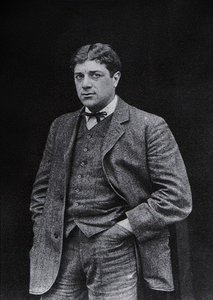
1882–1963, Frankrig
Georges Braque
Tidligt liv, familie og uddannelse Georges Braque blev født i Argenteuil, Frankrig, i 1882. Hans tidlige år blev tilbragt i Le Havre, Frankrig, i et hjem præget af dekorationens og farvernes praktiske realiteter. Da han voksede op i en familie af malere og dekoratører, blev han fra en tidlig alder opslugt af sit håndværks taktile virkelighed. Denne opvækst lagde et fundament af teknisk håndværksmæssig kunnen, som senere skulle komme til at præge hans tilgang til lærredet.
Om Georges Braque Bemærkelsesværdige værker af Georges Braque
Også af Georges Braque
 Mandola1910
 Guitar Man1914
 Huse ved L'estaque
 Havnen i Normandien1909
Essays om The Round Table
 Mastering Cubism: The Top 25 Georges Braque ArtworksJourney through the revolutionary world of Georges Braque. Explore 25 iconic Cubist masterpieces, from geometric abstractions to timeless s…
 Deconstructing Reality: Cubism's Revolutionary Impact on 20th-Century ArtExplore the revolutionary world of Cubism with OriginalUniqueArt. Discover Picasso & Braque's groundbreaking techniques, its philosophical …
 Understanding the Difference Between Analytical and Synthetic CubismMaster the differences between Analytical and Synthetic Cubism with our expert guide. Learn to identify these iconic art movements now.