Cubism
Fox (Georges Braque)
Georges Braque (1882–1963) har skabt Fox. Det tilhører Cubism-bevægelsen. Den er udført i Etching.
- Etching

 Se i rummet

 Håndmalet oliemalerie
 Del som kort
 Del
 Guide


 Download
 Lignende værker
 Røntgenundersøgelse
 Diasshow
 Spørgsmål og svar

 Statistikker
Fox: det vigtigste
- Titel
- Fox
- Kunstner
- Georges Braque (1882–1963)
- Kunstner født i
- Argenteuil, Frankrig
- Medium
- Etching
- Bevægelse
- Cubism
- Periode
- Modern
- Motiv
- abstract, geometric, monochrome, line art, composition, braque
Hvad forestiller Fox?
The Essence of Geometric Fragmentation
In the quiet, monochromatic depths of Georges Braque’s Fox, we encounter a profound moment in the evolution of modern vision. Created in 1911 and published the following year, this exquisite etching serves as a masterclass in the radical language of Cubism. At first glance, the eye may search for the titular subject, yet Braque deliberately withholds the literal. Instead, he offers us a fragment of pure geometry—a meticulously structured dance of rectangles, triangles, and sweeping curves that seem to float within a shallow, textured space. This is not a depiction of an animal, but rather an exploration of how light, line, and form can exist independently of the physical world. For the discerning collector or interior designer, this piece offers a sophisticated focal point, bringing an intellectual depth and a sense of avant-garde history to any curated space.
The technique employed in Fox is as vital to its impact as the composition itself. As a monochrome etching, the work relies on the subtle interplay of ink and paper to create a palpable sense of materiality. The grainy, tactile texture inherent in the printing process lends the piece an organic soul, preventing the geometric shapes from feeling cold or clinical. Braque’s mastery of linework is evident in the varying weights of each stroke, which guide the viewer's gaze in an upward trajectory toward the upper right corner. This deliberate movement creates a dynamic tension, a rhythmic pulse that breathes life into the abstract arrangement. The layering of multiple plates allows for tonal variations that suggest depth without ever relying on traditional, illusionistic shading, making it a quintessential example of the transition from representational art to pure abstraction.
A Legacy of Innovation and Aesthetic Grace
To understand Fox is to understand the seismic shift in the artistic landscape of the early 20th century. Emerging from the vibrant, experimental atmosphere of Paris, Braque worked alongside Pablo Picasso to dismantle the traditional perspective that had dominated Western art since the Renaissance. This piece embodies the intellectual fervor of an era obsessed with new ways of perceiving reality through the lenses of optics and mathematics. By deconstructing objects into fragmented planes, Braque invites us to view the world not as a static image, but as a complex, multi-dimensional experience. There is a profound emotional resonance in this struggle—a sense of searching for truth within the chaos of modern life.
For those looking to integrate fine art into a contemporary interior, Fox provides an unparalleled sense of timelessness. Its neutral palette and structural elegance allow it to harmonize with both minimalist modernism and more eclectic, classical settings. It does not demand attention through loud color, but rather commands respect through its sophisticated composition and historical weight. Owning a high-quality reproduction of this masterpiece is more than an aesthetic choice; it is an invitation to contemplate the very foundations of modern thought and to surround oneself with the enduring beauty of geometric truth.
Fox i høj opløsning

Beskyttet af ophavsret: billedet er kun vist som reference.
Flere størrelser, beskæringer og kildehenvisning →Georges Braque, Fox.
Spørgsmål om Fox
Hvilket medie er "Fox" af Georges Braque udført i?
"Fox" af Georges Braque er udført i Etching. Reproduktionerne har til formål at gengive denne tekniks visuelle udtryk.
Hvad forestiller "Fox"?
"Fox" af Georges Braque forestiller: abstract, geometric, monochrome, line art, composition, braque, printmaking, modernart.
Er "Fox" fri for ophavsret?
Ophavsretsstatus for "Fox" af Georges Braque: værket er stadig beskyttet af ophavsret. Dette afgør, om der frit må foretages reproduktioner af billedet.
Hvem har skabt "Fox"?
"Fox" blev skabt af Georges Braque. Informationen på denne side beskriver Georges Braques originale værk.
Hvilken kunstretning tilhører "Fox" af Georges Braque?
"Fox" af Georges Braque tilhører Cubism-bevægelsen. Denne bevægelse giver den stilistiske kontekst for værket.
Hvilken periode i Georges Braques karriere tilhører "Fox"?
"Fox" repræsenterer Georges Braques Mature Period.
Er "Fox" af Georges Braque i det offentlige domæne, og hvorfor?
"Fox" af Georges Braque er stadig beskyttet af ophavsret. Ophavsretten løber fra kunstnerens dødsår, som var 1963.
Hvad deler "Fox" med resten af Georges Braques produktion?
I Georges Braques samlede værk placerer "Fox" sig i Cubism-stilen, sammen med temaerne omkring geometric abstraction, constructivism, early printmaking, modernism, geometric forms, formal exploration, key cubist etching, exploring line & shape.
Hvordan relaterer motivet i "Fox" sig til Georges Braques sædvanlige temaer?
Georges Braques gennemgående temaer inkluderer geometric abstraction, constructivism, early printmaking, modernism, geometric forms, formal exploration, key cubist etching, exploring line & shape; "Fox" fokuserer på abstract, geometric, monochrome, line art, composition, braque, printmaking, modernart.
Om kunstneren, Georges Braque
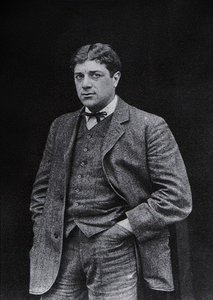
1882–1963, Frankrig
Georges Braque
Tidligt liv, familie og uddannelse Georges Braque blev født i Argenteuil, Frankrig, i 1882. Hans tidlige år blev tilbragt i Le Havre, Frankrig, i et hjem præget af dekorationens og farvernes praktiske realiteter. Da han voksede op i en familie af malere og dekoratører, blev han fra en tidlig alder opslugt af sit håndværks taktile virkelighed. Denne opvækst lagde et fundament af teknisk håndværksmæssig kunnen, som senere skulle komme til at præge hans tilgang til lærredet.
Om Georges Braque Bemærkelsesværdige værker af Georges Braque
Også af Georges Braque
 Mandola1910
 Guitar Man1914
 Huse ved L'estaque
 Havnen i Normandien1909
Essays om Fox
 Georges Braque: The Architect of Form and the Soul of Cubist RevolutionExplore the profound legacy of Georges Braque, a master of Cubism. Discover how his technical craftsmanship and collaboration with Picasso …
 Mastering Cubism: The Top 25 Essential Georges Braque ArtworksJourney through the revolutionary world of Georges Braque. Explore 25 iconic Cubist masterpieces, from geometric abstractions to Fauvist co…
 From Cézanne to Cubism: The Revolutionary Evolution of Modern Art's Structural VisionExplore the profound transition from Cézanne’s structural Post-Impressionism to the revolutionary fractured forms of Cubism. A sophisticate…