Tekststørrelse

() ·

Et maleri skabt til dig, i hånden

Lord Grosvenor

Håndlavet oliereproduktion

Håndmalet olie på lærred i din valgte størrelse og ramme, udført efter bestilling af vores kunstnere. ( Skift til printsalg Skift til digitalt billede)

Beskrivelse af samlerobjektet

George Stubbs' 'Lord Grosvenor’s Arabian Stallion with a Groom' (1765) showcases equestrian skill & classical influence. A stunning portrait capturing elegance, detail, and the bond between horse & rider.

Kunstnerbiografi

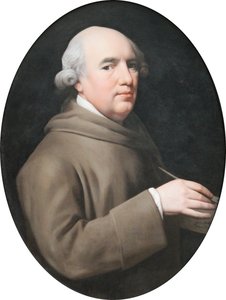
George Stubbs (1724-1806): En berømt engelsk maler kendt for sine præcise og smukke billeder af heste – en pioner indenfor romantikken. Hans mest ikoniske værk er 'Whistlejacket'.

fra ·

Kapitel 1

Hvor stor skal den være?

Træk i skyderen for at ændre størrelsen; billedet til venstre viser rammen i dens faktiske bredde. Originalens proportioner bevares.

Standardstørrelse
speciallavet
CM
INCH

Vælg mellem vores forudindstillede størrelser, der matcher kunstværkets originale proportioner.

bredde
højde

Indtast den bredde og højde, du har brug for, så det passer til din ramme eller din væg. Da dette er håndmalet, kan kunstneren ved en anden form på størrelsen male lidt mere rundt om billedet eller skære lidt væk — det er op til dig. Vi sender dig et digitalt mockup til godkendelse, før maleriet påbegyndes. Billedet, der vises på denne side, viser ikke det endelige resultat — det er kun mockuppet, der gør.

Kapitel 2

Hvordan skal det leveres?

Vælg kanterne på det opspændte lærred

Vælg din ramme

Corner sample of the WhiteWrap canvas edge finish, stretched on massivt træ bars
Hvid kant Dkr1
Corner sample of the BlurSideWrap canvas edge finish, stretched on massivt træ bars
Udvasket kant Dkr1
Corner sample of the ExtendedWrap canvas edge finish, stretched on massivt træ bars
Fortsat motiv Dkr1
Corner sample of the P118B picture frame: støbt polystyren, 5 cm wide and 3 cm thick
P118B Dkr10
Corner sample of the P118H picture frame: støbt polystyren, 5 cm wide and 3 cm thick
P118H Dkr10
Corner sample of the P118W picture frame: støbt polystyren, 5 cm wide and 3 cm thick
P118W Dkr10
Corner sample of the P438Z picture frame: støbt polystyren, 5.5 cm wide and 3.5 cm thick
P438Z Dkr10
Corner sample of the P508JH picture frame: støbt polystyren, 7 cm wide and 3.5 cm thick
P508JH Dkr12
Corner sample of the P508YH picture frame: støbt polystyren, 7 cm wide and 3.5 cm thick
P508YH Dkr12
Corner sample of the P805H picture frame: støbt polystyren, 5 cm wide and 3.5 cm thick
P805H Dkr10
Corner sample of the P805Z picture frame: støbt polystyren, 5 cm wide and 3.5 cm thick
P805Z Dkr10
Corner sample of the P919BZ picture frame: støbt polystyren, 7 cm wide and 3.5 cm thick
P919BZ Dkr10
Corner sample of the P919G picture frame: støbt polystyren, 7 cm wide and 3.5 cm thick
P919G Dkr10
Corner sample of the P919XJ picture frame: støbt polystyren, 7 cm wide and 3.5 cm thick
P919XJ Dkr10
Corner sample of the P959ZH picture frame: støbt polystyren, 5 cm wide and 3 cm thick
P959ZH Dkr10
Corner sample of the P968JZ picture frame: støbt polystyren, 6 cm wide and 4 cm thick
P968JZ Dkr12
Corner sample of the W106C picture frame: massivt træ, 5 cm wide and 3 cm thick
W106C Dkr8
Corner sample of the W218G picture frame: massivt træ, 5 cm wide and 3 cm thick
W218G Dkr10
Corner sample of the W218JH picture frame: massivt træ, 5 cm wide and 3 cm thick
W218JH Dkr8
Corner sample of the W218Y picture frame: massivt træ, 5 cm wide and 3 cm thick
W218Y Dkr10
Corner sample of the W307PJ picture frame: massivt træ, 6 cm wide and 3 cm thick
W307PJ Dkr10
Corner sample of the W316G picture frame: massivt træ, 6 cm wide and 3 cm thick
W316G Dkr10
Corner sample of the W316PJ picture frame: massivt træ, 6 cm wide and 3 cm thick
W316PJ Dkr8
Corner sample of the W316Y picture frame: massivt træ, 6 cm wide and 3 cm thick
W316Y Dkr10
Corner sample of the W398PJ picture frame: massivt træ, 5 cm wide and 3 cm thick
W398PJ Dkr8
Corner sample of the W4111J picture frame: massivt træ, 6.5 cm wide and 3.5 cm thick
W4111J Dkr10
Corner sample of the W500HY picture frame: massivt træ, 7 cm wide and 5 cm thick
W500HY Dkr15
Corner sample of the W500JH picture frame: massivt træ, 7 cm wide and 5 cm thick
W500JH Dkr15
Corner sample of the W692G picture frame: massivt træ, 8 cm wide and 4 cm thick
W692G Dkr12
Corner sample of the W849H picture frame: massivt træ, 5 cm wide and 3 cm thick
W849H Dkr8
Corner sample of the W940BG picture frame: massivt træ, 7.5 cm wide and 4.5 cm thick
W940BG Dkr15
Corner sample of the W953PJ picture frame: massivt træ, 6 cm wide and 3.5 cm thick
W953PJ Dkr8
Corner sample of the H24-GOLD picture frame: udskåret træ med gesso, 10 cm wide and 6 cm thick
H24-GOLD Dkr30
Corner sample of the H24-SILVER picture frame: udskåret træ med gesso, 10 cm wide and 6 cm thick
H24-SILVER Dkr30
Corner sample of the H36-GOLD picture frame: udskåret træ med gesso, 15 cm wide and 6.5 cm thick
H36-GOLD Dkr45
Corner sample of the H36-SILVER picture frame: udskåret træ med gesso, 15 cm wide and 6.5 cm thick
H36-SILVER Dkr45
Ramme-forhåndsvisning
Indrammet

Profil: . Samlet størrelse med ramme: .

Kapitel 3

Hvem maler det, og bør der ændres noget?

Eksempler på hvad kan ændres: Udskift ansigt med kundens eget foto; Tilføj kæledyr (f.eks. udskift kat med hund); Inkluder skjult besked i baggrunden; Skift baggrundslandskab eller elementer.
Efter bestilling vil OriginalUniqueArt.com-teamet sende en e-mail til kunden for at få instruktioner og levere et udkast til forhåndsvisning

Verdensomspændende levering () på 3-4 uger i stedet for de standard 5 uger. (7 november). Ingen kompromiser med kvaliteten.

Kapitel 4

De sidste detaljer

En navneplade, ligesom på et museum?

Detaljer om indgraveret bronzeskilt

This elegant plaque features the artist's name and the title of the artwork, finely engraved for a timeless presentation.

It is made from bronze with a refined, elegant finish. The text is precisely laser-engraved for a sharp and permanent result. Measuring 9x2 cm, the plaque is compact yet easy to read. It's built to be durable and scratch-resistant, offering a professional, museum-quality look. Mounting is simple thanks to the included adhesive backing.

Detaljer om gennemsigtig akrylplade

The plaque includes essential engraved details such as the artist's name, the title of the artwork, the date it was created, the type of media used-like oil on canvas or watercolor-a brief description of the piece, and a QR code that links to the complete artwork information.

It is crafted from clear acrylic, offering a sleek, modern appearance. The text is UV-engraved in black to ensure strong visual contrast. With a size of 10x15 cm, it ensures optimal readability. It comes equipped with two metal hooks for secure wall mounting. The plaque is designed to be weather-resistant, making it suitable for various environments, and it includes interactive features that work seamlessly with smartphone scanning.

Detaljer om sort akrylplade

This elegant plaque includes engraved information such as the artist's name, the title of the artwork, the date it was created, the type of media used (like oil on canvas or watercolor), a short description of the artwork, and a QR code for quick access to more information.

The plaque itself is made from refined black acrylic with a premium finish. The text is laser-engraved in white for high contrast and readability. Its size is 10x15 cm, designed to be easy to read. It comes with two metal hooks for professional mounting. The design is sleek and fits any interior style. It is also weather-resistant and durable, with built-in digital integration for mobile compatibility.

En beskyttende lak?

Hvornår skal det leveres?

Kapitel 5

Dit maleri, præcis som du har bestilt det

Lord Grosvenor

Reproduktionsmetode

Størrelse på reproduktion

-

Eksklusivt udvalgte senior-kunstnere

Mere detaljerigdom, finesse og ekstra produktionstid

-

Indramning af reproduktion

-

-

For kunstværker eller reproduktioner, der er større end 105 cm (ca. 41 tommer) på en hvilken som helst side, vil rammen blive leveret som et adskilt sæt. Denne metode sikrer sikker levering og forhindrer skader under transport.

Professionel montering er påkrævet – dette er ikke et gør-det-selv produkt.
Sættet skal samles, og lærredet skal opspændes af en erfaren professionel indrammer ved brug af trælim (ikke medfølger), en lærredsspænder og klemmer til at holde blindrammen vinkelret, mens limen tørrer. Forkert samling eller ujævn spænding af lærredet kan beskadige kunstværket permanent og er ikke dækket af vores garanti.

  • Alle massive trælister er inkluderet, præcist tilpasset i størrelsen.

  • Samles med de medfølgende skruer samt trælim til hjørneforbindelserne, som ikke medfølger og skal anskaffes af din indrammer.

  • Professionelt værktøj er påkrævet og medfølger ikke: en lærredsstrækker (spændetang) og klemmer til at holde blindrammen vinkelret, mens limen tørrer.

Vigtigt:
Hjørneforbindelserne kræver trælim, listerne skal holdes fast med skruetvinger, indtil limen er helt tør, og opspænding af lærredet på den samlede ramme kræver en lærredsspænder. Ingen af disse dele er inkluderet i sættet. Vi anbefaler, at du kontakter en erfaren professionel indrammer, før du bestiller denne størrelse.

Navneskilt

-

-

Beskyttende fernis

Blank lak (fremhæver farverne og beskytter mod lys og fugt)

-

Tilpas mit kunstværk

Eksempler på tilpasningsmuligheder: Udskift ansigt med kunde-foto; Tilføj kæledyr (f.eks. udskift kat med hund); Inkluder skjult besked i baggrunden; Ændr baggrundslandskab eller elementer.

-

Hurtig levering

Verdensomspændende levering () på 3-4 uger i stedet for de standard 5 uger. (7 november). Ingen kompromiser med kvaliteten.

-

Ekspreslevering

Verdensomspændende levering til inden for 5 uger. (14 november).

Inkluderet

Samlet pris

Dkr 2002

Samlet pris Dkr 2002

Glasmulighed er kun tilgængelig i størrelser under 110 cm

Inkluderet i hver ordre

  • Gratis ekspresforsendelse til hele verden
  • Lærred af linned i høj kvalitet
  • Fuld transportforsikring
  • Garanti for refusion af told og importafgifter
  • Garanti for præcis farvegengivelse
  • 100 dages returret ved fabrikationsfejl
  • 100% fuld returret
  • Mængderabat ved flere køb

The Equestrian Vision of George Stubbs

George Stubbs' "Lord Grosvenor’s Arabian Stallion with a Groom," painted in 1765, isn’t merely a portrait; it’s a meticulously crafted tableau vivant—a snapshot of aristocratic leisure and the profound connection between man and beast. Stubbs, already recognized as the foremost painter of horses of his era, transcends simple representation, instead offering a deeply considered study of anatomy, movement, and psychological nuance. This work exemplifies his pioneering approach to animal painting, firmly rooted in scientific observation yet imbued with a distinctly Romantic sensibility.

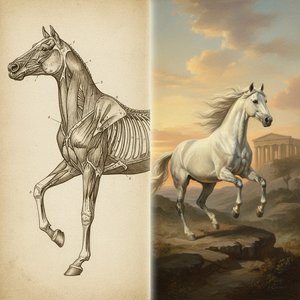
The scene unfolds within a softly rendered English landscape—rolling hills bathed in the golden light of late afternoon. The composition is dominated by the magnificent Arabian stallion, poised and alert, its muscular form captured with astonishing accuracy. Stubbs’s anatomical knowledge, honed through years of dissecting horses (a practice considered radical at the time), is immediately apparent in the precise rendering of every muscle, tendon, and bone. Yet, this isn't a cold, clinical study; the horse radiates vitality, its ears pricked forward, nostrils flared, conveying an intense awareness of its surroundings.

A Masterclass in Technique – Light, Shadow, and Sabino Markings

Stubbs’s mastery lies not just in his anatomical precision but also in his masterful manipulation of light and shadow. He employs a low horizon line, drawing the viewer's eye upwards to the horse, emphasizing its imposing presence against the backdrop of the landscape. The warm tones of the chestnut stallion—rich browns, golds, and russets—are contrasted with the cooler greens and blues of the foliage, creating a dynamic interplay of color that adds depth and realism to the scene. Notably, Stubbs meticulously portrays the horse’s unique genetic Sabino markings – the broad blaze running down its forehead, the striking white stockings, and the delicate white spots adorning its belly and sides—demonstrating an almost obsessive attention to detail.

The groom, a figure of quiet dignity, stands in stark contrast to the stallion’s spirited energy. Dressed in a dark suit, he exudes a reassuring presence, his posture suggesting years of experience and a deep understanding of horses. This juxtaposition—the youthful exuberance of the horse and the seasoned calm of its handler—adds another layer of complexity to the composition, hinting at the symbiotic relationship between man and animal.

Historical Context & Romantic Ideals

Painted during the mid-18th century, “Lord Grosvenor’s Arabian Stallion with a Groom” reflects the prevailing artistic trends of the time. Stubbs' work aligns with the burgeoning Romantic movement, which emphasized emotion, individualism, and the sublime beauty of nature. Unlike the rigid formality of Neoclassical art, Stubbs’s painting embraces a more naturalistic approach, capturing the essence of the subject rather than adhering to idealized forms. The inclusion of the landscape—a carefully constructed vista that evokes a sense of tranquility and grandeur—further reinforces this Romantic sensibility.

The portrait itself was commissioned for Richard Grosvenor, 7th Baronet, and 1st Earl Grosvenor, a prominent figure in English society. Such commissions were not merely about depicting a horse; they represented a celebration of aristocratic status, wealth, and the connection to the land. The painting served as a visual testament to the family’s equestrian pursuits and their appreciation for fine horses.

A Timeless Appeal – Reproduction & Beyond

“Lord Grosvenor’s Arabian Stallion with a Groom” remains a captivating work of art, admired for its technical brilliance, emotional depth, and historical significance. Reproductions offer an accessible way to experience the beauty and artistry of this iconic painting, bringing its timeless appeal into any home or office space. When selecting a reproduction, consider the quality of materials and the artist’s interpretation – ensuring that it faithfully captures Stubbs' original vision while maintaining a high level of detail and vibrancy.

Spørgsmål og svar

Er "Lord Grosvenor" typisk for det, som George Stubbs normalt skabte?

George Stubbss gennemgående temaer inkluderer classical anatomy, romantic style, aristocratic patronage, equestrian art, animal studies, scientific accuracy, british landscape, rural life; "Lord Grosvenor" fokuserer på horse, equestrian, portraiture, groom, landscape, sabino, anatomy, 18th century.

Hvor kommer de besøgende til "Lord Grosvenor" af George Stubbs fra?

Der findes en Besøgsstatistik-side for "Lord Grosvenor", som viser de månedlige besøgstal for kunstværket og kunstnerens øvrige værker, opdelt efter land og sprog.

I hvilket år og inden for hvilken stilart blev "Lord Grosvenor" skabt?

"Lord Grosvenor" blev skabt i 1765 som et værk inden for Romanticism-bevægelsen. Datoen og stilen forankrer kunstværket i kunsthistorien.

Læs mere om dette maleri

Se i rummet Se i AR Skift til printsalg Skift til digitalt billede Del som kort
Detaljer Guide Tilføj til favoritter Download Lignende værker Røntgenundersøgelse Diasshow Spørgsmål og svar Statistikker

I tal

  • 1765året det blev malet
  • 29vælg mellem forskellige rammer
  • standardstørrelser, i deres egne proportioner
  • 5uger at male og levere

George Stubbs

George Stubbs

1724 - 1806, Storbritannien

Hurtige fakta om George Stubbs

  • Artistic Movement Or Style: Romantik, Hestekunst
  • Artists Or Movements Influenced By This Artist: ['Joshua Reynolds']
  • Artists Who Influenced This Artist: ['Hamlet Winstanley']
  • Date Of Birth: 25. august 1724
  • Date Of Death: 10. juli 1806
  • Full Name: George Stubbs
  • Nationality: Britisk
  • Notable Artworks:
    • Whistlejacket
    • Løve angriber hest
    • En løve og en tiger
  • Place Of Birth: Liverpool, Storbritannien

Kunstnerbiografi

Early Life and Artistic Beginnings

George Stubbs, en af den engelske kunsts mest bemærkelsesværdige figurer, blev født i Liverpool den 25. august 1724. Hans barndom var præget af et sparsomt liv, hvor han arbejdede som læderhandler sammen med sin far, John Stubbs, indtil han i en alder af 15 år besluttede at forfølge sin passion for kunst. Denne tidlige beslutning førte ham til at søge vejledning hos Hamlet Winstanley, en lokal maler og graver, hvor han fik et kortvarigt mesterbrev. Selvom dette forhold var relativt kortvarigt, gav det Stubbs mulighed for at studere samlingen på Knowsley Hall, hvilket var afgørende for hans senere udvikling som kunstner. Stubbs’ tidlige interesse for anatomi blev tydelig, og han begyndte at studere menneskekroppen i en ung alder, hvilket ville blive et centralt element i hans kunstneriske stil.

Artistic Development and Anatomical Studies

Stubbs's rejse mod at blive en anerkendt kunstner var præget af en dyb interesse for anatomi og en dedikation til at forstå den menneskelige krop i alle dets detaljer. I 1744 flyttede han til York, hvor han studerede under kirurg Charles Atkinson på York County Hospital. Denne uddannelse gav ham et unikt indblik i musklernes struktur og bevægelse, hvilket ville blive afgørende for hans evne til at male realistiske og dynamiske billeder af heste. Et af hans tidligste og mest kendte værker er en serie illustrationer til John Burtons lærebog om fødselshjælp, udgivet i 1751. Disse illustrationer demonstrerede allerede Stubbs's evner som tegner og hans voksende forståelse for anatomien.

The Anatomy of the Horse and a Revolutionary Approach

I 1756 lejede Stubbs en gård i Lincolnshire og dedikerede de næste 18 måneder til at studere hestens anatomi, assisteret af sin samlever, Mary Spencer. Dette intensive arbejde kulminerede i udgivelsen af *Anatomy of the Horse* i 1766, et banebrydende værk, der revolutionerede forståelsen af hestenes krop og blev en vigtig reference for kunstnere og studerende i årtier fremover. Stubbs's illustrationer var ikke blot præcise anatomiske gengivelser; de var også fyldt med en dyb respekt for hestens styrke og elegance. Denne kombination af videnskabelig nøjagtighed og kunstnerisk følelse gjorde *Anatomy of the Horse* til et publikums hit og cementerede Stubbs's position som en pioner inden for sin genre.

Notable Paintings and Royal Patronage

Stubbs’ kunstneriske succes voksede hurtigt, og han begyndte at modtage bestillinger fra adskillige aristokratiske kunder, herunder den 3. hertug af Richmond, der kommissionerede tre store malerier i 1759. Disse værker markerede et vendepunkt i Stubbs's karriere og banede vejen for hans fremtidige succes. Han fortsatte med at skabe billeder for adskillige duker og grever, hvilket førte til købet af en bolig i Marylebone, London. Stubbs’ mest berømte værk, *Whistlejacket*, et portræt af en prangende hest, der rejser på sine bagben, er et eksempel på hans evne til at fange hestens kraft og elegance. Billedet, med sin simple baggrund, var en radikal afvigelse fra traditionelle portrætter og blev mødt med både begejstring og kontrovers. Stubbs's serie af malerier om en løve, der angriber en hest, er tidlige eksempler på den romantiske bevægelse i kunst, hvor følelser og drama var vigtigere end blot realistisk gengivelse.

Legacy and Enduring Influence

George Stubbs's arv som en af de mest betydningsfulde engelske malere er uomtvistelig. Hans evne til at male heste med en hidtil uset præcision og følelse har inspireret kunstnere i generationer. *Whistlejacket* er et ikonisk billede, der fortsat fascinerer publikum med sin dynamiske komposition og stærke udtryk. Stubbs's arbejde er repræsenteret på flere af de mest prestigefyldte museer i verden, herunder National Gallery i London og Yale Center for British Art. Hans bidrag til kunsthistorien er enormt, og hans værker fortsætter med at blive studeret og beundret af kunstelskere over hele kloden.

Hurtige fakta

  • Artist: George Stubbs
  • Subject or theme: Arabian stallion and groom
  • Notable elements: Low horizon, soft foliage
  • Year: 1765
  • Title: Lord Grosvenor's Arabian Stallion
  • Dimensions: 99 x 83 cm

Kunstquiz

Der er kun ét korrekt svar på hvert spørgsmål.

Spørgsmål 1:
What is the primary subject of George Stubbs’s ‘Lord Grosvenor’s Arabian Stallion with a Groom’?
Spørgsmål 2:
According to the description, what artistic technique did Stubbs employ to effectively display the warm tones of the chestnut Arabian?
Spørgsmål 3:
The description mentions that Stubbs’s anatomical studies influenced his work. What specific area of study was particularly important to him?
Spørgsmål 4:
What can be inferred about the original composition of the painting based on the description?
Spørgsmål 5:
In what century was ‘Lord Grosvenor’s Arabian Stallion with a Groom’ created?