

 Se i rummet
 Del som kort
 Del
Del
 Detaljer
 Guide
Guide

 Download
 Lignende værker
 Røntgenundersøgelse
 Diasshow
 Q&A
Q&A Statistikker
Dreamers
 Painting
- Symbolism
 1886
1886- 19th Century
 20.0 x 14.0 cm
 Smithsonian American Art Museum
 Vis mere
Giclée / Kunsttryk
Giclée- eller lærredstryk i museumskvalitet med hurtig produktion og fleksible muligheder for finish. ( Køb håndmalet maleri Skift til digitalt billede)




P118B Dkr10

P118H Dkr10

P118W Dkr10

P438Z Dkr10

P508JH Dkr12

P508YH Dkr12

P805H Dkr10

P805Z Dkr10

P919BZ Dkr10

P919G Dkr10

P919XJ Dkr10

P959ZH Dkr10

P968JZ Dkr12

W106C Dkr8

W218G Dkr10

W218JH Dkr8

W218Y Dkr10

W307PJ Dkr10

W316G Dkr10

W316PJ Dkr8

W316Y Dkr10

W398PJ Dkr8

W4111J Dkr10

W500HY Dkr15

W500JH Dkr15

W692G Dkr12

W849H Dkr8

W940BG Dkr15

W953PJ Dkr8




Vælg mellem vores forudindstillede størrelser, der matcher kunstværkets originale proportioner.

Indtast den bredde og højde, du har brug for, så det passer til din ramme eller din væg. Et print kan kun beskæres, aldrig gøres større end selve billedet, så en størrelse med et andet format vil medføre, at dele af motivet går tabt. Vi sender dig en digital mockup til godkendelse, før vi printer noget. Billedet vist på denne side viser ikke den faktiske beskæring — det er kun mockuppen, der gør.
Verdensomspændende levering () på 2 uger i stedet for de sædvanlige 4/5 uger. (28 oktober)

Gratis ekspresforsendelse til hele verden

Lærred af linned i høj kvalitet

Fuld transportforsikring

Garanti for refusion af told og importafgifter

Garanti for præcis farvegengivelse

100 dages returret ved fabrikationsfejl

100% fuld returret

Mængderabat ved flere køb
 Glasmulighed er kun tilgængelig i størrelser under 110 cm

Dreamers
Giclée / Kunsttryk
Størrelse på reproduktion
-


Samlet pris
Dkr 534
A Visionary Encounter: The Ethereal World of Frederick Stuart Church
In the delicate interplay of light and shadow found within Dreamers, we encounter the profound mastery of Frederick Stuart Church, an artist who possessed the rare ability to bridge the gap between the tangible world and the realm of symbolic allegory. Painted in 1886, this captivating work invites the viewer into a quiet, pastoral sanctuary where the boundaries between humanity and nature begin to dissolve. The scene centers on a woman seated gracefully upon the earth, her gaze fixed with an intimate, almost spiritual intensity upon a bird perched before her. This is not merely a depiction of a moment in time; it is an invitation to contemplate the deep, unspoken connections that bind all living creatures within the tapestry of existence.
Church’s technique, refined through his rigorous training at the Academy of Design in Chicago, allows for a breathtakingly soft rendering of texture and atmosphere. The grassy expanse surrounding the central figures feels alive, breathing with the quiet energy of an afternoon spent in reverie. As the eye wanders across the canvas, it discovers other avian companions—one resting near the right periphery and another drifting into the background—creating a sense of depth and a layered narrative of companionship. The presence of other figures in the distance adds a layer of social complexity to the scene, yet they remain secondary to the profound, silent dialogue occurring between the woman and her feathered interlocutor.
Symbolism and the Romantic Spirit
To understand Dreamers is to understand the late 19th-century fascination with Symbolism and the Romantic movement. Church was far more than a mere illustrator; he was a storyteller who used animals as vessels for moral and emotional truths. In this piece, the birds serve as much more than decorative elements; they act as messengers of the subconscious, representing the fleeting nature of thoughts and the purity of the soul. The woman’s contemplative posture suggests a state of "dreaming" while awake—a hallmark of the era's fascination with the inner life and the spiritual dimensions of the natural world.
For the discerning collector or interior designer, this painting offers an unparalleled emotional resonance. Its palette, characterized by the soft, organic tones of the late Victorian era, provides a sense of tranquility and timelessness that can anchor any sophisticated space. Whether placed in a sunlit study or a quiet library, a high-quality reproduction of Dreamers serves as a window into a more contemplative age. It is a piece that does not merely decorate a wall but enriches the atmosphere of a room, prompting guests to pause, reflect, and perhaps, like the figures within the painting, lose themselves in a moment of beautiful, silent dreaming.
Spørgsmål og svar
Hvilken teknik er brugt til "Dreamers", og hvad er målene?
"Dreamers" er udført i Painting og måler 20 x 14 cm i sin oprindelige form.
Hvilken fase af Frederick Stuart Churchs kunstneriske udvikling repræsenterer "Dreamers"?
"Dreamers" repræsenterer Frederick Stuart Churchs Mature Period.
Hvad er den anbefalede printstørrelse til "Dreamers" af Frederick Stuart Church?
En reproduktion i størrelsen Small anbefales til "Dreamers" af Frederick Stuart Church. Størrelsen kan justeres, mens proportionerne bevares.
Kunstnerbiografi
The Visionary Soul of an American Master
In the vibrant tapestry of late nineteenth-century American art, few threads are as intricately woven or as whimsically colored as those spun by Frederick Stuart Church. Born in Grand Rapids, Michigan, on December 1, 1842, Church was a man whose life trajectory defied the conventional paths laid out by his prominent lineage. The son of a distinguished lawyer and politician, his early years were marked by a departure from the structured world of commerce. At just thirteen, he abandoned formal schooling to join the American Express Company in Chicago—a move intended by his parents to steer him toward a stable business career. Yet, the call of destiny was far more profound than the lure of ledger books. The onset of the Civil War provided a transformative crucible; serving in the Union Army, Church experienced a depth of human experience that would later infuse his work with a unique sense of empathy and moral weight.
A Symphony of Allegory and Animal Grace
Church’s artistic legacy is most profoundly felt in his mastery of the allegorical depiction. He possessed a rare, almost supernatural ability to imbue the animal kingdom with human emotion and moral complexity. His illustrations, which graced the pages of prestigious publications such as Harper's and Century Magazine, were never merely decorative; they were narratives of the soul. Through his delicate use of line and color, a tiger was rarely just a predator, and a bird was never just a creature of flight. Instead, they became vessels for exploring themes of innocence, power, and the delicate balance of nature. In works like Maiden with Flamingos or his evocative etchings such as A Symphony, one finds a serene yet tension-filled world where every tilt of a head or outstretched paw tells a story of profound significance.
His technique often danced between the realms of Impressionism and fine line illustration, creating a dreamlike atmosphere that captivated the Gilded Age audience. His fascination with certain motifs—such as the majestic tiger or the delicate songbird—allowed him to explore the duality of existence: the predator and the prey, the powerful and the vulnerable. This era of his work reflected the broader cultural shifts of the time, capturing a sense of lightness and whimsy while simultaneously touching upon deeper, often more somber, social allegories. To look upon a Church original is to enter a realm where the boundaries between the natural world and the human psyche dissolve into a beautiful, symbolic haze.
Legacy of an American Illustrator
The historical significance of Frederick Stuart Church lies in his ability to bridge the gap between commercial illustration and fine art. He elevated the medium of the periodical illustration to a level of high symbolism, proving that even within the constraints of mass media, an artist could achieve profound depth. His life, spanning from the mid-nineteenth century through the dawn of the twentieth, mirrored the evolution of the American identity itself—moving from the ruggedness of the Civil War era to the sophisticated, ornamental elegance of the Gilded Age.
Today, his work remains a testament to the power of empathy in art. His ability to find the "human" within the animal and the "divine" within the mundane continues to resonate with collectors and historians alike. As we revisit his catalog, we see more than just beautiful images; we encounter the enduring spirit of an artist who believed that through the lens of nature, we might most clearly see ourselves.
- Key Artistic Milestones:
- Enrolled at the National Academy of Design under Lemuel Wilmarth.
- Became a prominent contributor to Harper's Weekly and Century Magazine.
- Developed a signature style blending Romanticism with animal allegory.
- Championed an independent, American-centric approach to artistic training.
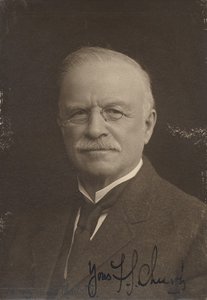
Frederick Stuart Church
1842 - 1924
Kort om kunstneren
- Full Name: Frederick Stuart Church
- Nationality: American
- Date Of Birth: 1842
- Date Of Death: 1924
- Place Of Birth: Grand Rapids, Michigan
- Notable Artworks:
- Supremacy
- Dreamers
- Two Birds
- Artistic Movement Or Style: Illustrator; Victorian Animal Art
- Artists Who Influenced This Artist: Walter Shirlaw
- Artists Or Movements Influenced By This Artist: Aesops Fables
Relaterede artikler
Animalia: Dyrenes Vedvarende Tilstedeværelse i Kunst og Indretning
Udforsk dyrenes fascinerende symbolik i kunsthistorien! Fra antikken til moderne indretning – lær om betydningen og find smukke reproduktioner hos .

Amerikansk Realisme: 10 Mesterværker der Definerede En Kunstbevægelse – Find Din Inspiration Hos OriginalUniqueArt
Oplev de 10 mest ikoniske værker inden for amerikansk realisme! Fra Edward Hopper til Andrew Wyeth – lær historierne bag mesterværkerne og find inspiration til dit hjem. Køb museumskvalitets reproduktioner på OriginalUniqueArt.com.
Idyllic Visions: Exploring the Pastoral Tradition in Western Art – Themes, Techniques & Enduring Appeal
Explore the rich history of pastoral art from classical Arcadia to contemporary interpretations. Discover key artists, themes & collecting tips at OriginalUniqueArt.

Charles Bird King: Capturing Native American Dignity Through Portraiture & Cultural Exchange
Explore the captivating portraits of Charles Bird King, renowned for his depictions of Native American leaders. Discover the historical context, artistic techniques, and collecting value of these significant 19th-century artworks.

Grant Wood & American Regionalism: Identity, Myth & the Rural Landscape
Explore the world of Grant Wood & American Regionalism with OriginalUniqueArt. Discover the symbolism behind 'American Gothic', recurring themes, and the movement's lasting impact on art history. High-quality reproductions available.
