

 Del
Del Del
Del
 Detaljer

 Download
 Lignende værker
 Diasshow
 Statistik
Character Head: Childish Weeping
 Bronze
- Sculpture
- Expressionism
 1783
1783- Early Modern
 45.0 x 22.0 cm
 Szépművészeti Múzeum
 Se mere
Håndlavet oliereproduktion
Håndmalet olie på lærred i din valgte størrelse og ramme, udført efter bestilling af vores kunstnere. ( Skift til print Skift til digitalt billede)




































Vælg mellem vores forudindstillede størrelser, der matcher kunstværkets originale proportioner.

Du kan indtaste dine egne mål for at passe til en bestemt ramme eller plads. Hvis den valgte størrelse ikke stemmer overens med det originale billedes proportioner, vil vi enten beskære kunstværket eller udvide maleriet med yderligere håndmalede elementer. En digital skitse sendes til din godkendelse, før produktionen påbegyndes.
Bemærk venligst, at forhåndsvisningen på skærmen ikke afspejler den faktiske beskæring eller udvidelse. Kun skitsen vil nøjagtigt vise den endelige komposition.
Selvom specialmål er mulige, anbefaler vi at vælge en dimension fra den foruddefinerede liste for at bevare de originale proportioner.
Efter bestilling vil OriginalUniqueArt.com team sende en e-mail til kunden for at få instruktioner og levere et udkast til en skitse.
Levering i hele verden () på 3/4 uger i stedet for de standard 5 uger. (18 september). Ingen kompromiser med kvaliteten.

Gratis ekspresforsendelse til hele verden

Lærred af linned i høj kvalitet

Fuld transportforsikring

Garanti for refusion af told og importafgifter

Garanti for præcis farvegengivelse

100 dages returret (kun ved fejl og mangler)

100% Tilfredshedsgaranti

Mængderabat tilgængelig
 Glasmulighed er kun tilgængelig i størrelser under 110 cm

Character Head: Childish Weeping
Reproduktionsmetode
Størrelse på reproduktion
-


Samlet pris
$ 300
The Visceral Echo of Grief: Unveiling Messerschmidt’s Masterpiece
In the quiet, somber depths of Franz Xaver Messerschmidt’s “Character Head: Childish Weeping,” one encounters more than a mere sculpture; one meets a profound psychological confrontation. Created in 1783, this bronze bust serves as a haunting window into the human soul, capturing a moment of raw, unadulterated sorrow that transcends the boundaries of its era. While many sculptors of the late eighteenth century sought to immortalize the idealized grace of Neoclassicism, Messerschmidt turned his gaze inward, toward the turbulent landscapes of human suffering. The face, rendered with an unsettling realism, does not merely depict a child in distress; it embodies the very essence of grief, making the viewer an involuntary witness to a private, agonizing moment of despair.
The power of this piece lies in its ability to bridge the gap between the classical tradition and the expressive fervor of modern Expressionism. Long before the formal emergence of movements that sought to distort reality for emotional truth, Messerschmidt was already manipulating form to convey the weight of existence. The subject’s features are caught in a state of profound tension, where every furrowed brow and tightened muscle speaks to an internal struggle. For the discerning collector or art enthusiast, this work offers a rare opportunity to possess a piece that does not just decorate a space, but actively engages with it, demanding reflection and emotional presence.
A Mastery of Form and Mannerist Distortion
Technically, “Childish Weeping” is a triumph of direct modeling and bronze casting. The texture of the bronze surface is intentionally tactile and uneven, eschewing the polished, sterile finish often found in academic sculpture. This ruggedness serves a vital symbolic purpose: it mirrors the fractured state of the subject's psyche. The light plays across the subtle imperfections of the metal, creating a dynamic interplay of shadow and highlight that breathes life into the contorted facial muscles. This deliberate use of texture ensures that the sculpture feels organic, as if the emotion itself is still physically shaping the bronze.
The artist’s stylistic lineage draws heavily from Mannerism, utilizing exaggerated proportions and anatomical distortions to heighten the dramatic impact. By departing from the harmonious symmetry favored by his contemporaries, Messerschmidt uses the geometry of the face—the sharp angles of the eyes and the heavy, drooping lines of the mouth—to direct the viewer's emotional response. This technique transforms the bust from a static portrait into a kinetic experience of movement and tension. For interior designers seeking to introduce a focal point of intellectual and emotional depth, such a piece provides a sophisticated anchor, offering a conversation starter that is as much about the history of human feeling as it is about sculptural excellence.
The Legacy of an Obsessive Vision
To understand the intensity of this work, one must consider the tragic brilliance of its creator. Franz Xaver Messerschmidt’s life was defined by a struggle between immense artistic talent and a mysterious, debilitating illness that eventually claimed his sanity and his career. His famous “Character Heads” were born from this period of psychological fragility, representing a series of distilled, often extreme, facial expressions. In “Childish Weezing,” we see the culmination of this obsession—a relentless pursuit of truth through the lens of distortion.
Owning a high-quality reproduction of this masterpiece allows one to bring this historical gravity into a contemporary setting. Whether placed in a curated gallery, a private study, or a thoughtfully designed living space, the bust acts as a memento mori, reminding us of our shared vulnerability. It is an investment in art that transcends mere aesthetics, offering instead a profound connection to the enduring human condition and the timeless beauty found within our most difficult emotions.
Kunstnerens biografi
Franz Xaver Messerschmidt – Master sculptor of haunting 'Character Heads' – intensely expressive busts exploring human emotion & psychology. A unique precursor to Expressionism.
Franz Xaver Messerschmidt, born in the Bavarian village of Wiesensteig in 1736, occupies a singular and often unsettling position in the history of sculpture. He wasn’t merely a product of his time—a bridge between the opulent late Baroque and the emerging Neoclassical styles—but an artist who seemed to anticipate the emotional intensity of Expressionism nearly a century before its formal emergence. His life, marked by both artistic promise and increasing psychological turmoil, is inextricably linked to his most enduring legacy: the “Character Heads,” busts that capture human emotion in states of raw, almost unbearable intensity. Messerschmidt’s early training was steeped in family tradition; he first learned the craft under the tutelage of his uncle, Johann Baptist Straub, a sculptor working in Munich. This foundational period instilled in him a mastery of traditional techniques, which he further honed through apprenticeships with another uncle, Philipp Jakob Straub, in Graz, and later at the Academy of Fine Arts Vienna, where Jacob Schletterer guided his development. These early works demonstrate a clear proficiency in the prevailing Baroque style, particularly evident in commissions for Empress Maria Theresa—bronze busts and reliefs that adhered to the conventions of courtly representation favored by artists like Balthasar Ferdinand Moll. He was, initially, a sculptor very much *of* his time, skilled at portraying power and status with appropriate grandeur.Early Years & Artistic Foundations
Born February 6, 1736, in the southwestern town of thence Bavarian Wiesensteig, located in the region of (now) Baden-Württemberg in Germany. Messerschmidt grew up in the Munich home of his uncle, Johann Baptist Straub, who became his first master. He spent two years in Graz, in the workshop of his other maternal uncle, Philipp Jakob Straub, and later at the Academy of Fine Arts Vienna, where Jacob Schletterer mentored him. These formative experiences instilled within him a profound understanding of Baroque sculptural conventions—the dramatic chiaroscuro, the idealized human form, and the meticulous attention to detail—influencing his subsequent artistic endeavors. His early commissions for Maria Theresa showcased this skill, producing impressive bronze busts and reliefs that upheld the standards of Habsburg courtly art. These works established Messerschmidt as a respected craftsman within the established artistic landscape of his era.The Genesis of Disquiet: The Character Heads
Around 1769-1770, however, a dramatic shift began to occur in Messerschmidt’s artistic vision. While continuing to accept traditional portrait commissions—a testament to his adaptability and commercial acumen—he embarked on the creation of what would become his defining work—the “Character Heads.” These were not portraits in the conventional sense; they weren't intended to flatter or commemorate. Instead, they depicted faces contorted in extreme emotional expressions: laughter bordering on hysteria, grief etched into every line, grimaces of anguish and despair. The origins of this unsettling departure are complex, interwoven with both artistic experimentation and a deepening personal struggle. Accounts from the time, particularly those provided by Friedrich Nicolai following a visit to Messerschmidt in 1781, reveal an artist obsessed with capturing the full spectrum of human emotion—a preoccupation that would ultimately shape his entire oeuvre. Nicolai’s observations documented Messerschmidt's peculiar method: he would reportedly pinch his own lower ribs, observing the resulting facial contortions in a mirror and then attempting to replicate them in marble or bronze. This self-experimentation suggests a deliberate effort to access and portray authentic emotional states—a radical departure from the idealized representations favored by many of his contemporaries. Furthermore, Messerschmidt believed he was striving to represent all 64 “canonical grimaces” of the human face—a monumental undertaking that demanded an unprecedented level of anatomical precision and psychological insight. This ambition speaks to a deeper philosophical underpinning—a desire to understand and codify the fundamental expressions of humanity—reflecting influences from Hermetic teachings and a fascination with universal balance.A Revolutionary Approach: Exploring Emotion Through Sculpture
The Character Heads represent a pivotal moment in Messerschmidt’s artistic trajectory, marking a decisive break from Baroque formalism and foreshadowing the expressive fervor of Expressionism. Unlike earlier sculptures designed to convey noble virtues or commemorate historical figures, these busts confronted viewers with visceral depictions of human suffering—a daring challenge to aesthetic conventions that demanded an uncompromising commitment to emotional truthfulness. The resulting sculptures are characterized by their unsettling realism—faces frozen in moments of intense emotion—and their masterful manipulation of sculptural form to communicate psychological states. Messerschmidt’s meticulous anatomical studies informed his work, ensuring accuracy while simultaneously serving as a vehicle for conveying profound feelings. He achieved this remarkable feat through subtle shifts in facial musculature and posture, creating images that resonate with an unsettling immediacy.Later Years & Legacy
Following his expulsion from the Academy of Fine Arts in 1774—a consequence of his increasingly erratic behavior and unorthodox artistic methods—Messerschmidt retreated to Wiesensteig, where he continued to sculpt until his death in 1783. Despite facing financial hardship and social isolation, Messerschmidt remained steadfast in his pursuit of artistic excellence, producing a final series of Character Heads that embody the culmination of his lifelong fascination with human emotion. These sculptures—particularly those created during his later years—are considered among his most poignant and psychologically complex works. Ernst Kris’s groundbreaking analysis suggested that Messerschmidt's obsessive preoccupation with capturing emotional expression stemmed from paranoid delusions—a controversial interpretation that nevertheless underscores the profound influence of psychological turmoil on his artistic output. Nevertheless, Franz Xaver Messerschmidt’s legacy endures as a testament to the transformative potential of art—specifically its capacity to confront uncomfortable truths and explore the depths of human experience. His pioneering approach to sculptural expression continues to inspire artists today, cementing his place as a singular visionary whose work transcends stylistic boundaries and speaks directly to the enduring power of emotion. His contribution extends beyond individual artworks; he fundamentally altered the possibilities of sculptural representation—a legacy that secures his position as one of the most important sculptors of his time.
Franz Xaver Messerschmidt
1736 - 1783 , Tyskland
Kort om kunstneren
- Artistic Movement Or Style: Senbarok, Neoklassicism
- Artists Who Influenced This Artist:
- Johann Baptist Straub
- Philipp Jakob Straub
- Jacob Schletterer
- Date Of Birth: Februar 6, 1736
- Date Of Death: August 19, 1783
- Full Name: Franz Xaver Messerschmidt
- Nationality: Tysk
- Notable Artworks:
- The Yawner
- Barns hoved: Sorgfuld
- Eliajs olie øgning
- Place Of Birth: Wiesensteig, Tyskland
Relaterede artikler

Bronzeskulpturers Mestre: 10 Værker der Ændrede Kunsthistorien | OriginalUniqueArt
Oplev de 10 mest legendariske bronzeskulpturer, der har formet kunsthistorien! Fra Rodin til Vigeland – lær historierne bag mesterværkerne og find inspiration til din indretning. Køb museumskvalitets reproduktioner på OriginalUniqueArt.com.

The Enduring Legacy of Bronze: A Historical & Artistic Exploration for the Collector
Explore the rich history & enduring appeal of bronze sculpture with expert insights for collectors at OriginalUniqueArt. Learn about casting techniques, iconic artists, collecting tips & contemporary interpretations.

The Enduring Legacy of Bronze Sculpture: A Collector's Guide to Form & Cultural Significance
Explore the rich history & enduring appeal of bronze sculpture with expert insights for collectors at OriginalUniqueArt. Learn about casting techniques, iconic artists, and collecting tips to build a discerning art collection.
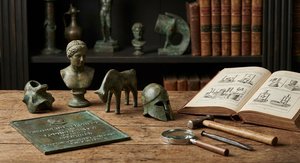
The Enduring Legacy of Bronze: History, Technique & Artistic Expression for the Collector
Explore the rich history & enduring appeal of bronze sculpture with expert insights for collectors at OriginalUniqueArt. Learn about casting techniques, iconic artists, and collecting tips.

Top 10 Bronzemesterværker: Kunsthistorien Ændret for Evigt | OriginalUniqueArt.dk
Oplev de 10 mest legendariske bronzemesterværker, der har formet kunsthistorien! Fra Rodin til Degas – lær historierne bag ikoniske skulpturer og find inspiration til din indretning. Køb museumskvalitets reproduktioner på OriginalUniqueArt.com.