
 Se i rummet
 Del som kort
 Del
Del
 Detaljer
 Guide
Guide

 Download
 Lignende værker
 Røntgenundersøgelse
 Diasshow
 Spørgsmål og svar
 Statistikker
A Lady in Her Bath

- 92.0 x 81.0 cm


 Vis mere
Få en printklar fil, der rækker langt ud over web-forhåndsvisningen. Hvert digitalt billede, vi sælger, stammer fra en højopløst master i vores database — typisk mellem 5.000 og 15.000 pixels i bredden — så du med selvtillid kan printe stort, beskære tæt eller gengive fine detaljer.
Ingen fil forlader vores studie uden at være blevet behandlet. En digital ekspert kontrollerer farverne i forhold til det originale maleri og korrigerer dem efter behov, hvorefter klarhed og detaljer forbedres med professionelle retoucheringsværktøjer — altid med fuld respekt for kunstnerens penselstrøg og stil. Resultatet er et billede, der ligner selve maleriet, og ikke blot et scannet billede med et filter.
Du godkender først, når du er tilfreds: Vores ekspert sender billedet til din gennemgang via e-mail inden for 72 timer. Ikke tilfreds? Bed om rettelser eller forbedringer, eller anmod om en refundering, hvis kvaliteten ikke lever op til forventningerne.
Dette er den kvalitet, som forlag, designstudier, gallerier og trykkerier stoler på.
Digitalt billede
Download en højopløselig fil til personlig fremvisning, print og kreative projekter. ( Skift til printsalg Køb håndmalet maleri)
Inkluderet i alle ordrer på digitale billeder
Ekspertise i digital levering, garanteret
Når du vælger OriginalUniqueArt.com, får du ikke blot et billede – du modtager et professionelt optimeret digitalt kunstværk, skabt med præcision og sikret med en tilfredshedsgaranti. Her er alt, hvad din ordre automatisk indeholder:

Hurtig levering via e-mail
Din højtopløselige digitale billedfil sendes til din e-mail inden for 72 timer efter bestilling – klar til øjeblikkelig brug.

AI-optimeret digital fil
Dit kunstværk optimeres professionelt ved hjælp af avancerede AI-værktøjer og manuel redigering, hvilket sikrer maksimal detaljegrad, klarhed og farvenøjagtighed.

Gratis livslang genlevering
Har du ved en fejl slettet eller mistet din fil? Ingen bekymring – vi sender den igen til enhver tid, helt gratis.

Ingen importgebyrer – nogensinde
Nyd dit kunstværk med det samme uden told, afgifter eller leveringsgebyrer – digitale downloads er altid skattefrie.

Garanteret farvenøjagtighed
Vi sikrer, at dit digitale billede gengiver de originale farver så præcist som muligt ved hjælp af professionelle værktøjer og farvestyring.

100 dages tilfredshedsgaranti
Hvis du ikke er tilfreds med dit digitale billede, vil vi revidere det eller refundere 100% inden for 100 dage – uden spørgsmål.

100% Pengene tilbage-garanti
Ik tilfreds? Få fuld refusion inden for 100 dage efter modtagelse af din digitale fil – uden spørgsmål.

Mængderabat ved storkøb
Køb 3 billeder, spar 10% - Køb 5, spar 15% - Køb 10+, spar 20%. Ideelt til kreative projekter, gallerier og bureauer.
A Moment Suspended in Time: The Grace of the French Renaissance
In the quiet, luminous atmosphere of François Clouet’s “A Lady in Her Bath,” the viewer is not merely an observer but a silent guest invited into a moment of profound domestic intimacy. Painted around 1571, this masterpiece serves as a breathtaking window into the private lives of the French aristocracy during the late Renaissance. The composition unfolds with a theatrical grace, where heavy red satin drapes are pulled back like a stage curtain to reveal a scene of serene vulnerability. At its heart sits a woman of ethereal beauty, her presence commanding yet gentle, captured in a state of repose that feels both timeless and fleeting.
The painting is far more than a simple portrait; it is a carefully constructed tableau brimming with the elegance and subtle anxieties of the French court. As we gaze upon the subject, we are drawn into a world where every fold of fabric and every glint of light serves to elevate the status of the sitter. For the collector or the interior designer, this work offers an unparalleled sense of noblesse oblige, bringing a touch of historical grandeur and sophisticated tranquility to any curated space.
Symbolism and the Maternal Ideal
While the definitive identity of the lady remains a subject of scholarly debate, the painting is often whispered to be a portrait of Diane de Poitiers, the legendary and influential mistress of King Henri II. Whether she represents this powerful figure or perhaps even Mary, Queen of Scots, the subject embodies the quintessential Renaissance ideals of femininity. Clouet skillfully portrays the woman reclining in an ornate bath, attended by two infants nestled upon her breasts. This specific pose intentionally harkens back to classical depictions of Venus Pudica, weaving together themes of modesty, maternal virtue, and the divine beauty of nature.
The presence of the children adds a layer of profound emotional depth, transforming a scene of personal grooming into a celebration of lineage and familial continuity. The subtle inclusion of objects—perhaps an apple or a small bird held by a child—serves as a symbolic language common to the era, hinting at fertility, innocence, and the cycle of life. This interplay between the physical body and the spiritual essence of motherhood creates an emotional resonance that continues to captivate viewers centuries after the brushstrokes were dried.
Mastery of Technique: Flemish Realism Meets Italian Grace
Clouet’s artistic approach is a masterful dialogue between two great European traditions. From his Northern roots, he inherited a devotion to Flemish naturalism, which is evident in the meticulous rendering of textures. One can almost feel the coolness of the water, the weight of the heavy drapery, and the delicate, translucent quality of the lady's skin. His ability to capture the tactile reality of the oak panel medium allows the light to dance across the surface, creating a lifelike presence that is rare in portraiture of this period.
Yet, this realism is tempered by an Italianate refinement. Influenced by the likes of Leonardo da Vinci and Raphael, Clouet employs a subtle chiaroscuro to sculpt the figures, giving them a three-dimensional majesty. The proportions are idealized, lending the lady an air of celestial grace that transcends the mundane. For those seeking a high-quality reproduction, this duality of style offers a rich visual experience—a perfect balance of anatomical precision and poetic beauty that serves as a sophisticated focal point for any refined interior.
Spørgsmål og svar
Hvordan kan "A Lady in Her Bath" af François Clouet bruges i boligindretningen?
"A Lady in Her Bath" af François Clouet anbefales til Accent, ideelt set i et Living Room. Anvendelse og rum skaber sammen rammen om, hvor en reproduktion passer ind.
Hvor placerer "A Lady in Her Bath" af François Clouet sig i kunsthistorien?
"A Lady in Her Bath" af François Clouet tilhører Renaissance Portraiture-bevægelsen fra Renaissance-perioden. Sammen giver de værket dets plads i kunsthistorien.
Er "A Lady in Her Bath" af François Clouet et maleri, en tegning eller et tryk?
"A Lady in Her Bath" af François Clouet er klassificeret som WallArt. Kategorien beskriver den type kunstværk, som originalen er.
Kunstnerens biografi
A Legacy of Likeness: The World of François Clouet
François Clouet, a name synonymous with the refined portraiture of the French Renaissance, emerged from a lineage steeped in artistic skill and courtly favor. Born around 1510 in Tours, France, his life unfolded against a backdrop of evolving artistic sensibilities and the opulent world of the Valois monarchy. He wasn’t merely a painter; he was a chronicler of an era, capturing the essence of kings, queens, and courtiers with a meticulousness that continues to captivate viewers today. The shadow of his father, Jean Clouet, loomed large – both artists shared not only a profession but also the familiar nickname ‘Janet,’ leading to occasional confusion in attributing their works across generations. Yet, François carved his own distinct path, blending Flemish naturalism with an emerging Italianate grace, and establishing himself as one of France’s most celebrated portraitists.Inheriting a Tradition: Early Life and Artistic Formation
The early years of François Clouet remain somewhat veiled in historical obscurity, but his artistic trajectory was undeniably shaped by the legacy of his father. Jean Clouet, originating from the Southern Netherlands, brought with him to the French court the meticulous detail and realistic approach characteristic of Flemish painting. This foundation formed the bedrock of François’s training. A pivotal moment arrived in 1541 when François inherited his father's estate, formally stepping into his artistic inheritance and assuming the responsibilities that came with it. This wasn’t simply a transfer of property; it was an assumption of a role within the very fabric of the French court. The Clouet family also enjoyed a unique connection to the Italian Renaissance through Jean’s time in Amboise, exposing François to the burgeoning ideals and innovative techniques emanating from Italy – a subtle but significant influence that would later manifest in his work. He absorbed not just technique, but an understanding of how art could serve as both documentation and celebration of power and status. He diligently studied the works of Leonardo da Vinci and other masters of Florentine painting, absorbing their principles of observation and anatomical accuracy.The Art of Revelation: Style and Major Works
François Clouet’s oeuvre is defined by a remarkable precision and elegance. His portraits weren't merely likenesses; they were insightful studies of character, capturing not only physical features but also the personality and social standing of his subjects. He possessed an extraordinary ability to convey royal authority and sophistication, as evidenced in several notable depictions of Francis I – masterpieces housed in institutions like the Uffizi Gallery and the Louvre Museum. Beyond Francis I, Clouet’s brush immortalized other key figures of the era. He likely painted portraits of Catherine de' Medici at Versailles, contributing to a visual record of her influential reign. Perhaps one of his most celebrated achievements is the chalk drawing of Mary, Queen of Scots – held in the Bibliothèque nationale – a work that showcases his mastery of capturing delicate features and conveying emotional depth with astonishing subtlety. Other notable works include portraits of Elizabeth of Austria (Louvre), Marguerite of France (Chantilly), and Charles IX (Château de Chantilly). His paintings often possess a quiet dignity, a restrained elegance that reflects the refined sensibilities of the French court. The use of light and shadow – *chiaroscuro* – is subtle yet effective, adding depth and dimension to his portraits without resorting to dramatic contrasts.A Defining Aesthetic: Characteristics of Clouet’s Art
Several hallmarks define François Clouet's distinctive style.- Elaborate Detail: A meticulous attention to detail permeates his work, evident in the intricate rendering of clothing, jewelry, and facial features – every element contributing to a sense of realism and opulence.
- Accurate Drawing: Clouet’s portraits are grounded in precise anatomical rendering and skillful use of line, demonstrating a mastery of draftsmanship that underpinned his artistic vision.
- Exquisite Completeness: His compositions convey a sense of wholeness and personality, going beyond mere physical representation to capture the inner life of his subjects. He didn’t just paint faces; he painted individuals.
A Lasting Impression: Historical Significance and Legacy
François Clouet’s contributions to French Renaissance art are profound. He played a crucial role in establishing portraiture as a prominent genre in France, elevating the status of the artist and providing invaluable visual records of the royal court. He bridged the gap between medieval artistic traditions and the emerging Renaissance ideals, incorporating naturalism and humanistic principles into his work. As a court painter for multiple French monarchs – Francis I, Henry II, Francis II, and Charles IX – he documented the lives and appearances of key figures in French history, creating a visual archive that continues to inform our understanding of this period. His meticulous style and attention to detail profoundly influenced subsequent generations of French portraitists, solidifying his place as a pivotal figure in the development of French art. François Clouet died on December 22, 1572, shortly after the tumultuous St. Bartholomew’s Day Massacre – a poignant end for an artist who had dedicated his life to immortalizing the world around him. His will offers glimpses into his personal life and financial standing, further cementing his legacy as both an artistic master and a significant figure in French society.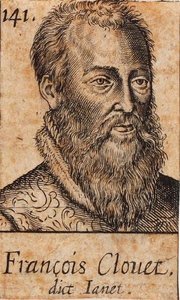
François Clouet
1510 - 1572 , Frankrig
Kort fortalt
- Artistic Movement Or Style: Renaissance portrætter
- Artists Or Movements Influenced By This Artist: ['Franske kunstnere']
- Artists Who Influenced This Artist:
- Jean Clouet
- Leonardo da Vinci
- Date Of Birth: c. 1510
- Date Of Death: 1572
- Full Name: François Clouet
- Nationality: Fransk
- Notable Artworks:
- Elisabeth af Østrig
- Marguerite af Frankrig
- Charles IX
- Place Of Birth: Tours, Frankrig