
 Se i rummet
 Del som kort
 Del
Del
 Detaljer
 Guide
Guide

 Download
 Lignende værker
 Røntgenundersøgelse
 Diasshow
 Spørgsmål og svar
 Statistikker
Granada


 Vis mere
Giclée / Kunsttryk
Giclée- eller lærredstryk i museumskvalitet med hurtig produktion og fleksible muligheder for finish. ( Køb håndmalet maleri Skift til digitalt billede)




P118B Dkr10

P118H Dkr10

P118W Dkr10

P438Z Dkr10

P508JH Dkr12

P508YH Dkr12

P805H Dkr10

P805Z Dkr10

P919BZ Dkr10

P919G Dkr10

P919XJ Dkr10

P959ZH Dkr10

P968JZ Dkr12

W106C Dkr8

W218G Dkr10

W218JH Dkr8

W218Y Dkr10

W307PJ Dkr10

W316G Dkr10

W316PJ Dkr8

W316Y Dkr10

W398PJ Dkr8

W4111J Dkr10

W500HY Dkr15

W500JH Dkr15

W692G Dkr12

W849H Dkr8

W940BG Dkr15

W953PJ Dkr8




Vælg mellem vores forudindstillede størrelser, der matcher kunstværkets originale proportioner.

Indtast den bredde og højde, du har brug for, så det passer til din ramme eller din væg. Et print kan kun beskæres, aldrig gøres større end selve billedet, så en størrelse med et andet format vil medføre, at dele af motivet går tabt. Vi sender dig en digital mockup til godkendelse, før vi printer noget. Billedet vist på denne side viser ikke den faktiske beskæring — det er kun mockuppen, der gør.
Verdensomspændende levering () på 2 uger i stedet for de sædvanlige 4/5 uger. (10 november)

Gratis ekspresforsendelse til hele verden

Lærred af linned i høj kvalitet

Fuld transportforsikring

Garanti for refusion af told og importafgifter

Garanti for præcis farvegengivelse

100 dages returret ved fabrikationsfejl

100% fuld returret

Mængderabat ved flere køb
 Glasmulighed er kun tilgængelig i størrelser under 110 cm

Granada
Giclée / Kunsttryk
Størrelse på reproduktion
-


Samlet pris
Dkr 541
Kunstnerbiografi
A Transatlantic Vision: The Life and Art of F. Luis Mora
Francis Luis Mora, a name perhaps less instantly recognizable than those of his American Impressionist contemporaries, nevertheless occupies a significant place in the narrative of early 20th-century art. Born in Montevideo, Uruguay, in 1874, Mora’s journey was one of constant movement and artistic assimilation, ultimately forging a unique aesthetic that blended European Old Master techniques with the burgeoning spirit of American Impressionism. His story is not merely that of an artist, but of a cultural bridge, connecting the rich artistic traditions of Spain and Uruguay to the evolving landscape of American art. The son of Domingo Mora, a sculptor, and Laura Gaillard, a woman steeped in French culture, young Francis was immersed in creativity from his earliest years. His father’s profession provided not only a livelihood but also an early education in form and composition, nurturing a talent that would soon blossom under formal training. Frequent relocations due to his father's work instilled in him a sense of adaptability and broadened his exposure to diverse cultural influences—a characteristic that would profoundly shape his artistic vision.From Boston to Europe: The Shaping of an Artistic Identity
Mora’s formal art education began at the School of the Museum of Fine Arts in Boston, where he studied with prominent American Impressionists like Edmund Charles Tarbell and Frank Weston Benson. This period was crucial in establishing his technical foundation and introducing him to the principles of light, color, and atmospheric perspective that defined the Impressionist movement. However, Mora’s artistic trajectory took a pivotal turn during a transformative trip to Europe with his mother in 1896. It was within the hallowed halls of Madrid's Museo del Prado, confronted by the masterpieces of Spanish Old Masters—particularly Diego Velázquez—that Mora experienced an epiphany. The profound realism and masterful handling of light and shadow captivated him, igniting a lifelong passion for integrating these techniques into his own work. This encounter wasn’t simply about imitation; it was about finding a way to reconcile the immediacy and vibrancy of Impressionism with the depth and gravitas of classical painting. He continued his studies at the Art Students League of New York under Henry Siddons Mowbray, further refining his skills while simultaneously grappling with this artistic synthesis.A Multifaceted Career: Portraits, Murals, and Patriotic Service
Mora’s career unfolded across a remarkable range of mediums and applications. He achieved early recognition within the American art establishment, becoming an associate member of the National Academy of Design in 1904 and a full member just two years later—a potentially groundbreaking achievement as one of the first Hispanic artists to receive such honor. This affiliation opened doors to commissions and exhibitions, establishing him as a respected figure in the New York art world. Beyond his easel paintings, Mora enjoyed considerable success as an illustrator, contributing to leading publications like Harper's Weekly, Scribner’s, The Century, Collier’s, and Ladies’ Home Journal. His illustrations showcased his versatility and ability to capture both narrative detail and emotional nuance. During World War I, he patriotically volunteered his artistic talents to create motivational posters for the Third and Fourth Liberty Loan Boards, demonstrating a commitment to public service through art. Perhaps less known but equally significant was Mora's work as a muralist. He received commissions for prominent public buildings, including the Lynn Public Library in Massachusetts and the Missouri State Building at the 1904 Louisiana Purchase Exposition, leaving behind lasting testaments to his artistic vision in architectural spaces.Themes, Style, and Lasting Legacy
Mora’s paintings are characterized by a refined technique, rich color palettes, and a compelling sense of realism tempered with Impressionistic brushwork. He frequently depicted elegant portraits, scenes of Spanish life—reflecting his deep connection to his heritage—historical subjects, and allegorical themes. His ability to capture the character and atmosphere of his subjects was particularly noteworthy, imbuing his work with a psychological depth that resonated with viewers. Granada, for example, exemplifies his skill in evoking the mood and ambiance of Spain, while his portraits reveal a sensitivity to individual personality. As a teacher at both William Merritt Chase's Chase School of Art (later Parsons) and the Art Students League, Mora played an important role in shaping the next generation of American artists. Among his notable students was none other than Georgia O’Keeffe, whose own groundbreaking work bears traces of the technical rigor and compositional principles she learned from him. F. Luis Mora's legacy extends beyond his individual artworks; he represents a vital intersection of Uruguayan heritage and American art, broadening the scope of artistic representation in the United States and leaving an indelible mark on the cultural landscape. His life and work stand as a testament to the power of cross-cultural exchange and the enduring appeal of artistic innovation.Notable Works
- The National Academy Jury of 1907: A striking portrait showcasing Mora’s mastery of composition and character study.
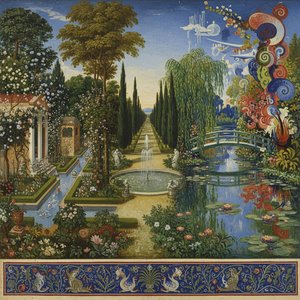
- Granada: An evocative depiction of Spanish life, capturing the essence of the region's atmosphere and culture.
- Mrs F. Luis Mora and Her Sister: A sensitive portrayal of familial bonds, demonstrating his skill in portraiture.

Francis Luis Mora
1874 - 1940 , Uruguay
Kort om kunstneren
- Full Name: Francis Luis Mora
- Nationality: Uruguayan-American
- Date Of Birth: 1874
- Date Of Death: 1940
- Place Of Birth: Montevideo, Uruguay
- Notable Artworks:
- The National Academy Jury of 1907
- Granada
- Mrs F. Luis Mora and Her Sister
- Artistic Movement Or Style: Impressionism, Realism
- Artists Who Influenced This Artist:
- Diego Velázquez
- Edmund Tarbell
- Frank Benson
- Artists Or Movements Influenced By This Artist: ["Georgia O'Keeffe"]
Relaterede artikler

Oil on Canvas: A Historical & Technical Exploration of a Timeless Artistic Medium
Explore the rich history & enduring techniques of oil painting on canvas. Discover the science behind its longevity, conservation practices, and contemporary relevance. Expert insights for art enthusiasts.
Cultivating Paradise: A Historical & Artistic Exploration of Gardens in Painting
Explore the rich history of gardens in painting! Discover masterpieces from Renaissance to Impressionism & beyond. Learn about symbolism, artists like Monet & Klimt, and find your perfect artwork at OriginalUniqueArt.

Francis Bacons 25 Mesterværker: En Kunstnerisk Rejse | OriginalUniqueArt.dk
Oplev Francis Bacons 25 mest ikoniske malerier. Fordyb dig i hans ekspressive stil, rå følelser og unikke teknikker. Find inspiration til din boligindretning & køb museumskvalitets reproduktioner på OriginalUniqueArt.com.

The Soul of Impressionism: Why Oil on Canvas Captures Eternal Light and Timeless Emotion
Discover the enchanting alchemy of Impressionism. Explore how the mastery of oil on canvas, through glazing and impasto, captures eternal light and emotion. Perfect for lovers of Monet and Van Gogh seeking the profound depth of hand-painted fine art.

The Enduring Legacy of Oil on Canvas: Technique, History & Aesthetic Impact
Explore the rich history & techniques of oil painting – from Renaissance masters to Impressionism. Discover pigments, layering methods, and why this timeless medium endures. Expert insights for artists & art enthusiasts.