
 Se i fuld skala
 Del
Del Del
Del
 Detaljer

 Download
 Lignende værker
 Røntgenundersøgelse
 Diasshow
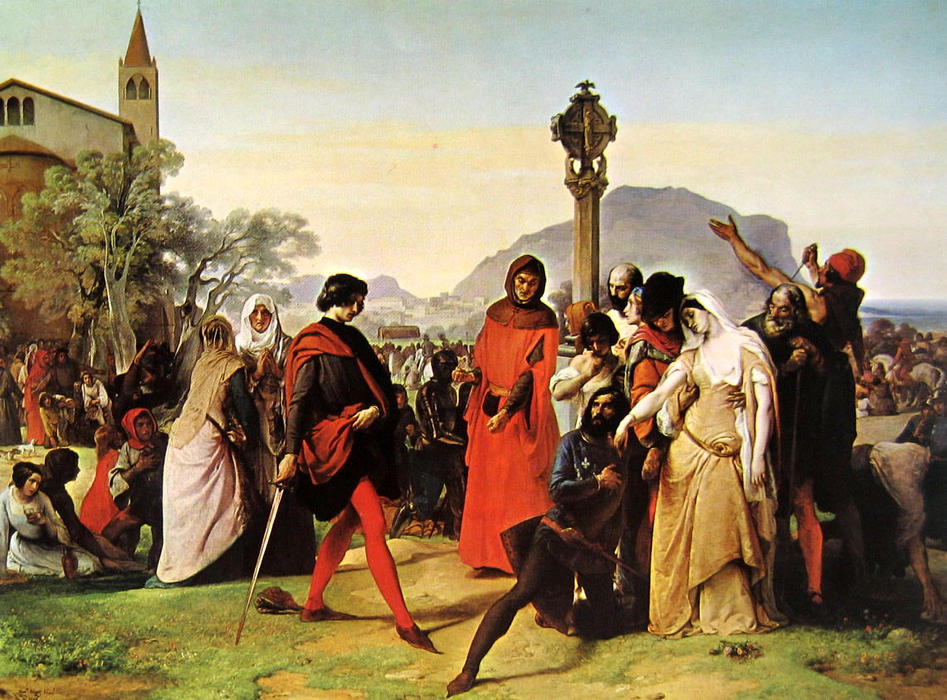
Sicilian Vespers scene 3


 Se mere
Giclée / Kunsttryk
Giclée- eller lærredstryk i museumskvalitet med hurtig produktion og fleksible muligheder for finish. ( Køb håndlavet maleri Køb billede)




P118B $10

P118H $10

P118W $10

P438Z $10

P508JH $12

P508YH $12

P805H $10

P805Z $10

P919BZ $10

P919G $10

P919XJ $10

P959ZH $10

P968JZ $12

W106C $8

W218G $10

W218JH $8

W218Y $10

W307PJ $10

W316G $10

W316PJ $8

W316Y $10

W398PJ $8

W4111J $10

W500HY $15

W500JH $15

W692G $12

W849H $8

W940BG $15

W953PJ $8




Vælg mellem vores forudindstillede størrelser, der matcher kunstværkets originale proportioner.

Du kan indtaste dine egne mål for at passe til en specifik ramme eller et bestemt område. Hvis den valgte størrelse ikke stemmer overens med det originale billedes proportioner, vil vi enten beskære kunstværket eller udvide billedet med en spejlet eller ensfarvet kant. En digital mockup vil blive sendt til din godkendelse, før produktionen påbegyndes.
Bemærk venligst, at forhåndsvisningen på skærmen ikke afspejler den faktiske beskæring eller udvidelse. Kun mockuppen vil nøjagtigt vise den endelige komposition.
Selvom specialmål er tilgængelige, anbefaler vi at vælge et mål fra den foruddefinerede liste for at bevare de originale proportioner.
Verdensomspændende levering () på 2 uger i stedet for de sædvanlige 4/5 uger. (22 august)

Gratis ekspresforsendelse til hele verden

Lærred af linned i høj kvalitet

Fuld transportforsikring

Garanti for refusion af told og importafgifter

Garanti for præcis farvegengivelse

60 dages returret (kun ved fabrikationsfejl)

100% Tilfredshedsgaranti

Mængderabat tilgængelig
 Glasmulighed er kun tilgængelig i størrelser under 110 cm

Sicilian Vespers scene 3
Giclée / Kunsttryk
Størrelse på reproduktion
-


Samlet pris
$ 81
Beskrivelse af samlerobjektet
A Tempestuous Vision: Hayez’s “Sicilian Vespers”
Francesco Hayez's "Sicilian Vespers" (1846) isn’t merely a historical painting; it’s a visceral eruption of conflict, a meticulously crafted tableau of political intrigue and simmering rebellion. The canvas explodes with the energy of a sudden uprising, capturing not just an event but the very essence of chaos and determination. It's a scene ripped from the annals of 13th-century Sicily, where dynastic ambitions collided with papal authority, resulting in a protracted and bloody struggle for control. More than a chronicle of events, Hayez delivers a potent allegory about power, loyalty, and the volatile nature of governance – themes that resonate powerfully even today.
The painting immediately commands attention through its dramatic composition. The central figure, clad in scarlet, leads a charge against a wall of defenders, his posture radiating both aggression and a desperate urgency. Around him, a swirling mass of soldiers, nobles, and commoners – all rendered with remarkable detail – surge forward, their faces contorted in expressions of fury and resolve. Hayez masterfully employs diagonal lines to create a sense of dynamic movement, pulling the viewer directly into the heart of the fray. The use of light is particularly striking; it illuminates the advancing figures while casting deep shadows over the retreating defenders, further amplifying the painting’s dramatic intensity.
Romanticism and Historical Narrative
Hayez was a pivotal figure in the Italian Romantic movement, and “Sicilian Vespers” exemplifies this style perfectly. Rejecting the cool detachment of Neoclassicism, Romantic artists sought to evoke strong emotions through vivid imagery and dynamic compositions. Hayez’s work is characterized by its theatricality, heightened drama, and focus on emotionally charged subjects – a hallmark of the era. He wasn't interested in simply depicting historical events; he aimed to capture their emotional core, translating them into a powerful visual narrative.
The painting draws heavily on medieval chronicles detailing the Sicilian Vespers revolt, which saw a group of Sicilian nobles overthrow King Peter III and demand the deposition of Pope Innocent IV. This event was fueled by resentment over papal interference in local affairs and a desire to restore Sicily’s independence. Hayez skillfully weaves together historical fact with elements of dramatic license, creating a compelling narrative that transcends mere documentation.
Technique and Symbolism
Hayez's technical skill is evident in every brushstroke. He employs a rich, dark palette dominated by reds, browns, and blacks, which contribute to the painting’s somber mood. The figures are rendered with meticulous detail, capturing their individual expressions and gestures with remarkable accuracy. The artist utilizes a technique of *sfumato*, subtly blurring edges and creating a sense of atmospheric depth, particularly in the background, adding to the overall feeling of chaos and uncertainty.
Beyond its historical subject matter, “Sicilian Vespers” is laden with symbolism. The scarlet garment worn by the leader represents courage, passion, and perhaps even rebellion against established authority. Conversely, the defenders’ armor symbolizes loyalty, tradition, and the weight of the past. The very act of fighting – a brutal, chaotic melee – speaks to the destructive consequences of political conflict and the erosion of social order. The inclusion of the papal banner amongst the defeated highlights the central role of the papacy in this tumultuous episode.
Emotional Resonance and Legacy
“Sicilian Vespers” is not simply a historical painting; it’s an emotionally resonant work that continues to captivate viewers today. Hayez masterfully conveys the sense of urgency, conflict, and human drama inherent in the subject matter. The painting's depiction of a passionate struggle for power—a theme that has resonated throughout history—makes it timeless and universally relatable.
Reproductions of this iconic artwork offer a stunning way to bring Hayez’s dramatic vision into any space. Whether adorning a grand salon or a more intimate setting, “Sicilian Vespers” serves as a powerful reminder of the complexities of human ambition, loyalty, and the enduring legacy of historical conflict. Its vibrant colors and dynamic composition make it an exceptional choice for collectors and interior designers seeking to infuse their surroundings with both beauty and intellectual depth.
Kunstnerens biografi
tidligt liv og uddannelse
Francesco Hayez, den berømte italienske maler, blev født den 10. februar 1791 i Venedig, Italien. Hans far, Giovanni, var af fransk oprindelse, mens hans mor, Chiara Torcella, stammede fra Murano. Den unge Francesco udviste tidligt en særlig evne for tegning og blev som lærling optaget hos sin onkel, der arbejdede som kunstrestauratør.kunstnerisk karriere
Hayez' kunstneriske rejse tog for alvor fart i 1806, da han blev indskrevet ved den nye akademi for skønne kunster i Milano, hvor han studerede under Teodoro Matteini. I 1809 vandt han en prestigefyldt konkurrence, der sikrede ham et års studieophold ved Accademia di San Luca i Rom. Denne eksponering for forskellige kunstneriske strømninger formede hans unikke stil, som senere skulle blive selve kendetegnet for den italienske romantik.bemærkelsesværdige værker og stil
Hayez' samlede værk er karakteriseret ved storslåede historiemalerier, politiske allegorier og exceptionelt fine portrætter. Blandt hans mest betydningsfulde værker finder man:- Kysset, som af hans samtidige blev betragtet som et af hans absolutte mesterværker og har vundet endnu større anerkendelse gennem tiden.
- Pave Urban II prædiker det første korstog på pladsen i Clermont, et væsentligt værk, der udviser hans evne til historisk fortælling.
- Portræt af Matilde Juva-Branca, som eksemplificerer hans færdighed i at indfange sine subjekters sande essens.
museer og samlinger
Hayez' værker er udstillet på adskillige museer, herunder Civica Galleria d'Arte Moderna i Milano, som huser en imponerende samling af moderne og samtidskunst.- Pave Urban II prædiker det første korstog på pladsen i Clermont (235 x 157 cm, Fondazione Cariplo, Milano)
- Francesco Hayez' profil på OriginalUniqueArt
- Wikipedia: Francesco Hayez
eftermæle og betydning
Hayez' indflydelse på den italienske romantik er ubestridelig. Hans arbejde har været genstand for studier hos både kunsthistorikere og entusiaster, og hans værker fortsætter med at inspirere nye generationer af kunstnere. vigtige datoer: - 10. februar 1791: født i Venedig, Italien - 1806: indskrevet ved den nye akademi for skønne kunster, Milano - 21. december 1882: gik bort og efterlod sig en arv i italiensk kunst
Francesco Hayez
1791 - 1882 , Italien
Kort om kunstneren
- Artistic Movement Or Style: Romantik
- Artists Or Movements Influenced By This Artist: ['Neoklasikisme']
- Artists Who Influenced This Artist: ['Teodoro Matteini']
- Date Of Birth: 10. februar 1791
- Date Of Death: 12. februar 1882
- Full Name: Francesco Hayez
- Nationality: Italiensk
- Notable Artworks:
- The Kiss
- Pape Urban II
- Portræt
- Place Of Birth: Venedig, Italien
Relaterede artikler
High Medieval Art: 10 Masterpieces That Shaped an Era | OriginalUniqueArt
Journey through High Medieval Art! Explore 10 iconic masterpieces – from Giotto's frescoes to stunning Gothic cathedrals. Discover the stories behind these timeless paintings, sculptures & illuminated manuscripts. Find museum-quality art reproductions at OriginalUniqueArt.com.
Late Medieval Masterpieces: 10 Artworks That Defined an Era | OriginalUniqueArt
Journey through 10 defining Late Medieval masterpieces – from Giotto's frescoes to Jan van Eyck’s realism. Explore the stories, techniques & vibrant colors of Gothic art. Find museum-quality reproductions and elevate your home decor with OriginalUniqueArt.com! Discover all masterpieces on OriginalUniqueArt.com
Timeless Elegance: How to Integrate High Medieval Art into Your Modern Interior Design
Discover how to infuse your modern home with the divine light of High Medieval art. From gilded illuminated manuscripts to Gothic-inspired textures, learn expert tips for integrating timeless elegance and historical grandeur into contemporary interior design.

Divine Light & Golden Splendor: A Journey Through the Sacred Grandeur of High Medieval Art
Embark on a soulful journey through High Medieval art. Explore the divine light of Gothic cathedrals, Byzantine splendor, and sacred masterpieces that shaped Western history with our expert-led cultural reflections.

Pre-Raphaelite Romanticism: A Guide to Vivid Detail and Medieval Beauty in Victorian Art
Explore the vivid detail and medieval beauty of Pre-Raphaelite Romanticism. Discover the history of masters like Rossetti and Millais through our expert guide to Victorian art, perfect for collectors and professionals seeking authentic, museum-quality reproductions.



