

 Se i rummet
 Send
Send Del
Del
 Detaljer
 Studieguide til kunstværker

 Download
 Lignende værker
 Røntgenundersøgelse
 Se diasshow
 Statistik
Pulpit


 Læs mere
Kunstværket vist på denne side er beskyttet af ophavsretsloven, hvilket betyder, at vi ikke lovligt kan skabe eller sælge en identisk reproduktion. Denne beskyttelse håndhæves i henhold til internationale aftaler som f.eks. den Bernerkonventionen og af nationale love, herunder de bestemmelser, der er fastlagt i Amerikansk ophavsretslov - Titel 17.
Som et respektfuldt og lovligt alternativ tilbyder vi skræddersyede, håndmalede kunstværker inspireret af originalen. Vores dygtige og professionelle kunstnere studerer omhyggeligt originalens stil, stemning og kunstneriske essens for at skabe et nyt, unikt værk, der fremkalder den samme følelse – samtidig med at det forbliver en original skabelse i egen ret.
Denne metode overholder fuldt ud ophavsretsreglerne, da den ikke indebærer kopiering eller duplikering af det beskyttede kunstværk. I stedet er der tale om en kreativ nytolkning – et nyt maleri, som er inspireret af det oprindelige, men ikke identisk med det.
Håndlavet oliereproduktion
Håndmalet olie på lærred i din valgte størrelse og ramme, udført efter bestilling af vores kunstnere. ( Skift til printversion Skift til digitalt billede)




P118B Dkr10

P118H Dkr10

P118W Dkr10

P438Z Dkr10

P508JH Dkr12

P508YH Dkr12

P805H Dkr10

P805Z Dkr10

P919BZ Dkr10

P919G Dkr10

P919XJ Dkr10

P959ZH Dkr10

P968JZ Dkr12

W106C Dkr8

W218G Dkr10

W218JH Dkr8

W218Y Dkr10

W307PJ Dkr10

W316G Dkr10

W316PJ Dkr8

W316Y Dkr10

W398PJ Dkr8

W4111J Dkr10

W500HY Dkr15

W500JH Dkr15

W692G Dkr12

W849H Dkr8

W940BG Dkr15

W953PJ Dkr8




Vælg mellem vores forudindstillede størrelser, der matcher kunstværkets originale proportioner.

Indtast den bredde og højde, du har brug for, så det passer til din ramme eller din væg. Da dette er håndmalet, kan kunstneren ved en anden form på størrelsen male lidt mere rundt om billedet eller skære lidt væk — det er op til dig. Vi sender dig et digitalt mockup til godkendelse, før maleriet påbegyndes. Billedet, der vises på denne side, viser ikke det endelige resultat — det er kun mockuppet, der gør.
Efter bestilling vil OriginalUniqueArt.com team sende en e-mail til kunden for at indhente instruktioner og fremsende et udkast til gennemgang.
Levering i hele verden () på 3-4 uger i stedet for de standard 5 uger. (24 oktober). Ingen kompromiser med kvaliteten.

Gratis ekspresforsendelse til hele verden

Lærred af linned i høj kvalitet

Komplet transportforsikring

Garanti for refusion af told og importafgifter

Garanti for autentisk farvegengivelse

100 dages returret ved fabrikationsfejl

100% fuld returret

Mængderabat ved flere køb
 Glasmulighed er kun tilgængelig i størrelser under 110 cm

Pulpit
Reproduktionsmateriale
Reproduktionsstørrelse
-


Samlet pris
Dkr 4273
Om kunstneren
Guglielmo Achille Cavellini: A Pioneer of Self-Historicization and Abstract Art
Guglielmo Achille Cavellini (1914-1990), a name perhaps less familiar than some of his contemporaries, stands as a pivotal figure in the evolution of 20th-century Italian art. Born in Brescia, Italy, into a family with roots in Tuscany’s Lunigiana region – a landscape steeped in artistic tradition – Cavellini's life was one of constant movement and intellectual exploration, ultimately shaping him into a unique artist, collector, and self-historian. His career spanned decades, encompassing painting, performance art, mail art, and most notably, the development of his groundbreaking concept of *autostoricizzazione*—a deliberate attempt to construct a personal history through his own artistic output. Cavellini’s legacy lies not just in his individual works but in his radical approach to defining an artist's identity and relationship to their oeuvre.Early Life and Artistic Beginnings
Guglielmo Achille Cavellini was born on September 11, 1914, into a family deeply connected to the artistic heritage of Tuscany. His parents, hailing from small villages near Pontremoli, brought with them a tradition of craftsmanship and an appreciation for visual culture. Following his father’s work as a bricklayer and later as a hawker, the family relocated to Switzerland, then Lombardy, eventually settling in Brescia where they opened a store called Bazar 33. From a young age, Cavellini demonstrated a keen interest in drawing and painting, primarily landscapes—a reflection of his familial ties to the rolling hills and picturesque scenery of Tuscany. His formal artistic education began at the Cesare Arici Jesuit College, where he studied for nine years, but was forced to interrupt his studies due to family responsibilities. This early exposure to both traditional academic training and independent exploration laid the foundation for his later experimentation with diverse art forms.Influences and Artistic Development
Cavellini’s artistic journey was profoundly shaped by a series of encounters and experiences. A pivotal meeting in 1935 with Lisetta, whom he would marry, provided him with a crucial creative partnership. In 1938, while residing in Cortina d'Ampezzo, he befriended the painter Domenico Mucci, who offered him invaluable painting lessons. This period marked an important shift towards abstraction and experimentation. Crucially, Cavellini’s artistic development was fueled by his extensive travels and engagement with the art world. He spent time in Venice, absorbing the atmosphere of the city and studying the works of Filippo de Pisis; he visited Burano, where he met another influential painter. However, it was a visit to the Procuratie in Venice, before Giorgione’s *Tempest*, that proved particularly transformative. There, he encountered Emilio Vedova, who encouraged him to organize an exhibition showcasing his own work, alongside the contributions of Giuseppe Santomaso and art critics Giuseppie Marchiori and Marco Valsecchi. This event served as a crucial validation of his artistic vision and established him within the burgeoning Italian avant-garde scene. The collection he curated included works by Giorgio de Chirico, Amadeo Modigliani, Giorgio Morandi, Henri Rousseau, André Derain, Alfred Sisley, and Paul Cézanne – artists whose diverse styles and approaches undoubtedly influenced his own evolving aesthetic.Innovation: Autostoricizzazione and Mail Art
In the 1960s, Cavellini developed a truly unique concept—*autostoricizzazione*, or self-historicization. Rejecting traditional biographical accounts of artists, he began to construct his own personal history through his art itself. He created a series of works, including *Exhibitions at Home* and *Round Trip*, which functioned as deliberate narratives about his life, experiences, and artistic process. This involved sending himself postcards bearing images of his artwork, accompanied by handwritten notes—a form of mail art that simultaneously documented his activities and actively shaped the perception of his career. This innovative approach challenged conventional notions of authorship and artistic identity, positioning the artist not merely as a creator but as an active participant in shaping their own historical narrative.Legacy and Significance
Guglielmo Achille Cavellini’s contribution to 20th-century art is multifaceted. He was a pioneer of Mail Art, pushing the boundaries of artistic communication through unconventional means. His exploration of Neo-Dada and performance art further solidified his position as a key figure in Italian avant-garde movements. However, it is *autostoricizzazione* that truly distinguishes Cavellini’s work—a radical concept that continues to resonate with contemporary artists grappling with questions of identity, authorship, and the role of art in shaping our understanding of history. His influence extends beyond his individual creations; he left behind a legacy of experimentation, self-reflection, and a profound challenge to established artistic conventions. His archive, meticulously assembled over decades, offers a unique window into the mind of an artist who actively constructed his own story through the very act of creating art.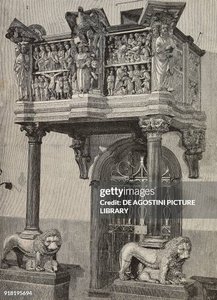
Fra Guglielmo
1914 - 1990 , United Kingdom
Hurtige fakta
- Full Name: Guglielmo Achille Cavellini
- Nationality: Italian
- Date Of Birth: 1914
- Date Of Death: 1990
- Place Of Birth: Brescia, United Kingdom
- Notable Artworks:
- Autostoricizzazione
- Round Trip
- Artistic Movement Or Style:
- Abstract art
- Mail Art
- Neo-Dada
- Performance art
- Artists Who Influenced This Artist:
- Giorgio de Chirico
- Amedeo Modigliani
- Gennaro Bellini
- Artists Or Movements Influenced By This Artist: ['Modern Italian art']
Relaterede artikler

The Enduring Form: Exploring Themes & Techniques in Sculpture Across Historical Periods
Explore the rich history of sculpture from ancient masterpieces to contemporary innovations. Discover key techniques, influential artists & investment potential for discerning art collectors.

Timeless Elegance: A Complete Guide to the Sublime Beauty and Artistry of Marble Sculpture
Discover the sublime beauty of marble art through an expert exploration of Renaissance and Neoclassical masterpieces. From the delicate textures of Carpeaux to the grandeur of Sansovino, immerse yourself in a guide to timeless elegance and sculptural perfection.

Bronzeskulpturers Mestre: 10 Værker der Ændrede Kunsthistorien | OriginalUniqueArt
Oplev de 10 mest legendariske bronzeskulpturer, der har formet kunsthistorien! Fra Rodin til Vigeland – lær historierne bag mesterværkerne og find inspiration til din indretning. Køb museumskvalitets reproduktioner på OriginalUniqueArt.com.

The Enduring Allure of Marble in Art History: From Classical Sculpture to Modern Abstraction
Explore the captivating history of marble sculpture from ancient Greece to modern art. Discover renowned artists like Canova & Michelangelo, carving techniques, and investment insights at OriginalUniqueArt.
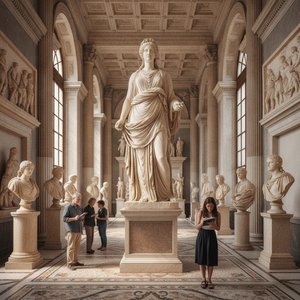
Timeless Grandeur: Exploring the Eternal Beauty and Art-Historical Legacy of Marble Sculpture
Explore the profound legacy of marble sculpture, from Classical antiquity to Neoclassical mastery. A definitive guide for elite collectors and designers seeking to integrate the luminous, eternal beauty of stone into sophisticated, high-end architectural spaces.