 Se i rummet
 Del som kort
 Del
Del
 Detaljer
 Guide
Guide

 Download
 Lignende værker
 Røntgenundersøgelse
 Diasshow
 Q&A
Q&A Statistikker
Devadatta


 Vis mere
Kunstværket vist på denne side er beskyttet af ophavsretsloven, hvilket betyder, at vi ikke lovligt kan skabe eller sælge en identisk reproduktion. Denne beskyttelse håndhæves i henhold til internationale aftaler som f.eks. den Bernerkonventionen og af nationale love, herunder de bestemmelser, der er fastlagt i Amerikansk ophavsretslov - Titel 17.
Denne metode overholder fuldt ud ophavsretsreglerne, da den ikke indebærer kopiering eller duplikering af det beskyttede kunstværk. I stedet er der tale om en kreativ nytolkning – et nyt maleri, som er inspireret af det oprindelige, men ikke identisk med det.
Giclée / Kunsttryk
Giclée- eller lærredstryk i museumskvalitet med hurtig produktion og fleksible muligheder for finish. ( Køb håndmalet maleri Skift til digitalt billede)




P118B Dkr10

P118H Dkr10

P118W Dkr10

P438Z Dkr10

P508JH Dkr12

P508YH Dkr12

P805H Dkr10

P805Z Dkr10

P919BZ Dkr10

P919G Dkr10

P919XJ Dkr10

P959ZH Dkr10

P968JZ Dkr12

W106C Dkr8

W218G Dkr10

W218JH Dkr8

W218Y Dkr10

W307PJ Dkr10

W316G Dkr10

W316PJ Dkr8

W316Y Dkr10

W398PJ Dkr8

W4111J Dkr10

W500HY Dkr15

W500JH Dkr15

W692G Dkr12

W849H Dkr8

W940BG Dkr15

W953PJ Dkr8




Vælg mellem vores forudindstillede størrelser, der matcher kunstværkets originale proportioner.

Indtast den bredde og højde, du har brug for, så det passer til din ramme eller din væg. Et print kan kun beskæres, aldrig gøres større end selve billedet, så en størrelse med et andet format vil medføre, at dele af motivet går tabt. Vi sender dig en digital mockup til godkendelse, før vi printer noget. Billedet vist på denne side viser ikke den faktiske beskæring — det er kun mockuppen, der gør.
Verdensomspændende levering () på 2 uger i stedet for de sædvanlige 4/5 uger. (2 november)

Gratis ekspresforsendelse til hele verden

Lærred af linned i høj kvalitet

Fuld transportforsikring

Garanti for refusion af told og importafgifter

Garanti for præcis farvegengivelse

100 dages returret ved fabrikationsfejl

100% fuld returret

Mængderabat ved flere køb
 Glasmulighed er kun tilgængelig i størrelser under 110 cm

Devadatta
Giclée / Kunsttryk
Størrelse på reproduktion
-


Samlet pris
Dkr 538
A Meditation on Enlightenment: "Devadatta" by the Fo Guang Shan Buddha Museum
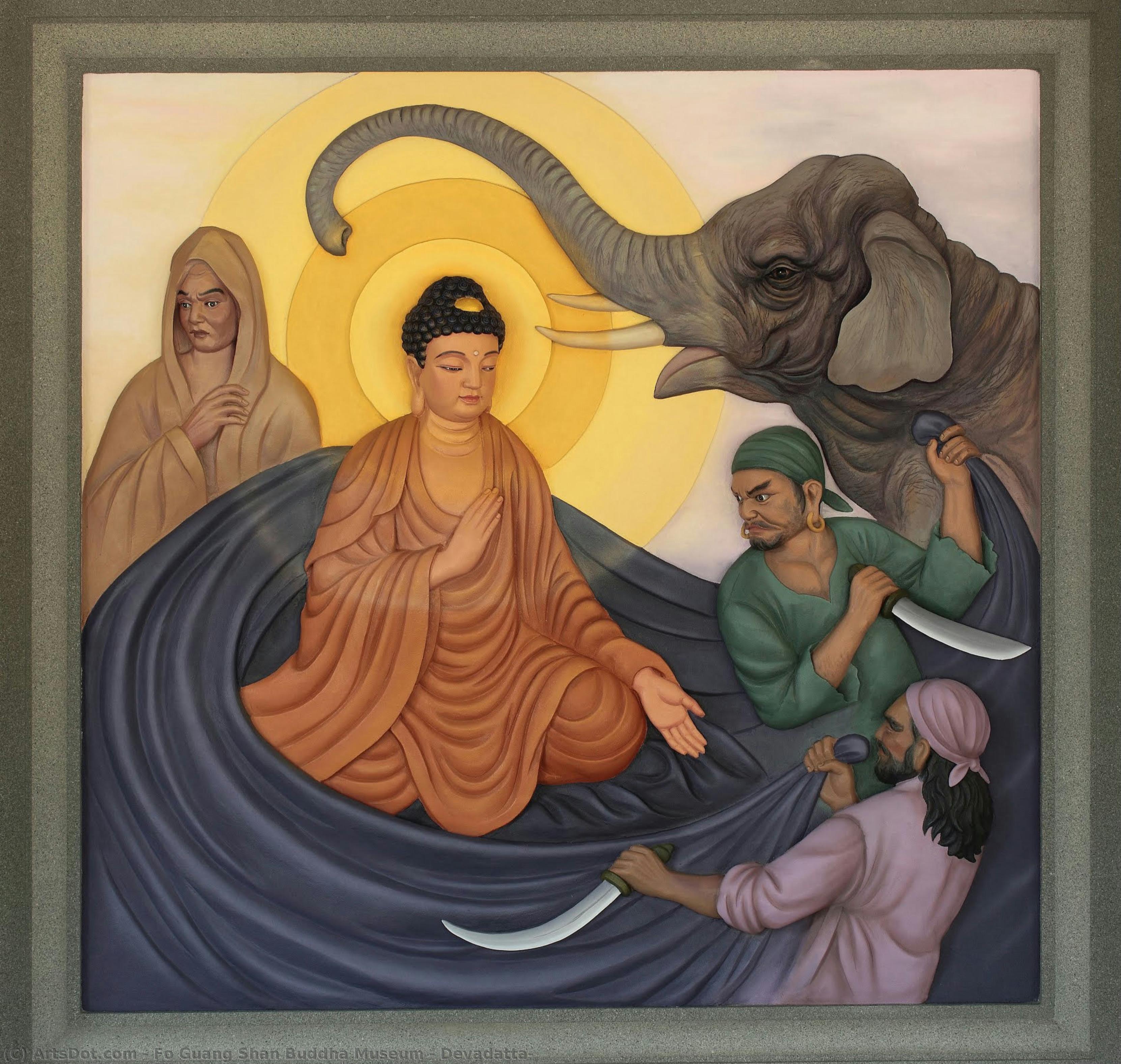
The painting “Devadatta,” created in 2011 by the Fo Guang Shan Buddha Museum, offers a profound visual meditation on themes central to Buddhist philosophy. This artwork isn’t merely a representation of a pivotal moment in the Buddha's life – the encounter with Devadatta, a former disciple seeking enlightenment through destructive means – but rather an embodiment of the struggle between desire and liberation, illusion and truth. The scene unfolds with a quiet intensity, inviting viewers to contemplate the path towards spiritual awakening.
- Subject Matter: The artwork depicts the Buddha seated in a traditional meditative posture, his hands folded in a gesture of serene contemplation. This iconic pose immediately establishes him as a figure of wisdom and detachment, while the presence of Devadatta underscores the challenges inherent in the pursuit of enlightenment.
- Composition: The composition is carefully balanced, utilizing the blue cloth beneath the Buddha to create a sense of stability and grounding. The surrounding figures – elephants symbolizing strength and wisdom, humans representing humanity’s potential for both good and evil, and crucially, the three swords – contribute to a dynamic interplay of forces.
- Color Palette: The dominant use of blues and earth tones evokes a sense of tranquility and spiritual depth, aligning with traditional Buddhist iconography. The vibrant colors used in the figures and surrounding elements add visual interest without disrupting the overall atmosphere of calm reflection.
Artistic Style and Technique – A Testament to Tradition
The Fo Guang Shan Buddha Museum’s artistic style is deeply rooted in Mahāyāna Buddhist traditions, particularly evident in its meticulous attention to detail and symbolic representation. The painting showcases a masterful blend of realism and stylized elements, characteristic of many classical East Asian artworks. The brushwork is deliberate and controlled, conveying a sense of reverence and spiritual power. The technique employed likely draws upon centuries-old methods of Chinese ink wash painting (Shui-mo hua), known for its subtle gradations of tone and expressive qualities. This approach lends the artwork an ethereal quality, enhancing its meditative impact.
- Medium: Likely oil on canvas, though traditional Eastern techniques may have been employed in the reproduction process.
- Brushwork: Precise and controlled, reflecting a deep understanding of classical Chinese painting principles.
- Symbolic Detail: Each element – from the elephants to the swords – is imbued with symbolic meaning, inviting viewers to engage in deeper interpretation.
Historical Context and Symbolism – Layers of Meaning
Created in 2011, “Devadatta” reflects a renewed interest in Buddhist art and philosophy within Taiwan’s cultural landscape. The Fo Guang Shan Buddha Museum itself was established as a vital center for the propagation of Mahāyāna Buddhism, founded by Venerable Master Hsing Yun. The inclusion of the tooth relic – entrusted to Master Hsing Yun in 1998 – immediately elevates the artwork's significance, connecting it to a tangible link with the Buddha himself. The swords represent the destructive forces that can derail one’s spiritual journey, while the surrounding figures symbolize the diverse paths individuals take towards enlightenment. The presence of elephants speaks to wisdom and strength, qualities central to Buddhist teachings.
- Devadatta: Represents the dangers of clinging to worldly desires and pursuing enlightenment through negative means.
- Elephants: Symbolize wisdom, strength, and protection – virtues associated with the Buddha.
- Swords: Represent destructive forces that must be overcome on the path to enlightenment.
Emotional Impact and Artistic Value – A Timeless Masterpiece
"Devadatta" transcends a simple depiction of a religious scene; it’s an invitation to contemplate profound questions about life, death, and the nature of reality. The artwork's serene composition and evocative symbolism create a powerful emotional resonance, fostering a sense of peace and introspection. As a hand-painted reproduction by the Fo Guang Shan Buddha Museum, this piece offers collectors and interior designers alike the opportunity to bring a touch of timeless wisdom and spiritual beauty into their spaces. Its enduring appeal lies in its ability to connect viewers with the core tenets of Buddhist philosophy – a message that remains profoundly relevant today.
Spørgsmål og svar
Er "Devadatta" typisk for det, som Fo Guang Shan Buddha Museum normalt skabte?
"Devadatta" skildrer buddha, meditation, elephant, swords, faith, buddhism, museum, mens Fo Guang Shan Buddha Museums registrerede temaer er buddhist iconography, faith, taiwan, mahayana, museum. En sammenligning af de to viser, hvordan værket relaterer sig til kunstnerens sædvanlige motiver.
Hvem er kunstneren bag "Devadatta", og hvornår blev værket skabt?
"Devadatta" blev skabt af Fo Guang Shan Buddha Museum i 2011.
Hvilken fase af Fo Guang Shan Buddha Museums karriere tilhører "Devadatta" (2011)?
"Devadatta", skabt i 2011, tilhører Contemporary Creation af Fo Guang Shan Buddha Museum's karriere.
Kunstnerbiografi
Et fristed for tro og kunst: Fo Guang Shan Buddha Museum
Fo Guang Shan Buddha Museum, der ligger smukt placeret i Dashu-distriktet i Kaohsiung, Taiwan, er meget mere end blot et depot for hellige genstande og kunstneriske kreationer; det er et levende vidnesbyrd om den buddhistiske filosofis vedvarende kraft og dens dybe indflydelse på østasiatisk kultur. Museet udsprang af visionen fra den ærværdige mester Hsing Yun, grundlæggeren af Fo Guang Shan – Taiwans største buddhistiske organisation – og åbnede officielt sine døre i december 2011 efter år med dedikeret konstruktion, der begyndte i 2008. Det står som et fyrtårn for Mahāyāna-buddhismen, omhyggeligt designet til at præsentere Dharma gennem en fordybende oplevelse, der omfatter kunst, kultur, film, humanistisk undersøgelse og international udveksling. Selve museets oprindelse er forankret i en bemærkelsesværdig fortælling: I 1998 blev mester Hsing Yun betroet en tandrelist fra Sakyamuni Buddha af Kunga Dorje Rinpoche, en tibetansk lama, der havde beskyttet den i tre årtier. Denne hellige gave blev katalysatoren for skabelsen af et rum, der er værdigt til denne ærefrygt og i stand til at dele buddhistisk visdom med hele verden.Arkitektonisk symbolik og kunstneriske skatte
Museets design er dybt symbolsk og afspejler de centrale principper i buddhistisk tankegang. Den arkitektoniske rejse begynder ved Porten for Perfekt Lethed og fortsætter gennem Porten for Befrielse, som begge er prydet med majestætiske løve- og elefantsstatuer – kraftfulde symboler på styrke, visdom og beskyttelse. Disse indgange leder de besøgende ind i et vidstrakt kompleks, der domineres af den store Fo Guang Buddha, en imponerende skikkelse, der fungerer som et fokuspunkt for kontemplation. Otte unikt designede pagoder punkterer landskabet, hver med sin egen betydning inden for den buddhistiske kosmologi. Inden for disse strukturer og gennem museets sale findes en mangfoldig samling af kunstværker, der afspejler kinesisk og taiwansk kulturarv med buddhismen som det centrale tema. Malerier, skulpturer og installationer repræsenterer et spektrum af kunstneriske stilarter, der fremviser både traditionelle teknikker og moderne fortolkninger. Museet udstiller ikke blot kunst; det legemliggør buddhistiske principper gennem æstetisk udtryk.Udvalgte kunstnere og bemærkelsesværdige værker
Selvom Fo Guang Shan Buddha Museum fungerer som en institution snarere end at være defineret af individuelle kunstnere i konventionel forstand, har flere skabere bidraget væsentligt til dets kunstneriske landskab.Forpligtelse til bevarelse, uddannelse og global dialog
Fo Guang Shan Buddha Museum er ikke blot et sted for passiv observation; det er et aktivt center for uddannelse, kulturel udveksling og bevarelse af den buddhistiske arv. Museet deltager aktivt i inter-museum-programmer på verdensplan og fremmer dialog og samarbejde med institutioner over hele verden. Initiativer inden for livsuddannelse har til formål at fremme forståelsen af buddhistiske principper og deres anvendelse i dagligdagen gennem workshops, forelæsninger og guidede meditationer. Offentlige tjenester er let tilgængelige og tilbyder ressourcer til dem, der ønsker at lære mere om buddhismen. Denne dedikation til tilgængelighed understreges af museets politik om gratis adgang, hvilket sikrer, at dets skatte er åbne for alle. Anerkendt internationalt for sin indsats for kvalitet og bevarelse, er Fo Guang Shan Buddha Museum medlem af International Council of Museums (ICOM) og har opnået ISO 50001 2011-certificering siden 2015, hvilket demonstrerer overholdelse af strenge standarder for museumsledelse og miljømæssigt ansvar. Museet står som en levende legemliggørelse af den ærværdige mester Hsing Yuns vision: et rum, hvor Buddhas visdom kan inspirere til fred, medfølelse og forståelse i en verden i konstant forandring.
Fo Guang Shan Buddha Museum
Taiwan
Kort om kunstneren
- Artistic Movement Or Style: Buddhistisk kunst
- Full Name: Fo Guang Shan Buddha Museum
- Nationality: Taiwanese
- Notable Artworks:
- Buddha træder ind i Parinirvana
- Undervisning af Sujata
- Daoistisk ritual
- Syning af tre kapper…
- Other Names: Buddha Memorial Center
- Place Of Birth: Dashu District, Taiwan
Relaterede artikler

The Enduring Legacy of Woodblock Printmaking: Technique, History & Artistic Expression
Explore the rich history of woodblock printmaking – from ancient techniques to Ukiyo-e masterpieces. Discover expert insights on collecting, preserving & appreciating this enduring art form.

The Enduring Legacy of Fine Art Prints: Technique, History & Aesthetic Impact
Explore the rich history & techniques of fine art prints. Discover investment potential, assess authenticity, and learn how to preserve your collection with expert guidance. Trusted insights for discerning collectors.
The Enduring Legacy of Printmaking: Techniques, Themes & Artistic Innovation Across Centuries
Explore the rich history of printmaking with OriginalUniqueArt. Discover techniques from intaglio to lithography, learn about collecting valuable prints & find museum-quality reproductions. Expert insights for art enthusiasts and collectors.

Echoes of Time: Exploring the Enduring Appeal & Historical Context of Vintage Art Prints
Explore the captivating world of vintage art prints! Discover their history, collecting tips & enduring appeal. Expert insights on chromolithography and building a legacy collection with OriginalUniqueArt.

Giclée Prints: Archival Quality & Aesthetic Nuances for the Discerning Collector
Explore the world of giclée prints with OriginalUniqueArt. Learn about archival quality, aesthetic nuances & investment potential. Expert guidance for discerning art collectors seeking museum-quality reproductions and lasting value.


