

 Se i rummet
 Send
Send Del
Del
 Detaljer
 Studieguide til kunstværker

 Download
 Lignende værker
 Røntgenundersøgelse
 Se diasshow
 Statistik
Annunciation


 Læs mere
Håndlavet oliereproduktion
Håndmalet olie på lærred i din valgte størrelse og ramme, udført efter bestilling af vores kunstnere. ( Skift til printversion Skift til digitalt billede)




P118B Dkr10

P118H Dkr10

P118W Dkr10

P438Z Dkr10

P508JH Dkr12

P508YH Dkr12

P805H Dkr10

P805Z Dkr10

P919BZ Dkr10

P919G Dkr10

P919XJ Dkr10

P959ZH Dkr10

P968JZ Dkr12

W106C Dkr8

W218G Dkr10

W218JH Dkr8

W218Y Dkr10

W307PJ Dkr10

W316G Dkr10

W316PJ Dkr8

W316Y Dkr10

W398PJ Dkr8

W4111J Dkr10

W500HY Dkr15

W500JH Dkr15

W692G Dkr12

W849H Dkr8

W940BG Dkr15

W953PJ Dkr8




Vælg mellem vores forudindstillede størrelser, der matcher kunstværkets originale proportioner.

Indtast den bredde og højde, du har brug for, så det passer til din ramme eller din væg. Da dette er håndmalet, kan kunstneren ved en anden form på størrelsen male lidt mere rundt om billedet eller skære lidt væk — det er op til dig. Vi sender dig et digitalt mockup til godkendelse, før maleriet påbegyndes. Billedet, der vises på denne side, viser ikke det endelige resultat — det er kun mockuppet, der gør.
Efter bestilling vil OriginalUniqueArt.com team sende en e-mail til kunden for at indhente instruktioner og fremsende et udkast til gennemgang.
Levering i hele verden () på 3-4 uger i stedet for de standard 5 uger. (23 oktober). Ingen kompromiser med kvaliteten.

Gratis ekspresforsendelse til hele verden

Lærred af linned i høj kvalitet

Komplet transportforsikring

Garanti for refusion af told og importafgifter

Garanti for autentisk farvegengivelse

100 dages returret ved fabrikationsfejl

100% fuld returret

Mængderabat ved flere køb
 Glasmulighed er kun tilgængelig i størrelser under 110 cm

Annunciation
Reproduktionsmateriale
Reproduktionsstørrelse
-


Samlet pris
Dkr 1972
The Annunciation: A Renaissance Dialogue of Light and Grace
Filippino Lippi’s “Annunciation,” painted in 1489 for the Medici family’s villa near Florence, is more than just a depiction of a pivotal biblical moment; it's a masterful orchestration of light, color, and human emotion. This fresco, now residing within the serene walls of Santa Maria sopra Minerva, offers a glimpse into the burgeoning artistic spirit of the High Renaissance – a period defined by its renewed interest in classical ideals and a profound exploration of human experience.
The scene itself is instantly recognizable: the angel Gabriel, rendered with an almost startlingly youthful energy, delivers the momentous news to Mary. Lippi’s genius lies not merely in his accurate portrayal of the figures but in his manipulation of space and atmosphere. The interior setting, though somewhat simplified, feels remarkably real – a modest chamber furnished with a chair, books, and a table, suggesting a domestic tranquility disrupted by this divine visitation. Note the careful attention to detail: the folds of Mary’s garments, the delicate rendering of Gabriel's wings, and the subtle play of light on the objects within the room all contribute to an immersive experience for the viewer.
A Symphony of Color and Technique
Lippi was a master of tempera paint, a medium known for its luminous quality and ability to achieve rich, vibrant colors. He employed a technique called *sfumato*, blurring lines and softening edges to create an ethereal effect – particularly evident in the hazy light that bathes the scene. The palette is dominated by warm hues: reds, golds, and ochres—reflecting the importance of Mary’s role as the Mother of God. The use of perspective, though not entirely rigorous by Renaissance standards, creates a sense of depth and spatial awareness, drawing the viewer into the heart of the narrative.
Furthermore, Lippi's brushwork is remarkably expressive. Observe how he captures the movement of Gabriel’s hand as he presents the message to Mary, or the gentle curve of her neck in response. These subtle gestures convey a profound sense of emotion and vulnerability – a testament to Lippi’s ability to imbue his figures with life.
Symbolism and Spiritual Resonance
The “Annunciation” is rich in symbolic meaning. Gabriel, often depicted as youthful and radiant, represents divine grace and the messenger of God's will. Mary, presented as a modest and contemplative figure, embodies humility and acceptance. The dove hovering above them symbolizes the Holy Spirit – the source of life and inspiration. The open book on the table is a subtle reference to scripture and the importance of faith.
Beyond these immediate symbols, the painting speaks to broader themes of communication, revelation, and the transformative power of divine grace. It’s a moment of profound significance—the beginning of a new era in Christian theology and art. The composition itself can be interpreted as a dialogue between heaven and earth, between the spiritual realm and the human world.
A Timeless Masterpiece for Reflection
“Annunciation” by Filippino Lippi remains a powerful and moving work of art. Its beauty lies not only in its technical brilliance but also in its ability to evoke a sense of wonder and contemplation. Whether viewed as a historical document, a religious icon, or simply a stunning example of Renaissance artistry, this fresco continues to captivate audiences centuries after its creation. Reproductions offer an accessible way to experience the depth and nuance of Lippi’s vision, bringing this timeless dialogue of light and grace into any space.
Useful Links:
- Annunciation (Filippo Lippi, London) - Wikipedia
- Annunciation 1489-91 Reproduction For Sale | 1st Art Gallery
- The National Gallery, London
Additional Research:
Spørgsmål & svar
Hvilke pseudonymer eller andre navne bruger Filippino Lippi?
Filippino Lippi optræder under de alternative navne Filippo Lippi, Filippino Di Tommaso Lippi, Filippino Lippi Den Yngre, Fra Filippo Lippi (Søn).
Hvor i Filippino Lippis karriere placerer "Annunciation" sig?
Inden for Filippino Lippis karriere tilhører "Annunciation" perioden Mature Renaissance. Denne fase gør det muligt at sammenligne værket med kunstnerens øvrige værker.
Hvor mættet er farvepaletten i "Annunciation"?
Farvepaletten i "Annunciation" har en mætning på Balanced Soft.
Om kunstneren
Tidlig Liv og Uddannelse
Filippino Lippi blev født i april 1457 i Prato, Italien, som den uægte søn af den berømte maler Fra Filippo Lippi og Lucrezia Buti. Hans tidlige liv var præget af sin fars kunstneriske miljø, og han modtog sin første uddannelse i værkstedet hos ham. Fra Filippos strenge disciplin og fokus på detaljer lagde grundlaget for Filippinos senere karriere. Selvom omstændighederne omkring hans fødsel var ukonventionelle, gav det ham en unik adgang til kunstens verden fra en tidlig alder. Hans far anerkendte hurtigt hans talent og begyndte at undervise ham i maleriets grundlæggende teknikker, herunder tegning, komposition og farveblanding. Denne tidlige træning var afgørende for Filippinos udvikling som kunstner og formede hans stilistiske tilgang.Kunstnerisk Karrieres Udvikling
Filippino Lippis kunstneriske karriere kan opdeles i flere faser, der afspejler hans voksende modenhed og eksperimentering med forskellige stilarter. I den tidlige periode (1475-1480) var hans værker, såsom en række madonnafremstillinger, præget af en mindre raffineret stil. Disse blev oprindeligt tilskrevet en anonym kunstner kendt som "amico di Sandro", hvilket indikerer en tidlig forbindelse med Sandro Botticellis kreds. Fra omkring 1480 begyndte han at udvikle en mere personlig og effektiv tilgang, tydeligt demonstreret i værker som *Tobias' Rejser*. Denne periode markerede et skift mod større kompleksitet og narrativ dybde i hans kompositioner. Hans mesterskab nåede sit højdepunkt i perioden 1485-1504, hvor han fuldt ud omfavnede High Renaissance-stilen, som det fremgår af *Kristi Åbenbarelse for Jomfru Maria*. I denne fase kombinerede han en levende farvebrug med detaljerede landskaber og ekspressive figurer.Vigtige Værker og Samarbejder
Filippino Lippi var kendt for sine omfattende freskoarbejder, men skabte også adskillige altertavler og portrætter. Han samarbejdede med fremtrædende kunstnere som Perugino, Ghirlandaio og Botticelli om fresker i Lorenzo de' Medicis villa, hvilket vidner om hans høje anseelse i florentinske kunstkredse. Et af hans mest betydningsfulde projekter var færdiggørelsen af Masaccios uafsluttede dekoration i Brancacci Kapellet sammen med Masolino. Dette arbejde gav ham mulighed for at bygge videre på en allerede etableret tradition og demonstrere sin egen kunstneriske vision. Blandt hans mest berømte værker kan nævnes *Jomfru Marias Krøning*, *Tobias og Englen*, *Sankt Hieronymus* og *Scener fra Sankt Thomas Aquinas' Liv*. Disse værker er eksempler på hans evne til at kombinere religiøs fromhed med kunstnerisk innovation.Indflydelser og Kunstnerisk Stil
Filippino Lippi blev i sin tidlige karriere stærkt påvirket af Sandro Botticelli og sin far, Fra Filippo Lippi. Han absorberede deres stilistiske elementer, men udviklede hurtigt en unik stemme. Hans karakteristiske stil er præget af animerede former og linjer, varm kolorisme, detaljerede landskaber, ekspressive figurer og en blanding af perspektivgeometri med intime interiører. Han studerede antikke romerske artefakter under sit ophold i Rom, hvilket påvirkede hans arbejde ved at inkorporere antikens vokabular i sin kunst. Hans evne til at skabe dynamiske kompositioner og fange menneskelige følelser gjorde ham til en af de mest eftertragtede malere i Firenze. Han var også dygtig til at bruge lys og skygge for at skabe dramatiske effekter og fremhæve vigtige elementer i sine værker.Historisk Betydning og Arv
Filippino Lippi var en førende florentinsk fortaler for traditionen med store freskokredse, og hans indflydelse på High Renaissance-maleriet er uomtvistelig. Han formåede at bygge bro mellem tidligere renæssancestilarter og den fremspirende High Renaissance æstetik. Hans værker findes i museer over hele verden, herunder Uffizi Galleriet i Firenze, hvor de fortsat beundres for deres skønhed og kunstneriske dygtighed. Han inspirerede en generation af malere, herunder Raffaellino del Garbo, der videreførte hans stilistiske traditioner. Filippino Lippis bidrag til renæssancekunsten ligger ikke kun i hans tekniske færdigheder, men også i hans evne til at formidle religiøse fortællinger med enestående følelsesmæssig dybde og kunstnerisk finesse. Han efterlod sig et rigt arv af værker, der fortsat fascinerer og inspirerer kunstelskere over hele verden.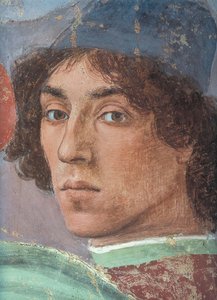
Filippino Lippi
1457 - 1504 , Italien
Hurtige fakta
- Bemærkelsesværdige Værker:
- Kroningen af Jomfru Maria
- Tobias og englen
- St. Hieronymus
- Dødsdato: April 1504
- Fulde Navn: Filippino Lippi
- Fødested: Prato, Italien
- Fødselsdato: April 1457
- Inspireret Af:
- Fra Filippo Lippi
- Sandro Botticelli
- Kunstnerisk Stil: Højrenæssancen
- Nationalitet: Italiensk
- Påvirkede Kunstnere: ['Raffaellino del Garbo']
Relaterede artikler

Dante Gabriel Rossettis 25 Mesterværker: Skønhed, Symbolik & Kunst til Dit Hjem
Oplev Dante Gabriel Rossettis 25 mest ikoniske værker! Fordyb dig i romantikkens symbolik og prærafaelitternes skønhed. Find museumskvalitets kunsttryk & inspiration til dit hjem på OriginalUniqueArt.com.

Celestial Messengers: A Comprehensive Exploration of Angelic Representation in Art History
Explore the captivating history of angels in art! Discover symbolism, iconic Renaissance masterpieces & renowned artists. Expert insights for art lovers & collectors at OriginalUniqueArt.

Freskoen som Familiens Arv: Bevar Din Historie på Væggene
Bevar din families historie med smukke, håndmalede vægmalerier og freskoer. Få professionel rådgivning & skræddersyede kunstværker hos – kvalitet og ekspertise garanteret!

Celestial Messengers: Angels in Painting – A Historical & Artistic Exploration
Explore the captivating history of angels in painting! Discover symbolism, iconic Renaissance & Byzantine masterpieces, and renowned artists. Expert insights for art lovers & collectors at OriginalUniqueArt.

The Enduring Legacy of Fresco Painting: Techniques, History & Contemporary Relevance
Explore the rich history & enduring artistry of fresco painting – from Giotto to Michelangelo! Discover techniques, conservation efforts, & modern applications. Learn how OriginalUniqueArt brings this timeless art form to your home.
