
 Se i rummet
 Del som kort
 Del
Del
 Detaljer
 Guide
Guide

 Download
 Lignende værker
 Røntgenundersøgelse
 Diasshow
 Spørgsmål og svar
 Statistikker
Child at Table


 Vis mere
Giclée / Kunsttryk
Giclée- eller lærredstryk i museumskvalitet med hurtig produktion og fleksible muligheder for finish. ( Køb håndmalet maleri Skift til digitalt billede)




P118B Dkr10

P118H Dkr10

P118W Dkr10

P438Z Dkr10

P508JH Dkr12

P508YH Dkr12

P805H Dkr10

P805Z Dkr10

P919BZ Dkr10

P919G Dkr10

P919XJ Dkr10

P959ZH Dkr10

P968JZ Dkr12

W106C Dkr8

W218G Dkr10

W218JH Dkr8

W218Y Dkr10

W307PJ Dkr10

W316G Dkr10

W316PJ Dkr8

W316Y Dkr10

W398PJ Dkr8

W4111J Dkr10

W500HY Dkr15

W500JH Dkr15

W692G Dkr12

W849H Dkr8

W940BG Dkr15

W953PJ Dkr8




Vælg mellem vores forudindstillede størrelser, der matcher kunstværkets originale proportioner.

Indtast den bredde og højde, du har brug for, så det passer til din ramme eller din væg. Et print kan kun beskæres, aldrig gøres større end selve billedet, så en størrelse med et andet format vil medføre, at dele af motivet går tabt. Vi sender dig en digital mockup til godkendelse, før vi printer noget. Billedet vist på denne side viser ikke den faktiske beskæring — det er kun mockuppen, der gør.
Verdensomspændende levering () på 2 uger i stedet for de sædvanlige 4/5 uger. (3 november)

Gratis ekspresforsendelse til hele verden

Lærred af linned i høj kvalitet

Fuld transportforsikring

Garanti for refusion af told og importafgifter

Garanti for præcis farvegengivelse

100 dages returret ved fabrikationsfejl

100% fuld returret

Mængderabat ved flere køb
 Glasmulighed er kun tilgængelig i størrelser under 110 cm

Child at Table
Giclée / Kunsttryk
Størrelse på reproduktion
-


Samlet pris
Dkr 540
Eugène Carrière’s ‘Child at Table’: A Monochromatic Meditation on Innocence
Eugène Anatole Carrière's Child at Table (1880) is not merely a portrait; it’s an immersion into a world of quiet contemplation, rendered with a startlingly spare palette and imbued with the profound symbolism characteristic of the Symbolist movement. Created during a period of intense artistic experimentation in France – a direct response to the Impressionists' focus on fleeting moments of light – Carrière sought to evoke deeper emotional and spiritual truths through his art. This work, depicting a young boy, likely his son Jean René, captured around 1888, exemplifies this approach with remarkable clarity.
- A Monochromatic Universe: Carrière’s signature style is immediately apparent in the painting's stark contrast. The almost entirely monochrome palette – shades of blue, gray, and brown – creates a sense of detachment from the everyday, elevating the scene to something almost sacred. This deliberate restriction of color wasn’t simply an aesthetic choice; it was rooted in Carrière’s early experience as a lithographer, where he honed his skills in creating dramatic tonal effects.
- The Power of Light and Shadow: Despite the lack of vibrant hues, Carrière masterfully manipulates light and shadow to generate a luminous effect. The creamy-white skin of the child is dramatically highlighted against the enveloping darkness, drawing the viewer’s eye directly to this vulnerable subject. This technique, reminiscent of Rubens' influence, suggests an almost ethereal quality, hinting at a timeless innocence.
Symbolism and Domestic Themes
Child at Table firmly places itself within the Symbolist tradition, which prioritized subjective emotion and spiritual meaning over realistic representation. The scene’s quiet intimacy – the boy seated at a table with a cup – speaks to themes of childhood, vulnerability, and perhaps even religious devotion. Carrière frequently depicted domestic scenes featuring his family, often exploring the complexities of motherhood and familial bonds. This particular work, like The Sick Child (Montargis), reflects this recurring motif, offering a poignant glimpse into the artist’s personal life.
- A Mystical Atmosphere: The dark background isn't merely a backdrop; it actively contributes to the painting's symbolic weight. It creates an atmosphere of mystery and introspection, inviting viewers to contemplate the child’s gaze upwards – a gesture that could be interpreted as prayerful or simply filled with wonder.
- The Artist's Lineage: The fact that Carrière was the grandson of artists further informs our understanding of this work. His artistic lineage undoubtedly influenced his approach, adding another layer of meaning to the scene’s quiet contemplation.
Technique and Historical Context
Carrière’s meticulous technique is evident in the smooth application of paint and the precise rendering of detail. The use of a glazing technique – applying thin layers of translucent color over dried underlayers – would have enhanced the luminosity of the skin tones and created subtle variations within the monochrome palette. Produced around 1880, this painting represents a pivotal moment in Carrière’s career, solidifying his reputation as a leading figure in the Symbolist movement and demonstrating his ability to create emotionally resonant works through masterful control of light, shadow, and tone.
Emotional Impact and Reproduction
Child at Table possesses an undeniable emotional power. The painting's quiet intimacy and the vulnerability of its subject evoke a sense of tenderness and nostalgia. A hand-painted reproduction captures not only the visual details but also the very essence of Carrière’s artistic vision, allowing you to experience this profound work in your own space.
Spørgsmål og svar
Hvilken kunsthistorisk betydning har "Child at Table" af Eugène Anatole Carrière?
"Child at Table" af Eugène Anatole Carrière er kunsthistorisk klassificeret som Symbolist Art fra 19th Century-perioden.
Hvem har skabt "Child at Table"?
Kunstneren bag "Child at Table" er Eugène Anatole Carrière. Værket er katalogiseret under Eugène Anatole Carrières navn.
Hvor anbefales det at udstille "Child at Table" i Landscape-formatet?
Formatet Landscape af "Child at Table" af Eugène Anatole Carrière anbefales til en Dining Room. Format og rumstørrelse er tilsammen vejledende for placeringen af en reproduktion.
Kunstnerbiografi
Opvækst og kunstnerisk dannelse
Eugène Anatole Carrière, en berømt fransk symbolistisk kunstner, blev født den 16. januar 1849 i Gournay-sur-Marne, Seine-Saint-Denis. Han studerede ved École des Beaux-Arts i Paris og senere under Cabanel, hvilket lagde fundamentet for hans fremtidige kunstneriske bedrifter.Kunstnerisk stil og inspirationskilder
Carrières malerier er mest berømte for deres særprægede, monokrome brune palet, som har fascineret utallige kunstelskere gennem tiden. Hans værk var dybt påvirket af Peter Paul Rubens' kunst, som han blev eksponeret for under sin tid som fange i Dresden; denne indflydelse er tydelig i de glødende farver, der pryder hans tidlige værker. Den unge moder (1879), et af Carrières tidligste mesterværker, findes i dag på Musée des Beaux-Arts de Rouen. Dette værk markerede begyndelsen på hans fokus på det hjemlige liv – et tema, der skulle blive selve kendetegnet for hans kunstneriske stil.Værker og udstillinger af betydning
- Det syge barn (Montargis)
- Den første kommunion (Toulon)
- Portræt af Louis-Henri Devillez (1887), et højt priset værk, der demonstrerer Carrières evne til at indfange sine subjekters essens.
Eftermæle og indflydelse på den moderne kunst
Carrières monokrome stil kan genfindes i værker af Pablo Picasso, især under hans blå periode. Denne forbindelse er et vidnesbyrd om Carrières varige aftryk på den moderne kunsthistorie.- Se flere af Carrières værker hos OriginalUniqueArt.com/eugène anatole carrière
- Udforsk Musée des Beaux-Arts de Rouen, som huser nogle af Carrières tidlige værker, ved at opdage Musée des Beaux-Arts de Carcassonne (Frankrig)
- Lær mere om symbolismen og dens indflydelse på kunsten via den symbolistiske kunstbevægelse

Eugène Anatole Carrière
1849 - 1906 , Frankrig
Kort om kunstneren
- Artistic Movement Or Style: Symbolisme, Monokrom
- Artists Or Movements Influenced By This Artist: ['Pablo Picasso']
- Artists Who Influenced This Artist: ['Peter Paul Rubens']
- Date Of Birth: 16 januar 1849
- Date Of Death: 27 marts 1906
- Full Name: Eugène Anatole Carrière
- Nationality: Fransk
- Notable Artworks:
- The Sick Child
- Young Mother
- First Communion
- Place Of Birth: Gournay-sur-Marne, Frankrig
Relaterede artikler
The Enduring Legacy of Printmaking: Techniques, Themes & Artistic Innovation Across Centuries
Explore the rich history of printmaking with OriginalUniqueArt. Discover techniques from intaglio to lithography, learn about collecting valuable prints & find museum-quality reproductions. Expert insights for art enthusiasts and collectors.

Echoes of Time: Exploring the Enduring Appeal & Historical Context of Vintage Art Prints
Explore the captivating world of vintage art prints! Discover their history, collecting tips & enduring appeal. Expert insights on chromolithography and building a legacy collection with OriginalUniqueArt.
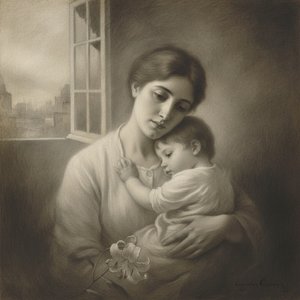
Eugène Carrière: The 'Peintre d'Âme' & Symbolist Portraiture’s Intimate Vision
Explore the haunting world of Eugène Carrière, a pivotal French Symbolist artist known for his deeply intimate portraits & 'peinture d'âme'. Discover his life, style, and lasting influence on modern masters like Picasso. Shop high-quality reproductions at OriginalUniqueArt.

The Enduring Legacy of Fine Art Prints: Technique, History & Aesthetic Impact
Explore the rich history & techniques of fine art prints. Discover investment potential, assess authenticity, and learn how to preserve your collection with expert guidance. Trusted insights for discerning collectors.

Giclée Prints: Archival Quality & Aesthetic Nuances for the Discerning Collector
Explore the world of giclée prints with OriginalUniqueArt. Learn about archival quality, aesthetic nuances & investment potential. Expert guidance for discerning art collectors seeking museum-quality reproductions and lasting value.