
 Se i fuld skala
 Del
Del Del
Del
 Detaljer

 Download
 Lignende værker
 Røntgenundersøgelse
 Diasshow
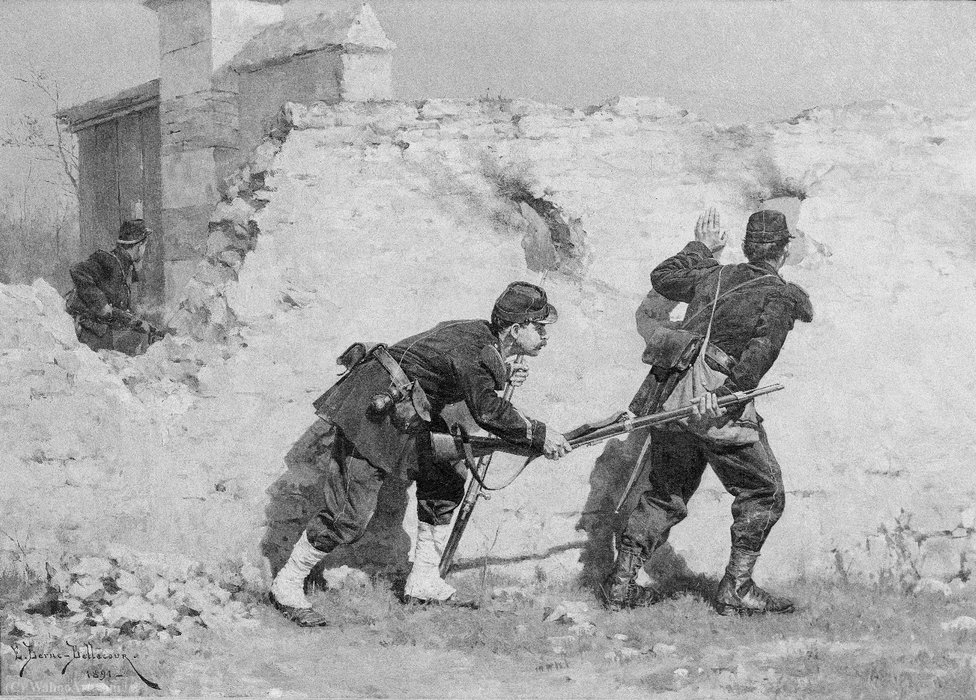
Picket guards
 Se mere
Håndlavet oliereproduktion
Håndmalet olie på lærred i din valgte størrelse og ramme, udført efter bestilling af vores kunstnere. ( Køb print Køb billede)




































Vælg mellem vores forudindstillede størrelser, der matcher kunstværkets originale proportioner.

Du kan indtaste dine egne mål for at passe til en bestemt ramme eller plads. Hvis den valgte størrelse ikke stemmer overens med det originale billedes proportioner, vil vi enten beskære kunstværket eller udvide maleriet med yderligere håndmalede elementer. En digital skitse sendes til din godkendelse, før produktionen påbegyndes.
Bemærk venligst, at forhåndsvisningen på skærmen ikke afspejler den faktiske beskæring eller udvidelse. Kun skitsen vil nøjagtigt vise den endelige komposition.
Selvom specialmål er mulige, anbefaler vi at vælge en dimension fra den foruddefinerede liste for at bevare de originale proportioner.
Efter bestilling vil OriginalUniqueArt.com team sende en e-mail til kunden for at få instruktioner og levere et udkast til en skitse.
Levering i hele verden () på 3/4 uger i stedet for de standard 5 uger. (13 august). Ingen kompromiser med kvaliteten.

Gratis ekspresforsendelse til hele verden

Lærred af linned i høj kvalitet

Fuld transportforsikring

Garanti for refusion af told og importafgifter

Garanti for præcis farvegengivelse

60 dages returret (kun ved fabrikationsfejl)

100% Tilfredshedsgaranti

Mængderabat tilgængelig
 Glasmulighed er kun tilgængelig i størrelser under 110 cm

Picket guards
Reproduktionsmetode
Størrelse på reproduktion
-


Samlet pris
$ 350
Kunstnerens biografi
A Life Etched in Military Canvas: The World of Étienne-Prosper Berne-Bellecour
Born in the coastal town of Boulogne-sur-Mer, France, in 1838, Étienne-Prosper Berne-Bellecour embarked on an artistic journey that would ultimately capture the tumultuous spirit of 19th-century France. From his earliest days, a clear inclination towards art was evident, leading him to formal training under the esteemed François-Édouard Picot and Félix-Joseph Barrias. These masters instilled in him a solid foundation in traditional painting techniques, a discipline he would later blend with emerging artistic sensibilities. His ambition drove him to compete for the prestigious Prix de Rome in 1859 while simultaneously demonstrating an adaptable spirit by supporting his studies through photography – a testament to his resourcefulness and keen eye for visual detail. This early exposure to both established academic methods and the burgeoning field of photography would profoundly shape his artistic perspective, allowing him to approach painting with a unique blend of precision and observation. Even during these formative years, Berne-Bellecour displayed a diverse range of talents, collaborating with his brother-in-law, Jehan Georges Vibert, on a comedic play performed at the Palais Royal in 1862 – an unusual venture that hinted at a playful intellect alongside his artistic dedication.From Landscapes to the Echoes of War
Initially, Berne-Bellecour’s artistic focus mirrored the prevailing tastes of the time, centering on landscapes and portraits. He diligently exhibited his work at the Salons throughout the 1860s, gradually gaining recognition within the Parisian art scene. His photographic skills were also acknowledged with a prize at the Universal Exposition of 1867, further solidifying his reputation as a versatile artist. However, a pivotal moment arrived in 1868 when Vibert encouraged him to dedicate himself entirely to painting. This encouragement coincided with a period of significant upheaval – the outbreak of the Franco-Prussian War in 1870. Alongside Vibert, Alexander Louis Leloir, and Édouard Detaille, Berne-Bellecour embarked on a journey to Africa, an experience that broadened his artistic horizons before being abruptly curtailed by the conflict. Returning to France, he bravely served as a *francs-tireur* (irregular soldier), earning a medal for gallantry under fire – an experience that would irrevocably alter the course of his art. The horrors and realities witnessed during the war ignited within him a passion for depicting military life with unflinching honesty and emotional depth.Mastering the Art of Military Realism
The Franco-Prussian War profoundly impacted Berne-Bellecour’s artistic direction, leading him to specialize in military subjects. His paintings meticulously depict scenes of soldiers at rest, battles unfolding, and the stark realities of warfare with remarkable detail. He didn't merely portray the grandeur of conflict; he focused on the human element – the weariness, resilience, and quiet dignity of those caught within its grasp. This commitment to realism was skillfully blended with elements of Impressionism, allowing him to capture not only the accuracy of observation but also the emotional atmosphere of his subjects. He masterfully employed light and shadow to convey a sense of drama and immediacy, drawing viewers into the heart of the scene. Beyond painting, Berne-Bellecour further demonstrated his artistic range by practicing as a sculptor and etcher, showcasing his versatility across different mediums. In 1878, he was honored with the title of Chevalier in the French Legion of Honor, recognizing his significant contributions to the arts and solidifying his position within the Parisian art world.A Legacy Forged in History
Étienne-Prosper Berne-Bellecour’s work provides invaluable insights into the military history and social context of 19th-century France. His detailed depictions of soldiers and battle scenes offer a compelling visual record of this turbulent period, going beyond mere documentation to capture the psychological impact of war on individuals and society. He wasn't simply painting *what* happened; he was conveying *how it felt*. His son, Jean-Jacques Berne-Bellecour (1874–1939), followed in his father’s footsteps as a military painter, continuing the family legacy and ensuring that this unique artistic perspective endured. Étienne-Prosper Berne-Bellecour passed away on November 29, 1910, leaving behind a significant body of work that continues to be appreciated for its historical accuracy, artistic merit, and poignant portrayal of human experience amidst the chaos of war. His canvases serve as enduring reminders of a pivotal era in French history, offering a glimpse into the lives of those who lived through it.
etienne prosper berne bellecour
1838 - 1910 , France
Kort om kunstneren
- Artistic Movement Or Style: Realism & Impressionism
- Artists Or Movements Influenced By This Artist: ['Jean-Jacques Berne-Bellecour']
- Artists Who Influenced This Artist:
- François-Édouard Picot
- Félix-Joseph Barrias
- Date Of Birth: June 29, 1838
- Date Of Death: November 29, 1910
- Full Name: Étienne-Prosper Berne-Bellecour
- Nationality: French
- Notable Artworks:
- Picket guards
- A dragon in front of a portal
- Soldier on a battlefield
- Place Of Birth: Boulogne-sur-Mer, France

