
 Se i fuld skala
 Del
Del Del
Del
 Detaljer

 Download
 Lignende værker
 Røntgenundersøgelse
 Diasshow
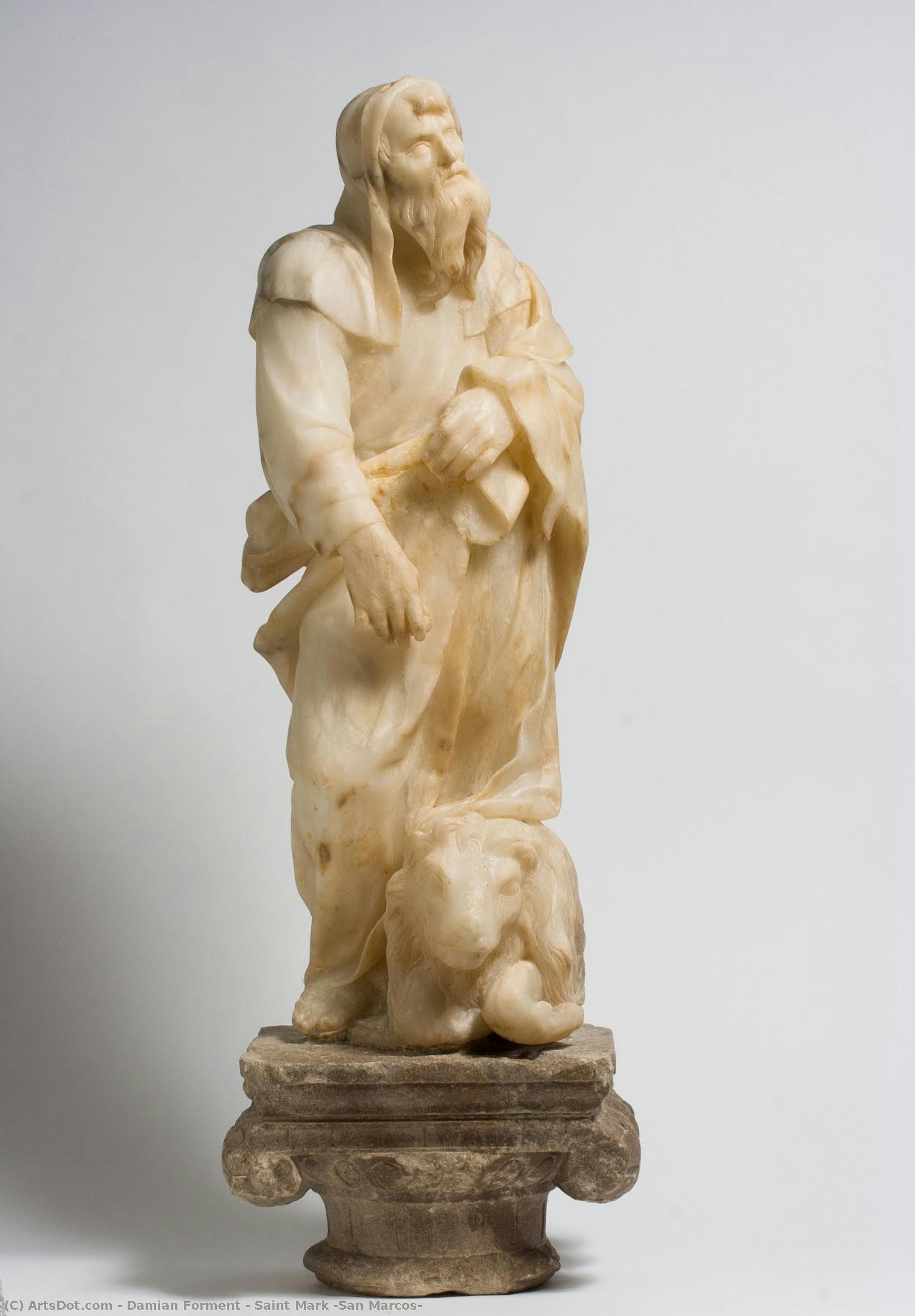
Saint Mark (San Marcos)
 24.0 x 85.0 cm
 Zaragoza Museum
 Se mere
Håndlavet oliereproduktion
Håndmalet olie på lærred i din valgte størrelse og ramme, udført efter bestilling af vores kunstnere. ( Køb print Køb billede)




































Vælg mellem vores forudindstillede størrelser, der matcher kunstværkets originale proportioner.

Du kan indtaste dine egne mål for at passe til en bestemt ramme eller plads. Hvis den valgte størrelse ikke stemmer overens med det originale billedes proportioner, vil vi enten beskære kunstværket eller udvide maleriet med yderligere håndmalede elementer. En digital skitse sendes til din godkendelse, før produktionen påbegyndes.
Bemærk venligst, at forhåndsvisningen på skærmen ikke afspejler den faktiske beskæring eller udvidelse. Kun skitsen vil nøjagtigt vise den endelige komposition.
Selvom specialmål er mulige, anbefaler vi at vælge en dimension fra den foruddefinerede liste for at bevare de originale proportioner.
Efter bestilling vil OriginalUniqueArt.com team sende en e-mail til kunden for at få instruktioner og levere et udkast til en skitse.
Levering i hele verden () på 3/4 uger i stedet for de standard 5 uger. (17 august). Ingen kompromiser med kvaliteten.

Gratis ekspresforsendelse til hele verden

Lærred af linned i høj kvalitet

Fuld transportforsikring

Garanti for refusion af told og importafgifter

Garanti for præcis farvegengivelse

60 dages returret (kun ved fabrikationsfejl)

100% Tilfredshedsgaranti

Mængderabat tilgængelig
 Glasmulighed er kun tilgængelig i størrelser under 110 cm

Saint Mark (San Marcos)
Reproduktionsmetode
Størrelse på reproduktion
-


Samlet pris
$ 300
Kunstnerens biografi
Damián Forment: Bridging Gothic and Renaissance Splendor
Damián Forment (c. 1480 – 1540) stands as a monumental figure in Spanish art history, recognized unequivocally as the nation’s most prominent sculptor of the sixteenth century. He was not merely an artisan but a transformative force who skillfully blended the grandeur of Gothic tradition with the burgeoning innovations of Renaissance aesthetics—a synthesis that profoundly impacted religious sculpture across Spain and cemented his legacy as one of the era’s foremost masters. Born in Valencia, Forment’s formative years were steeped in the artistic fervor of Italy. His journey through Rome and Florence instilled within him a deep understanding of classical ideals, anatomical precision, and the revolutionary architectural visions that would later redefine the Spanish landscape.
The essence of Forment's genius lay in his ability to navigate the transition between two worlds. While his early training exposed him to the humanist principles championed by masters like Leonardo da Vinci and the structural brilliance of Brunelleschi, he never abandoned the spiritual weight of the Gothic style. This duality is most breathtakingly captured in his monumental alabaster altar for Zaragoza's Basilica of Our Lady of Pilar (1509–12). In this masterpiece, the soaring, intricate grandeur of the Gothic cathedral meets the balanced, harmonious compositional strategies of the Renaissance, creating a sacred space that feels both ancient and profoundly modern.
A Legacy Carved in Alabaster and Wood
Upon returning to his homeland, Forment established himself as a prolific sculptor based primarily in Zaragoza, where he cultivated a workshop that nurtured generations of talent. His studio became an epicenter of creativity, attracting significant patronage from ecclesiastical dignitaries such as Bishop Jaime. Through this workshop, he produced an astonishing array of masterpieces that utilized both wood and the luminous, translucent beauty of alabaster to tell divine stories. His work was characterized by a meticulous attention to detail and an embrace of idealized forms that brought a new level of human emotion to religious iconography.
The breadth of his technical mastery is evident in the diverse range of his commissions:
- The Basilica of Our Lady of Pilar: His earliest major triumph, where he successfully merged Gothic verticality with Renaissance grace.
- Poblet Monastery: A significant milestone representing his first work executed entirely in the pure Renaissance style.
- Zaragoza Altarpieces: His profound contributions to the churches of San Miguel de los Navarros and San Pablo, which showcased an evolving Mannerist influence.
- The Cathedral of Huesca: A testament to his enduring dominance over the regional artistic landscape.
Historical Significance and Artistic Evolution
As Forment’s career progressed, his style moved beyond simple imitation of Italian models toward a more complex, Mannerist sensibility. This evolution allowed him to infuse his sculptures with a sense of movement and psychological depth that resonated with the changing religious climate of the sixteenth century. Even in his final years, as he worked on the Renaissance altar for the Cathedral of Santo Domingo de la Calzada, his commitment to pushing the boundaries of sculptural form remained undiminished.
The historical significance of Damián Forment cannot be overstated. He acted as a cultural conduit, bringing the sophisticated light and logic of the Italian Renaissance to the Iberian Peninsula and adapting it to suit the local devotion and architectural traditions. By doing so, he did more than just decorate churches; he redefined the visual language of Spanish faith. His ability to harmonize the intricate, shadowed complexity of the Gothic era with the clarity and humanism of the Renaissance ensures that his name remains etched in the stone and wood of Spain's most sacred monuments.

Damián Forment
1480 - 1540 , Spain
Kort om kunstneren
- Artistic Movement Or Style: Renaissance & Mannerism
- Artists Or Movements Influenced By This Artist: ['Gothic Art']
- Artists Who Influenced This Artist: ['Juan de Salas']
- Date Of Birth: Valencia, Spain (1480)
- Date Of Death: Santo Domingo de la Calzada, 1540
- Full Name: Damián Forment
- Nationality: Spanish
- Notable Artworks:
- Saint Luke
- Retable of the High Altar
- Saint Mark
- Place Of Birth: Valencia

