

 Se i rummet
 Send
Send Del
Del
 Detaljer
 Studieguide til kunstværker

 Download
 Lignende værker
 Røntgenundersøgelse
 Se diasshow
 Statistik
Tectonic,
 Oil On Canvas
- WallArt
- Abstract Expressionism
 1993
1993 191.0 x 101.0 cm
 Serpentine Galleries
 Læs mere
Kunstværket vist på denne side er beskyttet af ophavsretsloven, hvilket betyder, at vi ikke lovligt kan skabe eller sælge en identisk reproduktion. Denne beskyttelse håndhæves i henhold til internationale aftaler som f.eks. den Bernerkonventionen og af nationale love, herunder de bestemmelser, der er fastlagt i Amerikansk ophavsretslov - Titel 17.
Denne metode overholder fuldt ud ophavsretsreglerne, da den ikke indebærer kopiering eller duplikering af det beskyttede kunstværk. I stedet er der tale om en kreativ nytolkning – et nyt maleri, som er inspireret af det oprindelige, men ikke identisk med det.
Giclée / Kunsttryk
Giclée- eller lærredstryk i museumskvalitet med hurtig produktion og fleksible muligheder for finish. ( Bestil håndmalet reproduktion Skift til digitalt billede)




P118B Dkr10

P118H Dkr10

P118W Dkr10

P438Z Dkr10

P508JH Dkr12

P508YH Dkr12

P805H Dkr10

P805Z Dkr10

P919BZ Dkr10

P919G Dkr10

P919XJ Dkr10

P959ZH Dkr10

P968JZ Dkr12

W106C Dkr8

W218G Dkr10

W218JH Dkr8

W218Y Dkr10

W307PJ Dkr10

W316G Dkr10

W316PJ Dkr8

W316Y Dkr10

W398PJ Dkr8

W4111J Dkr10

W500HY Dkr15

W500JH Dkr15

W692G Dkr12

W849H Dkr8

W940BG Dkr15

W953PJ Dkr8




Vælg mellem vores forudindstillede størrelser, der matcher kunstværkets originale proportioner.

Indtast den bredde og højde, du har brug for, så det passer til din ramme eller din væg. Et print kan kun beskæres, aldrig gøres større end billedet, så en størrelse med en anden form vil miste en del af motivet. Vi sender dig en digital mockup til godkendelse, før vi printer noget. Billedet vist på denne side viser ikke den faktiske beskæring — det er kun mockuppen, der gør.
Verdensomspændende levering () på 2 uger i stedet for de sædvanlige 4/5 uger. (26 oktober)

Gratis ekspresforsendelse til hele verden

Lærred af linned i høj kvalitet

Komplet transportforsikring

Garanti for refusion af told og importafgifter

Garanti for autentisk farvegengivelse

100 dages returret ved fabrikationsfejl

100% fuld returret

Mængderabat ved flere køb
 Glasmulighed er kun tilgængelig i størrelser under 110 cm

Tectonic,
Giclée / Kunsttryk
Reproduktionsstørrelse
-


Samlet pris
Dkr 531
A Fractured Cosmos: Unveiling the Dynamic Vision of Zaha Hadid’s “Tectonic”
Zaha Hadid's "Tectonic," a striking acrylic and watercolour study on cartridge paper from 1993, isn’t merely a depiction of architectural forms; it’s an embodiment of tectonic forces – the very processes that shape our planet. Born amidst the intellectual currents of Baghdad and nurtured by a family steeped in both artistic sensibility and political influence, Hadid's early life instilled within her a profound fascination with spatial relationships and the interplay between structure and movement. This piece, created during a pivotal period of her career, reveals a nascent exploration of abstraction that would later define her revolutionary architectural style – a style characterized by fluid geometries, dynamic curves, and an unapologetic embrace of the unexpected.
The artwork immediately commands attention with its monochromatic palette, primarily shades of grey ranging from near-white to deep charcoal. This deliberate restraint serves not to diminish the piece’s impact, but rather to amplify the underlying dynamism. Geometric shapes – cubes, rectangles, and subtly curved elements – are arranged in a deliberately asymmetrical composition, reminiscent of a geological cross-section or perhaps even a stylized map of tectonic plates. The central structure, resembling a fragmented bicycle frame, anchors the image while radiating outwards with other forms, creating a sense of controlled chaos that mirrors the complex processes occurring within the Earth’s crust. It's a visual representation of forces in constant motion, a testament to Hadid’s fascination with the underlying mechanics of both architecture and nature.
Deconstructing Form: The Influence of Suprematism and Malevich
Hadid’s approach to “Tectonic” is deeply rooted in her early artistic explorations. Inspired by the pioneering Russian avant-garde, particularly Kazimir Malevich's Suprematist paintings, she sought a way to move beyond traditional architectural representation. Malevich’s emphasis on pure geometric forms and their spatial relationships profoundly influenced Hadid’s thinking, encouraging her to explore abstraction as a means of conveying complex ideas about space and movement. The piece echoes this influence through its simplified shapes and the deliberate distortion of perspective – a departure from conventional realism. This deconstruction of form wasn't simply an aesthetic choice; it was a conscious effort to reveal the underlying structure and energy within the depicted subject matter.
The use of acrylic and watercolour paints contributes significantly to the artwork’s textural quality. The layering and blending create subtle tonal variations, suggesting depth without resorting to traditional shading techniques. While the surface appears relatively smooth, a closer examination reveals a delicate balance between precision in rendering the geometric shapes and an expressive quality in the flowing lines. This combination of technical skill and artistic intuition is characteristic of Hadid’s work – a seamless integration of logic and emotion.
Symbolism of Earth's Processes
Beyond its formal qualities, “Tectonic” resonates with powerful symbolic meaning. The fragmented forms can be interpreted as representations of tectonic plates shifting and colliding, mirroring the geological processes that shape our planet. The swirling lines evoke a sense of dynamism and transformation, suggesting the constant flux of energy within the Earth’s interior. The central bicycle frame, a recurring motif in Hadid's work, may symbolize human ingenuity and its interaction with the natural world – a reminder of humanity’s capacity to both create and be shaped by forces beyond our control. The muted color palette reinforces this connection to the earth, evoking images of stone, sediment, and the vastness of geological time.
Furthermore, the artwork's ambiguity invites multiple interpretations. It could be seen as an exploration of form, space, and movement, or a meditation on themes of chaos and order, creation and destruction. Ultimately, “Tectonic” is a testament to Hadid’s visionary approach to architecture – a bold and innovative work that continues to inspire awe and provoke thought.
Spørgsmål & svar
Kan jeg bruge augmented reality til at se "Tectonic," af Zaha Hadid i mit eget rum?
"Tectonic," af Zaha Hadid kan ses på din egen væg via kunstværkets AR-forhåndsvisning-side ved hjælp af augmented reality på en kompatibel enhed.
Hvilken fase af Zaha Hadids udvikling repræsenterer "Tectonic,"?
"Tectonic," tilhører Late Period i Zaha Hadid's karriere. Denne klassificering relaterer værket til kunstnerens udvikling.
Hvilken følelse er associeret med "Tectonic,"?
Den emotionelle stemning, der er registreret for "Tectonic," af Zaha Hadid, er Energetic. Den opsummerer den følelse, som værket udtrykker.
Om kunstneren
En revolutionerende vision: Zaha Hadids liv og eftermæle
Født i Bagdad, Irak, i 1950, trådte Dame Zaha Mohammad Hadid frem som en af de mest betydningsfulde arkitektoniske kræfter i vores tid. Hendes rejse begyndte ikke inden for de traditionelle rammer af en kunstnerisk opvækst, men midt i et stimulerende intellektuelt miljø; hendes far, Muhammad al-Hajj Husayn Hadid, var en succesfuld industrimand og politiker, mens hendes mor, Wajiha al-Sabunji, nærede en passion for kunst. Denne unikke blanding af pragmatisme og kreativitet ville præge den unge Zahas verdensbillede dybt. Selvom hun oprindeligt studerede matematik ved American University of Beirut, opdagede hun snart, at hendes sande kald lå i det rumlige design, hvilket førte hende til London i 1972 og indskrivning på Architectural Association School of Architecture. Det var her, under vejledning af indflydelsesrige skikkelser som Rem Koolhaas, Elia Zenghelis og Bernard Tschumi, at Hadids radikale arkitektoniske tænkning begyndte at tage form. Disse mentorer opmuntrede til en udfordring af etablerede normer og skabte et miljø, hvor eksperimentering og innovation kunne blomstre – et fundament, som hun byggede sin ekstraordinære karriere på.Dekonstruktion af konventioner: Stil og indflydelser
Zaha Hadid designede ikke blot bygninger; hun skulpturerede oplevelser. Som en bredt fejret pioner inden for dekonstruktivismen forkastede hendes arbejde modigt de stive geometrier og konventionelle former, der længe havde defineret arkitektonisk praksis. I stedet omfavnede hun fragmentering, dynamiske kurver og en følelse af flydende bevægelse, hvilket skabte strukturer, der syntes at trodse selve tyngdekraften. Hendes designs var ikke blot funktionelle rum; de var kunstneriske erklæringer – kraftfulde udtryk for form og energi. Indflydelsen fra det tidlige 20. århundredes avantgarde-bevægelser, især suprematismen og Kazimir Malevichs arbejde, er tydelig i hendes tidlige undersøgelser. Faktisk fungerede hendes afgangsprojekt, ”Malevich’s Tektonik”, som en kraftfuld demonstration af hendes engagement i abstrakte principper og ikke-retlinede former. Men Hadid var ikke blot en efterligner; hun syntetiserede disse indflydelser med sin egen unikke vision, hvilket frigjorde den arkitektoniske geometri og gav den en ny ekspressiv identitet. Afgørende var det, at maleri og tegning ikke blot var forberedende værktøjer for Hadid – de var integrerede dele af selve designprocessen, som gjorde det muligt for hende at udforske rumlige koncepter og visualisere komplekse former, før de materialiserede sig i beton og stål.Landmærke-skabelser: En global indvirkning
Hadid etablerede sin egen praksis i London i 1980, men anerkendelsen kom ikke let. Hendes tidlige designs blev ofte betragtet som for radikale og for udfordrende for det daværende arkitektoniske klima. Hun holdt dog fast, og gradvist begyndte hendes innovative tilgang at vinde indpas. Hong Kong Peak Club (1983) var en tidlig fremvisning af hendes spirende stil, der antydede de bjergtagende strukturer, som skulle følge. Gennem de efterfølgende årtier færdiggjorde Hadids firma en række landmærke-projekter, der redefinerede bylandskaber over hele verden. Disse omfattede det flydende og dynamiske London Aquatics Centre til OL i lag 2012, et vidnesbyrd om hendes evne til at skabe rum, der inspirerer til bevægelse og atletik; Broad Art Museum i Michigan, USA, med sin slående plisserede stålfacade; MAXXI – Nationalmuseet for 21. århundredes kunst i Rom, Italien, et komplekst samspil mellem volumener og tomrum; Guangzhou Opera House i Kina, der ligner to glatte sten på Perlefloden; og Heydar Aliyev Center i Baku, Aserbajdsjan, en bjergtagende bølgeagtig struktur, der legemliggør hendes signaturprægede kurvelineære æstetik. Disse projekter var ikke blot bygninger – de var kulturelle ikoner, der skubbede til grænserne for arkitektoniske muligheder.Anerkendelse og vedvarende indflydelse
De priser, som Zaha Hadid modtog gennem sin karriere, er et vidnesbyrd om hendes ekstraordinære talent og varige betydning. Hun modtog adskillige priser, hvilket kulminerede i Pritzker Architecture Prize i 2004 – den højeste ære inden for arkitektur – hvilket gjorde hende til den første kvinde, der modtog denne prestigefyldte anerkendelse individuelt. Yderligere æresbevisninger omfattede Stirling Prize (tildelt to gange, i 2010 og 2011) og, posthumt, Royal Gold Medal fra Royal Institute of British Architects i 2016, endnu en historisk bedrift for en kvinde. Udover sine arkitektoniske præstationer nedbrød Hadid barrierer som kvindelig arkitekt i et historisk mandsdomineret felt og blev en inspiration for utallige aspirerende designere. Hendes eftermæle strækker sig ud over de fysiske strukturer, hun skabte; det ligger i hendes transformative indflydelse på arkitektonisk tankegang og praksis. Selv efter hendes tidlige død i 2016 fortsætter Zaha Hadid Architects med at operere og fører hendes vision og principper videre med urokkelig dedikation. Hendes udforskning af kunstneriske medier udover arkitekturen – såsom værker som ”Tatlin Tower and Tectonic” – demonstrerer en unik synergi mellem designekspertise og kunstnerisk udtryk. Zaha Hadids bygninger står som varige monumenter over hendes innovative ånd, der former det byggede miljø for kommende generationer.Bag om bygningerne: En vedvarende kunstnerisk arv
Selvom hun primært fejres for sine arkitektoniske bedrifter, strakte Zaha Hadids kreative vision sig langt ud over bygningsdesignets verden. Hun udforskede konsekvent kunstneriske medier som maleri og produktdesign og betragtede dem ikke som separate discipliner, men som sammenhængende udtryk for hendes unikke æstetiske sans. Hendes malerier, der ofte er karakteriseret ved dynamiske kompositioner og abstrakte former, fungerede som konceptuelle undersøgelser, der direkte informerede hendes arkitektoniske projekter. Disse værker var ikke blot skitser eller repræsentationer; de var integrerede i udviklingen af hendes idéer, hvilket gjorde det muligt for hende at eksperimentere med rumlige relationer og visuelle teksturer, før de blev oversat til tredimensionelle strukturer.- Tidlige malerier: Hendes tidlige malerier, som ”Orange Explosion on White”, udviser en fascination af fragmenterede former og levende farver, hvilket varsler de dekonstruktivistiske principper, der skulle definere hendes arkitektoniske stil.
- Designobjekter: Hadid bevægede sig også ind i produktdesign og skabte møbler, belysning og andre genstande, der ekkoede de flydende linjer og skulpturelle kvaliteter fra hendes bygninger. Chanel Mobile Art Pavilion i Tokyo er et fremragende eksempel på denne tværfaglige tilgang, som viser hendes evne til at oversætte arkitektoniske koncepter til et bærbart, fordybende miljø.
- Konceptuelle undersøgelser: Værker som ”Interpretation of Tatlin” afslører hendes engagement i historiske avantgarde-bevægelser og hendes ønske om at genfortolke modernistiske principper i en nutidig kontekst.
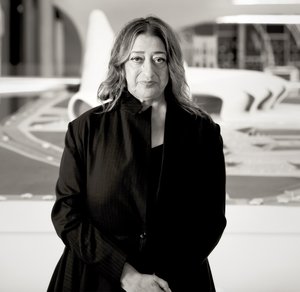
Zaha Hadid
1950 - 2016 , Irak
Hurtige fakta
- Artistic Movement Or Style: Dekonstruktivisme
- Artists Or Movements Influenced By This Artist: ['Suprematisme']
- Artists Who Influenced This Artist:
- Kazimir Malevich
- Rem Koolhaas
- Elia Zenghelis
- Date Of Birth: 31 oktober 1950
- Date Of Death: 31 marts 2016
- Full Name: Zaha Mohammad Hadid
- Nationality: Irak og Storbritannien
- Notable Artworks:
- Peak Klub
- Broad Art Museum
- MAXXI
- Vitra Fire Station
- Place Of Birth: Bagdad, Irak
Relaterede artikler

Kandinskys 25 Mesterværker: En Rejse Ind i Abstrakt Kunst | OriginalUniqueArt.com
Oplev Kandinskys 25 mest ikoniske værker! Dyk ned i abstrakt kunst, ekspressionisme og farvernes sprog. Find luksus reproduktioner af berømte malerier som 'Komposition VIII' på OriginalUniqueArt.com – inspiration til din vægkunst & indretning.

Beyond Form & Color: Geometric Abstraction's Evolution in 20th/21st Century Art
Explore the evolution of geometric abstraction from Cubism to contemporary art. Discover key artists like Malevich & Mondrian, investment insights, and expert collecting advice at OriginalUniqueArt.

Neo-Abstract Art: The High-Impact Evolution of Modern Visual Energy and Geometric Sophistication
Discover the power of Neo-Abstract art. Explore how bold geometric forms and high-impact visual energy are redefining modern design. Learn to curate sophisticated, high-energy spaces with the latest trends in contemporary abstraction and structural color.
Beyond Form & Color: Geometric Abstraction's Enduring Legacy in Art History
Explore the captivating world of geometric abstraction! Discover its origins, key artists like Malevich & Mondrian, and why this movement remains highly valued by art collectors today. Expert insights at OriginalUniqueArt.

Geometrisk Abstraktion: Top 10 Kunstværker der Definerede Bevægelsen | OriginalUniqueArt.dk
Oplev de 10 mest ikoniske værker inden for geometrisk abstraktion! Fra Kandinsky til Mondrian – lær historierne bag disse banebrydende kunstnere og deres farverige malerier. Find museumskvalitets reproduktioner & inspiration til din indretning på OriginalUniqueArt.dk.