
 Se i rummet
 Del som kort
 Del
Del
 Detaljer
 Guide
Guide

 Download
 Lignende værker
 Røntgenundersøgelse
 Diasshow
 Spørgsmål og svar
 Statistikker
Metropolis

- 239.0 x 548.0 cm


 Vis mere
Kunstværket vist på denne side er beskyttet af ophavsretsloven, hvilket betyder, at vi ikke lovligt kan skabe eller sælge en identisk reproduktion. Denne beskyttelse håndhæves i henhold til internationale aftaler som f.eks. den Bernerkonventionen og af nationale love, herunder de bestemmelser, der er fastlagt i Amerikansk ophavsretslov - Titel 17.
Denne metode overholder fuldt ud ophavsretsreglerne, da den ikke indebærer kopiering eller duplikering af det beskyttede kunstværk. I stedet er der tale om en kreativ nytolkning – et nyt maleri, som er inspireret af det oprindelige, men ikke identisk med det.
Giclée / Kunsttryk
Giclée- eller lærredstryk i museumskvalitet med hurtig produktion og fleksible muligheder for finish. ( Køb håndmalet maleri Skift til digitalt billede)




P118B Dkr10

P118H Dkr10

P118W Dkr10

P438Z Dkr10

P508JH Dkr12

P508YH Dkr12

P805H Dkr10

P805Z Dkr10

P919BZ Dkr10

P919G Dkr10

P919XJ Dkr10

P959ZH Dkr10

P968JZ Dkr12

W106C Dkr8

W218G Dkr10

W218JH Dkr8

W218Y Dkr10

W307PJ Dkr10

W316G Dkr10

W316PJ Dkr8

W316Y Dkr10

W398PJ Dkr8

W4111J Dkr10

W500HY Dkr15

W500JH Dkr15

W692G Dkr12

W849H Dkr8

W940BG Dkr15

W953PJ Dkr8




Vælg mellem vores forudindstillede størrelser, der matcher kunstværkets originale proportioner.

Indtast den bredde og højde, du har brug for, så det passer til din ramme eller din væg. Et print kan kun beskæres, aldrig gøres større end selve billedet, så en størrelse med et andet format vil medføre, at dele af motivet går tabt. Vi sender dig en digital mockup til godkendelse, før vi printer noget. Billedet vist på denne side viser ikke den faktiske beskæring — det er kun mockuppen, der gør.
Verdensomspændende levering () på 2 uger i stedet for de sædvanlige 4/5 uger. (4 november)

Gratis ekspresforsendelse til hele verden

Lærred af linned i høj kvalitet

Fuld transportforsikring

Garanti for refusion af told og importafgifter

Garanti for præcis farvegengivelse

100 dages returret ved fabrikationsfejl

100% fuld returret

Mængderabat ved flere køb
 Glasmulighed er kun tilgængelig i størrelser under 110 cm

Metropolis
Giclée / Kunsttryk
Størrelse på reproduktion
-


Samlet pris
Dkr 538
A City’s Fever Dream: Zaha Hadid's ‘Metropolis’
Zaha Hadid’s “Metropolis,” painted in 1988, isn’t merely a cityscape; it’s a visceral representation of urban anxiety and the relentless expansion of modern life. Created during a pivotal period of her architectural career – a time when she was forging a radical new aesthetic that defied conventional spatial thinking – the painting captures a frenetic energy rarely found in traditional cityscapes. It's a work brimming with dynamism, a fever dream rendered in acrylic on canvas, and a surprisingly intimate reflection on the complexities of urban existence.
Hadid’s early artistic explorations were deeply rooted in mathematics and geometry, disciplines she approached with an almost obsessive precision. This intellectual rigor is immediately apparent in “Metropolis.” The city isn't presented as a harmonious whole but rather as a fractured mosaic of interconnected villages, each pulsating with its own distinct rhythm. These individual units – rendered in varying shades of red, ochre, and yellow – seem to be vying for dominance, creating a sense of chaotic competition. The River Thames, a vital artery of London, is depicted as a vibrant orange streak, acting as both a divider and a connector between these disparate zones.
Deconstructing the Metropolis: Style and Technique
The painting’s style is undeniably deconstructivist, anticipating many of the principles that would later define Hadid's architectural designs. The sharp angles, fragmented forms, and deliberate distortions challenge traditional notions of perspective and spatial coherence. Unlike a realistic depiction, “Metropolis” prioritizes emotional impact over photographic accuracy. Hadid employs bold brushstrokes and layered colors to build up texture and create a sense of movement—as if the city itself is constantly shifting and evolving.
Technically, the painting showcases Hadid’s early experimentation with acrylic on canvas. The medium lends itself beautifully to her fluid, dynamic style, allowing for both precise detailing and broad washes of color. Notice how she uses layering – building up colors in thin glazes—to create a luminous quality and suggest depth within the fragmented composition. The deliberate use of red isn’t simply decorative; it's symbolic, representing the intensity, urgency, and even the potential danger inherent in urban life.
Symbolism and Emotional Resonance
“Metropolis” is rich with symbolism, offering a commentary on the social and psychological pressures of modern city living. The prevalence of red—often associated with fire, passion, and conflict—suggests a simmering tension beneath the surface of the urban landscape. The individual villages represent not just physical spaces but also distinct communities, each grappling with its own challenges and aspirations. The painting subtly critiques the homogenization of urban experience, highlighting the fragmentation and isolation that can arise within densely populated areas.
Despite its somewhat unsettling depiction, “Metropolis” is ultimately a powerful and evocative work. It’s not simply a portrayal of London; it's an exploration of the human condition—our desire for connection, our struggles with identity, and our constant negotiation with the overwhelming forces of urban life. The painting invites viewers to contemplate their own relationship to the city, prompting questions about its beauty, its chaos, and its enduring allure.
A Legacy in Reproduction
Today, “Metropolis” stands as a testament to Zaha Hadid’s visionary talent and her profound impact on contemporary art and architecture. High-quality reproductions capture much of the original's dynamism and emotional intensity, offering a compelling addition to any collection or interior space. When selecting a reproduction, consider the materials used – archival quality prints on canvas or fine art paper will ensure that the colors remain vibrant for years to come, preserving the essence of this remarkable work.
Spørgsmål og svar
Kan man se et diasshow af "Metropolis" af Zaha Hadid?
Se diaporamabillederne af "Metropolis" på værkets side Billedserie.
Hvad forestiller "Metropolis" af Zaha Hadid, og hvilken stemning formidler det?
"Metropolis" af Zaha Hadid skildrer cityscape, birds, red background, hadid, architecture, urban, metropolis i en Dramatic stemning. Motiv og atmosfære beskriver tilsammen værket.
Hvad er teknikken og dimensionerne på "Metropolis" af Zaha Hadid?
Det originale værk "Metropolis" af Zaha Hadid er et Acrylic On Canvas med målene 239 x 548 cm. Teknik og størrelse beskriver det originale objekt.
Kunstnerbiografi
En revolutionerende vision: Zaha Hadids liv og eftermæle
Født i Bagdad, Irak, i 1950, trådte Dame Zaha Mohammad Hadid frem som en af de mest betydningsfulde arkitektoniske kræfter i vores tid. Hendes rejse begyndte ikke inden for de traditionelle rammer af en kunstnerisk opvækst, men midt i et stimulerende intellektuelt miljø; hendes far, Muhammad al-Hajj Husayn Hadid, var en succesfuld industrimand og politiker, mens hendes mor, Wajiha al-Sabunji, nærede en passion for kunst. Denne unikke blanding af pragmatisme og kreativitet ville præge den unge Zahas verdensbillede dybt. Selvom hun oprindeligt studerede matematik ved American University of Beirut, opdagede hun snart, at hendes sande kald lå i det rumlige design, hvilket førte hende til London i 1972 og indskrivning på Architectural Association School of Architecture. Det var her, under vejledning af indflydelsesrige skikkelser som Rem Koolhaas, Elia Zenghelis og Bernard Tschumi, at Hadids radikale arkitektoniske tænkning begyndte at tage form. Disse mentorer opmuntrede til en udfordring af etablerede normer og skabte et miljø, hvor eksperimentering og innovation kunne blomstre – et fundament, som hun byggede sin ekstraordinære karriere på.Dekonstruktion af konventioner: Stil og indflydelser
Zaha Hadid designede ikke blot bygninger; hun skulpturerede oplevelser. Som en bredt fejret pioner inden for dekonstruktivismen forkastede hendes arbejde modigt de stive geometrier og konventionelle former, der længe havde defineret arkitektonisk praksis. I stedet omfavnede hun fragmentering, dynamiske kurver og en følelse af flydende bevægelse, hvilket skabte strukturer, der syntes at trodse selve tyngdekraften. Hendes designs var ikke blot funktionelle rum; de var kunstneriske erklæringer – kraftfulde udtryk for form og energi. Indflydelsen fra det tidlige 20. århundredes avantgarde-bevægelser, især suprematismen og Kazimir Malevichs arbejde, er tydelig i hendes tidlige undersøgelser. Faktisk fungerede hendes afgangsprojekt, ”Malevich’s Tektonik”, som en kraftfuld demonstration af hendes engagement i abstrakte principper og ikke-retlinede former. Men Hadid var ikke blot en efterligner; hun syntetiserede disse indflydelser med sin egen unikke vision, hvilket frigjorde den arkitektoniske geometri og gav den en ny ekspressiv identitet. Afgørende var det, at maleri og tegning ikke blot var forberedende værktøjer for Hadid – de var integrerede dele af selve designprocessen, som gjorde det muligt for hende at udforske rumlige koncepter og visualisere komplekse former, før de materialiserede sig i beton og stål.Landmærke-skabelser: En global indvirkning
Hadid etablerede sin egen praksis i London i 1980, men anerkendelsen kom ikke let. Hendes tidlige designs blev ofte betragtet som for radikale og for udfordrende for det daværende arkitektoniske klima. Hun holdt dog fast, og gradvist begyndte hendes innovative tilgang at vinde indpas. Hong Kong Peak Club (1983) var en tidlig fremvisning af hendes spirende stil, der antydede de bjergtagende strukturer, som skulle følge. Gennem de efterfølgende årtier færdiggjorde Hadids firma en række landmærke-projekter, der redefinerede bylandskaber over hele verden. Disse omfattede det flydende og dynamiske London Aquatics Centre til OL i lag 2012, et vidnesbyrd om hendes evne til at skabe rum, der inspirerer til bevægelse og atletik; Broad Art Museum i Michigan, USA, med sin slående plisserede stålfacade; MAXXI – Nationalmuseet for 21. århundredes kunst i Rom, Italien, et komplekst samspil mellem volumener og tomrum; Guangzhou Opera House i Kina, der ligner to glatte sten på Perlefloden; og Heydar Aliyev Center i Baku, Aserbajdsjan, en bjergtagende bølgeagtig struktur, der legemliggør hendes signaturprægede kurvelineære æstetik. Disse projekter var ikke blot bygninger – de var kulturelle ikoner, der skubbede til grænserne for arkitektoniske muligheder.Anerkendelse og vedvarende indflydelse
De priser, som Zaha Hadid modtog gennem sin karriere, er et vidnesbyrd om hendes ekstraordinære talent og varige betydning. Hun modtog adskillige priser, hvilket kulminerede i Pritzker Architecture Prize i 2004 – den højeste ære inden for arkitektur – hvilket gjorde hende til den første kvinde, der modtog denne prestigefyldte anerkendelse individuelt. Yderligere æresbevisninger omfattede Stirling Prize (tildelt to gange, i 2010 og 2011) og, posthumt, Royal Gold Medal fra Royal Institute of British Architects i 2016, endnu en historisk bedrift for en kvinde. Udover sine arkitektoniske præstationer nedbrød Hadid barrierer som kvindelig arkitekt i et historisk mandsdomineret felt og blev en inspiration for utallige aspirerende designere. Hendes eftermæle strækker sig ud over de fysiske strukturer, hun skabte; det ligger i hendes transformative indflydelse på arkitektonisk tankegang og praksis. Selv efter hendes tidlige død i 2016 fortsætter Zaha Hadid Architects med at operere og fører hendes vision og principper videre med urokkelig dedikation. Hendes udforskning af kunstneriske medier udover arkitekturen – såsom værker som ”Tatlin Tower and Tectonic” – demonstrerer en unik synergi mellem designekspertise og kunstnerisk udtryk. Zaha Hadids bygninger står som varige monumenter over hendes innovative ånd, der former det byggede miljø for kommende generationer.Bag om bygningerne: En vedvarende kunstnerisk arv
Selvom hun primært fejres for sine arkitektoniske bedrifter, strakte Zaha Hadids kreative vision sig langt ud over bygningsdesignets verden. Hun udforskede konsekvent kunstneriske medier som maleri og produktdesign og betragtede dem ikke som separate discipliner, men som sammenhængende udtryk for hendes unikke æstetiske sans. Hendes malerier, der ofte er karakteriseret ved dynamiske kompositioner og abstrakte former, fungerede som konceptuelle undersøgelser, der direkte informerede hendes arkitektoniske projekter. Disse værker var ikke blot skitser eller repræsentationer; de var integrerede i udviklingen af hendes idéer, hvilket gjorde det muligt for hende at eksperimentere med rumlige relationer og visuelle teksturer, før de blev oversat til tredimensionelle strukturer.- Tidlige malerier: Hendes tidlige malerier, som ”Orange Explosion on White”, udviser en fascination af fragmenterede former og levende farver, hvilket varsler de dekonstruktivistiske principper, der skulle definere hendes arkitektoniske stil.
- Designobjekter: Hadid bevægede sig også ind i produktdesign og skabte møbler, belysning og andre genstande, der ekkoede de flydende linjer og skulpturelle kvaliteter fra hendes bygninger. Chanel Mobile Art Pavilion i Tokyo er et fremragende eksempel på denne tværfaglige tilgang, som viser hendes evne til at oversætte arkitektoniske koncepter til et bærbart, fordybende miljø.
- Konceptuelle undersøgelser: Værker som ”Interpretation of Tatlin” afslører hendes engagement i historiske avantgarde-bevægelser og hendes ønske om at genfortolke modernistiske principper i en nutidig kontekst.
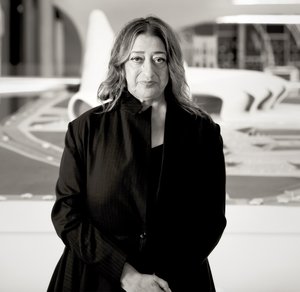
Zaha Hadid
1950 - 2016 , Irak
Kort om kunstneren
- Artistic Movement Or Style: Dekonstruktivisme
- Artists Or Movements Influenced By This Artist: ['Suprematisme']
- Artists Who Influenced This Artist:
- Kazimir Malevich
- Rem Koolhaas
- Elia Zenghelis
- Date Of Birth: 31 oktober 1950
- Date Of Death: 31 marts 2016
- Full Name: Zaha Mohammad Hadid
- Nationality: Irak og Storbritannien
- Notable Artworks:
- Peak Klub
- Broad Art Museum
- MAXXI
- Vitra Fire Station
- Place Of Birth: Bagdad, Irak
Relaterede artikler

Crimson Threads of Narrative: Exploring Symbolism & Representation in Artworks Featuring the Red Dress
Explore the rich symbolism of the red dress in art history! From ancient power displays to iconic portraits like Cézanne’s 'Madame Cezanne', discover the cultural and artistic significance behind this captivating color. Expert analysis & insights.
Urban Visions: A Historical & Artistic Exploration of the Cityscape in Painting
Explore the evolution of cityscape painting from historical maps to Impressionist masterpieces. Discover artists like Caillebotte, Utrillo & Matsumoto Shunsuke. Find museum-quality reproductions at OriginalUniqueArt.
Feathered Visions: A Historical & Artistic Exploration of Birds in Painting
Explore the rich history of birds in painting! Discover symbolism, artistic movements & master artists like Audubon. High-quality reproductions available at OriginalUniqueArt.

Mark Rothkos 25 Mesterværker: En Emotionel Rejse i Farver & Kunst | OriginalUniqueArt.dk
Oplev Mark Rothkos 25 mest ikoniske malerier – en dybdegående rejse i abstrakt ekspressionisme og farvefeltmaleri. Lær historien bag værkerne & find inspiration til din indretning med OriginalUniqueArt.dk. Udforsk samlingen online!

National Gallerys Mesterværker: 25 Kunstperler til Dit Hjem | OriginalUniqueArt.dk
Oplev National Gallery Londons 25 mest ikoniske kunstværker! Fra Van Gogh til Monet – dyk ned i historien bag berømte malerier og find inspiration til din boligindretning. Køb museumskvalitets reproduktioner på OriginalUniqueArt.com.