
 Se i fuld skala
 Del
Del Del
Del
 Detaljer

 Download
 Lignende værker
 Røntgenundersøgelse
 Diasshow
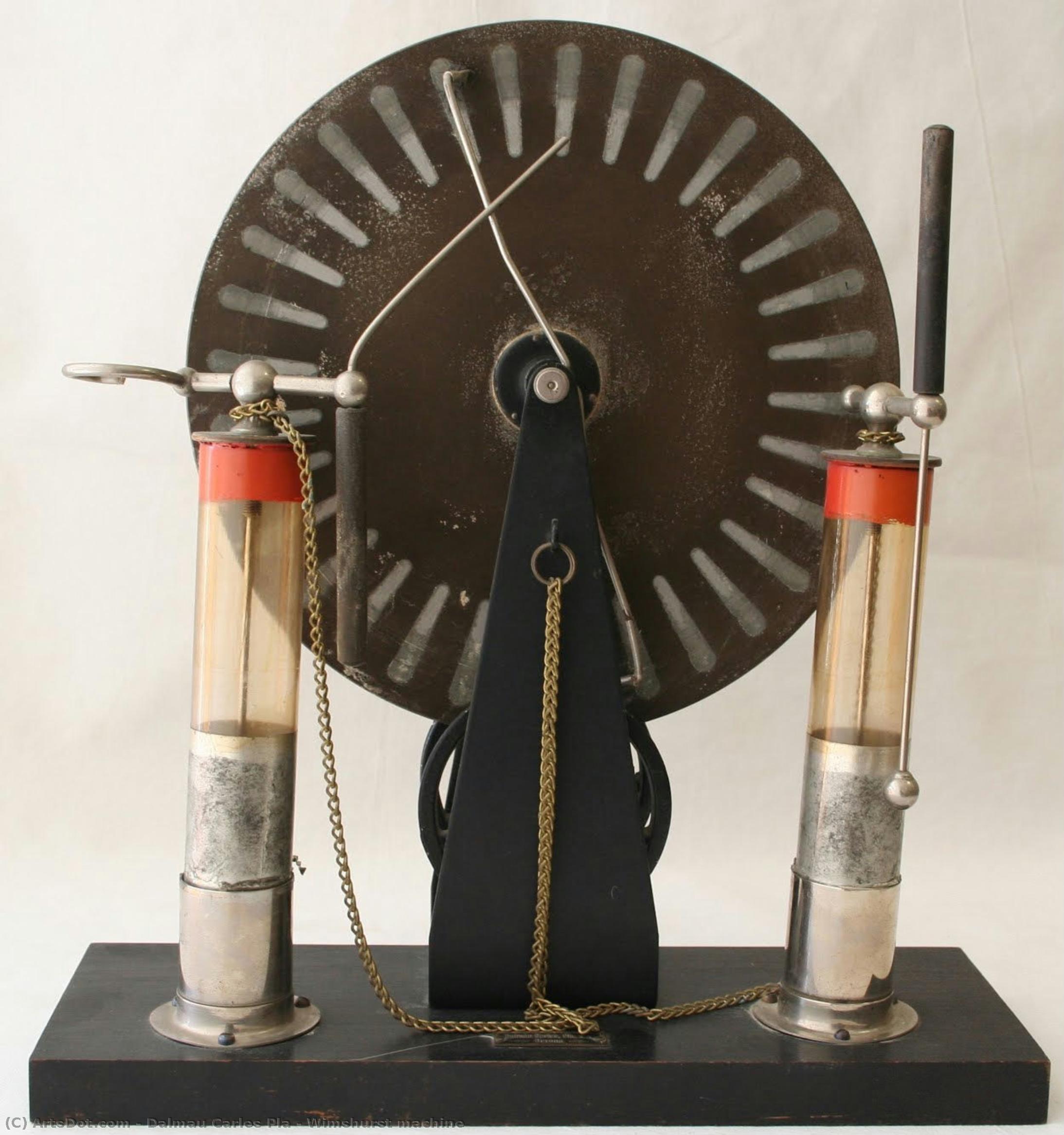
Wimshurst machine
 5.0 x 17.0 cm
 Museo Pedagógico de Aragón
 Se mere
Køb et højopløst, forbedret digitalt billede, der er langt bedre end online-forhåndsvisningen.
Hver fil er omhyggeligt forberedt af vores interne specialister ved hjælp af avancerede værktøjer og ekspertmæssig manuel retuschering. Vi sikrer, at hvert billede har enestående klarhed, præcis farvegengivelse og fine detaljer.
Den endelige fil leveres via e-mail inden for 72 timer og er optimeret til øjeblikkelig brug i professionelle, redaktionelle og trykte miljøer. Det er den samme kvalitet, som førende designstudier, forlag og gallerier har tillid til.
Digitalt billede
Download en højopløselig fil til personlig fremvisning, print og kreative projekter. ( Skift til print Skift til håndmalet maleri)
Inkluderet i alle ordrer på digitale billeder
Ekspert digital levering, garanteret
Når du vælger OriginalUniqueArt.com, får du ikke blot et billede – du modtager et professionelt optimeret digitalt kunstværk, skabt med præcision og sikret med en tilfredshedsgaranti. Her er alt, hvad din ordre automatisk indeholder:

Hurtig levering via e-mail
Din højkvalitets digitale billedfil vil blive sendt til din e-mail inden for 72 timer efter bestilling – klar til øjeblikkelig brug.

AI-optimeret digital fil
Dit kunstværk optimeres professionelt ved hjælp af avancerede AI-værktøjer og manuel redigering, hvilket sikrer maksimal detaljegrad, klarhed og farvenøjagtighed.

Gratis livslang genlevering
Har du ved en fejl slettet eller mistet din fil? Ingen bekymring – vi sender den igen til enhver tid, helt gratis.

Ingen importgebyrer – nogensinde
Nyd dit kunstværk med det samme uden told, afgifter eller leveringsgebyrer – digitale downloads er altid skattefrie.

Garanteret farvenøjagtighed
Vi sikrer, at dit digitale billede gengiver de originale farver så præcist som muligt ved hjælp af professionelle værktøjer og farvestyring.

60 dages tilfredshedsgaranti
Hvis du ikke er tilfreds med dit digitale billede, vil vi revidere det eller refundere 100% inden for 60 dage – uden spørgsmål.

100% Pengene tilbage-garanti
Ik tilfreds? Få fuld refusion inden for 60 dage efter modtagelse af din digitale fil – uden spørgsmål.

Mængderabat
Køb 3 billeder, spar 10% - Køb 5, spar 15% - Køb 10+, spar 20%. Ideelt til kreative projekter, gallerier og bureauer.
Beskrivelse af samlerobjektet
Kunstnerens biografi
Salvador Dalí: A Surrealist Visionary
Born in Figueres, Catalonia, Spain, on May 11, 1904, Salvador Dalí was more than just a painter; he was a provocateur, an iconoclast, and arguably the most recognizable figure of the Surrealist movement. His life, marked by eccentricity, meticulous technique, and a profound fascination with the subconscious, continues to captivate audiences nearly a century after his death in 1989. From humble beginnings—the son of a notary and a devout Catholic—Dalí’s artistic journey was shaped by a complex interplay of influences, including the Renaissance masters, Cubism, and, crucially, Sigmund Freud's theories on psychoanalysis.
Early education at the Real Academia de Bellas Artes de San Fernando in Madrid provided Dalí with a formal grounding in classical art. However, it was his encounter with the avant-garde movements of the time, particularly Cubism’s fragmentation of form and Surrealism's exploration of dreams and irrationality, that truly ignited his creative spirit. He quickly embraced the latter, joining the group in 1929 and becoming a key figure in its dissemination. This shift wasn’t merely stylistic; it represented a deliberate rejection of rational thought and an embrace of the hidden depths of the human psyche.
The Development of a Unique Style
Dalí's artistic style is instantly recognizable, characterized by meticulous detail, hyperrealism, and a dreamlike quality. He wasn’t interested in simply depicting reality; he sought to translate the illogical world of dreams into tangible form. His paintings are populated with bizarre juxtapositions—melting clocks, elongated figures, ants crawling on melting cheese – all rendered with astonishing precision. This meticulousness was not born of a desire for photographic accuracy but rather a deliberate attempt to capture the fleeting and unstable nature of subconscious imagery.
Influenced by Freud’s work on dream interpretation, Dalí developed his own personal iconography—the double images, the melting forms, the ants representing decay, and the eggs symbolizing birth. These recurring motifs became integral to his artistic language, allowing him to explore themes of mortality, desire, anxiety, and the irrationality of human experience. His famous “persistence of memory,” for example, isn’t just a depiction of time; it's a visual representation of the subjective nature of time itself, as experienced within the realm of dreams.
Major Works and Surrealist Connections
Dalí’s most celebrated work, *The Persistence of Memory* (1931), cemented his place in art history. The drooping clocks, draped over a barren landscape, immediately became an iconic symbol of surrealism—a visual representation of the fluidity of time and the subjective nature of reality. Other significant works include *Swans Reflecting Elephants* (1937), a complex double image that exemplifies his technique of creating multiple meanings within a single composition; *Galatea of the Spheres* (1952), a celebration of beauty and mathematical precision; and *Christ of Saint John of the Cross* (1951), a powerful meditation on faith and suffering.
Dalí’s involvement with Surrealism extended beyond his paintings. He collaborated with Luis Buñuel on several films, most notably *Un Chien Andalou* (1929) and *L'Age d'Or* (1930), which pushed the boundaries of cinematic expression and challenged conventional narrative structures. These collaborations further solidified his reputation as a visionary artist who refused to be confined by traditional artistic conventions.
Legacy and Historical Significance
Salvador Dalí’s impact on 20th-century art is undeniable. He not only helped to popularize Surrealism but also influenced countless artists across various disciplines—film, fashion, advertising, and design. His distinctive style, characterized by its meticulous detail and dreamlike imagery, continues to resonate with audiences today. Dalí’s work serves as a potent reminder of the power of the subconscious mind and the importance of exploring the irrational aspects of human experience.
Beyond his artistic achievements, Dalí's flamboyant personality and provocative behavior ensured that he remained a constant source of fascination for the media and the public. He was a master of self-promotion, cultivating an image as both genius and eccentric—a duality that contributed significantly to his enduring legacy. Salvador Dalí remains one of the most recognizable and influential artists of the 20th century, a true pioneer in the realm of Surrealism.

dalmau carles pla
1904 - 1983 , Spain
Kort om kunstneren
- Artistic Movement Or Style: Surrealism
- Artists Or Movements Influenced By This Artist:
- Picasso
- Breguet
- Artists Who Influenced This Artist:
- Cubism
- Dada
- Impressionism
- Date Of Birth: May 11, 1904
- Date Of Death: January 23, 1989
- Full Name: Salvador Felipe Jacinto Dalí i Domènech
- Nationality: Spanish
- Notable Artworks:
- The Persistence of Memory
- Galatea of the Spheres
- Dream Caused by the Flight of a Bee
- Place Of Birth: Figueres, Catalonia, Spain

