
 Se i rummet
 Del som kort
 Del
Del
 Detaljer
 Guide
Guide

 Download
 Lignende værker
 Røntgenundersøgelse
 Diasshow
 Q&A
Q&A Statistikker
Hip-length jacket


 Vis mere
Kunstværket vist på denne side er beskyttet af ophavsretsloven, hvilket betyder, at vi ikke lovligt kan skabe eller sælge en identisk reproduktion. Denne beskyttelse håndhæves i henhold til internationale aftaler som f.eks. den Bernerkonventionen og af nationale love, herunder de bestemmelser, der er fastlagt i Amerikansk ophavsretslov - Titel 17.
Denne metode overholder fuldt ud ophavsretsreglerne, da den ikke indebærer kopiering eller duplikering af det beskyttede kunstværk. I stedet er der tale om en kreativ nytolkning – et nyt maleri, som er inspireret af det oprindelige, men ikke identisk med det.
Giclée / Kunsttryk
Giclée- eller lærredstryk i museumskvalitet med hurtig produktion og fleksible muligheder for finish. ( Køb håndmalet maleri Skift til digitalt billede)




P118B Dkr10

P118H Dkr10

P118W Dkr10

P438Z Dkr10

P508JH Dkr12

P508YH Dkr12

P805H Dkr10

P805Z Dkr10

P919BZ Dkr10

P919G Dkr10

P919XJ Dkr10

P959ZH Dkr10

P968JZ Dkr12

W106C Dkr8

W218G Dkr10

W218JH Dkr8

W218Y Dkr10

W307PJ Dkr10

W316G Dkr10

W316PJ Dkr8

W316Y Dkr10

W398PJ Dkr8

W4111J Dkr10

W500HY Dkr15

W500JH Dkr15

W692G Dkr12

W849H Dkr8

W940BG Dkr15

W953PJ Dkr8




Vælg mellem vores forudindstillede størrelser, der matcher kunstværkets originale proportioner.

Indtast den bredde og højde, du har brug for, så det passer til din ramme eller din væg. Et print kan kun beskæres, aldrig gøres større end selve billedet, så en størrelse med et andet format vil medføre, at dele af motivet går tabt. Vi sender dig en digital mockup til godkendelse, før vi printer noget. Billedet vist på denne side viser ikke den faktiske beskæring — det er kun mockuppen, der gør.
Verdensomspændende levering () på 2 uger i stedet for de sædvanlige 4/5 uger. (2 november)

Gratis ekspresforsendelse til hele verden

Lærred af linned i høj kvalitet

Fuld transportforsikring

Garanti for refusion af told og importafgifter

Garanti for præcis farvegengivelse

100 dages returret ved fabrikationsfejl

100% fuld returret

Mængderabat ved flere køb
 Glasmulighed er kun tilgængelig i størrelser under 110 cm

Hip-length jacket
Giclée / Kunsttryk
Størrelse på reproduktion
-


Samlet pris
Dkr 538
The Genesis of a Masterpiece: Cristóbal Balenciaga and the 1951 Hip-Length Jacket
In the post-war years, as Europe cautiously emerged from the shadows of conflict, fashion sought solace in an embrace of understated elegance. It was within this climate of restrained optimism that Cristóbal Balenciaga, the “master of us all,” conceived his iconic 1951 hip-length jacket – a garment that transcends mere outerwear and embodies a profound understanding of form, fabric, and the human silhouette. More than just a coat, it’s a distilled essence of Balenciaga's philosophy: a celebration of simplicity achieved through meticulous construction and an almost sculptural approach to design.
Born in Getaria, Spain, Balenciaga’s early life was steeped in the traditions of Basque tailoring – a lineage he would ultimately revolutionize. He arrived in Paris in 1936, immediately establishing himself as a force to be reckoned with, challenging the established norms of haute couture with his bold silhouettes and innovative use of materials. The 1951 jacket represents a pivotal moment in this evolution; it’s a return to the fundamental principles of tailoring, stripped bare of excessive ornamentation, yet imbued with an undeniable sense of power and sophistication.
Deconstructing the Form: Construction and Materials
The jacket's structure is deceptively simple. A clean, hip-length cut establishes its immediate impact – a statement of confidence and modernity. The front is fitted to the waist with strategic darts, creating a subtly defined silhouette that accentuates the natural curves of the body. The back, conversely, flows freely, adapting gracefully to the shoulder line, offering both structure and movement. This duality—the controlled precision of the front juxtaposed against the fluid drape of the back—is a hallmark of Balenciaga’s design philosophy.
- Fabric: The jacket is constructed from ivory silk taffeta, chosen for its luxurious sheen and ability to hold its shape.
- Details: A black velvet turndown collar and lapels add a touch of formality and visual interest. An inside strap hugs the garment to the body, leaving the outside free and accentuating the fullness of the back.
- Construction: The three-quarter sleeves are assembled with three panels, ensuring a clean and polished finish.
A Tapestry of Texture and Technique
While seemingly minimalist, the jacket is far from devoid of embellishment. The true artistry lies in the intricate chenille embroidery that adorns the surface – a technique Balenciaga pioneered and mastered. The floral motifs, reminiscent of opulent Oriental gardens, are meticulously rendered with an almost obsessive attention to detail. Alongside the embroidery, acetate sequins shimmer with iridescent light, while delicate beads add a subtle sparkle. Twisted golden threads weave a luxurious tapestry across the fabric, creating a dynamic interplay of texture and color.
Balenciaga’s genius lay not just in his understanding of silhouette, but in his innovative use of materials and techniques. The jacket is a testament to this – a showcase for his signature approach to embellishment, demonstrating a mastery of both traditional and experimental methods.
Symbolism and Emotional Resonance
The 1951 hip-length jacket transcends its purely functional purpose; it’s imbued with symbolic meaning. In the post-war era, it represented a return to elegance and refinement – a rejection of the flamboyant excesses of the pre-war period. The simplicity of the design speaks to a desire for clarity and restraint, while the luxurious materials and intricate embellishment suggest an underlying celebration of beauty and craftsmanship.
The jacket’s enduring appeal lies in its ability to evoke a sense of timeless sophistication. It's a garment that embodies both strength and grace, confidence and humility – qualities that continue to resonate with contemporary audiences. A reproduction captures this essence beautifully, offering a tangible connection to the genius of Cristóbal Balenciaga and his legacy as one of fashion’s most influential designers.
Spørgsmål og svar
Kan jeg bestille en oliereproduktion af "Hip-length jacket"?
"Hip-length jacket" er tilgængelig som en håndmalet oliereproduktion på lærred af hør. Du kan bestille den på dens Håndmalet reproduktion-side, hvor du kan vælge mellem forskellige størrelser.
Findes der værker, der ligner "Hip-length jacket"?
Se lignende værker til "Hip-length jacket" af Cristóbal Balenciaga på denne side: Lignende værker
Hvilken fase af Cristóbal Balenciagas karriere tilhører "Hip-length jacket" (1951)?
Med sin datering fra 1951 tilhører "Hip-length jacket" Cristóbal Balenciagas Mature Period.
Kunstnerbiografi
Cristóbal Balenciaga Eizaguirre: The Architect of Elegance
Cristóbal Balenciaga Eizaguirre, simply known as Balenciaga, stands as a towering figure in the history of fashion – a true master who redefined women’s silhouettes and left an indelible mark on the world of haute couture. Born in 1895 in the small Basque fishing village of Getaria, Spain, his journey from humble beginnings to international acclaim is a testament to his innate talent, relentless dedication, and profound understanding of materials and form. Balenciaga's legacy isn’t merely about beautiful clothes; it’s about a revolutionary approach to design, one that prioritized structure, precision, and an almost sculptural quality rarely seen before him. His influence continues to resonate today, inspiring designers who seek to create garments with both timeless elegance and groundbreaking innovation.Early Life and Artistic Foundations
Balenciaga's early life was deeply intertwined with the world of textiles and craftsmanship. Growing up in Getaria, he spent much of his childhood assisting his mother, a seamstress, learning the fundamental skills that would later become the bedrock of his extraordinary career. This formative experience instilled within him an unparalleled respect for materials – their weight, drape, and potential – a characteristic that set him apart from many of his contemporaries. At the age of twelve, he apprenticed with a tailor in San Sebastián, a coastal city renowned for its artistic community and burgeoning fashion scene. It was here that he began to hone his skills, absorbing techniques and developing an eye for detail that would become hallmarks of his designs. A pivotal moment arrived when the Marchioness de Casa Torres, a prominent figure in Spanish society, recognized Balenciaga’s exceptional talent and became his patron, sending him to Paris for formal training – a crucial step that opened doors to the heart of the fashion world.Parisian Innovation and Influences
Balenciaga's arrival in Paris marked the beginning of an era of experimentation and groundbreaking design. He quickly established himself as a formidable force within the Parisian couture scene, working under Jacques Doucet at the prestigious Au Louvre department store. It was during this period that he began to develop his signature style – characterized by its dramatic volumes, sharp angles, and masterful manipulation of fabric. He drew inspiration from a diverse range of sources, including Spanish Renaissance art (particularly the works of Diego Velázquez), flamenco dance, and the traditional attire of Spanish matadors. These influences manifested in his designs through bold color combinations, intricate embellishments, and a distinctly sculptural aesthetic. Crucially, Balenciaga’s work was profoundly shaped by Coco Chanel, with whom he maintained a close friendship and mutual respect – a relationship that further solidified his position as a leading innovator.The Sculptural Silhouette and Revolutionary Designs
Balenciaga's most significant contribution to fashion lies in his radical reimagining of the female silhouette. He moved away from the prevailing hourglass shapes popularized by Christian Dior’s “New Look” after World War II, instead favoring fluid lines, dramatic volumes, and a focus on architectural form. His designs were often described as "sculptural," with garments that appeared to be constructed rather than draped. Key innovations included the “barrel line,” which created a powerful shoulder line; the sack dress, a deceptively simple yet revolutionary design that eliminated the waistline; and the baby doll dress, a playful yet sophisticated creation that redefined feminine elegance. These designs were not merely fashionable; they were statements – bold declarations of Balenciaga’s artistic vision and his unwavering commitment to pushing the boundaries of couture.Legacy and Enduring Influence
Cristóbal Balenciaga's career spanned over five decades, during which he consistently challenged conventions and elevated the art of fashion. His influence extends far beyond the garments he created; it permeates contemporary design, inspiring generations of stylists, designers, and artists. The Musée Cristóbal Balenciaga in Getaria serves as a poignant reminder of his humble origins and a testament to his enduring legacy. His meticulous approach to construction, his masterful use of materials, and his unwavering pursuit of perfection continue to be studied and admired by fashion professionals worldwide. Balenciaga remains not just a designer, but an architect of elegance – a true visionary who forever changed the landscape of haute couture.
Cristóbal Balenciaga
1895 - 1972 , Spanien
Kort om kunstneren
- Artistic Movement Or Style: Avantgarde kunst / Surrealisme
- Artists Or Movements Influenced By This Artist:
- Christian Dior
- Coco Chanel
- Artists Who Influenced This Artist: ['Hubert de Givenchy']
- Date Of Birth: 21. januar 1895
- Date Of Death: 23. marts 1972
- Full Name: Cristóbal Balenciaga Eizaguirre
- Nationality: Spansk
- Notable Artworks:
- Study 'Song of Songs IV'
- Trærod
- Akrobat
- Place Of Birth: Getaria, Spanien
Relaterede artikler

The Lens of Luxury: A Visual Journey Through the Evolution and Artistry of Fashion Photography
Embark on a visual journey through the evolution of fashion photography. Discover how masters like Gianfranco Ferré blended geometry, surrealism, and texture to redefine high-fashion art for collectors and connoisseurs of luxury imagery.
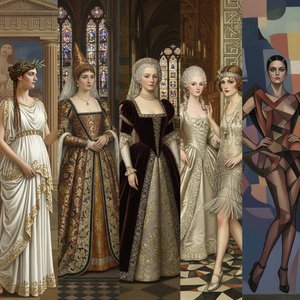
Style Through the Ages: Iconic Artworks That Defined the Evolution of Fashion Design
Explore the breathtaking intersection of fine art and high fashion. Discover how iconic masterpieces from Art Deco to Impressionism have shaped the world of luxury couture and timeless design in this curated visual journey.
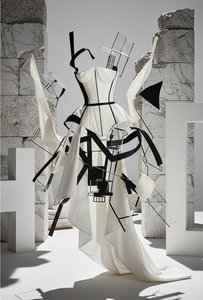
Gianfranco Ferré: Deconstructing Haute Couture – A Legacy of Architectural Form
Explore the revolutionary world of Gianfranco Ferré, 'the architect of fashion.' Discover his architectural approach to haute couture, iconic Dior designs, and lasting influence on luxury style. A deep dive for collectors & enthusiasts.

Sort i Kunsten: Top 10 Berømte Malerier & Deres Mystik | OriginalUniqueArt.dk
Oplev 10 berømte malerier domineret af sort – fra Rembrandts drama til Goyas mystik. Lær historierne bag disse ikoniske kunstværker og find inspiration til dit hjem. Køb museumskvalitets reproduktioner på OriginalUniqueArt.com

Cristóbal Balenciaga: Deconstructing Haute Couture's Architectural Legacy
Explore the revolutionary world of Cristóbal Balenciaga, the 'couturier's couturier'. Discover his architectural designs, lasting influence on haute couture, and guide to collecting rare pieces. A connoisseur’s resource.


