

 Send
Send Del
Del
 Detaljer
 Studieguide til kunstværker

 Download
 Lignende værker
 Se diasshow
 Statistik
Dress


 Læs mere
Giclée / Kunsttryk
Giclée- eller lærredstryk i museumskvalitet med hurtig produktion og fleksible muligheder for finish. ( Bestil håndmalet reproduktion Skift til digitalt billede)




































Vælg mellem vores forudindstillede størrelser, der matcher kunstværkets originale proportioner.

Du kan indtaste dine egne mål for at passe til en specifik ramme eller et bestemt område. Hvis den valgte størrelse ikke stemmer overens med det originale billedes proportioner, vil vi enten beskære kunstværket eller udvide billedet med en spejlet eller ensfarvet kant. En digital mockup vil blive sendt til din godkendelse, før produktionen påbegyndes.
Bemærk venligst, at forhåndsvisningen på skærmen ikke afspejler den faktiske beskæring eller udvidelse. Kun mockuppen vil nøjagtigt vise den endelige komposition.
Selvom specialmål er tilgængelige, anbefaler vi at vælge et mål fra den foruddefinerede liste for at bevare de originale proportioner.
Verdensomspændende levering () på 2 uger i stedet for de sædvanlige 4/5 uger. (26 september)

Gratis ekspresforsendelse til hele verden

Lærred af linned i høj kvalitet

Komplet transportforsikring

Garanti for refusion af told og importafgifter

Garanti for autentisk farvegengivelse

100 dages returret ved fabrikationsfejl

100% fuld returret

Mængderabat ved flere køb
 Glasmulighed er kun tilgængelig i størrelser under 110 cm

Dress
Giclée / Kunsttryk
Reproduktionsstørrelse
-


Samlet pris
$ 81
The Genesis of a Masterpiece: Cristóbal Balenciaga and the ‘Dress’
The world of fashion, often perceived as fleeting trends and ephemeral glamour, occasionally yields objects of profound and enduring significance. Cristóbal Balenciaga’s “Dress,” a 1953 creation housed within the Museo Nacional de Artes Decorativas in Madrid, stands as one such testament – not merely a garment, but a meticulously crafted exploration of silhouette, texture, and the very nature of perception. Born from the atelier of a visionary couturier who challenged convention and embraced an almost sculptural approach to design, this piece embodies Balenciaga’s signature blend of architectural precision and understated elegance.
Balenciaga's early life in Getaria, a small fishing village on Spain’s Basque coast, instilled within him a deep appreciation for structure and form. This foundational influence is immediately apparent in the “Dress,” where the bodice – a testament to Balenciaga’s mastery of tailoring – is rigidly defined by vertical darts and reinforced with metallic boning, creating an almost architectural framework. The choice of pale-pink satin, a luxurious yet delicate material, further emphasizes this sense of controlled structure, while simultaneously lending a subtle air of romanticism.
Deconstructing the Silhouette: Form and Function
The dress’s silhouette is a captivating paradox – simultaneously restrictive and fluid. The fitted bodice, with its sweetheart neckline and strategically placed straps, cinches the waist before blossoming into a full, gathered skirt. This dynamic interplay of form speaks to Balenciaga's fascination with volume and his ability to manipulate fabric to create an illusion of movement. The verticality of the bodice is cleverly countered by the horizontal sweep of the skirt, generating visual interest and preventing the design from feeling overly formal.
- The Bodice: A study in precision, featuring vertical darts that sculpt the torso and metallic boning for structural support.
- The Skirt: Gathered at the waist, creating a full, voluminous silhouette reminiscent of a classical Greek gown.
- The Stole: Adding layers of texture and visual complexity with its intricate lace detailing and castanet/fan motifs – a nod to Spanish heritage.
A Tapestry of Texture and Symbolism
Beyond its structural elegance, the “Dress” is rich in textural detail and symbolic resonance. The satin’s smooth surface contrasts beautifully with the delicate lace appliqué adorning the stole, creating a tactile experience for the viewer. The inclusion of Spanish motifs – the castanets and fans – subtly references Balenciaga's roots and his admiration for Iberian culture. These elements aren’t merely decorative; they contribute to a narrative of heritage and artistic inspiration.
Furthermore, the dress’s monochrome presentation—a black-and-white photograph capturing its essence—heightens its impact. The absence of color forces the viewer to focus entirely on form, texture, and construction, revealing the intricate details that define Balenciaga's genius. It echoes the stark elegance of early 20th-century photography, lending a timeless quality to the image.
The Legacy of Illusion: A Timeless Masterpiece
The “Dress” is more than just a beautiful garment; it’s a meditation on perception and the power of design. Its enduring appeal lies in its ability to simultaneously challenge and delight, inviting viewers to contemplate the relationship between form, texture, and meaning. Cristóbal Balenciaga's legacy continues through this piece – a testament to his innovative spirit, unparalleled craftsmanship, and profound understanding of the human form. Reproductions capture only a fraction of the original’s impact, but offer a window into the mind of one of fashion’s most influential figures.
Om kunstneren
Cristóbal Balenciaga Eizaguirre: The Architect of Elegance
Cristóbal Balenciaga Eizaguirre, simply known as Balenciaga, stands as a towering figure in the history of fashion – a true master who redefined women’s silhouettes and left an indelible mark on the world of haute couture. Born in 1895 in the small Basque fishing village of Getaria, Spain, his journey from humble beginnings to international acclaim is a testament to his innate talent, relentless dedication, and profound understanding of materials and form. Balenciaga's legacy isn’t merely about beautiful clothes; it’s about a revolutionary approach to design, one that prioritized structure, precision, and an almost sculptural quality rarely seen before him. His influence continues to resonate today, inspiring designers who seek to create garments with both timeless elegance and groundbreaking innovation.Early Life and Artistic Foundations
Balenciaga's early life was deeply intertwined with the world of textiles and craftsmanship. Growing up in Getaria, he spent much of his childhood assisting his mother, a seamstress, learning the fundamental skills that would later become the bedrock of his extraordinary career. This formative experience instilled within him an unparalleled respect for materials – their weight, drape, and potential – a characteristic that set him apart from many of his contemporaries. At the age of twelve, he apprenticed with a tailor in San Sebastián, a coastal city renowned for its artistic community and burgeoning fashion scene. It was here that he began to hone his skills, absorbing techniques and developing an eye for detail that would become hallmarks of his designs. A pivotal moment arrived when the Marchioness de Casa Torres, a prominent figure in Spanish society, recognized Balenciaga’s exceptional talent and became his patron, sending him to Paris for formal training – a crucial step that opened doors to the heart of the fashion world.Parisian Innovation and Influences
Balenciaga's arrival in Paris marked the beginning of an era of experimentation and groundbreaking design. He quickly established himself as a formidable force within the Parisian couture scene, working under Jacques Doucet at the prestigious Au Louvre department store. It was during this period that he began to develop his signature style – characterized by its dramatic volumes, sharp angles, and masterful manipulation of fabric. He drew inspiration from a diverse range of sources, including Spanish Renaissance art (particularly the works of Diego Velázquez), flamenco dance, and the traditional attire of Spanish matadors. These influences manifested in his designs through bold color combinations, intricate embellishments, and a distinctly sculptural aesthetic. Crucially, Balenciaga’s work was profoundly shaped by Coco Chanel, with whom he maintained a close friendship and mutual respect – a relationship that further solidified his position as a leading innovator.The Sculptural Silhouette and Revolutionary Designs
Balenciaga's most significant contribution to fashion lies in his radical reimagining of the female silhouette. He moved away from the prevailing hourglass shapes popularized by Christian Dior’s “New Look” after World War II, instead favoring fluid lines, dramatic volumes, and a focus on architectural form. His designs were often described as "sculptural," with garments that appeared to be constructed rather than draped. Key innovations included the “barrel line,” which created a powerful shoulder line; the sack dress, a deceptively simple yet revolutionary design that eliminated the waistline; and the baby doll dress, a playful yet sophisticated creation that redefined feminine elegance. These designs were not merely fashionable; they were statements – bold declarations of Balenciaga’s artistic vision and his unwavering commitment to pushing the boundaries of couture.Legacy and Enduring Influence
Cristóbal Balenciaga's career spanned over five decades, during which he consistently challenged conventions and elevated the art of fashion. His influence extends far beyond the garments he created; it permeates contemporary design, inspiring generations of stylists, designers, and artists. The Musée Cristóbal Balenciaga in Getaria serves as a poignant reminder of his humble origins and a testament to his enduring legacy. His meticulous approach to construction, his masterful use of materials, and his unwavering pursuit of perfection continue to be studied and admired by fashion professionals worldwide. Balenciaga remains not just a designer, but an architect of elegance – a true visionary who forever changed the landscape of haute couture.
Cristóbal Balenciaga
1895 - 1972 , Spanien
Hurtige fakta
- Artistic Movement Or Style: Avantgarde kunst / Surrealisme
- Artists Or Movements Influenced By This Artist:
- Christian Dior
- Coco Chanel
- Artists Who Influenced This Artist: ['Hubert de Givenchy']
- Date Of Birth: 21. januar 1895
- Date Of Death: 23. marts 1972
- Full Name: Cristóbal Balenciaga Eizaguirre
- Nationality: Spansk
- Notable Artworks:
- Study 'Song of Songs IV'
- Trærod
- Akrobat
- Place Of Birth: Getaria, Spanien
Relaterede artikler

Crimson Threads of Narrative: Exploring Symbolism & Representation in Artworks Featuring the Red Dress
Explore the rich symbolism of the red dress in art history! From ancient power displays to iconic portraits like Cézanne’s 'Madame Cezanne', discover the cultural and artistic significance behind this captivating color. Expert analysis & insights.
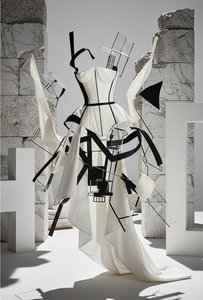
Gianfranco Ferré: Deconstructing Haute Couture – A Legacy of Architectural Form
Explore the revolutionary world of Gianfranco Ferré, 'the architect of fashion.' Discover his architectural approach to haute couture, iconic Dior designs, and lasting influence on luxury style. A deep dive for collectors & enthusiasts.
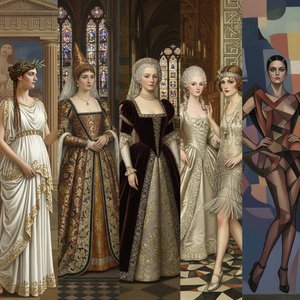
Style Through the Ages: Iconic Artworks That Defined the Evolution of Fashion Design
Explore the breathtaking intersection of fine art and high fashion. Discover how iconic masterpieces from Art Deco to Impressionism have shaped the world of luxury couture and timeless design in this curated visual journey.

Cristóbal Balenciaga: Deconstructing Haute Couture's Architectural Legacy
Explore the revolutionary world of Cristóbal Balenciaga, the 'couturier's couturier'. Discover his architectural designs, lasting influence on haute couture, and guide to collecting rare pieces. A connoisseur’s resource.
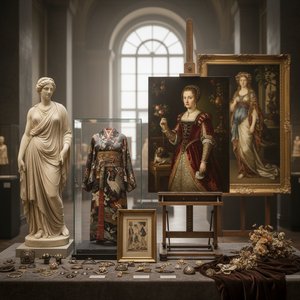
Draped Narratives: Fashion as Symbol & Subject in Historical Art
Explore the fascinating history of fashion as a symbol of power & status in art! Discover masterpieces from Gainsborough to Tissot and learn how clothing shaped societal narratives. Find museum-quality reproductions at OriginalUniqueArt.


