

 Send
Send Del
Del
 Detaljer
 Studieguide til kunstværker

 Download
 Lignende værker
 Se diasshow
 Statistik
Brooch


 Læs mere
Kunstværket vist på denne side er beskyttet af ophavsretsloven, hvilket betyder, at vi ikke lovligt kan skabe eller sælge en identisk reproduktion. Denne beskyttelse håndhæves i henhold til internationale aftaler som f.eks. den Bernerkonventionen og af nationale love, herunder de bestemmelser, der er fastlagt i Amerikansk ophavsretslov - Titel 17.
Denne metode overholder fuldt ud ophavsretsreglerne, da den ikke indebærer kopiering eller duplikering af det beskyttede kunstværk. I stedet er der tale om en kreativ nytolkning – et nyt maleri, som er inspireret af det oprindelige, men ikke identisk med det.
Giclée / Kunsttryk
Giclée- eller lærredstryk i museumskvalitet med hurtig produktion og fleksible muligheder for finish. ( Bestil håndmalet reproduktion Skift til digitalt billede)




































Vælg mellem vores forudindstillede størrelser, der matcher kunstværkets originale proportioner.

Indtast den bredde og højde, du har brug for, så det passer til din ramme eller din væg. Et print kan kun beskæres, aldrig gøres større end billedet, så en størrelse med en anden form vil miste en del af motivet. Vi sender dig en digital mockup til godkendelse, før vi printer noget. Billedet vist på denne side viser ikke den faktiske beskæring — det er kun mockuppen, der gør.
Verdensomspændende levering () på 2 uger i stedet for de sædvanlige 4/5 uger. (23 oktober)

Gratis ekspresforsendelse til hele verden

Lærred af linned i høj kvalitet

Komplet transportforsikring

Garanti for refusion af told og importafgifter

Garanti for autentisk farvegengivelse

100 dages returret ved fabrikationsfejl

100% fuld returret

Mængderabat ved flere køb
 Glasmulighed er kun tilgængelig i størrelser under 110 cm

Brooch
Giclée / Kunsttryk
Reproduktionsstørrelse
-


Samlet pris
Dkr 532
The Architecture of Elegance: A Study in Couture Form
To stand before this depiction of a Balenciaga coat is to encounter fashion elevated to the realm of pure sculpture. It is not merely an article of clothing, but a carefully considered architectural statement, frozen in time by the lens of masterful photography. The subject matter itself—a garment displayed upon a mannequin—forces the viewer to look beyond mere wearability and instead appreciate the structure, the drape, and the inherent geometry conceived by Cristóbal Balenciaga. His genius lay in understanding volume; he seemed to sculpt with fabric, allowing the material to suggest forms that defied gravity or convention. The coat, rendered here in stark monochrome, becomes a study in negative space as much as it is a celebration of its own silhouette.
Mastery of Light and Shadow: Photographic Technique
The technical brilliance underpinning this image is undeniable. The photographer has employed dramatic, directional lighting that carves the form out of the surrounding void. Observe how the strong highlights catch the subtle nap or matte quality of the material, while the deep shadows pool in the folds, giving the piece an almost tangible weight. This interplay between illumination and obscurity—the chiaroscuro effect applied to fashion—is what lends the image its profound depth. The background, a textured gray expanse punctuated by dynamic diagonal light streaks, serves not as mere setting, but as an active compositional element, guiding the eye across the garment's planes and suggesting movement even in this static display.
A Timeless Dialogue: Symbolism and Historical Context
The choice of black and white is perhaps the most potent symbolic gesture. By stripping away the distraction of color, the image achieves a timeless quality, allowing the viewer to focus solely on line, texture, and form—the very elements that define Balenciaga's enduring legacy. This piece speaks to an era where couture was treated as high art; it evokes the sophisticated glamour of mid-20th century fashion photography. It whispers tales of Parisian ateliers and uncompromising standards, connecting the viewer directly to the avant-garde spirit that defined modern design. Owning a reproduction of this work is acquiring a piece of that cultural memory.
Interior Inspiration: Integrating Art into Living Space
For the collector or interior designer, this artwork offers more than just visual appeal; it provides an aesthetic anchor. Its strong verticality and dramatic contrast make it exceptionally versatile for creating focal points in sophisticated settings. Imagine it displayed above a console table or within a gallery wall dedicated to design history. The inherent drama of the lighting translates beautifully into physical space, adding depth and intellectual gravitas without overwhelming the room's natural palette. It suggests an appreciation for craftsmanship that transcends fleeting trends.
Spørgsmål & svar
Er farverne i "Brooch" af Cristóbal Balenciaga mættede eller dæmpede?
Farvepaletten i "Brooch" har en mætning på Muted.
Hvilken følelsesmæssig stemning formidler "Brooch" af Cristóbal Balenciaga?
Den emotionelle stemning, der er registreret for "Brooch" af Cristóbal Balenciaga, er Romantic. Den opsummerer den følelse, som værket udtrykker.
Hvordan relaterer motivet i "Brooch" sig til Cristóbal Balenciagas sædvanlige temaer?
"Brooch" skildrer fashion, balenciaga, couture, brooch, 1950s, black & white, mannequin, mens Cristóbal Balenciagas registrerede temaer er avant-garde art movement, basque heritage, regional identity, high fashion, couture legacy, sculptural design, architectural forms, innovative tailoring. En sammenligning af de to viser, hvordan værket relaterer sig til kunstnerens sædvanlige motiver.
Om kunstneren
Cristóbal Balenciaga Eizaguirre: The Architect of Elegance
Cristóbal Balenciaga Eizaguirre, simply known as Balenciaga, stands as a towering figure in the history of fashion – a true master who redefined women’s silhouettes and left an indelible mark on the world of haute couture. Born in 1895 in the small Basque fishing village of Getaria, Spain, his journey from humble beginnings to international acclaim is a testament to his innate talent, relentless dedication, and profound understanding of materials and form. Balenciaga's legacy isn’t merely about beautiful clothes; it’s about a revolutionary approach to design, one that prioritized structure, precision, and an almost sculptural quality rarely seen before him. His influence continues to resonate today, inspiring designers who seek to create garments with both timeless elegance and groundbreaking innovation.Early Life and Artistic Foundations
Balenciaga's early life was deeply intertwined with the world of textiles and craftsmanship. Growing up in Getaria, he spent much of his childhood assisting his mother, a seamstress, learning the fundamental skills that would later become the bedrock of his extraordinary career. This formative experience instilled within him an unparalleled respect for materials – their weight, drape, and potential – a characteristic that set him apart from many of his contemporaries. At the age of twelve, he apprenticed with a tailor in San Sebastián, a coastal city renowned for its artistic community and burgeoning fashion scene. It was here that he began to hone his skills, absorbing techniques and developing an eye for detail that would become hallmarks of his designs. A pivotal moment arrived when the Marchioness de Casa Torres, a prominent figure in Spanish society, recognized Balenciaga’s exceptional talent and became his patron, sending him to Paris for formal training – a crucial step that opened doors to the heart of the fashion world.Parisian Innovation and Influences
Balenciaga's arrival in Paris marked the beginning of an era of experimentation and groundbreaking design. He quickly established himself as a formidable force within the Parisian couture scene, working under Jacques Doucet at the prestigious Au Louvre department store. It was during this period that he began to develop his signature style – characterized by its dramatic volumes, sharp angles, and masterful manipulation of fabric. He drew inspiration from a diverse range of sources, including Spanish Renaissance art (particularly the works of Diego Velázquez), flamenco dance, and the traditional attire of Spanish matadors. These influences manifested in his designs through bold color combinations, intricate embellishments, and a distinctly sculptural aesthetic. Crucially, Balenciaga’s work was profoundly shaped by Coco Chanel, with whom he maintained a close friendship and mutual respect – a relationship that further solidified his position as a leading innovator.The Sculptural Silhouette and Revolutionary Designs
Balenciaga's most significant contribution to fashion lies in his radical reimagining of the female silhouette. He moved away from the prevailing hourglass shapes popularized by Christian Dior’s “New Look” after World War II, instead favoring fluid lines, dramatic volumes, and a focus on architectural form. His designs were often described as "sculptural," with garments that appeared to be constructed rather than draped. Key innovations included the “barrel line,” which created a powerful shoulder line; the sack dress, a deceptively simple yet revolutionary design that eliminated the waistline; and the baby doll dress, a playful yet sophisticated creation that redefined feminine elegance. These designs were not merely fashionable; they were statements – bold declarations of Balenciaga’s artistic vision and his unwavering commitment to pushing the boundaries of couture.Legacy and Enduring Influence
Cristóbal Balenciaga's career spanned over five decades, during which he consistently challenged conventions and elevated the art of fashion. His influence extends far beyond the garments he created; it permeates contemporary design, inspiring generations of stylists, designers, and artists. The Musée Cristóbal Balenciaga in Getaria serves as a poignant reminder of his humble origins and a testament to his enduring legacy. His meticulous approach to construction, his masterful use of materials, and his unwavering pursuit of perfection continue to be studied and admired by fashion professionals worldwide. Balenciaga remains not just a designer, but an architect of elegance – a true visionary who forever changed the landscape of haute couture.
Cristóbal Balenciaga
1895 - 1972 , Spanien
Hurtige fakta
- Artistic Movement Or Style: Avantgarde kunst / Surrealisme
- Artists Or Movements Influenced By This Artist:
- Christian Dior
- Coco Chanel
- Artists Who Influenced This Artist: ['Hubert de Givenchy']
- Date Of Birth: 21. januar 1895
- Date Of Death: 23. marts 1972
- Full Name: Cristóbal Balenciaga Eizaguirre
- Nationality: Spansk
- Notable Artworks:
- Study 'Song of Songs IV'
- Trærod
- Akrobat
- Place Of Birth: Getaria, Spanien
Relaterede artikler

Timeless Elegance: Unveiling the Chic Allure and Artistic Legacy of Black Dress Artworks
Immerse yourself in the timeless allure of black dress artworks. Explore a curated collection of fine art reproductions and bespoke oil paintings that blend fashion history with modern elegance. Discover how OriginalUniqueArt.com transforms memories into exquisite, hand-painted masterpieces.
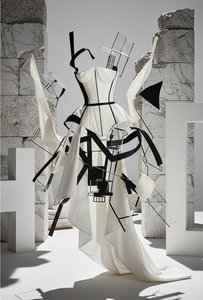
Gianfranco Ferré: Deconstructing Haute Couture – A Legacy of Architectural Form
Explore the revolutionary world of Gianfranco Ferré, 'the architect of fashion.' Discover his architectural approach to haute couture, iconic Dior designs, and lasting influence on luxury style. A deep dive for collectors & enthusiasts.
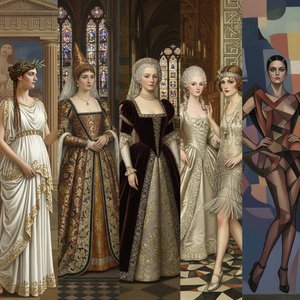
Style Through the Ages: Iconic Artworks That Defined the Evolution of Fashion Design
Explore the breathtaking intersection of fine art and high fashion. Discover how iconic masterpieces from Art Deco to Impressionism have shaped the world of luxury couture and timeless design in this curated visual journey.

Sort i Kunsten: Top 10 Berømte Malerier & Deres Mystik | OriginalUniqueArt.dk
Oplev 10 berømte malerier domineret af sort – fra Rembrandts drama til Goyas mystik. Lær historierne bag disse ikoniske kunstværker og find inspiration til dit hjem. Køb museumskvalitets reproduktioner på OriginalUniqueArt.com

Cristóbal Balenciaga: Deconstructing Haute Couture's Architectural Legacy
Explore the revolutionary world of Cristóbal Balenciaga, the 'couturier's couturier'. Discover his architectural designs, lasting influence on haute couture, and guide to collecting rare pieces. A connoisseur’s resource.


