Impressionism
untitled (113) (Claude Monet)
Claude Monet (1840–1926) har skabt untitled (113). Det tilhører Impressionism-bevægelsen. Den er udført i Oil On Canvas.
- Oil On Canvas

 Se i rummet

 Håndmalet oliemalerie
 Del som kort
 Del
 Faktablad


 Download
 Lignende værker
 Røntgenundersøgelse
 Diasshow
 Spørgsmål og svar

 Statistikker
untitled (113) kort fortalt
- Titel
- untitled (113)
- Kunstner
- Claude Monet (1840–1926)
- Kunstner født i
- Paris, Frankrig
- Medium
- Oil On Canvas
- Bevægelse
- Impressionism
- Periode
- 19th Century
- Motiv
- woman, bed, veil, knife, light, landscape
Hvad forestiller untitled (113)?
A Fragment of Impressionistic Reverie: Unpacking Claude Monet’s Untitled (113)
Claude Monet's “Untitled (113),” painted in 1907, embodies the very essence of Impressionism—a deliberate rejection of academic conventions in favor of capturing the immediacy and subjective experience of a particular moment. This seemingly simple monochrome depiction holds profound artistic significance, reflecting not only Monet’s masterful technique but also the broader intellectual currents shaping European art at the turn of the century.
- Subject Matter: The painting presents a woman reclining in bed, enveloped by drapery and partially obscured by a sheet. This deliberate ambiguity invites contemplation about privacy, vulnerability, and perhaps even hidden emotions—themes prevalent in Impressionist explorations of human psychology.
- Style & Technique: Monet’s signature style is evident in the loose brushstrokes characteristic of plein air painting. The artist eschewed meticulous detail, prioritizing instead the transmission of light and color onto canvas. Thick impasto creates textural surfaces that capture the subtle nuances of illumination, mirroring the fleeting beauty of natural landscapes.
- Historical Context: Painted during Monet’s prolific period at Giverny—his garden transformed into a haven for experimentation—the artwork speaks to the broader artistic movement concerned with documenting sensory perceptions. Impressionism arose as a reaction against Romantic idealism, asserting that art should strive to represent reality as it is perceived by the eye rather than imposing preconceived notions of beauty.
Symbolic Layers Beneath Surface Calm
Beyond its visual aesthetic, “Untitled (113)” possesses symbolic resonance. The woman’s veiled posture suggests concealment—perhaps representing secrets unspoken or emotions suppressed. Simultaneously, the presence of a knife nearby introduces an unsettling element, hinting at potential danger or disruption within this tranquil scene. This juxtaposition underscores Monet's ability to convey complex psychological states through deceptively understated imagery.
- The Veil: Traditionally associated with modesty and concealment, the veil symbolizes privacy and introspection—elements central to Impressionist interest in portraying inner life alongside external observation.
- The Knife: Often interpreted as representing violence or disruption, the knife’s placement disrupts the serene composition, prompting viewers to consider darker interpretations of human experience. It serves as a counterpoint to the woman's repose, suggesting an underlying tension.
Light and Texture: Monet’s Pursuit of Impressionistic Ideal
Monet’s meticulous attention to light—a cornerstone of Impressionism—is palpable in “Untitled (113).” The artist skillfully captures the diffused glow emanating from unseen sources, creating a luminous atmosphere that envelops the figure. Furthermore, the textured surface achieved through thick impasto enhances the visual impact, conveying the materiality of the canvas and mirroring the tactile qualities of natural surfaces.
- Impasto Technique: Monet’s deliberate layering of paint—creating ridges and peaks on the canvas—was revolutionary for its time. It prioritized capturing the physicality of light and color rather than achieving photographic realism.
- Color Palette: The predominantly monochrome palette contributes to the painting's contemplative mood, emphasizing tonal variations and subtle gradations of gray—a technique favored by Monet in his later works.
Emotional Resonance & Artistic Legacy
"Untitled (113)" transcends mere visual representation; it invites viewers into a realm of emotion and psychological exploration. Like many of Monet’s masterpieces, it captures the elusive beauty of fleeting moments—a testament to his unwavering commitment to portraying subjective experience. Its enduring appeal lies in its ability to provoke contemplation about identity, vulnerability, and the complexities of human consciousness—themes that continue to resonate with audiences today.
Højopløselige billeder af untitled (113)
Public domain: kunstneren døde i 1926.
Claude Monet, untitled (113). Public domain
Spørgsmål om untitled (113) besvaret
Hvilket medie er "untitled (113)" af Claude Monet udført i?
"untitled (113)" af Claude Monet er udført i Oil On Canvas. Reproduktionerne har til formål at gengive denne tekniks visuelle udtryk.
Hvad forestiller "untitled (113)" af Claude Monet?
Temaerne i "untitled (113)" af Claude Monet omfatter woman, bed, veil, knife, light, landscape, mystery, som tilsammen udgør værkets motivverden.
Er billedet af "untitled (113)" af Claude Monet frit tilgængeligt i det offentlige domæne?
Ophavsretsstatus for "untitled (113)" af Claude Monet: værket er i det offentlige domæne – ophavsretten er udløbet. Dette afgør, om der frit må foretages reproduktioner af billedet.
Hvilken kunstner tilskrives "untitled (113)"?
Kunstneren bag "untitled (113)" er Claude Monet. Værket er katalogiseret under Claude Monets navn.
Hvilken stilart tilhører "untitled (113)"?
"untitled (113)" af Claude Monet tilhører Impressionism-bevægelsen. Denne bevægelse giver den stilistiske kontekst for værket.
Hvor i Claude Monets karriere placerer "untitled (113)" sig?
"untitled (113)" repræsenterer Claude Monets Mature Period.
Hvad er årsagen til ophavsretsstatus for "untitled (113)" af Claude Monet?
"untitled (113)" af Claude Monet er i det offentlige domæne – ophavsretten er udløbet. Ophavsretten beregnes ud fra kunstnerens dødsår, og Claude Monet døde i 1926.
Hvor placerer "untitled (113)" sig i forhold til Claude Monets samlede værk?
"untitled (113)" er et værk fra Claude Monets Impressionism-periode, hvis gennemgående temaer inkluderer light capture, symbolic imagery, quiet reflection, landscape vision, monet legacy.
Hvor placerer "untitled (113)" sig blandt Claude Monets gennemgående motiver?
Blandt Claude Monets gennemgående temaer – light capture, symbolic imagery, quiet reflection, landscape vision, monet legacy – bringer "untitled (113)" sit eget fokus på woman, bed, veil, knife, light, landscape, mystery.
Om kunstneren, Claude Monet
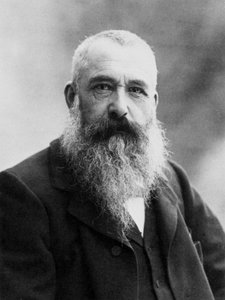
1840–1926, Frankrig
Claude Monet
Tidligt liv, familie og uddannelse Claude Monet blev født i Paris, Frankrig, den 14. november 1840, og trådte ind i en verden præget af modstridende forventninger. Mens hans far, Claude-Adolphe Monet, forestillede sig en mere stabil professionel karrierevej for sin søn, tilbød hans mor, Louise-Justine Aubrée Monet, en stille støtte til hans spirende kreative anlæg. Familien slog sig til sidst ned i Le Havre i Normandiet, hvor den kystnære atmosfære ville efterlade et varigt indtryk på den unge dreng.
Også af Claude Monet
 Åkander (eller Nympheas)1916
 Solopgang1872
 Høstakke: Snøeffekt1891
 Promenade1875
Essays om untitled (113)
 Capturing Light: The Technical Revolution of Claude Monet and ImpressionismExplore the technical mastery of Monet and Impressionist light through expert analysis. Discover the science behind the brushstroke now.
 Capturing Light: The Revolutionary Legacy of Claude Monet and the Impressionist MastersDiscover the luminous revolution of Claude Monet and the Impressionist masters. Explore an expert journey through light, color, and the end…
 The White Veil: From Sacred Rituals to the Stillness of Impressionist LandscapesExplore the profound symbolism of the veil from sacred rituals to Impressionist landscapes. Discover the art of concealment and revelation.