

 Se i rummet
 Del som kort
 Del
Del
 Detaljer
 Guide
Guide

 Download
 Lignende værker
 Røntgenundersøgelse
 Diasshow
 Q&A
Q&A Statistikker
Rachel Weeping


 Vis mere
Giclée / Kunsttryk
Giclée- eller lærredstryk i museumskvalitet med hurtig produktion og fleksible muligheder for finish. ( Køb håndmalet maleri Skift til digitalt billede)




P118B Dkr10

P118H Dkr10

P118W Dkr10

P438Z Dkr10

P508JH Dkr12

P508YH Dkr12

P805H Dkr10

P805Z Dkr10

P919BZ Dkr10

P919G Dkr10

P919XJ Dkr10

P959ZH Dkr10

P968JZ Dkr12

W106C Dkr8

W218G Dkr10

W218JH Dkr8

W218Y Dkr10

W307PJ Dkr10

W316G Dkr10

W316PJ Dkr8

W316Y Dkr10

W398PJ Dkr8

W4111J Dkr10

W500HY Dkr15

W500JH Dkr15

W692G Dkr12

W849H Dkr8

W940BG Dkr15

W953PJ Dkr8




Vælg mellem vores forudindstillede størrelser, der matcher kunstværkets originale proportioner.

Indtast den bredde og højde, du har brug for, så det passer til din ramme eller din væg. Et print kan kun beskæres, aldrig gøres større end selve billedet, så en størrelse med et andet format vil medføre, at dele af motivet går tabt. Vi sender dig en digital mockup til godkendelse, før vi printer noget. Billedet vist på denne side viser ikke den faktiske beskæring — det er kun mockuppen, der gør.
Verdensomspændende levering () på 2 uger i stedet for de sædvanlige 4/5 uger. (29 oktober)

Gratis ekspresforsendelse til hele verden

Lærred af linned i høj kvalitet

Fuld transportforsikring

Garanti for refusion af told og importafgifter

Garanti for præcis farvegengivelse

100 dages returret ved fabrikationsfejl

100% fuld returret

Mængderabat ved flere køb
 Glasmulighed er kun tilgængelig i størrelser under 110 cm

Rachel Weeping
Giclée / Kunsttryk
Størrelse på reproduktion
-


Samlet pris
Dkr 533
The Haunting Beauty of Loss
Charles Willson Peale’s “Rachel Weeping,” painted in 1772, isn't merely a portrait; it’s a visceral embodiment of sorrow, a poignant meditation on loss and the enduring bonds of family. The painting depicts Rachel Peale, Charles’s wife, mourning the death of their child – a tragedy that struck deeply within the heart of this prominent American artist and his family. Yet, despite its subject matter, “Rachel Weeping” transcends mere grief to become a powerful statement about resilience, faith, and the enduring nature of love.
Peale’s decision to immortalize this moment of profound sorrow was revolutionary for its time. Rather than shy away from depicting the raw emotion of bereavement, he embraced it with unflinching honesty. The composition immediately draws the viewer in – a woman enveloped in shadow, cradling her lifeless infant, a scene both heartbreaking and strangely dignified. It’s a stark departure from the idealized depictions of motherhood prevalent in earlier art, offering instead an intimate glimpse into the depths of human suffering.
Neoclassical Elegance Meets Emotional Intensity
Stylistically, “Rachel Weeping” masterfully blends elements of Neoclassicism with Romanticism. Peale’s training under Benjamin West, a leading figure in the British Neoclassical movement, is evident in the painting's carefully rendered details – the delicate folds of Rachel’s garments, the precise modeling of her face, and the restrained palette dominated by muted browns, grays, and creams. However, beneath this formal elegance lies an undeniable surge of emotional intensity. The use of chiaroscuro—the dramatic contrast between light and shadow—heightens the sense of drama and underscores the painting’s central theme of grief. Notice how the light gently illuminates Rachel's face, highlighting her sorrowful expression while leaving much of the background shrouded in darkness.
Peale’s technique is remarkably skillful. He employs a loose brushstroke to create a sense of movement and immediacy, capturing the raw emotion of the scene with remarkable sensitivity. The positioning of the child – nestled close to Rachel's chest, its head resting on her shoulder – speaks volumes about the profound connection between mother and child, further amplifying the painting’s emotional impact.
Symbolism and a Testament to Family
The symbolism within “Rachel Weeping” is layered and deeply resonant. The inclusion of other figures in the background—a man standing behind Rachel and another positioned further back on the right—suggests a wider family circle, emphasizing the communal nature of grief. The presence of medical bottles hints at the era’s limited understanding of illness and death, adding a layer of historical context to the scene. Most powerfully, Rachel's posture – her head bowed in sorrow, her hands clasped protectively around the child—evokes the iconography of the Madonna and Child, transforming her grief into a sacred act of mourning.
Peale’s decision to paint this image after the loss of his own children underscores the profound personal connection he felt to the subject matter. “Rachel Weeping” is not simply a portrait; it's a deeply felt expression of love, loss, and the enduring strength of the human spirit. It remains a hauntingly beautiful testament to the complexities of family life and the universal experience of grief.
A Legacy of Emotional Depth
“Rachel Weeping” holds a significant place in American art history as one of the earliest examples of a portrait confronting difficult emotions with such directness. Its emotional honesty and technical skill continue to resonate with viewers today, prompting reflection on themes of loss, family, and the enduring power of human connection. Reproductions of this iconic painting offer a powerful opportunity to experience Peale’s masterful artistry and contemplate the profound beauty that can be found even in moments of deepest sorrow.
Spørgsmål og svar
Findes der en guide til "Rachel Weeping" af Charles Willson Peale?
Guiden til "Rachel Weeping" findes på værkets Elevguide-side – et printbart faktablad, der præsenterer værket sammen med dets billedtekst, kreditering og identifikationstabel (kunstner, datoer, medie, original størrelse, samling).
Hvilken følelse formidler "Rachel Weeping" af Charles Willson Peale?
Stemningen i "Rachel Weeping" af Charles Willson Peale er Romantic, og dens følelsesmæssige tone er Melancholic.
Hvor kan jeg se det originale værk "Rachel Weeping" af Charles Willson Peale?
Du kan se det originale værk "Rachel Weeping" på Philadelphia Art Museum, Philadelphia, USA.
Kunstnerbiografi
Charles Willson Peale: Et liv præget af kunst, videnskab og patriotisme
- Født: 15. april 1741, Chester, Queen Anne's County, Maryland
- Død: 22. februar 1827, Philadelphia, Pennsylvania
Tidligt liv og kunstnerisk uddannelse
- Peales tidlige liv var præget af økonomiske svårigheder efter sin fars død. Han arbejdede som lærling hos en sadelmaker, før han opdagede sin passion for kunsten.
- Han modtog sin indledende træning fra John Hesselius og studerede kortvarigt under John Singleton Copley, hvilket tidligt viste hans talent for portrætkunst.
- En afgørende periode i hans udvikling var tiden som studerende under Benjamin West i London (1767-1770). Denne eksponering for europæiske kunstneriske strømninger havde en betydelig indflydelse på hans stil.
Kunstnerisk karriere og hovedværker
- Portrætkunst: Peale er bedst kendt for sine portrætter af fremtrædende skikkelser fra den amerikanske revolution, herunder adskillige afbildninger af George Washington (næsten tres i alt). Disse portrætter fungerer som værdifulde historiske dokumenter såvel som kunstneriske bedrifter.
- Stil: Hans stil udviklede sig over tid; oprindeligt var han påvirket af Wests neoklassiske tilgang, men senere inkorporerede han elementer af realisme og et ønske om at indfange ligheden med stor nøjagtighed.
- Bemærkelsesværdige værker:
- George Washington (1772): Markerede begyndelsen på hans lange tilknytning til Washington.
- The Staircase Group (ca. 1795): Et slående eksempel på trompe l'oeil, der afbilder hans sønner Raphael og Titian, som om de var en del af selve det arkitektoniske miljø.
Videnskabelige bestræbelser og Peales American Museum
- Peale var en passioneret naturalist og videnskabsmand, der organiserede ekspeditioner for at studere naturhistorie.
- Han grundlagde Peale's American Museum i Philadelphia (1784), et af de første museer i USA. Det husede botaniske, biologiske og arkæologiske fund.
- Museet spillede en væsentlig rolle i at gøre videnskab og uddannelse populær i Amerika. Han blev især kendt for sine udstillinger af mastodontknogler, som blev erhvervet gennem en ekspedition i 1801.
- Han lærte sig selv taksidermi (udstopning) for at kunne bevare præparater til museet, hvilket vidner om hans alsidige evner.
Eftermæle og historisk betydning
- Peales arbejde bygger bro mellem kunst og videnskab og afspejler oplysningstidens idealer i hans samtid.
- Hans portrætter udgør uvurderlige visuelle optegnelser af nøglefigurer i amerikansk historie.
- Grundlæggelsen af Peale's American Museum var en pionerindsats, der hjalp med at etablere museet som en vigtig institution for uddannelse og videnskabelig udforskning.
- Han påvirkede efterfølgende generationer af kunstnere og videnskabsfolk og bidrog betydeligt til udviklingen af den amerikanske kultur.
- Hans familiære arv fortsatte gennem hans sønner, herunder James Peale og Rubens Peale, som også blev dygtige kunstnere og bidrog til museets samling.

Charles Willson Peale
1741 - 1827 , Storbritannien
Kort om kunstneren
- Artistic Movement Or Style: Neoklassisk maleri
- Artists Who Influenced This Artist:
- John Hesselius
- John Singleton Copley
- Benjamin West
- Date Of Birth: April 15, 1741
- Date Of Death: Februar 22, 1827
- Full Name: Charles Willson Peale
- Nationality: Amerikaner
- Notable Artworks:
- Staircase Group
- George Washington portrætter
- Place Of Birth: Chester, England
Relaterede artikler

Echoes of Absence: Loss & Grief in Visual Art Through the Ages
Explore the profound history of grief in art, from Renaissance masterpieces to contemporary expressions. Discover how artists have captured loss, mourning, and mortality through powerful imagery & symbolism. OriginalUniqueArt offers expert insights.

Echoes of Loss: Exploring Representations of Grief Across Art History
Explore the profound history of grief in art, from Renaissance masterpieces to Baroque drama. Discover how artists captured loss, mourning & faith through powerful imagery. Expert insights at OriginalUniqueArt.

Charles Willson Peale: Portraiture, Enlightenment Ideals & Shaping American Identity
Explore the life & art of Charles Willson Peale – Revolutionary portraitist, scientist, and founder of America’s first museum. Discover his iconic paintings of Washington & the Enlightenment ideals that shaped a nation.

Titian Ramsay Peale II: A Legacy of Botanical Precision & Artistic Innovation
Explore the life & art of Titian Ramsay Peale II, a master of botanical precision and wildlife painting. Discover his legacy bridging art & natural history at OriginalUniqueArt.
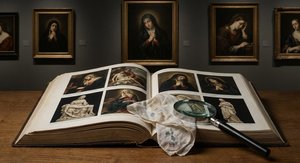
The Visceral Language of Loss: Exploring Grief's Depiction in Art History
Explore the profound history of grief in art with OriginalUniqueArt. Discover Renaissance & Baroque masterpieces depicting loss, mourning, and faith. Expert insights & handmade reproductions available.

