

 Se i rummet
 Send
Send Del
Del
 Detaljer
 Studieguide til kunstværker

 Download
 Lignende værker
 Røntgenundersøgelse
 Se diasshow
 Statistik
Rural Landscape


 Læs mere
Giclée / Kunsttryk
Giclée- eller lærredstryk i museumskvalitet med hurtig produktion og fleksible muligheder for finish. ( Bestil håndmalet reproduktion Skift til digitalt billede)




P118B Dkr10

P118H Dkr10

P118W Dkr10

P438Z Dkr10

P508JH Dkr12

P508YH Dkr12

P805H Dkr10

P805Z Dkr10

P919BZ Dkr10

P919G Dkr10

P919XJ Dkr10

P959ZH Dkr10

P968JZ Dkr12

W106C Dkr8

W218G Dkr10

W218JH Dkr8

W218Y Dkr10

W307PJ Dkr10

W316G Dkr10

W316PJ Dkr8

W316Y Dkr10

W398PJ Dkr8

W4111J Dkr10

W500HY Dkr15

W500JH Dkr15

W692G Dkr12

W849H Dkr8

W940BG Dkr15

W953PJ Dkr8




Vælg mellem vores forudindstillede størrelser, der matcher kunstværkets originale proportioner.

Indtast den bredde og højde, du har brug for, så det passer til din ramme eller din væg. Et print kan kun beskæres, aldrig gøres større end billedet, så en størrelse med en anden form vil miste en del af motivet. Vi sender dig en digital mockup til godkendelse, før vi printer noget. Billedet vist på denne side viser ikke den faktiske beskæring — det er kun mockuppen, der gør.
Verdensomspændende levering () på 2 uger i stedet for de sædvanlige 4/5 uger. (23 oktober)

Gratis ekspresforsendelse til hele verden

Lærred af linned i høj kvalitet

Komplet transportforsikring

Garanti for refusion af told og importafgifter

Garanti for autentisk farvegengivelse

100 dages returret ved fabrikationsfejl

100% fuld returret

Mængderabat ved flere køb
 Glasmulighed er kun tilgængelig i størrelser under 110 cm

Rural Landscape
Giclée / Kunsttryk
Reproduktionsstørrelse
-


Samlet pris
Dkr 532
A Serene Vision of Rural America: Charles Harold Davis’ “Rural Landscape”
Charles Harold Davis' "Rural Landscape," painted in 1905, isn’t merely a depiction of a field and trees; it’s an invitation to step into a moment of profound tranquility. Born in Amesbury, Massachusetts, in 1856, Davis honed his artistic skills under the tutelage of prominent figures like Jules Joseph Lefebvre and Gustave Boulanger in Paris, absorbing the vibrant energy of the European art scene before returning to America and embracing a distinctly American aesthetic. His work, particularly during his time in Mystic, Connecticut, shifted towards a Tonalist style, characterized by its muted colors, atmospheric perspective, and an almost meditative focus on capturing the essence of nature – a legacy deeply influenced by the Barbizon School’s emphasis on light and shadow.
The painting immediately draws the eye with its harmonious blend of blues, greens, and browns. Davis masterfully employs a technique reminiscent of Impressionism, though tempered with a Tonalist sensibility. He doesn't strive for photographic realism; instead, he uses broken brushstrokes and subtle gradations of color to evoke a feeling of atmosphere—the hazy warmth of the afternoon sun filtering through the trees, the gentle movement of clouds across the sky. The composition is carefully balanced, leading the viewer’s eye through the scene towards a distant horizon, creating a sense of depth and spaciousness. Note the delicate rendering of the foliage – not sharply defined, but rather suggested with loose, expressive strokes that capture the texture and vitality of the landscape.
The Language of Light and Shadow
Davis’s genius lies in his ability to translate light into color and form. The painting is bathed in a soft, diffused light, characteristic of the late afternoon. He skillfully uses shadows to define shapes and create a sense of volume, particularly in the trees that frame the scene. These aren't dark, ominous shadows; they are gentle, almost luminous, suggesting warmth and inviting the viewer into the heart of the landscape. The clouds themselves are rendered with remarkable subtlety, shifting between shades of gray and blue, creating an ethereal quality that elevates the painting beyond a simple depiction of weather.
The inclusion of figures in the foreground adds a layer of narrative to the scene without disrupting its overall sense of serenity. These individuals – likely farmers or laborers – are rendered with minimal detail, serving primarily as anchors for the viewer’s eye and subtly hinting at human connection within this vast landscape. They represent not just a rural life but also a timeless harmony between humanity and nature.
Symbolism and Emotional Resonance
“Rural Landscape” is more than just a pretty picture; it's imbued with symbolism. The scene evokes a sense of nostalgia for a simpler time, a longing for connection to the land, and an appreciation for the beauty of the natural world. It speaks to the values of hard work, community, and resilience – themes that were particularly resonant in America at the turn of the 20th century.
The painting’s quietude is profoundly calming. It invites contemplation and offers a respite from the stresses of modern life. Davis's masterful use of color and light creates an emotional atmosphere of peace, contentment, and connection to something larger than oneself. The scene feels both familiar and timeless, tapping into a deep-seated human desire for beauty and tranquility.
A Legacy in American Art
Charles Harold Davis’s “Rural Landscape” stands as a testament to the power of Tonalist and Impressionistic techniques to capture the essence of the American landscape. His work is represented in prominent museums, including the Metropolitan Museum of Art and the Corcoran Gallery of Art, solidifying his place as a significant figure in American art history. Reproductions of this evocative painting offer a beautiful way to bring a touch of rural serenity into any home or office – a reminder of the enduring beauty and tranquility of the natural world.
Spørgsmål & svar
Hvilken teknik blev brugt til "Rural Landscape", og hvornår blev den skabt?
"Rural Landscape" blev skabt i 1905 ved brug af Oil On Canvas-teknikken. Materiale og dato beskriver, hvordan og hvornår originalen blev lavet.
Hvilken mætning og intensitet udviser "Rural Landscape" af Charles Harold Davis?
"Rural Landscape" af Charles Harold Davis er gengivet med en Subtle Color mætning og en Balanced intensitet.
Findes der et faktablad om "Rural Landscape" af Charles Harold Davis til studerende?
En Guide-side er tilgængelig for "Rural Landscape" af Charles Harold Davis: et printbart faktablad om kunstværket, designet til brug i undervisningen og til elever.
Om kunstneren
tidligt liv og uddannelse
charles harold davis, en amerikansk landskabsmaler, blev født den 7. januar 1856 i amesbury, massachusetts. Som elev ved boston museum of fine arts blev han i 1880 sendt til paris for at forfine sit håndværk. Under vejledning af jules joseph lefebvre og gustave boulanger ved académie julian udviklede davis en dyb forståelse for den europæiske kunstscene.kunstnerisk stil og indflydelser
davis' værk er karakteriseret ved sine serene og idylliske skildringer af landskaber, der ofte indfanger naturens skønhed med den største præcision. Hans tid i barbizon, hvor han malede omfattende, havde en gennemgribende indflydelse på hans stil, som med tiden bevægede sig mod impressionismen. Denne transformation er tydelig i hans skyformationer, som han blev berømt for.bemærkelsesværdige bedrifter og tilhørsforhold
- blev fuldgyldigt medlem af national academy of design i 1906.
- modtog en sølvmedalje ved paris-udstillingen i 1889.
- hans værker er repræsenteret på fremtrædende museer, herunder metropolitan museum of art (new york), corcoran gallery of art (washington) og boston museum of fine arts.
eftermæle
davis' eftermæle rækker ud over hans kunstneriske bidrag. Han spillede en afgørende rolle i etableringen af mystic art association i 1913, hvilket gjorde ham til en ledende skikkelse i den kunstkoloni, der udviklede sig i mystic, connecticut. se charles harold davis' kunstværker på OriginalUniqueArt: https://OriginalUniqueArt.com/@/charles-harold-davis læs mere om charles harold davis på wikipedia: https://en.wikipedia.org/wiki/charles_harold_davis
Charles Harold Davis
1856 - 1933 , USA
Relaterede artikler

John Constables 25 Mesterværker: En Hyldest til Englands Landskabskunst | OriginalUniqueArt.com
Oplev John Constables 25 mest ikoniske værker! Fordyb dig i engelsk romantik, betagende landskaber og tidløs skønhed. Køb museumskvalitets reproduktioner af 'The Hay Wain' & mere på OriginalUniqueArt.com – inspiration til dit hjem.

The Unvarnished Truth: A Cultural Journey Through the Soul of American Realism
Explore the profound beauty of American Realism. From the Ashcan School's urban grit to intimate portraits, discover how artists captured the authentic soul of a nation through unvarnished truth and masterful observation.

Grant Wood & American Regionalism: Identity, Myth & the Rural Landscape
Explore the world of Grant Wood & American Regionalism with OriginalUniqueArt. Discover the symbolism behind 'American Gothic', recurring themes, and the movement's lasting impact on art history. High-quality reproductions available.

Amerikansk Realisme: 10 Mesterværker der Definerede En Kunstbevægelse – Find Din Inspiration Hos OriginalUniqueArt
Oplev de 10 mest ikoniske værker inden for amerikansk realisme! Fra Edward Hopper til Andrew Wyeth – lær historierne bag mesterværkerne og find inspiration til dit hjem. Køb museumskvalitets reproduktioner på OriginalUniqueArt.com.
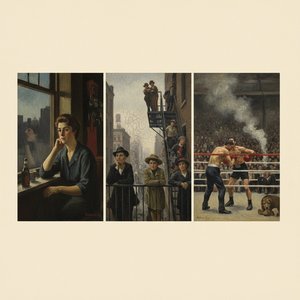
American Realism: Social Commentary & Artistic Representation in Early 20th-Century Painting
Explore the powerful social commentary & artistic representation of American Realism. Discover key artists like Bellows & Sloan, and understand the movement's lasting impact on 20th-century art history.