

 Se i rummet
 Send
Send Del
Del
 Detaljer
 Studieguide til kunstværker

 Download
 Lignende værker
 Røntgenundersøgelse
 Se diasshow
 Statistik
Self-Portrait
 Oil On Canvas
- WallArt
- Rococo
 1762
1762 88.0 x 72.0 cm
 Hermitage Museum
 Læs mere
Håndlavet oliereproduktion
Håndmalet olie på lærred i din valgte størrelse og ramme, udført efter bestilling af vores kunstnere. ( Skift til printversion Skift til digitalt billede)




P118B Dkr10

P118H Dkr10

P118W Dkr10

P438Z Dkr10

P508JH Dkr12

P508YH Dkr12

P805H Dkr10

P805Z Dkr10

P919BZ Dkr10

P919G Dkr10

P919XJ Dkr10

P959ZH Dkr10

P968JZ Dkr12

W106C Dkr8

W218G Dkr10

W218JH Dkr8

W218Y Dkr10

W307PJ Dkr10

W316G Dkr10

W316PJ Dkr8

W316Y Dkr10

W398PJ Dkr8

W4111J Dkr10

W500HY Dkr15

W500JH Dkr15

W692G Dkr12

W849H Dkr8

W940BG Dkr15

W953PJ Dkr8




Vælg mellem vores forudindstillede størrelser, der matcher kunstværkets originale proportioner.

Indtast den bredde og højde, du har brug for, så det passer til din ramme eller din væg. Da dette er håndmalet, kan kunstneren ved en anden form på størrelsen male lidt mere rundt om billedet eller skære lidt væk — det er op til dig. Vi sender dig et digitalt mockup til godkendelse, før maleriet påbegyndes. Billedet, der vises på denne side, viser ikke det endelige resultat — det er kun mockuppet, der gør.
Efter bestilling vil OriginalUniqueArt.com team sende en e-mail til kunden for at indhente instruktioner og fremsende et udkast til gennemgang.
Levering i hele verden () på 3-4 uger i stedet for de standard 5 uger. (16 oktober). Ingen kompromiser med kvaliteten.

Gratis ekspresforsendelse til hele verden

Lærred af linned i høj kvalitet

Komplet transportforsikring

Garanti for refusion af told og importafgifter

Garanti for autentisk farvegengivelse

100 dages returret ved fabrikationsfejl

100% fuld returret

Mængderabat ved flere køb
 Glasmulighed er kun tilgængelig i størrelser under 110 cm

Self-Portrait
Reproduktionsmateriale
Reproduktionsstørrelse
-


Samlet pris
Dkr 1954
A Portrait of Inner Reflection: Charles-André van Loo’s “Self-Portrait”
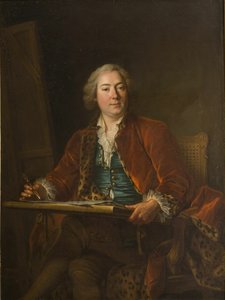
The year 1762 witnessed a pivotal moment in the artistic landscape of France – the creation of Charles-André van Loo's "Self-Portrait." More than simply a likeness, this painting is a carefully constructed meditation on identity, status, and the burgeoning Rococo aesthetic. Van Loo, a key figure within his family’s esteemed dynasty of painters, presents himself not as a flamboyant courtier or a heroic warrior, but as a thoughtful observer, subtly imbued with an air of quiet contemplation. The portrait immediately draws the eye to the artist's direct gaze, a deliberate act of engagement that invites the viewer into a private moment.
Van Loo’s style is quintessential Rococo – characterized by its delicate brushwork, pastel hues, and an emphasis on elegant ornamentation. He employs a loose, almost impressionistic technique, favoring soft transitions between light and shadow to create a sense of atmospheric depth. The rich fabrics of his suit—a deep burgundy velvet accented with gold embroidery—speak volumes about his position within the French court, while the subtle details – the meticulously rendered lace collar, the gleaming sword on his side – reinforce this image of refined authority. Yet, it’s not merely a display of wealth; these elements are presented with an understated grace that suggests a considered awareness of their symbolic weight.
The Context of 18th-Century Portraiture
To fully appreciate “Self-Portrait,” one must understand the evolving context of portraiture during the mid-18th century. Following the grandeur of the Baroque period, artists began to shift towards a more intimate and psychologically nuanced approach. The rise of the middle class fueled demand for portraits, but royal patronage continued to shape artistic trends. Artists like Van Loo were tasked with capturing not just physical likenesses, but also conveying an individual’s character and social standing. Van Loo's self-portrait reflects this trend – it is a carefully crafted statement about his identity as both artist and member of the elite.
Interestingly, the portrait predates the widespread popularity of the self-portrait as a genre. While artists had occasionally depicted themselves in various roles throughout history, Van Loo’s work stands out for its directness and lack of theatricality. He avoids overtly dramatic poses or elaborate settings, opting instead for a simple, uncluttered composition that focuses entirely on his own image. This deliberate restraint speaks to the artist's confidence and self-awareness – he is not seeking to impress, but rather to present himself honestly.
Symbolism and Emotional Resonance
Beyond its technical merits, “Self-Portrait” is rich in symbolic detail. The sword, a traditional emblem of power and authority, suggests Van Loo’s role as a court painter – a position that demanded both artistic skill and political savvy. However, the sword is not brandished aggressively; it rests calmly on his hip, hinting at a measured approach to wielding influence. The background—a plain wall—further emphasizes the artist's focus on himself, creating an aura of introspection.
Perhaps most powerfully, the painting evokes a sense of quiet contemplation. Van Loo’s gaze is direct and unwavering, yet there is also a hint of melancholy in his expression. It’s as if he is reflecting on his own life, his work, and the complexities of his position within society. The subtle shading around his eyes and mouth contributes to this feeling of emotional depth, inviting the viewer to share in his private thoughts. The painting isn't merely a representation of a man; it’s an invitation into his inner world.
A Timeless Masterpiece: Reproduction Possibilities
Charles-André van Loo’s “Self-Portrait” remains a captivating work of art, offering a rare glimpse into the mind and soul of a prominent 18th-century artist. High-quality reproductions capture the delicate brushwork and nuanced color palette that define this masterpiece. Whether displayed in a formal salon or a contemporary living space, this portrait continues to resonate with viewers today, reminding us of the enduring power of self-reflection and artistic expression. OriginalUniqueArt offers meticulously crafted hand-painted reproductions, allowing you to bring this timeless work into your home.
Spørgsmål & svar
Hvordan kan jeg få et tryk af "Self-Portrait" af Charles-André van Loo?
For at bestille et tryk af "Self-Portrait" af Charles-André van Loo, skal du blot gøre det på dens Fine art-print side: et fine art-print på bomuldscanvas eller arkivbestandigt lærredspapir.
Hvilke proportioner har "Self-Portrait" af Charles-André van Loo, og hvor stor er den?
"Self-Portrait" af Charles-André van Loo er en Portrait komposition med de originale mål på 88 x 72 cm.
Hvilken periode i Charles-André van Loos karriere tilhører "Self-Portrait"?
"Self-Portrait" repræsenterer Charles-André van Loos Mature Period.
Om kunstneren
Tidligt liv og uddannelse
- Født: 15. februar 1705, i Nice, Frankrig
- Familiebaggrund: Søn af Louis-Abraham van Loo og yngre bror til Jean-Baptiste van Loo. Medlem af en succesfuld hollandsk malerdynasti.
- Tidlig uddannelse: Indledende træning i Torino, efterfulgt af studier i Rom (1712) under Benedetto Luti og Pierre Legros.
- Studier i Paris: Deltog på Académie royale, hvor han vandt førstepræmien for tegning i 1723 og historiemaleri i 1727.
Kunstnerisk karriere og bemærkelsesværdige værker
- Stil: Primært kendt som rokokomaler, karakteriseret ved elegance, ynde og detaljerigdom.
- Motiver: En mangfoldig række emner, herunder portrætter, mytologiske scener, historiemaleri, allegorier og genrebilleder.
- Vigtige værker:
- Venus og Amor (Kunsthalle Bremen) – Demonstrerer mesterskab inden for rokokostilen.
- Jagtens ophold (The Metropolitan Museum of Art) – Indfanger aristokratiske aktiviteter.
- Portræt af Marie Leszczynska, Frankrigs dronning – Et bemærkelsesværdigt kongeligt portræt.
- Jupiter og Antiope – Fremviser mytologiske temaer.
- Selvportræt – Giver et indblik i kunstnerens egen selvopfattelse.
- Perseus og Andromeda (flere versioner) – Illustrerer færdigheder i skildringen af klassisk mytologi.
- Mademoiselle Clairon som Medea (lille version) – Et fængslende rokokoportræt fra 1760.
Mæcenat og kongelig anerkendelse
- Kongeligt mæcenat: Nød godt af støtte fra Madame de Pompadour og det franske hof.
- <Udnævnelse til hoffet: Blev udnævnt til førstestemaler for Kong Louis XV i 1762, en prestigefyldt stilling.
- Sankt Michael-ordenen: Dekoreret med Sankt Michael-ordenen, hvilket var et tegn på kongelig gunst.
Indflydelse og eftermæle
- Familiens indflydelse: Var stærkt påvirket af sin far og bror, som begge var dygtige malere.
- Rivalisering: Konkurrerede med François Boucher, en anden fremtrædende rokokokunstner.
- Den moderne franske skole: Hans "enkelhed i stil og korrekthed i design" havde betydelig indflydelse på den moderne franske malerskole.
- Kritisk skæbne: Selvom hans kritiske anseelse svingede over tid, indgyder hans færdigheder og værkernes omfang stor respekt.
Museumssamlinger og videre udforskning
- Museumstilstedeværelse: Hans værker er udstillet på fremtrædende museer, herunder Louvre (Jomfru Marias bryllup), Kunsthalle Bremen og The Metropolitan Museum of Art.
- Yderligere ressourcer:
- OriginalUniqueArts side om Charles-André van Loo: https://www.OriginalUniqueArt.com/artists/charles-andre-van-loo/
- OriginalUniqueArts side om verdens største kunstnere: https://www.OriginalUniqueArt.com/greatest-artists
- OriginalUniqueArts virtuelle museum: https://www.OriginalUniqueArt.com/
- Wikipedia-artikel: https://en.wikipedia.org/wiki/Charles-Andr%C3%A9_van_Loo
Charles-André van Loo
1705 - 1765 , Frankrig
Hurtige fakta
- Artistic Movement Or Style: Rokoko maleri
- Artists Who Influenced This Artist:
- Louis-Abraham van Loo
- Jean-Baptiste van Loo
- Date Of Birth: Februar 15, 1705
- Full Name: Charles-André van Loo
- Nationality: Fransk
- Notable Artworks:
- Venus og Amor
- Jagthavnen
- Portræt af Marie Leszczynska
- Place Of Birth: Nice, Frankrig
Relaterede artikler

Rokokomaleriet: Top 10 Mesterværker der Definerede Epoken | OriginalUniqueArt.dk
Oplev Rokoko kunstens pragt! Dyk ned i 10 mesterværker fra Boucher, Watteau og Fragonard. Historier, teknikker & inspiration til dit hjem. Find museumskvalitets reproduktioner på OriginalUniqueArt.com

De 10 Mesterværker der Definerede Tidlig Nederlandsk Maleri – Kunst til Dit Hjem
Oplev de 10 ikoniske mesterværker fra tidlig nederlandsk maleri! Jan van Eyck, Rogier van der Weyden og andre flamske renæssancekunstnere. Find inspiration & køb museumskvalitets reproduktioner på OriginalUniqueArt.com.

Rembrandts Mesterværker: Top 25 Kunstværker til Din Væg – OriginalUniqueArt.dk
Oplev Rembrandts 25 mest ikoniske kunstværker! Fordyb dig i historierne bag 'Nattevagten', hans selvportrætter og bibelske motiver. Find museumskvalitets reproduktioner & inspiration til din væg på OriginalUniqueArt.com.

Charles-André van Loo: A Study in Rococo Portraiture & the French Court's Artistic Dynamics
Explore the elegant world of Charles-André van Loo, a master of Rococo portraiture at the French court. Discover his life, techniques, and enduring influence on 18th-century art. Hand-painted reproductions available.

The Rococo Aesthetic: Opulence, Rebellion & the Pursuit of Pleasure in 18th-Century Art
Explore the opulent world of Rococo art! Discover its origins, key artists like Watteau & Boucher, and lasting influence on design. Expert insights for collectors & enthusiasts.


