

 Se i rummet
 Del som kort
 Del
Del
 Detaljer
 Guide
Guide

 Download
 Lignende værker
 Røntgenundersøgelse
 Diasshow
 Q&A
Q&A Statistikker
Untitled


 Vis mere
Kunstværket vist på denne side er beskyttet af ophavsretsloven, hvilket betyder, at vi ikke lovligt kan skabe eller sælge en identisk reproduktion. Denne beskyttelse håndhæves i henhold til internationale aftaler som f.eks. den Bernerkonventionen og af nationale love, herunder de bestemmelser, der er fastlagt i Amerikansk ophavsretslov - Titel 17.
Denne metode overholder fuldt ud ophavsretsreglerne, da den ikke indebærer kopiering eller duplikering af det beskyttede kunstværk. I stedet er der tale om en kreativ nytolkning – et nyt maleri, som er inspireret af det oprindelige, men ikke identisk med det.
Giclée / Kunsttryk
Giclée- eller lærredstryk i museumskvalitet med hurtig produktion og fleksible muligheder for finish. ( Køb håndmalet maleri Skift til digitalt billede)




































Vælg mellem vores forudindstillede størrelser, der matcher kunstværkets originale proportioner.

Indtast den bredde og højde, du har brug for, så det passer til din ramme eller din væg. Et print kan kun beskæres, aldrig gøres større end selve billedet, så en størrelse med et andet format vil medføre, at dele af motivet går tabt. Vi sender dig en digital mockup til godkendelse, før vi printer noget. Billedet vist på denne side viser ikke den faktiske beskæring — det er kun mockuppen, der gør.
Verdensomspændende levering () på 2 uger i stedet for de sædvanlige 4/5 uger. (30 oktober)

Gratis ekspresforsendelse til hele verden

Lærred af linned i høj kvalitet

Fuld transportforsikring

Garanti for refusion af told og importafgifter

Garanti for præcis farvegengivelse

100 dages returret ved fabrikationsfejl

100% fuld returret

Mængderabat ved flere køb
 Glasmulighed er kun tilgængelig i størrelser under 110 cm

Untitled
Giclée / Kunsttryk
Størrelse på reproduktion
-


Samlet pris
Dkr 537
Kunstnerbiografi
Célia Euvaldo de Oliveira: A Bold Voice of Brazilian Abstraction
Célia Euvaldo de Oliveira (1934-2017) stands as a significant, yet often underappreciated, figure in the landscape of 20th and 21st-century Brazilian art. Born in São Paulo, Brazil, her artistic journey began in the early 1960s, marked by a deliberate rejection of prevailing artistic norms and an embrace of abstract expressionism. Euvaldo’s work wasn't simply about creating images; it was a visceral exploration of color, texture, and gesture – a direct engagement with the materiality of paint itself. She belonged to the Grupo Riso (The Group of Laughter), a collective of Brazilian artists who sought to dismantle traditional artistic conventions and forge new paths for creative expression, injecting a vital dose of irreverence into the Brazilian art scene. Her legacy resides not just in individual works but within the spirit of experimentation and challenging established boundaries that she embodied.Early Years and Influences: A São Paulo Foundation
Euvaldo’s formative years were deeply rooted in the vibrant cultural atmosphere of São Paulo. While details about her early artistic training are somewhat sparse, it's clear that she developed a strong foundation through observation and independent study. The city itself – with its blend of European influences and burgeoning modernism – undoubtedly played a role in shaping her aesthetic sensibilities. The Grupo Riso, formed in the mid-1960s, provided a crucial context for her artistic development. This group, comprised of artists like Antonio Dias and Lygia Clark, shared a commitment to challenging conventional art practices and exploring new forms of interaction between artist and viewer. The emphasis on process over product, and the blurring of lines between art and life, were central tenets of Grupo Riso’s philosophy – principles that profoundly influenced Euvaldo's approach. Early influences likely included the European abstract expressionists—particularly those who prioritized gesture and emotional intensity—but she quickly developed a distinctly Brazilian voice, informed by her unique cultural background and experiences.A Distinctive Style: Layered Abstraction and Impasto
Euvaldo’s artistic style is immediately recognizable for its bold use of color and dynamic gestural brushstrokes. Her paintings are characterized by layered application of paint – often employing a technique known as *impasto*, where thick layers of pigment create a tactile, three-dimensional surface. This layering isn't merely decorative; it’s integral to the expressive power of her work. Dark tones frequently dominate her palette, creating a sense of depth and contemplation. She wasn’t interested in representational accuracy but rather in conveying emotional states through color and texture. Her compositions are often fragmented and asymmetrical, avoiding traditional notions of balance or harmony. The works evoke a feeling of raw emotion, as if the paint itself is struggling to contain the energy within. A particularly compelling example of this style can be seen in “Sem título” (2002), where layered dark tones and impasto texture create an atmosphere of profound introspection – a testament to her ability to imbue abstract forms with emotional resonance.Exhibitions and Recognition: A Growing Presence
Throughout the 1970s, 80s, and 90s, Euvaldo’s work steadily gained recognition within Brazil. She participated in numerous group exhibitions across the country, including those at the Museu da Gravura da Cidade de Curitiba, the Centro Universitário Maria Antônia, and the Estação Pinacoteca de São Paulo. Her commitment to challenging artistic conventions also led her to participate in international events, notably the 7th Biennial International of Painting of Cuenca (Spain) and the 5th Mercosul Biennial. These engagements broadened her visibility and cemented her position as a leading figure in contemporary Brazilian art. While she may not have achieved widespread international fame during her lifetime, her work is now increasingly appreciated for its originality and emotional depth.Legacy and Significance: A Quiet Revolutionary
Célia Euvaldo de Oliveira’s contribution to Brazilian art lies not in grand pronouncements or sensational exhibitions, but in a consistent dedication to exploring the expressive potential of abstraction. She was a quiet revolutionary—a painter who refused to be defined by conventional categories and instead forged her own path through experimentation and unwavering commitment to her artistic vision. Her work serves as a powerful reminder that art can be a vehicle for profound emotional expression, independent of representational concerns. Her influence continues to resonate within the Brazilian art community, inspiring artists to push boundaries and challenge established norms. Today, her paintings are exhibited in galleries and museums throughout Brazil, and her legacy is being increasingly recognized as an essential part of the country’s artistic heritage.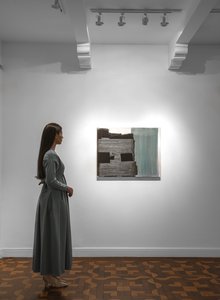
Célia Euvaldo De Oliveira
1934 - 2017 , Brazil
Kort om kunstneren
- Full Name: Célia Euvaldo de Oliveira
- Nationality: Brazilian
- Date Of Birth: 1934
- Date Of Death: 2017
- Place Of Birth: São Paulo, Brazil
- Notable Artworks:
- Sem título (2002)
- Sem título
- Artistic Movement Or Style: Abstract & Expressionist
- Artists Who Influenced This Artist: ['Grupo Riso']
- Artists Or Movements Influenced By This Artist: ['Modern Brazilian Art']