

 Se i fuld skala
 Del
Del Del
Del
 Detaljer

 Download
 Lignende værker
 Røntgenundersøgelse
 Diasshow
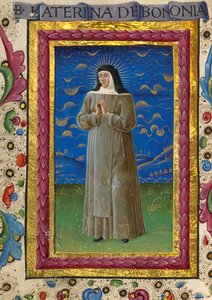
Breviary with Miniatures
 1452
1452 200.0 x 300.0 cm
 Convent of the Corpus Domini
 Se mere
Håndlavet oliereproduktion
Håndmalet olie på lærred i din valgte størrelse og ramme, udført efter bestilling af vores kunstnere. ( Køb print Køb billede)




































Vælg mellem vores forudindstillede størrelser, der matcher kunstværkets originale proportioner.

Du kan indtaste dine egne mål for at passe til en bestemt ramme eller plads. Hvis den valgte størrelse ikke stemmer overens med det originale billedes proportioner, vil vi enten beskære kunstværket eller udvide maleriet med yderligere håndmalede elementer. En digital skitse sendes til din godkendelse, før produktionen påbegyndes.
Bemærk venligst, at forhåndsvisningen på skærmen ikke afspejler den faktiske beskæring eller udvidelse. Kun skitsen vil nøjagtigt vise den endelige komposition.
Selvom specialmål er mulige, anbefaler vi at vælge en dimension fra den foruddefinerede liste for at bevare de originale proportioner.
Efter bestilling vil OriginalUniqueArt.com team sende en e-mail til kunden for at få instruktioner og levere et udkast til en skitse.
Levering i hele verden () på 3/4 uger i stedet for de standard 5 uger. (21 august). Ingen kompromiser med kvaliteten.

Gratis ekspresforsendelse til hele verden

Lærred af linned i høj kvalitet

Fuld transportforsikring

Garanti for refusion af told og importafgifter

Garanti for præcis farvegengivelse

60 dages returret (kun ved fabrikationsfejl)

100% Tilfredshedsgaranti

Mængderabat tilgængelig
 Glasmulighed er kun tilgængelig i størrelser under 110 cm

Breviary with Miniatures
Reproduktionsmetode
Størrelse på reproduktion
-


Samlet pris
$ 300
Kunstnerens biografi
The Radiant Spirit of Caterina Vigri
In the golden light of the Italian Renaissance, few figures embody the intersection of profound mysticism and exquisite artistry as gracefully as Caterina Vigri. Known to history as Saint Catherine of Bologna, her life was a tapestry woven from the threads of courtly elegance and monastic devotion. Born in 1413 into an aristocratic Bolognese family, Caterina was raised within the vibrant cultural atmosphere of the Este court in Ferrara. As the daughter of a diplomat serving the Marquis Niccolò III d’Este, she was immersed in a world where humanist learning, music, and fine arts flourished. This early exposure to a liberal education—encompassing Latin, music, and the delicate art of manuscript illumination—provided the foundational tools for what would become one of the most spiritually resonant artistic legacies of the fifteenth century.
The trajectory of Caterina’s life was irrevocably altered by the tragic political intrigues of the Ferrarese court. Following the execution of her patroness, Parisina Malatesta, in 1425, a profound spiritual calling drew Caterina away from the splendor of secular life toward the quietude of religious service. She joined a community of laywomen in Ferrara, eventually guiding them toward the reformed Observant Poor Clare order. This transition from lady-in-waiting to mistress of novices marked the beginning of her dual identity as both a spiritual leader and a dedicated creator. Her art was never merely decorative; it was an extension of her prayer, a visual manifestation of the divine mysteries she encountered in her moments of mystical ecstasy.
Mastery of the Miniature and Devotional Light
Caterina’s artistic output is most profoundly realized in the realm of breviary illumination. Within the intimate confines of these liturgical books, she achieved a level of precision and emotional depth that far surpassed the requirements of mere ornamentation. Her technique involved the painstaking application of watercolor pigments and gold leaf onto parchment, a process that demanded immense patience and an almost superhuman control over fine detail. Unlike the grand, sweeping frescoes of her contemporaries, Vigri’s work invited a closer, more personal gaze. She possessed a rare ability to capture nuanced human emotion and sacred atmosphere within miniature frames, using luminous colors to guide the viewer's eye toward the divine.
Her most celebrated achievement remains her personally illustrated breviary, a relic of immense spiritual and artistic value. In these pages, the boundaries between the artist’s hand and the saint’s soul dissolve. Through delicate brushstrokes, she rendered biblical scenes that felt both tangibly real and ethereally transcendent. Beyond her illuminations, other works attributed to her, such as Saint Ursula and her Maidens and the Madonna of the Peach, showcase a mastery of composition and a subtle elegance that reflect the sophisticated aesthetic of the Ferrarese school. Her ability to blend the observational realism of the Renaissance with a profound symbolic language allowed her to communicate complex theological truths to both the learned and the devout.
Legacy of an Artist-Saint
The historical significance of Caterina Vigri extends far beyond the borders of her convent walls. She remains one of the most prominent examples of the female artist in the Renaissance, a period when women’s access to formal artistic training was often severely restricted. Her legacy is characterized by several enduring contributions:
- Spiritual Literature: Beyond her visual art, she authored the influential treatise The Seven Spiritual Weapons, which provided guidance on overcoming temptation through Christ-like devotion.
- Foundational Leadership: She played a pivotal role in establishing the convent of Corpus Domini in Bologna, creating a sanctuary for both religious life and artistic expression.
- Iconographic Influence: Her miniature style helped define a specific mode of devotional art that emphasized intimacy, clarity, and emotional resonance.
- Cultural Symbolism: As a canonized saint whose incorrupt body became a subject of veneration, her life serves as a bridge between the intellectual rigor of the Renaissance and the deep piety of the Catholic tradition.
Today, the works of Caterina Vigri continue to inspire awe, standing as testaments to the power of art to serve as a vessel for the sacred. Her ability to transform parchment into a window to the heavens ensures her place in the pantheon of great Italian masters, reminding us that the smallest stroke of a brush can carry the weight of eternal devotion.
caterina vigri
1747 - 1794 , Italy
Kort om kunstneren
- Artistic Movement Or Style: Miniature Illuminations
- Date Of Birth: 1747
- Date Of Death: 1794
- Full Name: Caterina Vigri
- Nationality: Italian
- Notable Artworks: ['Breviary with Miniatures']
- Place Of Birth: Bologna

