Tidlig renæssance · 1493
Pietæ (Carlo Crivelli, 1493)
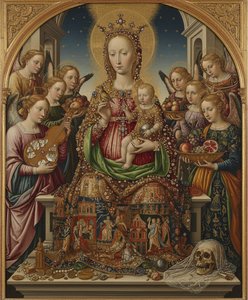
Carlo Crivelli (1435–1495) har skabt Pietæ. Det er fra 1493. Det tilhører Tidlig renæssance-bevægelsen. Den er udført i Temperamaling på panel. Det opbevares på Pinacoteca di Brera i Milano, Italien. Målene er 128 × 241 cm.
- 1493
- Temperamaling på panel
- 128 × 241 cm
- Pinacoteca di Brera, Milano

 Se i rummet

 Håndmalet oliemalerie
 Del som kort
 Del
 Faktablad


 Download
 Lignende værker
 Røntgenundersøgelse
 Diasshow
 Spørgsmål og svar

 Statistikker
Pietæ kort fortalt
- Titel
- Pietæ
- Kunstner
- Carlo Crivelli (1435–1495)
- Kunstner født i
- Venedig, Italien
- Dato
- 1493
- Materiale
- Temperamaling på panel
- Dimensioner
- 128 × 241 cm
- Hvor det kan ses
- Pinacoteca di Brera, Milano, Italien
- Bevægelse
- Tidlig renæssance
- Periode
- Renæssancen
- Motiv
- religious scene, virgin mary, christ figure, lamentation, renaissance art, italian painting
Hvad forestiller Pietæ?
Carlo Crivelli’s Pietà: A Meditation on Sorrow and Divine Grace
Carlo Crivelli’s “Pietà,” painted in 1493, stands as a testament to the enduring power of Early Renaissance art – specifically its ability to convey profound emotion within meticulously crafted detail. Housed at Pinacoteca di Brera in Milan, this tempera painting transcends mere representation; it invites contemplation on themes of grief, compassion, and faith. The artwork’s impact resonates deeply with viewers centuries later, cementing Crivelli's place as a master of his time.Subject Matter and Narrative Depth
The scene depicts the Virgin Mary cradling the lifeless body of Jesus Christ after his crucifixion – a motif central to Christian iconography throughout history. However, Crivelli’s rendition goes beyond simple depiction. The composition is imbued with narrative complexity; Mary's sorrowful gaze directs our attention to the delicate positioning of Christ’s limbs and torso, emphasizing the vulnerability inherent in human mortality juxtaposed against divine grace. Each figure—Mary, Jesus, and the attendant figures—performs a specific role within this poignant tableau, contributing to the overarching message of mourning and remembrance.Style and Technique: A Legacy of Gothic Elegance
Crivelli’s style embodies the lingering influence of Late Gothic art while simultaneously embracing the burgeoning humanist ideals of the Renaissance. The painting showcases a linear quality characteristic of gothic tradition, yet Crivelli skillfully incorporates “trompe l’oeil” techniques—creating illusions of depth and perspective—to heighten realism. Attention to detail is paramount; observe the intricate folds of Mary's robe, the subtle shading on Christ’s face, and the meticulous rendering of textures – all indicative of Crivelli’s dedication to capturing the essence of his subject matter. The use of tempera paint ensures exceptional luminosity and color fidelity, preserving the vibrancy of the pigments for generations.Historical Context: Ascoli Piceno's Artistic Renaissance
Painted during a period of significant artistic innovation in Italy—specifically in Marche region around Ascoli Piceno—the Pietà reflects the broader cultural currents shaping European art at the time. Crivelli’s work aligns with the stylistic preferences of his contemporaries, such as Giovanni Bellini, demonstrating a shared commitment to portraying religious subjects with dignity and emotional resonance. The patronage system prevalent during the Renaissance fueled artistic ambition, encouraging artists like Crivelli to produce masterpieces that would endure through history.Symbolism: Layers of Meaning Beyond Visual Representation
The Pietà is replete with symbolic elements designed to communicate profound spiritual truths. Mary’s posture conveys humility and compassion—she embodies maternal devotion and unwavering faith. The placement of Christ's body underscores the sacrifice he endured for humanity, symbolizing redemption and divine mercy. Furthermore, the inclusion of the attendant figures—representing sorrowful witnesses—reinforces the universality of grief experienced in response to loss. Each element contributes to a multilayered narrative that transcends mere visual depiction, inviting viewers to engage with questions of faith and mortality.Emotional Impact: A Timeless Expression of Sorrow
Ultimately, “Pietà” succeeds in eliciting an emotional response from its audience—a feeling of sorrowful contemplation mingled with reverence for the divine. Crivelli’s masterful execution captures the palpable grief experienced by Mary—a grief that speaks to the human condition and underscores the significance of compassion and remembrance. Reproductions of this iconic artwork offer a powerful opportunity to experience firsthand the enduring beauty and emotional depth of Early Renaissance art, inspiring interior designers and collectors alike.Hvilket museum udstiller Pietæ?
Pinacoteca di Brera
Milano, Italien
Historien om Pinacoteca di Brera Pinacoteca di Brera er et kunstmuseum beliggende i Milano, Italien. Dets rødder er uløseligt forbundet med Brera-akademiet for de skønne kunster, som blev grundlagt i 1776. Museet udsprang af akademiets kulturelle program, der blev etableret for at give de studerende direkte adgang til betydningsfulde kunstværker.


Højopløselige billeder af Pietæ

Public domain: kunstneren døde i 1495.
Andre størrelser, beskæringer og kildeangivelse →Carlo Crivelli, Pietæ (1493), Pinacoteca di Brera. Frit tilgængelig
Spørgsmål om Pietæ besvaret
Hvilket museum udstiller det originale "Pietæ"?
Du kan se det originale værk "Pietæ" på Pinacoteca di Brera, Milano, Italien.
I hvilket år blev "Pietæ" af Carlo Crivelli skabt?
"Pietæ" af Carlo Crivelli er dateret til 1493.
Hvilken teknik er "Pietæ" udført med?
Carlo Crivelli brugte Temperamaling på panel-teknikken til "Pietæ". Teknikken definerer det originale værks materielle karakter.
Hvad er målene på det originale værk "Pietæ"?
De registrerede mål for "Pietæ" af Carlo Crivelli er 128 x 241 cm. Reproduktioner kan bestilles i andre størrelser, mens de samme proportioner bevares.
Hvad forestiller "Pietæ"?
Temaerne i "Pietæ" af Carlo Crivelli omfatter religious scene, virgin mary, christ figure, lamentation, renaissance art, italian painting, medieval symbolism, som tilsammen udgør værkets motivverden.
Er "Pietæ" fri for ophavsret?
Hvad angår ophavsret, er "Pietæ" i det offentlige domæne – ophavsretten er udløbet.
Hvilken kunstner tilskrives "Pietæ"?
"Pietæ" blev skabt af Carlo Crivelli. Informationen på denne side beskriver Carlo Crivellis originale værk.
Hvilken kunstretning tilhører "Pietæ" af Carlo Crivelli?
"Pietæ" af Carlo Crivelli tilhører Tidlig renæssance-bevægelsen. Denne bevægelse giver den stilistiske kontekst for værket.
Hvilken fase af Carlo Crivellis kunstneriske udvikling repræsenterer "Pietæ"?
"Pietæ" tilhører Mature Period i Carlo Crivellis karriere. Denne klassificering knytter værket til kunstnerens udvikling.
Om kunstneren, Carlo Crivelli

1435–1495, Italien
Carlo Crivelli
Venetos individualist Født i Venedig trådte Carlo Crivelli ind på scenen som en del af en malerfamilie, en slægt, der sandsynligvis formede hans tidlige forståelse for håndværket. Hans formative år blev brugt på at opsuge de stilistiske strømninger i Veneto, hvor han trak på Vivarini-skolen og den lineære præcision fra den paduanske tradition. Han var en mand med en markant, ofte stædig, sanselighed. Mens hans samtidige bevægede sig mod den tidlige renæssances naturalisme, fastholdt Carlo Crivelli sin hengivenhed til den dekorative overflod i sengotikken.
Om Carlo Crivelli Bemærkelsesværdige værker af Carlo Crivelli
Også af Carlo Crivelli
 Bebudelsen med Sankt Emidius1486
 Pietà
 Virgin and Child1482
 Annunciation with St Emidius (detail)1486

Essays om Pietæ
 Sacred Visions: A Curated Journey Through the Masterpieces of the Nativity in Art HistoryExplore a curated journey through iconic Nativity masterpieces from Gothic to Baroque eras. Discover the divine power of sacred art history.
 Carlo Crivelli: Mysticism & Materiality in Renaissance VeniceExplore the captivating world of Carlo Crivelli, a Renaissance master blending Gothic detail with profound symbolism. Discover his unique s…
 Masterpieces of Milan: Top 25 Must-See Artworks at Pinacoteca di BreraExplore 25 iconic masterpieces from Milan's Pinacoteca di Brera. Discover timeless Italian art on OriginalUniqueArt.com.