Se i rummet
 Send
Send Del
Del
 Detaljer
 Studieguide til kunstværker

 Download
 Lignende værker
 Røntgenundersøgelse
 Se diasshow
 Statistik
not identified

 Læs mere
Giclée / Kunsttryk
Giclée- eller lærredstryk i museumskvalitet med hurtig produktion og fleksible muligheder for finish. ( Bestil håndmalet reproduktion Skift til digitalt billede)




P118B Dkr10

P118H Dkr10

P118W Dkr10

P438Z Dkr10

P508JH Dkr12

P508YH Dkr12

P805H Dkr10

P805Z Dkr10

P919BZ Dkr10

P919G Dkr10

P919XJ Dkr10

P959ZH Dkr10

P968JZ Dkr12

W106C Dkr8

W218G Dkr10

W218JH Dkr8

W218Y Dkr10

W307PJ Dkr10

W316G Dkr10

W316PJ Dkr8

W316Y Dkr10

W398PJ Dkr8

W4111J Dkr10

W500HY Dkr15

W500JH Dkr15

W692G Dkr12

W849H Dkr8

W940BG Dkr15

W953PJ Dkr8




Vælg mellem vores forudindstillede størrelser, der matcher kunstværkets originale proportioner.

Indtast den bredde og højde, du har brug for, så det passer til din ramme eller din væg. Et print kan kun beskæres, aldrig gøres større end billedet, så en størrelse med en anden form vil miste en del af motivet. Vi sender dig en digital mockup til godkendelse, før vi printer noget. Billedet vist på denne side viser ikke den faktiske beskæring — det er kun mockuppen, der gør.
Verdensomspændende levering () på 2 uger i stedet for de sædvanlige 4/5 uger. (22 oktober)

Gratis ekspresforsendelse til hele verden

Lærred af linned i høj kvalitet

Komplet transportforsikring

Garanti for refusion af told og importafgifter

Garanti for autentisk farvegengivelse

100 dages returret ved fabrikationsfejl

100% fuld returret

Mængderabat ved flere køb
 Glasmulighed er kun tilgængelig i størrelser under 110 cm

not identified
Giclée / Kunsttryk
Reproduktionsstørrelse
-


Samlet pris
Dkr 528
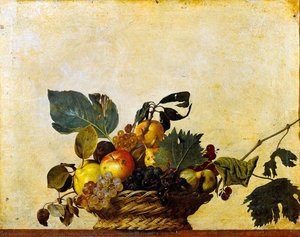
A Study in Abundance: A Caravaggio Still Life
This captivating still life, attributed to the masterful hand of Michelangelo Merisi da Caravaggio, presents a scene brimming with both earthly bounty and profound emotional resonance. The composition immediately draws the eye to a monumental pumpkin – a dominant presence that speaks volumes about the harvest’s richness and the transient nature of beauty. Scattered around this central figure are a carefully arranged collection of apples, their crimson skins offering a vibrant counterpoint to the earthy tones of the vegetables and fruit. A solitary human form, subtly placed on the right side of the canvas, introduces an element of narrative, perhaps suggesting contemplation or interaction with this opulent display.
- Subject Matter: The painting’s subject is a classic still life – a meticulously rendered collection of fruits and vegetables. However, Caravaggio elevates this genre through his dramatic use of light and shadow, transforming the mundane into something deeply evocative.
- Style & Technique: This work exemplifies Caravaggio's signature *tenebrism*, a technique characterized by stark contrasts between intensely dark areas and dramatically illuminated subjects. The strong directional light not only reveals the textures and forms of the objects but also serves to heighten their emotional impact, creating a sense of theatrical drama. The artist’s brushwork is loose and expressive, contributing to the painting's raw energy and immediacy.
Historical Context & Caravaggio’s Innovation
Created during the tumultuous period of the Baroque era (roughly 1600-1750), this still life reflects a shift in artistic sensibilities away from the idealized forms of the Renaissance towards a more realistic and emotionally charged approach. Caravaggio, working primarily in Rome, was a revolutionary figure who challenged the established conventions of his time. He rejected the polished surfaces and classical allegories favored by many of his contemporaries, instead choosing to depict everyday subjects – often religious scenes – with unflinching honesty and a deep understanding of human psychology. His use of ordinary people as models, rather than idealized figures, further contributed to this revolutionary spirit.
Born in Milan in 1571, Caravaggio’s early life was marked by tragedy—the deaths of his father and grandfather from the plague. This experience profoundly shaped his artistic vision, fueling a preoccupation with themes of mortality, suffering, and redemption. His time in Rome, though initially challenging, provided him with the freedom to develop his unique style, which would ultimately influence generations of artists.
Symbolism & Emotional Impact
- The Pumpkin: The oversized pumpkin is often interpreted as a symbol of abundance, fertility, and even mortality – a reminder of the cyclical nature of life and death.
- Apples: Apples frequently represent temptation, knowledge, or beauty in Western art. Their placement strategically draws attention to specific areas of the composition.
- The Human Figure: The presence of the human figure adds an element of mystery and invites the viewer to contemplate their role within this scene. It could be interpreted as a representation of humanity’s relationship with nature, or perhaps a meditation on faith and doubt.
Ultimately, this Caravaggio still life transcends its simple subject matter to become a powerful exploration of light, shadow, emotion, and the human condition. Its dramatic intensity and masterful technique continue to captivate viewers centuries later, making it a timeless masterpiece worthy of admiration and preservation.
Spørgsmål & svar
Hvordan relaterer motivet i "not identified" sig til Caravaggios sædvanlige temaer?
"not identified" skildrer still life, caravaggio, fruits, vegetables, pumpkin, abundance, baroque, mens Caravaggios registrerede temaer er religious symbolism, caravaggio’s style, dramatic chiaroscuro, realism, humanism, social commentary, early baroque influence”, “complex artistic legacy. En sammenligning af de to viser, hvordan værket relaterer sig til kunstnerens sædvanlige motiver.
Hvilken lysstyrke har "not identified" af Caravaggio?
Luminansen registreret for "not identified" af Caravaggio er Dark.
Hvor intens er farveintensiteten i "not identified" af Caravaggio?
Farverne i "not identified" af Caravaggio har en Monochromatic intensitet.
Om kunstneren
Et Liv Smedet i Skygge og Lys
Michelangelo Merisi da Caravaggio, et navn synonymt med den barokkes dramatiske intensitet, blev født i Milano i 1571, en periode præget af både kunstnerisk blomstring og samfundsmæssig uro. Hans tidlige liv var mærket af tab; pest hærgede hans hjemby, tog livet af hans far og bedstefar, da han kun var seks år gammel. Opvokset under relativ fattigdom indgydte Michelangelos formative år ham en skarp bevidsthed om menneskelig lidelse og modstandskraft – temaer, der senere skulle dominere hans lærreder. Han begyndte sin kunstneriske uddannelse i Milano under Simone Peterzano, en tidligere elev af Tizian, hvor han absorberede det renæssancemæssige techniques grundlæggende principper, men allerede antydede et oprørsk sind, der snart skulle knuse konventionelle normer. Denne lærlingeuddannelse gav et solidt fundament, men det var i Rom omkring 1592, at Caravaggio virkelig fandt sin stemme, om end ikke uden indledende kamp og modgang. Byen, et pulserende centrum for kunstnerisk patronage og religiøs glød, viste sig både lokkende og ubarmhjertig overfor den ambitiøse unge maler.En Revolutionerende Vision: Teknik og Stil
Caravaggios ankomst til Rom varslede et seismisk skift i det italienske kunstlandskabs udstrækning. Han afviste den fremherskende manieristiske stil – karakteriseret ved dens kunstige elegance og aflange former – til fordel for en kompromisløs realisme, der chokerede og fængslede publikum. Hans mest definerende innovation var hans mesterlige brug af chiaroscuro, den dramatiske kontrast mellem lys og mørke, som han hævede til et nyt niveau af udtryksfuld kraft. Denne teknik, ofte omtalt som tenebrisme, var ikke blot et æstetisk valg; det var et middel til at intensivere følelsesmæssig virkning, trække seerne ind i scenens hjerte og give hans figurer en håndgribelig fornemmelse af nærvær. Han fraskrev sig idealiserede fremstillinger og befolkedede sine malerier med almindelige mennesker – ofte hentet fra Roms gader – som modeller for religiøse figurer. Denne radikale tilgang udfordrede traditionelle forestillinger om skønhed og hellighed, hvilket gjorde det hellige relaterbart og dybt menneskeligt. Hans kompositioner var ofte nøgne og direkte, fokuseret på afgørende øjeblikke af intens drama, hvad enten det var den brutale realisme i “Kristi fangst” eller den stille kontemplation i “Sankt Frans af Assisi i ekstase”.Nøgleværker og Varig Indflydelse
Gennem sin relativt korte karriere producerede Caravaggio et værk, der fortsat genlyder hos publikum i dag. Tidlige værker som “Spåkonen” (1594) demonstrerer hans spirende talent for at fange realistiske detaljer og psykologisk nuance. “Emmaus’ nadver” (1601-1602), der findes på National Gallery i London, er et eksempel på hans beherskelse af chiaroscuro og evnen til at formidle dyb følelsesmæssig dybde inden for en bibelsk fortælling. “David med Goliat’s hoved” (ca. 1610) er særligt hjemsøgende, ofte fortolket som et selvportræt, der afspejler Caravaggios egen problematiske tilstand. Hans indflydelse strakte sig langt ud over Italien og inspirerede en generation af kunstnere kendt som Caravaggisterne eller “skyggemalerne”, der adopterede hans stil i hele Europa. Bemærkelsesværdige efterfølgere omfattede Peter Paul Rubens, Jusepe de Ribera og Gerrit van Honthorst, der hver tilpassede Caravaggios teknikker til deres egne unikke kunstneriske visioner.Et Tumultarisk Eksistens og Vedvarende Arv
Caravaggios liv var lige så dramatisk og turbulent som hans kunst. Et ustabilt temperament og en forkærlighed for slagsmål førte ham ofte i problemer med loven, hvilket kulminerede i en mordcharge i 1606, der tvang ham til at flygte fra Rom. De næste fire år vandrede han gennem Napoli, Malta og Sicilien, fortsatte med at male, mens han desperat søgte en pavelig benådning. På trods af sine bestræbelser forblev han lovløs, hjemsøgt af sin fortid og plaget af personlige konflikter. Han døde i Porto Ercole, Italien, i 1610 under mystiske omstændigheder – årsagen til hans død er stadig genstand for debat, med teorier der spænder fra feber til forgiftning. Selvom hans liv blev kort, består Caravaggios kunstneriske arv som et vidnesbyrd om hans revolutionerende vision og urokkelige engagement i realismen. Han udfordrede konventionerne i sin tid, banede vejen for en mere moderne tilgang til maleri og satte et varigt præg på vestlig kunsthistorie. Hans arbejde fortsætter med at inspirere ærefrygt og fremprovokere kontemplation, hvilket minder os om kunsten kraft til at belyse de mørkeste hjørner af den menneskelige oplevelse.
Caravaggio
1571 - 1610 , Spanien
Hurtige fakta
- Bemærkelsesværdige Værker:
- Fortune Teller
- Supper at Emmaus
- David med Goliath
- Dødsdato: 18. juli 1610
- Fulde Navn: Michelangelo Merisi da Caravaggio
- Fødested: Milano, Spanien
- Fødselsdato: 29. september 1571
- Kunstnere Der Påvirkede:
- Titian
- Leonardo da Vinci
- Kunstnere/Bevægelser Påvirket:
- Rubens
- Ribera
- Caravaggisti
- Kunstnerisk Bevægelse: Barok, Tenebrisme
- Nationalitet: Italiensk
Relaterede artikler
Nature's Bounty: The Art History of Fruit Arrangement Masterpieces and the Baroque Still Life Tradition
Explore the profound beauty of fruit arrangement masterpieces. From Dutch Golden Age opulence to Baroque chiaroscuro, discover the art history, symbolism, and timeless elegance of classical still life paintings for the discerning collector.

The Bountiful Still Life: Symbolism & Artistic Representation of Fruit Across Art History
Explore the rich history of still life painting & the symbolism of fruit across art movements. Discover masterpieces from Caravaggio to Cézanne with OriginalUniqueArt – expert guidance & museum-quality reproductions.
The Art of the Vine: Curating Exquisite Masterpieces Featuring Grapes for the Discerning Collector
Embark on a visual journey through the world's most exquisite grape-themed masterpieces. Discover the technical brilliance of Baroque masters and learn how to curate timeless, hand-painted oil reproductions for your luxury collection with OriginalUniqueArt.com.
Barokkens Mestre: Top 10 Kunstværker der Definerede en Æra | OriginalUniqueArt.dk
Oplev barokkens storhed! Udforsk 10 ikoniske malerier af Caravaggio, Rembrandt & Vermeer. Lær historierne bag mesterværkerne og find inspiration til din indretning med OriginalUniqueArt.dk – museumskvalitet reproduktioner online.

Barokkens Mestre: Top 10 Kunstværker der Definerede en Æra | OriginalUniqueArt.dk
Oplev barokkens storhed! Dyk ned i 10 ikoniske kunstværker af Caravaggio, Rembrandt & Vermeer. Lær historierne bag mesterværkerne og find inspiration til din indretning med museumskvalitets reproduktioner på OriginalUniqueArt.com