

 Se i fuld skala
 Del
Del Del
Del
 Detaljer

 Download
 Lignende værker
 Røntgenundersøgelse
 Diasshow
Folkestone, Kent, Boat Train
 Painting
- Impressionism
 1932
1932- Modern
 87.0 x 111.0 cm
 Folkestone Library – History Resource Centre
 Se mere
Giclée / Kunsttryk
Giclée- eller lærredstryk i museumskvalitet med hurtig produktion og fleksible muligheder for finish. ( Køb håndlavet maleri Køb billede)




P118B $10

P118H $10

P118W $10

P438Z $10

P508JH $12

P508YH $12

P805H $10

P805Z $10

P919BZ $10

P919G $10

P919XJ $10

P959ZH $10

P968JZ $12

W106C $8

W218G $10

W218JH $8

W218Y $10

W307PJ $10

W316G $10

W316PJ $8

W316Y $10

W398PJ $8

W4111J $10

W500HY $15

W500JH $15

W692G $12

W849H $8

W940BG $15

W953PJ $8




Vælg mellem vores forudindstillede størrelser, der matcher kunstværkets originale proportioner.

Du kan indtaste dine egne mål for at passe til en specifik ramme eller et bestemt område. Hvis den valgte størrelse ikke stemmer overens med det originale billedes proportioner, vil vi enten beskære kunstværket eller udvide billedet med en spejlet eller ensfarvet kant. En digital mockup vil blive sendt til din godkendelse, før produktionen påbegyndes.
Bemærk venligst, at forhåndsvisningen på skærmen ikke afspejler den faktiske beskæring eller udvidelse. Kun mockuppen vil nøjagtigt vise den endelige komposition.
Selvom specialmål er tilgængelige, anbefaler vi at vælge et mål fra den foruddefinerede liste for at bevare de originale proportioner.
Verdensomspændende levering () på 2 uger i stedet for de sædvanlige 4/5 uger. (21 august)

Gratis ekspresforsendelse til hele verden

Lærred af linned i høj kvalitet

Fuld transportforsikring

Garanti for refusion af told og importafgifter

Garanti for præcis farvegengivelse

60 dages returret (kun ved fabrikationsfejl)

100% Tilfredshedsgaranti

Mængderabat tilgængelig
 Glasmulighed er kun tilgængelig i størrelser under 110 cm

Folkestone, Kent, Boat Train
Giclée / Kunsttryk
Størrelse på reproduktion
-


Samlet pris
$ 81
Beskrivelse af samlerobjektet
A Symphony of Steam and Water
In his evocative 1932 masterpiece, Folkestone, Kent, Boat Train, Bertram Priestman invites the viewer into a moment of rhythmic motion and industrial grace. The painting captures a quintessential slice of British life during the interwar period, where the burgeoning power of locomotive technology meets the timeless serenity of the English coast. As the train traverses the bridge, billowing plumes of white smoke drift across the sky, acting as a transient veil that softens the edges of the landscape. Below this iron giant, the river flows with a quiet purpose, dotted with various boats that suggest a bustling maritime commerce. The composition is a masterful balance of elements; the heavy, mechanical presence of the train on the right is harmoniously offset by the delicate scattering of vessels and the historic architecture lining the banks, creating a scene that feels both energetic and profoundly peaceful.
The artist’s technique reflects his deep-rooted training at the Slade School of Fine Art, showcasing a sophisticated command over light and atmosphere. Priestman utilizes a palette that breathes with the damp, luminous quality characteristic of the Kentish landscape. Through subtle brushwork, he captures the way sunlight interacts with the metallic surfaces of the engine and the reflective ripples of the water. There is a palpable sense of texture in the billowing steam and the weathered facades of the riverside buildings, achieved through a layering of tones that lends the work a three-dimensional depth. This mastery of light does more than just illuminate the scene; it imbues the painting with a nostalgic glow, turning a functional moment of transit into a poetic meditation on progress and tradition.
Historical Resonance and Interior Elegance
Beyond its visual splendor, this work serves as a window into a bygone era of travel. The "Boat Train" was once a symbol of connectivity, linking the heart of London to the continental gateways of Europe. By documenting this specific intersection of rail and sea, Priestman captures the pulse of an era defined by movement and the romanticism of the journey. For the discerning collector or interior designer, this painting offers much more than mere decoration; it provides a narrative anchor for a room. Its themes of movement and stability make it an ideal centerpiece for sophisticated spaces, such as a study, a library, or a grand hallway, where its muted yet rich tones can complement both classical and contemporary aesthetics.
Integrating a high-quality reproduction of this work into a curated interior allows one to evoke the quiet dignity of the English countryside. The painting’s ability to balance the industrial with the pastoral makes it incredibly versatile. Whether placed in a setting filled with antique textures or paired with modern, minimalist furniture, Folkestone, Kent, Boat Train brings an air of historical depth and emotional tranquility. It is a piece that invites long periods of contemplation, encouraging anyone who gazes upon it to pause and reflect on the beautiful, fleeting intersections of human ingenuity and the natural world.
Kunstnerens biografi
The Soul of the Yorkshire Landscape: The Life of Bertram Priestman
To wander through the canvases of Bertram Walter Priestman is to embark on a journey through the very heart of the British landscape, where the mist of the Yorkshire dales meets the rhythmic pulse of industrial progress. Born in 1868 at Clifford House, Bradford, Priestman was a child of the North, raised within a Quaker lineage that instilled in him a profound appreciation for the quiet dignity of nature and the industrious spirit of his homeland. His early years, shaped by the educational traditions of the Friends’ School and Bootham School, provided a foundation of discipline and observation that would later define his masterful command over light and atmosphere.
Priestman's artistic evolution was a sophisticated blend of rigorous classical training and an embrace of the burgeoning Impressionist movement. His initial studies in watercolor under Edwin Moore in York allowed him to capture the delicate nuances of the English countryside, but it was his time at the prestigious Slade School of Fine Art in London that truly refined his vision. Under the tutelage of Alphonse Legros, Priestman learned to balance structural integrity with expressive brushwork. While he briefly flirted with the precision of engineering, the call of the canvas proved irresistible, leading him to adopt the luminous techniques championed by masters such as Claude Monet and Pierre-Auguste Renoir. This fusion of academic strength and Impressionistic light allowed him to transform ordinary rural scenes into poetic meditations on existence.
A Mastery of Light, Steam, and Serenity
The breadth of Priestman’s oeuvre is a testament to his versatility as a chronicler of both the pastoral and the modern. He possessed a rare ability to find beauty in the unexpected, whether it was the soft, earthy tones of a Yorkshire watering hole at dusk or the dramatic, mechanical grace of a locomotive traversing a bridge. In works such as Folkestone, Kent, Boat Train, one can witness his ability to weave the industrial into the natural; the billowing white plumes of steam act as a transient veil, softening the iron edges of progress and integrating the machine into the timeless rhythm of the coast.
His landscapes are rarely mere topographical records; they are emotional experiences. Through his eyes, we see:
- The Ethereal Atmosphere: A profound ability to capture the damp, luminous quality of the English air, making the light feel as though it is breathing upon the canvas.
- Rural Tranquility: Serene depictions of Wharfedale and North Wales that celebrate the enduring peace of the countryside, often featuring livestock and quiet hamlets.
- The Interplay of Motion and Stillness: The rhythmic motion of water and steam contrasted against the steadfast presence of historic architecture and ancient hills.
Legacy and Artistic Eminence
Priestman’s contributions to the British art world were recognized by the most prestigious institutions of his era. His election to The Royal Academy in 1916, The Royal Institute of Oil Painters in 1910, and The New English Art Club in 1896 solidified his status as a "painter’s painter." Beyond his personal accolades, his influence extended through his role as a teacher; during his years in Walberswick, Suffolk, he nurtured new talents, passing on the secrets of light and texture to a burgeoning generation of landscape artists.
As he moved through the decades, from the height of the Edwardian era to the mid-20th century, Priestman remained a steadfast observer of change. His work serves as a vital historical bridge, capturing a world on the cusp of transformation—where the traditional pastoral life of England began to meet the encroaching energy of the modern age. Today, his paintings remain cherished not only for their technical brilliance but for the nostalgic glow they cast upon a bygone era, inviting every viewer to rediscover the quiet, enduring soul of the landscape.

bertram priestman
1868 - 1951
Kort om kunstneren
- Artistic Movement Or Style: Impressionist painting
- Artists Or Movements Influenced By This Artist: ['Sir William Llewellyn']
- Artists Who Influenced This Artist: ['Edwin Moore']
- Date Of Birth: November 30, 1868
- Date Of Death: March 19, 1951
- Full Name: Bertram Walter Priestman
- Nationality: British
- Notable Artworks: ['Swollen Waters']
- Place Of Birth: Bradford, Yorkshire
Relaterede artikler

Capturing the Steam & Steel: Impressionist Visions of the Industrial Age
Explore the breathtaking intersection of industry and art. Discover how Impressionist masters captured the ethereal beauty of steam, steel, and light during the Industrial Age through evocative oil paintings and timeless techniques.
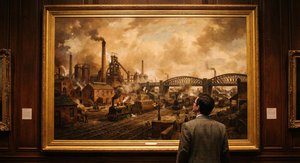
Industriens Sjæl i Kunsten: Top 10 Værker til Dit Hjem
Oplev industriens sjæl i kunsten! Udforsk 10 ikoniske værker fra impressionismen til realismen. Find inspiration til dit hjem og køb museumskvalitets kunsttryk online hos OriginalUniqueArt.com – din kilde til berømte malerier & dekoration.
The Gritty Muse: Industrial Vibe as Defining Aesthetic in Modern Artwork
Explore the captivating world of industrial aesthetics in modern art. Discover key movements, influential artists & collecting insights at OriginalUniqueArt.com – your source for museum-quality reproductions and expert art guidance.

Flowing Narratives: Rivers in Painting – A Historical Exploration
Explore the rich history of rivers in painting! Discover masterpieces from ancient times to Impressionism & beyond. Learn about symbolism, artists like Monet & Daubigny, and find your perfect serene artwork at OriginalUniqueArt.

Hudson River Skolens 10 Mesterværker: Kunst, Natur & Indretning
Oplev Hudson River Skolens 10 mest ikoniske værker! Dyk ned i Thomas Cole, Frederic Church og Albert Bierstadts landskaber. Find museumskvalitets reproduktioner & inspiration til din boligindretning på OriginalUniqueArt.com.

