

 Se i rummet
 Del som kort
 Del
Del
 Detaljer
 Guide
Guide

 Download
 Lignende værker
 Røntgenundersøgelse
 Diasshow
 Q&A
Q&A Statistikker
Paule Gobillard Painting
 Oil On Canvas
- WallArt
- Impressionist Painting
 1886
1886 85.0 x 94.0 cm
 Musée Marmottan Monet
 Vis mere
Giclée / Kunsttryk
Giclée- eller lærredstryk i museumskvalitet med hurtig produktion og fleksible muligheder for finish. ( Køb håndmalet maleri Skift til digitalt billede)




P118B Dkr10

P118H Dkr10

P118W Dkr10

P438Z Dkr10

P508JH Dkr12

P508YH Dkr12

P805H Dkr10

P805Z Dkr10

P919BZ Dkr10

P919G Dkr10

P919XJ Dkr10

P959ZH Dkr10

P968JZ Dkr12

W106C Dkr8

W218G Dkr10

W218JH Dkr8

W218Y Dkr10

W307PJ Dkr10

W316G Dkr10

W316PJ Dkr8

W316Y Dkr10

W398PJ Dkr8

W4111J Dkr10

W500HY Dkr15

W500JH Dkr15

W692G Dkr12

W849H Dkr8

W940BG Dkr15

W953PJ Dkr8




Vælg mellem vores forudindstillede størrelser, der matcher kunstværkets originale proportioner.

Indtast den bredde og højde, du har brug for, så det passer til din ramme eller din væg. Et print kan kun beskæres, aldrig gøres større end selve billedet, så en størrelse med et andet format vil medføre, at dele af motivet går tabt. Vi sender dig en digital mockup til godkendelse, før vi printer noget. Billedet vist på denne side viser ikke den faktiske beskæring — det er kun mockuppen, der gør.
Verdensomspændende levering () på 2 uger i stedet for de sædvanlige 4/5 uger. (30 oktober)

Gratis ekspresforsendelse til hele verden

Lærred af linned i høj kvalitet

Fuld transportforsikring

Garanti for refusion af told og importafgifter

Garanti for præcis farvegengivelse

100 dages returret ved fabrikationsfejl

100% fuld returret

Mængderabat ved flere køb
 Glasmulighed er kun tilgængelig i størrelser under 110 cm

Paule Gobillard Painting
Giclée / Kunsttryk
Størrelse på reproduktion
-


Samlet pris
Dkr 533
A Moment of Domestic Grace: Exploring Berthe Morisot’s Paule Gobillard Painting
Berthe Morisot's "Paule Gobillard Painting," a captivating portrait completed in 1886, offers a rare glimpse into the quiet intimacy of everyday life during the Impressionist era. More than simply a depiction of a young woman, it’s a study in light, color, and the subtle nuances of human connection—a testament to Morisot's remarkable ability to capture fleeting moments of beauty within the domestic sphere. The painting resides at the Musée Marmottan Monet in Paris, a fitting home for this delicate yet powerful work, surrounded by other masterpieces of the Impressionist movement.
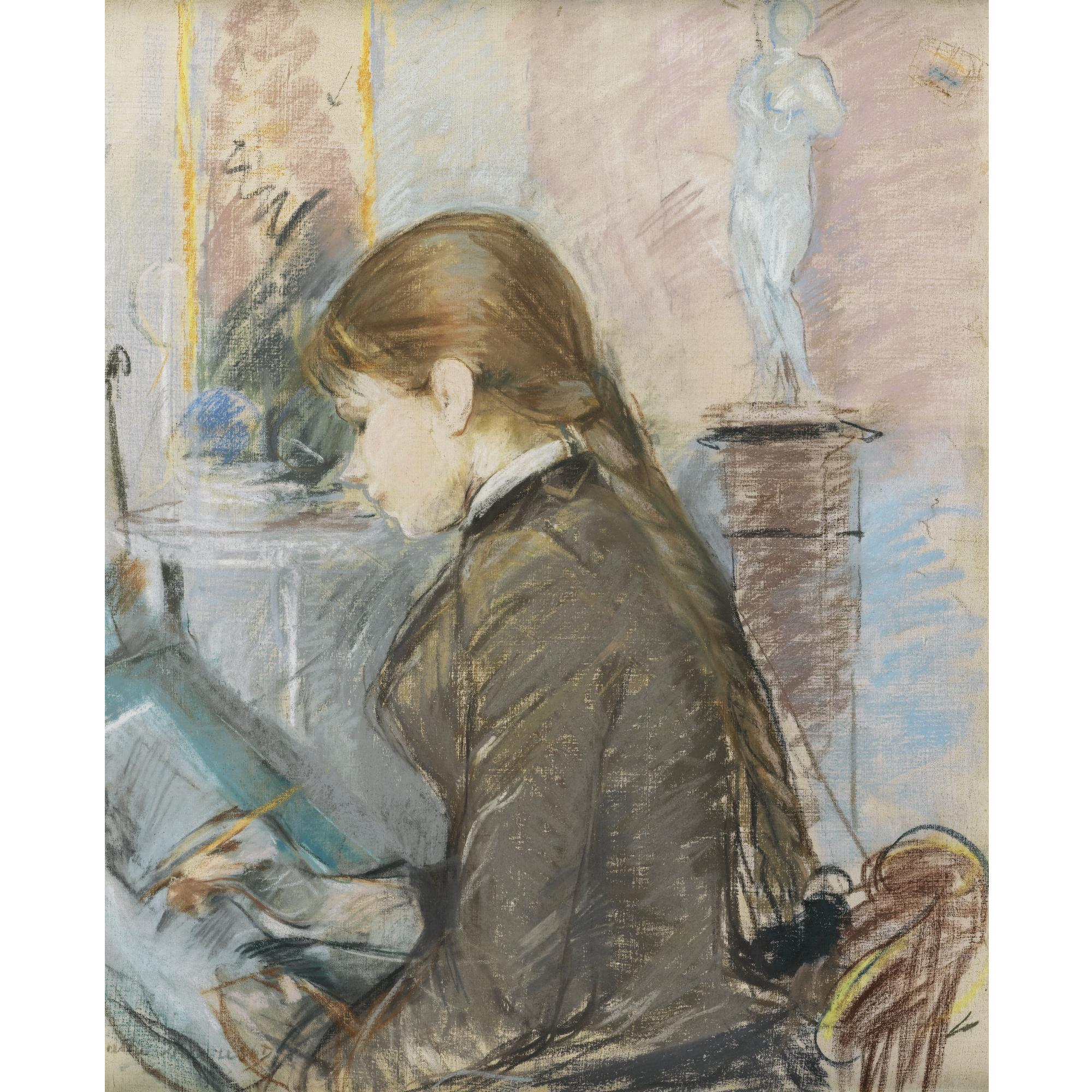
At first glance, the scene is remarkably simple: Paule Gobillard, a niece of Morisot and daughter of Yves Gobillard, sits poised before a chair, her hands resting gently on a small table. She holds a plate or basket – its contents obscured, inviting the viewer’s imagination to fill in the details. The room itself is bathed in soft light, filtered through the window, creating an atmosphere of serene tranquility. Yet, it's within these seemingly ordinary elements that Morisot’s genius shines through.
The Impressionist Palette and Technique
Morisot was a master of capturing the ephemeral qualities of light and color—a hallmark of the Impressionist movement. She employed loose, broken brushstrokes, layering hues to create an effect of shimmering luminosity. Notice how she uses delicate washes of pinks, blues, and greens to define the fabrics and shadows, avoiding sharp outlines or precise details. This technique allows the colors to blend and mingle, mimicking the way light actually interacts with surfaces. The painting’s composition is carefully balanced, drawing the eye to Paule's face—her expression serene and contemplative. Morisot’s use of a limited palette contributes to the painting’s overall sense of harmony and tranquility.
The choice of canvas size – 85 x 94 cm – further enhances the intimacy of the scene. It feels as though we are invited into a private moment, observing a familiar domestic tableau. The brushwork is remarkably free and expressive, reflecting Morisot’s commitment to capturing the immediacy of her observations rather than creating a meticulously rendered representation.
A Portrait of Family and Era
“Paule Gobillard Painting” offers a poignant glimpse into the lives of women during the late 19th century. Berthe Morisot herself was a pioneering female artist in a male-dominated field, often painting scenes of domestic life—a subject that was typically relegated to the role of a secondary genre. By focusing on Paule Gobillard, Morisot elevates this everyday subject matter, imbuing it with a sense of dignity and grace. The inclusion of the vase and chair suggests a comfortable, familiar setting – a space for quiet contemplation and connection.
The painting’s historical context is also significant. It was created during a period of rapid social change in France, as industrialization transformed urban landscapes and traditional ways of life. Morisot's work reflects this shift, capturing the lingering traces of rural beauty amidst the encroaching modernity. The portrait speaks to the quiet resilience and understated elegance of women navigating these changing times.
Collecting a Legacy: Reproductions and Beyond
For art enthusiasts seeking to experience the beauty and emotional depth of “Paule Gobillard Painting,” high-quality reproductions are readily available through platforms like OriginalUniqueArt.com, offering meticulously crafted oil painting recreations that faithfully capture Morisot’s artistic vision. This allows a wider audience to appreciate the nuances of her technique and the profound insights she offers into the human experience. Consider this piece not just as a beautiful image, but as a window into a specific moment in art history—a testament to the enduring power of Impressionism.
Spørgsmål og svar
Hvordan forenes kontrast og harmoni i "Paule Gobillard Painting"?
Farvesammensætningen i "Paule Gobillard Painting" af Berthe Morisot forener en Bold kontrast med en Strong Color Unity harmoni.
Fremstår farverne i "Paule Gobillard Painting" kraftige eller bløde?
"Paule Gobillard Painting" af Berthe Morisot har en Balanced farveintensitet.
Hvor høj er kontrasten i "Paule Gobillard Painting" af Berthe Morisot?
Kontrastniveauet i "Paule Gobillard Painting" af Berthe Morisot er Bold.
Kunstnerbiografi
A Life Immersed in Light and Intimacy
Berthe Morisot, født i Bourges i Frankrig i 1841, var en central figur inden for Impressionistbevægelsen, men hendes historie strækker sig langt ud over blot at være en “kvindelig Impressionist.” At definere hende udelukkende efter køn nedtoner den dybtgående originalitet af hendes kunstneriske vision og hendes ubøjelige engagement i at fange livets flygtende øjeblikke. Hun var efterkommere af en borgelighedsfamilie med kunstnerisk arv – hun var slægtning til den berømte Rokoko-maler Jean-Honoré Fragonard – og modtog en uddannelse, der var usædvanlig for kvinder i hendes æra, en uddannelse, der nærede hendes indfødte talent og fremmede en livslang dedikation til maleri. Tidlige lektioner med Geoffroy-Alphonse Chocarne og Joseph Guichard gav hende grundlæggende færdigheder, men det var eksponeringen for mesterværkerne i Louvre, hvor hun kopierede værker af de gamle mestre, der virkelig antændte hendes kunstneriske sanselighed. Denne periode med streng træning lagde grundlaget for hendes senere udforskninger af lys, farve og form. Jean-Baptiste-Camille Corots indflydelse var særlig betydningsfuld; hans vægt på *plein air* maleri – at male udendørs direkte fra naturen – blev en hjørnesten i hendes tilgang, hvilket tillod hende at fange lysets og atmosfærens flygtende kvaliteter med bemærkelsesværdig følsomhed.Navigating the Impressionist Circle
Morisot’s kunstneriske rejse var tæt forbundet med Édouard Manet, som hun mødte i 1864. Deres forhold var præget af gensidig respekt og intellektuel udveksling, hvor Manet fungerede som mentor og ven. Han malede hende mange gange, og skildrede hendes tilstedeværelse inden for sin egen udviklende stil. Men Morisot var ikke blot et motiv; hun deltog aktivt i den voksende Impressionistbevægelse, blev medstifter sammen med Monet, Degas, Renoir og Pissarro. I 1874 tog hun modigt til dénne gruppe af “afvist” kunstnere, hvilket udfordrede de konservative standarder for det officielle Salon. Denne første Impressionistudstilling markerede et vendepunkt i kunsthistorien, hvor den udfordrede traditionelle akademiske konventioner og banede vejen for nye former for kunstnerisk udtryk. Morisot deltog i næsten alle efterfølgende Impressionistudstillinger, og viste konstant sin unikke perspektiv og befæstede dermed sin position inden for avantgardegruppen. Hendes værker, der ofte skildrede intime scener af hjemmelivet – kvinder, der læser, mødre med børn, afslappede øjeblikke i haverne – tilbød et distinkt feminint blik, der udfordrede de dominerende samfundsmæssige normer og udvidede omfanget af acceptabelt motivmateriale for kvindelige kunstnere.A Distinctive Artistic Voice
Hvad der adskiller Morisot fra andre, er ikke blot *hvad* hun malede, men *hvordan* hun malede det. Hendes penselstrøg er karakteriseret ved deres delikate flydende, en lethed af berøring, der udtrykker et indtryk af spontanitet og øjeblikkelighed. Hun benyttede sig mesterligt af brudt farve – at påføre små stykker ren pigment side om side for at skabe en skimrende effekt af lys og atmosfære. I modsætning til nogle af hendes Impressionist-kolleger, der fokuserede på store landskaber eller travle byscener, valgte Morisot ofte intime interiører og portrætter, og udforskede nuancerne i menneskelige relationer og den stille skønhed i hverdagens liv. Hendes palet er typisk blød og harmonisk, der foretrækker pastelfarver og subtile farveskift. Dette betyder ikke, at hendes arbejde mangler styrke; snarere har det en raffineret elegance og følelsesmæssig dybde, der resonerer hos seerne selv i dag. Kritikere som Gustave Geffroy anerkendte denne unikke kvalitet, og hyldede hende som en af “les trois grandes dames” (De tre store damer) af Impressionismen – sammen med Marie Bracquemond og Mary Cassatt – og anerkendte hendes betydelige bidrag til bevægelsen.Legacy and Lasting Influence
Berthe Morisot’s liv blev tragisk forkortet i 1895, men hendes kunstneriske arv består. Gift med Eugène Manet, bror til Édouard, navigerede hun en verden, der ofte undervurderede kvindelige kunstnere, men hun holdt fast i sin ubødighed. Hun udstillede under sit fulde efternavn – et subtilt tegn på uafhængighed og selvbevidsthed – og udfordrede konstant traditionelle forventninger. Hendes værker er stadig bevaret i prestigefyldte samlinger rundt om i verden, og tjener som en testamente til hendes vedvarende talent og hendes afgørende rolle i at forme moderne kunst. *Woman in the Green Dress*, *The Cradle* og *Summer’s Day* er eksempler på hendes mesterskab, der inviterer seerne ind i en verden af lys, intimitet og stille refleksion.
Berthe Morisot
1841 - 1895 , Frankrig
Kort om kunstneren
- Artistic Movement Or Style: Impressionisme
- Artists Or Movements Influenced By This Artist: ['Impressionisme']
- Artists Who Influenced This Artist:
- Corot
- Manet
- Date Of Birth: 14. januar 1841
- Date Of Death: 2. marts 1895
- Full Name: Berthe Morisot
- Nationality: Fransk
- Notable Artworks:
- Kvinden i grøn kjole
- Sengens lys
- Sommersdag
- Place Of Birth: Bourges, Frankrig
Relaterede artikler

The Enduring Legacy of Oil on Canvas: Technique, History & Aesthetic Impact
Explore the rich history & techniques of oil painting – from Renaissance masters to Impressionism. Discover pigments, layering methods, and why this timeless medium endures. Expert insights for artists & art enthusiasts.
The Interior Gaze: Exploring Representations of Domestic Space in Art History
Explore the fascinating history of domestic interiors in art! From Dutch Masters to Impressionism, discover how artists captured home life & social meaning. Expert analysis and insights at OriginalUniqueArt.

Intimate Interiors: Domestic Life & Artistic Representation from Renaissance to Impressionism
Explore the evolution of domestic life in Western art from the Renaissance to Impressionism. Discover symbolism, realism & artistic techniques shaping intimate interior scenes. Learn more with OriginalUniqueArt.
Olie på træs ikoniske mesterværker: 10 kunstværker der ændrede historien | OriginalUniqueArt
Oplev 10 ikoniske mesterværker malet på træ – fra Van Gogh til Monet! Lær historien bag disse klassiske kunstværker og find inspiration til din indretning. Museumskvalitet reproduktioner hos OriginalUniqueArt.com. Udforsk samlingen online!

Paul Cézannes 25 Mesterværker: En Kunstnerisk Rejse til Moderne Malerkunst | OriginalUniqueArt.dk
Oplev Paul Cézannes 25 mest ikoniske malerier – fra stilleben til landskaber. Lær om impressionismen, hans unikke stil og køb eksklusive kunsttryk på OriginalUniqueArt.dk. Find inspiration til din indretning!


