

 Se i rummet
 Send
Send Del
Del
 Detaljer
 Studieguide til kunstværker

 Download
 Lignende værker
 Røntgenundersøgelse
 Se diasshow
 Statistik
Evening, Richmond
 Oil
Oil- WallArt
- Impressionism
 1970
1970- Modern
 21.0 x 26.0 cm
 Llyfrgell Genedlaethol Cymru / The National Library of Wales
 Læs mere
Kunstværket vist på denne side er beskyttet af ophavsretsloven, hvilket betyder, at vi ikke lovligt kan skabe eller sælge en identisk reproduktion. Denne beskyttelse håndhæves i henhold til internationale aftaler som f.eks. den Bernerkonventionen og af nationale love, herunder de bestemmelser, der er fastlagt i Amerikansk ophavsretslov - Titel 17.
Denne metode overholder fuldt ud ophavsretsreglerne, da den ikke indebærer kopiering eller duplikering af det beskyttede kunstværk. I stedet er der tale om en kreativ nytolkning – et nyt maleri, som er inspireret af det oprindelige, men ikke identisk med det.
Giclée / Kunsttryk
Giclée- eller lærredstryk i museumskvalitet med hurtig produktion og fleksible muligheder for finish. ( Bestil håndmalet reproduktion Skift til digitalt billede)




P118B Dkr10

P118H Dkr10

P118W Dkr10

P438Z Dkr10

P508JH Dkr12

P508YH Dkr12

P805H Dkr10

P805Z Dkr10

P919BZ Dkr10

P919G Dkr10

P919XJ Dkr10

P959ZH Dkr10

P968JZ Dkr12

W106C Dkr8

W218G Dkr10

W218JH Dkr8

W218Y Dkr10

W307PJ Dkr10

W316G Dkr10

W316PJ Dkr8

W316Y Dkr10

W398PJ Dkr8

W4111J Dkr10

W500HY Dkr15

W500JH Dkr15

W692G Dkr12

W849H Dkr8

W940BG Dkr15

W953PJ Dkr8




Vælg mellem vores forudindstillede størrelser, der matcher kunstværkets originale proportioner.

Indtast den bredde og højde, du har brug for, så det passer til din ramme eller din væg. Et print kan kun beskæres, aldrig gøres større end billedet, så en størrelse med en anden form vil miste en del af motivet. Vi sender dig en digital mockup til godkendelse, før vi printer noget. Billedet vist på denne side viser ikke den faktiske beskæring — det er kun mockuppen, der gør.
Verdensomspændende levering () på 2 uger i stedet for de sædvanlige 4/5 uger. (21 oktober)

Gratis ekspresforsendelse til hele verden

Lærred af linned i høj kvalitet

Komplet transportforsikring

Garanti for refusion af told og importafgifter

Garanti for autentisk farvegengivelse

100 dages returret ved fabrikationsfejl

100% fuld returret

Mængderabat ved flere køb
 Glasmulighed er kun tilgængelig i størrelser under 110 cm

Evening, Richmond
Giclée / Kunsttryk
Reproduktionsstørrelse
-


Samlet pris
Dkr 528
A Golden Hour in Richmond
In the quiet transition between day and night, there exists a fleeting moment of profound stillness, a period where the world seems to hold its breath as the sun dips below the horizon. Evening, Richmond, painted by the esteemed Royal Academician Bernard Dunstan in 1970, captures this ephemeral magic with unparalleled grace. The painting presents a breathtaking vista of a cityscape bathed in the warm, amber glow of a setting sun. As the light filters through the urban silhouette, it transforms the architecture into a series of soft, glowing shapes, creating a sense of depth and atmosphere that invites the viewer to step directly into the scene. It is not merely a depiction of a place, but an invitation to experience the serenity of a summer twilight.
The composition masterfully balances the grandeur of the sky with the intimate human element found in the foreground. Two figures stroll along a pathway, their presence providing a sense of scale and a narrative heartbeat to the landscape. They are not alone; scattered throughout the scene, other souls move through the twilight, some lost in thought, others simply pausing to admire the celestial display. This subtle inclusion of life within the urban expanse evokes a feeling of shared human experience—a collective moment of awe at the beauty of the natural world persisting amidst the structures of man. For an interior designer, this piece serves as a focal point of tranquility, offering a window into a peaceful, idealized reality that can soothe and elevate any living space.
Technically, Dunstan employs an Impressionistic sensibility that prioritizes light and mood over rigid detail. His brushwork is deliberate yet fluid, allowing the warm hues of the sunset—deep oranges, soft pinks, and mellow yellows—to bleed into one another with a dreamlike quality. This technique creates a luminous effect, as if the canvas itself is radiating heat from the departing sun. Having been trained at the prestigious Slade School of Fine Art, Dunstan brings a rigorous command of light and shadow to this work, ensuring that every stroke contributes to the overall emotional resonance. The painting does not just show us a sunset; it makes us feel the cooling air and the lengthening shadows of an evening in Richmond.
For collectors and lovers of fine British art, Evening, Richmond represents a quintessential example of Dunstan’s ability to find extraordinary beauty in ordinary moments. It is a work steeped in nostalgia and peace, making it an ideal acquisition for those looking to add a touch of classical elegance and emotional warmth to their collections. Whether displayed in a sunlit gallery or a cozy study, this reproduction brings with it the timeless allure of a perfect summer evening, reminding us all to pause and appreciate the quiet splendor of the world around us.
Spørgsmål & svar
Hvor placerer "Evening, Richmond" af Bernard Dunstan sig i kunsthistorien?
Den kunsthistoriske klassificering af "Evening, Richmond" af Bernard Dunstan er Impressionism, i Modern-perioden.
Hvem er ophavsmanden til "Evening, Richmond", og i hvilken stilart?
"Evening, Richmond" blev skabt af Bernard Dunstan i Impressionism-stil. Kunstneren og stilen identificerer værkets tradition.
Hvor gammel var Bernard Dunstan, da vedkommende skabte "Evening, Richmond"?
Bernard Dunstan skabte "Evening, Richmond" i en alder af 50. Kunstneren blev født i 1920, og værket er dateret 1970.
Om kunstneren
A Life Dedicated to Observation: The World of Bernard Dunstan
Bernard Dunstan, Royal Academician (1920-2017), stands as a quietly compelling figure in 20th and 21st century British art. Though perhaps not a household name, his long career – he was the longest serving Royal Academician at the time of his death – was marked by a steadfast dedication to painting figures within interiors and evocative landscapes, rendered with a sensitivity that speaks to both Impressionistic roots and a uniquely personal vision. Born in Teddington, Middlesex, Dunstan’s artistic journey began in 1939 with studies at the Byam Shaw School of Art, quickly followed by formal training at the prestigious Slade School of Fine Art in London until 1941. These formative years instilled in him a rigorous approach to technique and observation that would define his oeuvre. The interruption of war undoubtedly shaped a generation of artists, but Dunstan’s commitment remained unbroken; he continued to develop his style, focusing on capturing the subtleties of light and atmosphere.The Development of a Distinctive Style
Dunstan's artistic development wasn’t one of radical shifts, but rather a gradual refinement of focus and technique. Early works demonstrate an engagement with realism, yet even then, a concern for tonal qualities and the interplay of light hinted at his future direction. He became a member of the New English Art Club in 1947, a group that championed representational painting during a period dominated by abstraction. This affiliation provided a supportive environment for Dunstan to explore his growing interest in capturing fleeting moments and subjective experiences. His palette evolved towards a softer, more luminous quality, influenced by artists he deeply admired – Renoir, Bonnard, and Vuillard. However, Dunstan wasn’t simply imitating these masters; he synthesized their lessons with the distinctly British sensibilities of Walter Sickert and Philip Wilson Steer, creating a style that was both intimate and sophisticated. His interiors are not grand statements but rather quiet observations of domestic life, often featuring figures absorbed in everyday activities, bathed in gentle light. Landscapes similarly eschew dramatic vistas for more subtle depictions of the English countryside, emphasizing mood and atmosphere over topographical accuracy.A Teacher and a Scholar
Beyond his own painting practice, Bernard Dunstan was a dedicated educator, profoundly influencing generations of artists. He held teaching positions at numerous prestigious institutions including the Royal West of England Academy in Bristol (1946-1949), Camberwell School of Art (1950-1964), Byam Shaw School (1953-1974), Ravensbourne Art College (1959-1964) and the City and Guilds of London Art School (1964-1969). This commitment to teaching wasn’t merely a means of livelihood; it reflected his belief in the importance of passing on knowledge and fostering artistic talent. His pedagogical approach likely emphasized direct observation, careful study of light and colour, and an understanding of art history – principles evident in his own work. Furthermore, Dunstan was a prolific writer on painting, sharing his insights with a wider audience through books such as Painting Methods of the Impressionists (1976). This demonstrated not only technical mastery but also a deep intellectual engagement with the artistic process.Recognition and Legacy
Dunstan’s dedication to his craft was recognized throughout his career, culminating in his election as a full member of the Royal Academy in 1968. He served as President of the Royal West of England Academy from 1979 to 1984, further solidifying his position within the British art establishment. His works are now held in significant public collections including the National Portrait Gallery, the Royal Collection at Windsor Castle, and the Museum of London – a testament to their enduring quality and historical importance. While he may not have sought fame or notoriety, Bernard Dunstan’s quiet persistence and unwavering commitment to observation left an indelible mark on British painting. His ability to capture the beauty in everyday moments, combined with his technical skill and intellectual depth, continues to resonate with viewers today. He was married to fellow Royal Academician Diana Armfield, and is also the father of Professor David Dunstan, a physicist – demonstrating a family legacy that extends beyond the realm of art. His passing in 2017 at the age of 97 marked the end of an era, but his paintings remain as enduring reminders of a life dedicated to the pursuit of artistic truth and beauty.
Bernard Dunstan
1920 - 2017 , United Kingdom
Hurtige fakta
- Date Of Birth: 1920
- Date Of Death: 2017
- Place Of Birth: Teddington, United Kingdom
- Artistic Movement Or Style: 1920s Art Deco
- Artists Who Influenced This Artist: ['Marcel Duchamp']
- Artists Or Movements Influenced By This Artist:
- Dada
- Surrealism
Relaterede artikler
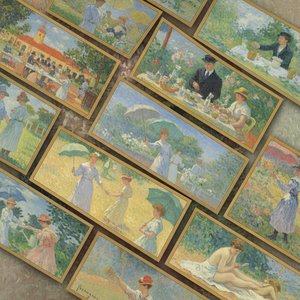
Renoirs Mesterværker: Top 25 Kunstværker til Dit Hjem | OriginalUniqueArt.dk
Oplev Renoirs 25 mest ikoniske malerier! Fordyb dig i Impressionismens verden, fra 'Bal du moulin de la Galette' til 'Umbrellas'. Køb museumskvalitets reproduktioner og find inspiration til din bolig på OriginalUniqueArt.com.
Concrete Narratives: Exploring Urban Life in Modern & Contemporary Art
Explore the evolution of cityscape painting with OriginalUniqueArt. Discover key artists from Realism to contemporary movements & invest in timeless urban visions. Expert guidance, museum-quality reproductions.
Urban Visions: A Historical & Artistic Exploration of the Cityscape in Painting
Explore the evolution of cityscape painting from historical maps to Impressionist masterpieces. Discover artists like Caillebotte & Utrillo. Find museum-quality reproductions at OriginalUniqueArt.
Concrete Visions: Exploring Representations of Urban Life in Modern & Contemporary Art
Explore the evolution of cityscape painting from Realism to contemporary art. Discover key artists & invest in timeless urban visions with OriginalUniqueArt's expert guidance and museum-quality reproductions.

Concrete Visions: Exploring the Urban Landscape in Painting – From Realism to Contemporary Art
Explore the evolution of cityscape painting from Realism to contemporary art with OriginalUniqueArt. Discover key artists & invest in timeless urban visions. Expert guidance, museum-quality reproductions.