
 Se i fuld skala
 Del
Del Del
Del
 Detaljer

 Download
 Lignende værker
 Røntgenundersøgelse
 Diasshow
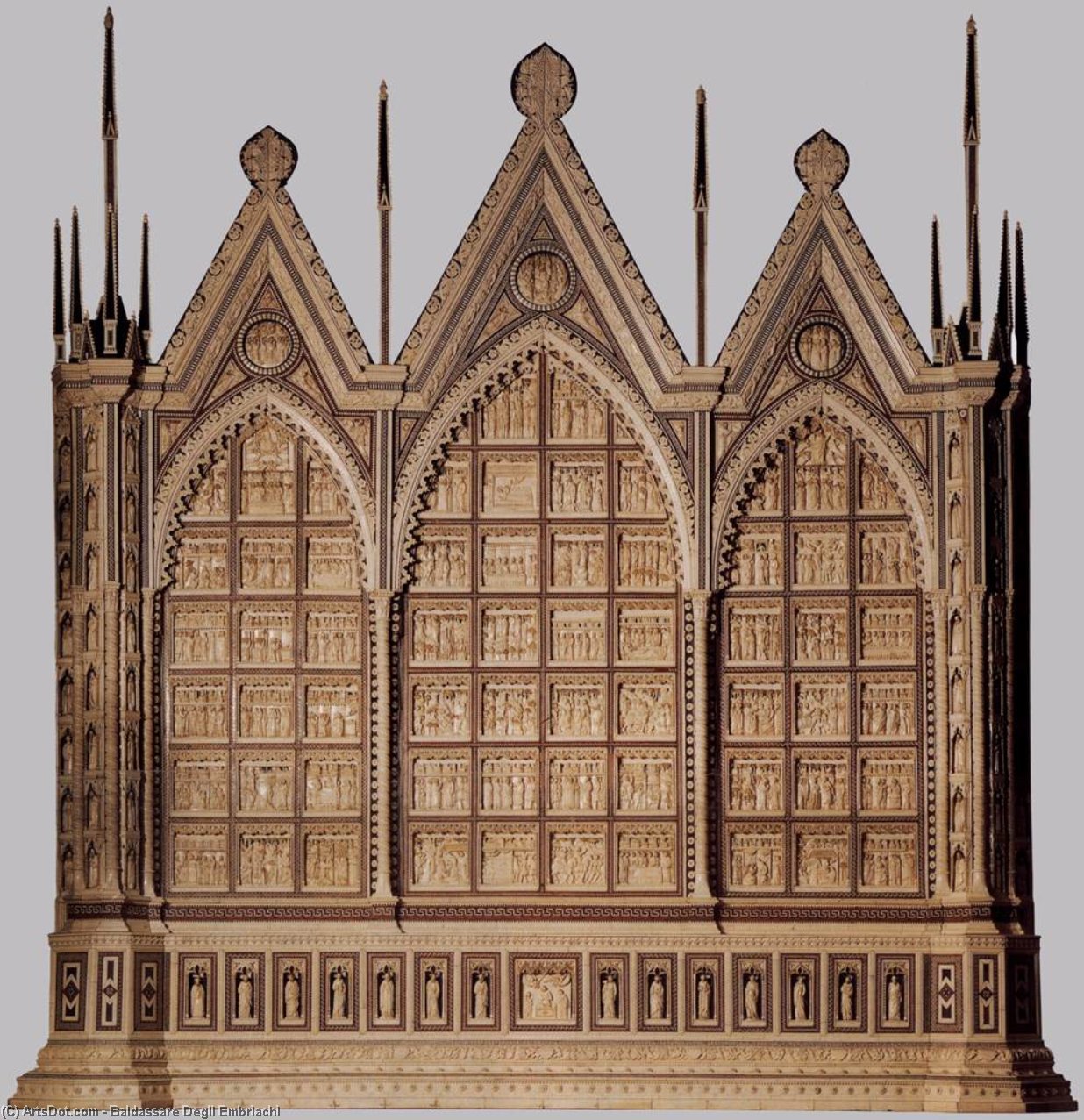
Altarpiece


 Se mere
Håndlavet oliereproduktion
Håndmalet olie på lærred i din valgte størrelse og ramme, udført efter bestilling af vores kunstnere. ( Køb print Køb billede)




































Vælg mellem vores forudindstillede størrelser, der matcher kunstværkets originale proportioner.

Du kan indtaste dine egne mål for at passe til en bestemt ramme eller plads. Hvis den valgte størrelse ikke stemmer overens med det originale billedes proportioner, vil vi enten beskære kunstværket eller udvide maleriet med yderligere håndmalede elementer. En digital skitse sendes til din godkendelse, før produktionen påbegyndes.
Bemærk venligst, at forhåndsvisningen på skærmen ikke afspejler den faktiske beskæring eller udvidelse. Kun skitsen vil nøjagtigt vise den endelige komposition.
Selvom specialmål er mulige, anbefaler vi at vælge en dimension fra den foruddefinerede liste for at bevare de originale proportioner.
Efter bestilling vil OriginalUniqueArt.com team sende en e-mail til kunden for at få instruktioner og levere et udkast til en skitse.
Levering i hele verden () på 3/4 uger i stedet for de standard 5 uger. (19 august). Ingen kompromiser med kvaliteten.

Gratis ekspresforsendelse til hele verden

Lærred af linned i høj kvalitet

Fuld transportforsikring

Garanti for refusion af told og importafgifter

Garanti for præcis farvegengivelse

60 dages returret (kun ved fabrikationsfejl)

100% Tilfredshedsgaranti

Mængderabat tilgængelig
 Glasmulighed er kun tilgængelig i størrelser under 110 cm

Altarpiece
Reproduktionsmetode
Størrelse på reproduktion
-


Samlet pris
$ 300
Kunstnerens biografi
Baldassare degli Embriachi: Florentine Renaissance Master of Marriage Caskets and Altarpieces
Baldassare degli Embriachi (c. 1390 – after 1433) remains an enigmatic figure in the history of Florentine art, largely obscured by the prolific output of his workshop and the difficulty of definitively attributing works to him alone. Despite this lack of biographical detail, scholars recognize Embriachi as a pivotal innovator within the burgeoning marriage casket tradition—a genre that captured the spirit of courtship and solidified Venetian artistic prestige—and as a contributor to monumental altarpieces reflecting the piety and grandeur of his era. ### The Marriage Casket Phenomenon: A Reflection of Florentine Culture The Embriachi workshop achieved renown for its exquisitely crafted hexagonal marriage caskets, approximately twelve inches across, adorned with intricate marquetry inlaid wood, horn, and bone—materials chosen not merely for their aesthetic appeal but also for symbolic significance. These caskets were presented to prospective brides as emblems of fidelity and marital bliss, embodying the ideals of Renaissance Florence where familial alliances and social status dictated romantic relationships. The workshop’s designs frequently incorporated scenes from classical mythology – Venus and Adonis, Cupid and Psyche—representing idealized love and virtue, alongside depictions of biblical narratives highlighting Christian morality. Furthermore, the meticulous craftsmanship demonstrated a mastery of techniques like *certosina*, a method of inlaying colored pastes into wood to create vibrant geometric patterns that mirrored the decorative sensibilities of the time. The workshop’s output catered to a discerning clientele—primarily wealthy merchants and noble families—establishing Venice as a center for artistic excellence and demonstrating the power of art to communicate social values. ### Workshop Organization and Artistic Legacy Research suggests Embriachi oversaw a sizable enterprise, employing numerous artisans who specialized in distinct tasks – carving bone panels, applying marquetry, gilding surfaces, and painting decorative elements. The workshop’s success stemmed from its ability to standardize production while maintaining artistic quality—a feat achieved through the division of labor and the use of molds for repetitive designs. While individual Embriachi pieces remain elusive, stylistic analysis confirms that his workshop produced a vast corpus of works reflecting prevailing trends in Florentine art during the latter half of the fourteenth century. The Embriachi style is characterized by its refined elegance, meticulous attention to detail, and masterful execution—traits evident in altarpieces commissioned for churches throughout Tuscany and Umbria. These monumental sculptures exemplify the humanist ideals of the Renaissance, blending classical influences with Christian iconography to convey profound spiritual messages. Notably, Lorenzo d'Antonio di Messer Manfredi degli Embriachi, Baldassare’s grandson, served as Canon of St Maria Novella in Florence—a testament to the family’s enduring influence within Florentine society and artistic circles. ### Influence on Venetian Art and Decorative Arts The Embriachi workshop’s impact extended beyond marriage caskets into broader decorative arts, particularly marquetry—the art of inlaying thin sheets of wood with colored pastes or veneers—which achieved unparalleled sophistication during Embriachi's lifetime. Venetian artisans adopted techniques pioneered by the Embriachi family, elevating marquetry to a level of artistic prestige previously unattainable. This stylistic innovation contributed significantly to Venice’s reputation as a hub for luxury craftsmanship and solidified its position as a dominant force in European art history. The workshop’s legacy continues to inspire artists today—a reminder that even in periods marked by relative obscurity regarding biographical details, artistic achievement speaks volumes about an artist's contribution to cultural heritage. ### Further Exploration: Notable Embriachi Works The Spedale degli Innocenti (Florence) houses a magnificent altarpiece attributed to Embriachi and his workshop, showcasing the workshop’s mastery of sculptural technique and its ability to convey complex theological narratives. The intricate carving in bone and horn—particularly the depiction of Saint John the Baptist—demonstrates the Embriachi workshop's unparalleled skill in manipulating materials and achieving remarkable visual effects. Ongoing research continues to illuminate new facets of Embriachi’s artistic life and legacy, ensuring that his contribution to Florentine Renaissance art remains a subject of scholarly fascination for generations to come.
Kort om kunstneren
- Artistic Movement Or Style: Renaissance
- Full Name: Baldassare degli Embriachi
- Nationality: Italian
- Notable Artworks: ['Altarpiece with the Lives of Jesus, Saint John the Baptist, and Saint John the Evangelist']
- Place Of Birth: Florence, Italy

