German Expressionism · 1907
Tree in the cornfield (August Macke, 1907)
August Macke (1887–1914) har skabt Tree in the cornfield. Det er fra 1907. Det tilhører German Expressionism-bevægelsen. Den er udført i Oil On Canvas. Det opbevares på Museum Ostwall i Dortmund, Germany. Målene er 15 × 30 cm.
- 1907
- Oil On Canvas
- 15 × 30 cm
- Museum Ostwall, Dortmund

 Se i rummet

 Håndmalet oliemalerie
 Del som kort
 Del
 Faktablad


 Download
 Lignende værker
 Røntgenundersøgelse
 Diasshow
 Spørgsmål og svar

 Statistikker
Tree in the cornfield kort fortalt
- Titel
- Tree in the cornfield
- Kunstner
- August Macke (1887–1914)
- Kunstner født i
- Meschede, Tyskland
- Dato
- 1907
- Medium
- Oil On Canvas
- Dimensioner
- 15 × 30 cm
- Hvor det kan ses
- Museum Ostwall, Dortmund, Germany
- Bevægelse
- German Expressionism
- Motiv
- cornfield scene, figures outdoors, umbrellas, rural life, summer day, tree painting
Hvad forestiller Tree in the cornfield?
A Sunlit Interlude in the Cornfield
August Macke’s Tree in the cornfield, painted in 1907, transports the viewer into a moment suspended between pastoral tranquility and burgeoning modern life. This canvas is not merely a depiction of an agricultural scene; it is a vibrant meditation on human connection set against the rhythmic geometry of nature. The composition immediately draws the eye into the lush expanse of the cornfield, dominated by the stately presence of a central tree whose trunk anchors the entire scene. Macke captures the light with an almost palpable energy, suggesting a warm, late afternoon glow filtering through the stalks and illuminating the figures gathered within.
The Echoes of Impressionism in German Expressionism
To understand this work is to appreciate its pivotal moment in art history. While Macke’s early training placed him within the orbit of academic tradition, his style blossomed into a brilliant embrace of Post-Impressionist color and the burgeoning spirit of German Expressionism. Yet, unlike some of his more emotionally charged contemporaries, here, the energy feels buoyant, almost joyous. The technique is characterized by visible, confident brushstrokes that build up the texture of the foliage and the earth. Macke uses color not just to mimic reality, but to amplify feeling—the greens are rich, the skin tones luminous, suggesting an optimistic view of modern existence.
Narrative Details and Symbolic Touches
The human element adds a layer of intimate storytelling. We observe a man bending low, perhaps gathering something precious from the ground, while a woman stands nearby, lending a sense of watchful grace to the scene. The inclusion of details—the two umbrellas suggesting preparedness for changing weather, the handbag resting near the woman’s feet—grounds the ethereal quality of the light in tangible reality. These small props invite speculation: What are they gathering? Are they pausing from a journey? Macke masterfully weaves these anecdotal elements into the broader tapestry of the field, turning a simple outing into a portrait of shared experience.
Bringing the Light Home
For the collector or designer seeking to infuse a space with artistic vitality, this reproduction offers more than just decoration; it offers an atmosphere. The scale of 30 x 15 cm makes it perfectly suited for mantelpieces, gallery walls, or console tables where a burst of color and narrative depth is desired without overwhelming the room. Owning Tree in the cornfield is to possess a piece of early 20th-century optimism—a reminder that even amidst the structured beauty of nature, moments of human grace and connection can bloom vibrantly.
Hvilket museum udstiller Tree in the cornfield?
Museum Ostwall
Dortmund, Germany
The History and Origins of Museum Ostwall Museum Ostwall serves as a museum of modern and contemporary art in Dortmund, Germany. The institution was founded in the late 1940s, emerging during a period of significant reconstruction. Its first exhibition, held in 1949 under the name Museum am Ostwall, established it as one of Germany's first post-war museums dedicated to 20th-century art.


Højopløselige billeder af Tree in the cornfield

Public domain: kunstneren døde i 1914.
Andre størrelser, beskæringer og kildehenvisning →August Macke, Tree in the cornfield (1907), Museum Ostwall. Public domain
Spørgsmål om Tree in the cornfield besvaret
Hvor kan man i dag se "Tree in the cornfield" af August Macke udstillet?
Du kan se det originale værk "Tree in the cornfield" på Museum Ostwall, Dortmund, Germany.
I hvilket år blev "Tree in the cornfield" af August Macke skabt?
"Tree in the cornfield" af August Macke blev skabt i 1907.
Hvilken teknik er "Tree in the cornfield" udført med?
"Tree in the cornfield" af August Macke er udført i Oil On Canvas. Reproduktionerne har til formål at gengive denne tekniks visuelle udtryk.
Hvad er målene på det originale værk "Tree in the cornfield"?
"Tree in the cornfield" måler 30 x 15 cm i sin oprindelige form. De originale dimensioner er en nyttig reference, når du skal vælge størrelsen på en reproduktion.
Hvad forestiller "Tree in the cornfield" af August Macke?
"Tree in the cornfield" af August Macke forestiller: cornfield scene, figures outdoors, umbrellas, rural life, summer day, tree painting.
Er "Tree in the cornfield" af August Macke i det offentlige domæne?
Ophavsretsstatus for "Tree in the cornfield" af August Macke: værket er i det offentlige domæne – ophavsretten er udløbet. Dette afgør, om der frit må foretages reproduktioner af billedet.
Hvem har skabt "Tree in the cornfield"?
"Tree in the cornfield" blev skabt af August Macke. Informationen på denne side beskriver August Mackes originale værk.
Hvilken stilart tilhører "Tree in the cornfield"?
"Tree in the cornfield" af August Macke tilhører German Expressionism-bevægelsen. Denne bevægelse giver den stilistiske kontekst for værket.
Hvor i August Mackes karriere placerer "Tree in the cornfield" sig?
"Tree in the cornfield" tilhører Formative years i August Mackes karriere. Denne klassificering knytter værket til kunstnerens udvikling.
Om kunstneren, August Macke
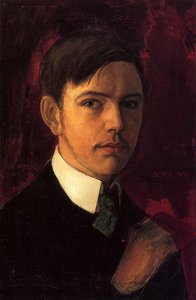
1887–1914, Tyskland
August Macke
Tidligt liv, familie og uddannelse Historien om August Macke begynder i den tyske by Meschede, hvor han blev født den 3. januar 1887. Han var den eneste søn af August Friedrich Hermann Macke, en entreprenør og amatørkunstner, og Maria Florentine. Hans barndom blev præget af de skiftende økonomiske kår i faderens virksomhed, hvilket førte familien til Köln og senere til Bonn.
Også af August Macke
 Kvinde i grøn jakke1913
 Baderpiger med by baggrund1913
 Hat Shop1913
 Portrait of the Artist's Wife with Hat1909

Essays om Tree in the cornfield
 Capturing Grace: The Timeless Beauty and Emotional Depth of Impressionist Female PortraitsDiscover the ethereal beauty of Impressionist female portraits. Explore Renoir's mastery of light, color, and emotion through our curated c…
 Mastering Light: The 25 Most Iconic Landscapes by Jean-Baptiste-Camille CorotImmerse yourself in the serene landscapes of Jean-Baptiste-Camille Corot. Explore 25 iconic masterpieces of the Barbizon school, from misty…
 August Macke: Expressionist Visions of Harmony & Modern LifeExplore the vibrant Expressionist paintings of August Macke (1887-1914). Discover his key role in Der Blaue Reiter, Fauvist influences, and…