

 Se i rummet
 Send
Send Del
Del
 Detaljer
 Studieguide til kunstværker

 Download
 Lignende værker
 Røntgenundersøgelse
 Se diasshow
 Statistik
Landscape near Hammamet
 Acrylic
- WallArt
- German Expressionism
 1914
1914 24.0 x 20.0 cm
 Westfälisches Landesmuseum
 Læs mere
Håndlavet oliereproduktion
Håndmalet olie på lærred i din valgte størrelse og ramme, udført efter bestilling af vores kunstnere. ( Skift til printversion Skift til digitalt billede)




P118B Dkr10

P118H Dkr10

P118W Dkr10

P438Z Dkr10

P508JH Dkr12

P508YH Dkr12

P805H Dkr10

P805Z Dkr10

P919BZ Dkr10

P919G Dkr10

P919XJ Dkr10

P959ZH Dkr10

P968JZ Dkr12

W106C Dkr8

W218G Dkr10

W218JH Dkr8

W218Y Dkr10

W307PJ Dkr10

W316G Dkr10

W316PJ Dkr8

W316Y Dkr10

W398PJ Dkr8

W4111J Dkr10

W500HY Dkr15

W500JH Dkr15

W692G Dkr12

W849H Dkr8

W940BG Dkr15

W953PJ Dkr8




Vælg mellem vores forudindstillede størrelser, der matcher kunstværkets originale proportioner.

Indtast den bredde og højde, du har brug for, så det passer til din ramme eller din væg. Da dette er håndmalet, kan kunstneren ved en anden form på størrelsen male lidt mere rundt om billedet eller skære lidt væk — det er op til dig. Vi sender dig et digitalt mockup til godkendelse, før maleriet påbegyndes. Billedet, der vises på denne side, viser ikke det endelige resultat — det er kun mockuppet, der gør.
Efter bestilling vil OriginalUniqueArt.com team sende en e-mail til kunden for at indhente instruktioner og fremsende et udkast til gennemgang.
Levering i hele verden () på 3-4 uger i stedet for de standard 5 uger. (22 oktober). Ingen kompromiser med kvaliteten.

Gratis ekspresforsendelse til hele verden

Lærred af linned i høj kvalitet

Komplet transportforsikring

Garanti for refusion af told og importafgifter

Garanti for autentisk farvegengivelse

100 dages returret ved fabrikationsfejl

100% fuld returret

Mængderabat ved flere køb
 Glasmulighed er kun tilgængelig i størrelser under 110 cm

Landscape near Hammamet
Reproduktionsmateriale
Reproduktionsstørrelse
-


Samlet pris
Dkr 1966
Landscape near Hammamet – A Moment Frozen in Time
- Subject Matter: This watercolor depicts a serene coastal landscape overlooking the Mediterranean Sea, specifically situated close to Hammamet, Tunisia. The scene centers around a small boat gliding across calm waters, framed by towering mountains rising majestically into the distance.
- Style and Technique: August Macke’s work embodies the core tenets of German Expressionism – an emotive response to reality rather than a mere representation. He employs loose watercolor washes and vibrant color palettes characteristic of the movement, prioritizing expressive brushstrokes over meticulous detail. The artist skillfully captures atmospheric perspective, conveying depth and mood through subtle gradations of hue.
- Historical Context: Created in 1914, just before the commencement of World War I, “Landscape near Hammamet” reflects the anxieties and uncertainties prevalent during this turbulent period. Macke’s artistic endeavors coincided with a broader cultural shift toward confronting psychological realities and exploring themes of solitude and contemplation – sentiments deeply rooted in the Expressionist ethos.
- Symbolism: The inclusion of bottles scattered throughout the composition carries symbolic weight, representing fragility and perhaps hinting at the transient nature of beauty amidst impending conflict. Their placement—some clustered together, others isolated—suggests a consideration of interconnectedness versus individual experience. Furthermore, the fork serves as an understated visual motif, symbolizing division or crossroads – themes frequently explored in Expressionist art.
- Emotional Impact: Viewing “Landscape near Hammamet” evokes feelings of tranquility juxtaposed with melancholy. Macke’s masterful use of color and brushwork conveys a palpable sense of atmosphere, transporting the viewer to this picturesque Tunisian vista. The painting's enduring appeal lies in its ability to capture a fleeting moment of beauty—a poignant reminder of life’s ephemeral nature and an invitation to contemplate profound questions about existence.
Spørgsmål & svar
Hvem har skabt "Landscape near Hammamet"?
"Landscape near Hammamet" tilskrives August Macke.
Hvad er den anbefalede printstørrelse til "Landscape near Hammamet" af August Macke?
"Landscape near Hammamet" anbefales i en trykstørrelse på Medium. Andre størrelser er tilgængelige med de samme proportioner.
Hvad er den dominerende farve i "Landscape near Hammamet" af August Macke?
Den dominerende farve i "Landscape near Hammamet" af August Macke er Putty (#e7eccd).
Om kunstneren
A Life Cut Short: The Vibrant World of August Macke
August Robert Ludwig Macke, a name forever intertwined with the brief but brilliant flowering of German Expressionism, lived a life tragically curtailed by the horrors of the First World War. Born in 1887 in Meschede, a small town nestled within the Sauerland region of Westphalia, his artistic journey was one of rapid evolution and profound exploration – a relentless pursuit to capture not just what he *saw*, but how he *felt* about it. Macke’s early years were marked by a restless spirit and an insatiable curiosity, leading him away from his family's building business and towards the vibrant world of art. His formal training at the Düsseldorf Art Academy, though ultimately deemed insufficient by his own discerning eye, provided a crucial foundation, while independent study and extensive travel proved to be the true catalysts for his unique artistic voice. These formative years were characterized by an absorption of Impressionist and Post-Impressionist techniques – particularly the evocative use of light and color – laying the groundwork for the bolder, more emotionally charged expressions that would define his later work. He supplemented his income through stage design, a demanding profession that honed his compositional skills and sharpened his eye for visual harmony.Influences and Artistic Development
Macke’s artistic trajectory was profoundly shaped by encounters with some of the most influential figures and movements of the early 20th century. A pivotal moment arrived in Paris in 1912, where he met Robert Delaunay, a leading proponent of Orphism – a branch of Cubism that focused on pure abstraction and the ecstatic harmony of color. This encounter proved transformative, introducing Macke to the concept of simultaneous contrast and profoundly influencing his approach to composition. He began experimenting with broken planes of color and abstracted forms, seeking to convey not just what he saw, but how he *felt* about it – a key characteristic of Expressionism. Simultaneously, his close friendship with Franz Marc, a fellow artist and a central figure in the influential group Der Blaue Reiter (The Blue Rider), drew him into the orbit of Wassily Kandinsky and other avant-garde thinkers. While Macke’s style remained distinct from Kandinsky's more purely abstract explorations, he embraced the group’s spirit of artistic freedom and spiritual inquiry. His paintings began to reflect a growing interest in depicting the emotional resonance of landscapes and everyday life – imbued with a sense of joy, optimism, and a yearning for connection. The influence of Henri Matisse, whose bold use of color and simplified forms captivated Macke during his time in Paris, is also evident in many of his works. He was particularly drawn to the Fauvist movement’s emphasis on vibrant hues and expressive brushstrokes, incorporating these techniques into his own distinctive style.The Blue Rider and Beyond: A Unique Expressionist Vision
As an integral member of Der Blaue Reiter, Macke contributed significantly to the group's exhibitions and publications, helping to disseminate its radical ideas about art and spirituality. However, he wasn’t simply a follower; he forged his own unique path within the movement. Unlike some of his colleagues who leaned towards darker, more angst-ridden themes – often reflecting the anxieties of the time – Macke consistently sought to portray beauty and harmony in the world around him. His paintings, such as *Bathing Girls with Town in the Background*, exemplify this approach – vibrant colors, simplified forms, and a sense of idyllic tranquility characterize his work. He masterfully blended elements of Fauvism, Cubism, and Futurism into a distinctly personal style, creating compositions that are both visually striking and emotionally resonant. *Woman in a Green Jacket*, painted in 1913, is another prime example – a portrait radiating warmth and vitality through its bold color palette and confident brushwork. His later works, like *Türkisches Café*, demonstrate his luminist approach, capturing the play of light and shadow with remarkable sensitivity. The influence of Japanese art, particularly woodblock prints, can also be detected in his use of composition and perspective.A Tragic End and Lasting Legacy
The outbreak of World War I brought a sudden and devastating end to Macke’s promising career. Driven by patriotic fervor – a sentiment tragically common among many artists at the time – he volunteered for military service in 1914. Tragically, he was killed in action just weeks later, on September 26th, at the front near Champagne, France, at the young age of 27. His final painting, *Farewell*, poignantly captures the somber mood that descended upon Europe as war engulfed the continent – a haunting testament to his untimely demise. Despite his tragically short life, August Macke left behind a body of work that continues to captivate and inspire. He remains a significant figure in the history of Expressionism, celebrated for his vibrant colors, dynamic compositions, and optimistic vision. His paintings offer a glimpse into a world on the cusp of change – a world grappling with modernity, industrialization, and the looming threat of war – imbued with a sense of beauty and hope amidst growing uncertainty.Exploring Macke’s World Today
Today, August Macke's works are held in prominent collections worldwide, including the Staatsgalerie Moderner Kunst in Munich, the Museum Ludwig in Cologne, and the Kunsthaus Zürich. Several museums dedicated to Expressionism feature his paintings prominently, offering visitors a chance to experience the power of his art firsthand. The Westfälisches Landesmuseum Münster and the Kunstmuseum Bonn are particularly noteworthy for their holdings of Macke’s work. His influence can be seen in the continued exploration of color and emotion by contemporary artists. For those seeking to delve deeper into his world, resources like Artnet and Wikipedia provide valuable biographical information and insights into his artistic development. Exploring his paintings through online databases such as OriginalUniqueArt allows for a closer examination of his technique and subject matter – revealing the enduring appeal of this remarkable artist whose life was tragically cut short but whose legacy continues to shine brightly.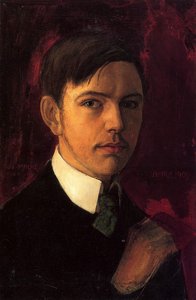
August Macke
1887 - 1914 , Tyskland
Hurtige fakta
- Artistic Movement Or Style: Expressionisme
- Artists Or Movements Influenced By This Artist: ['Der Blaue Reiter']
- Artists Who Influenced This Artist:
- Franz Marc
- Robert Delaunay
- Date Of Birth: 3. januar 1887
- Date Of Death: 26. september 1914
- Full Name: August Robert Ludwig Macke
- Nationality: Tysk
- Notable Artworks:
- Baderpiger med by baggrund
- Gartentor
- Türkisches Café
- Place Of Birth: Meschede, Tyskland
Relaterede artikler

Ephemeral Visions: Exploring the Artistic Legacy & Contemporary Practice of Watercolor Painting
Explore the captivating world of watercolor painting! Discover its rich history, essential techniques, influential artists & collecting tips. A comprehensive guide for art enthusiasts from OriginalUniqueArt.

Ephemeral Visions: Exploring the History & Emotional Resonance of Watercolor Painting
Explore the captivating history of watercolor painting, from ancient techniques to modern masters like Kandinsky & Blake. Discover essential artists, collecting tips & the emotional power of this luminous medium. Expert insights for art enthusiasts.

Ephemeral Visions: Exploring the Artistic Legacy & Nuances of Watercolor Painting
Explore the captivating world of watercolor painting! Discover its rich history, essential techniques, influential artists & collecting tips from art experts. A comprehensive guide for enthusiasts.
Renoirs Mesterværker: Top 25 Kunstværker til Dit Hjem | OriginalUniqueArt.dk
Oplev Renoirs 25 mest ikoniske malerier! Fordyb dig i Impressionismens verden, fra 'Bal du moulin de la Galette' til 'Umbrellas'. Køb museumskvalitets reproduktioner og find inspiration til din bolig på OriginalUniqueArt.com.

Top 10 Akvarelmesterværker: Kunst der Ændrede Historien | OriginalUniqueArt.dk
Oplev de 10 mest legendariske akvarelmesterværker, der har ændret kunsthistorien! Fra Turner til Monet – lær om teknikken og historierne bag ikoniske værker. Find museumskvalitets reproduktioner & inspiration til din indretning på OriginalUniqueArt.com.


